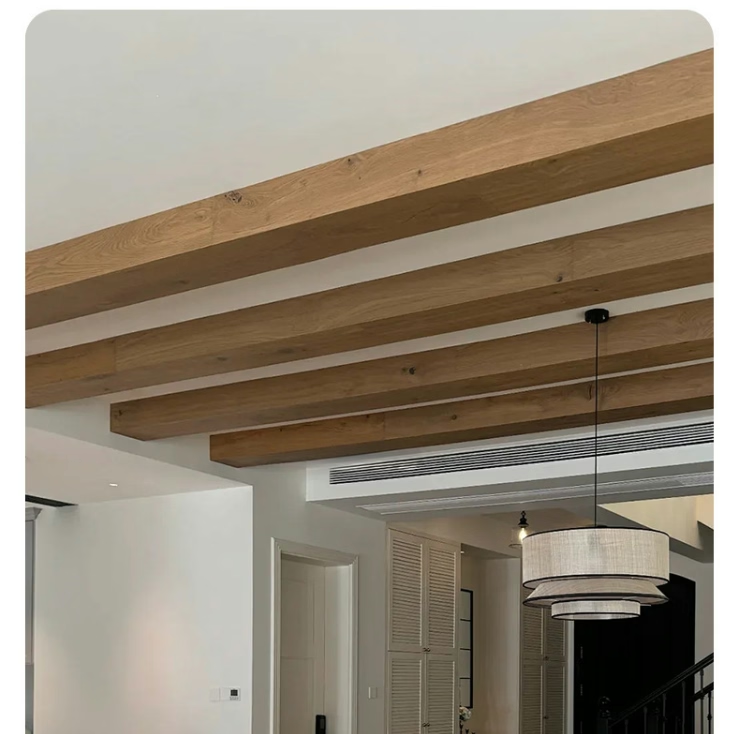
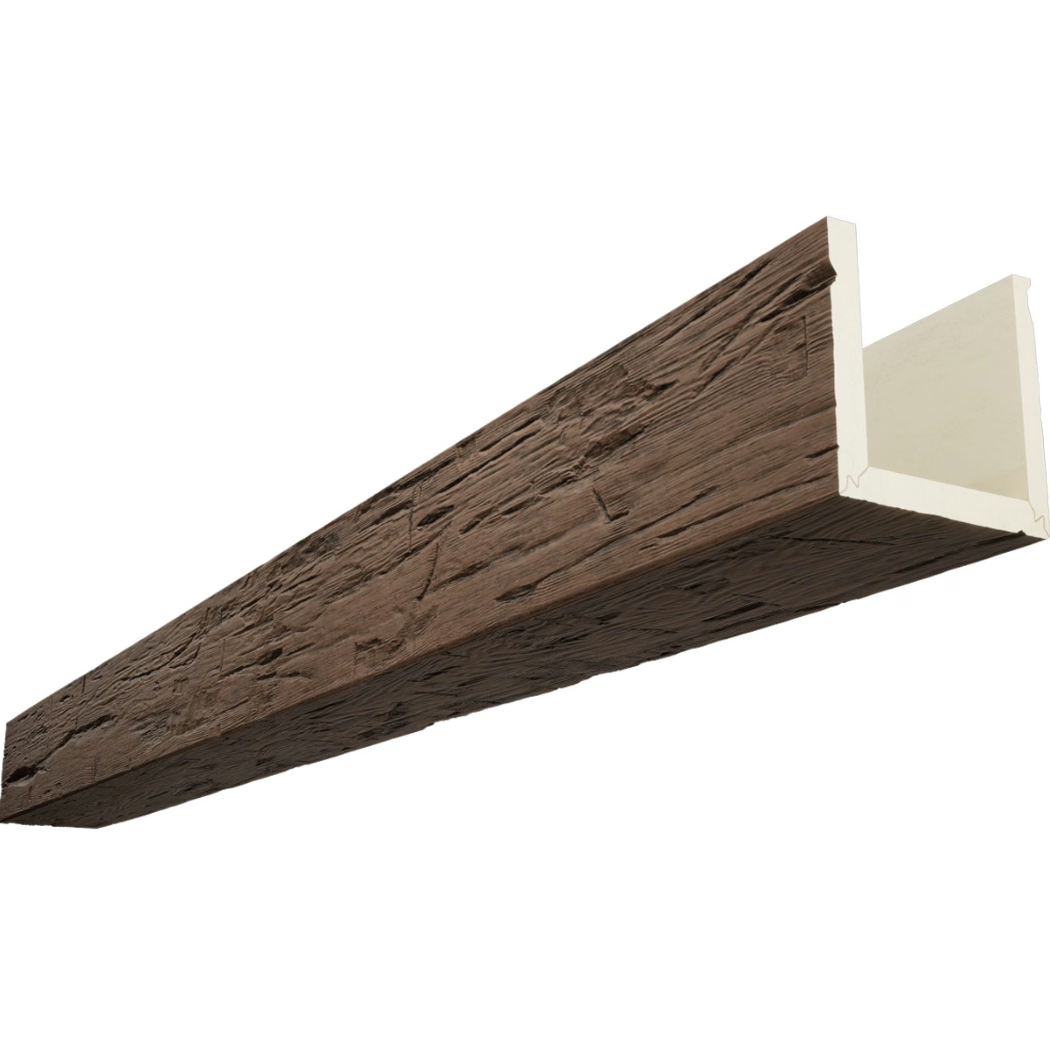
Commercial Construction Demands Higher Specifications
Commercial construction projects operate under different pressures than residential work. Tighter timelines, larger scales, stricter building codes, and professional liability considerations all push specifications toward higher-performance products. Contractor-grade faux ceiling beams address these demands with enhanced material formulations, comprehensive certifications, and features that support efficient installation at scale.
Specifying contractor-grade products means selecting beams designed for commercial rather than residential applications. These products carry appropriate fire ratings, structural certifications, and quality documentation that general contractors and commercial architects require for project approval and liability protection.

What Distinguishes Contractor-Grade Beams
Contractor-grade designation indicates products meeting specific performance criteria beyond consumer-grade alternatives. These criteria typically include enhanced fire ratings, higher material density, improved impact resistance, comprehensive warranty coverage, and detailed quality documentation.
The designation also implies product consistency suitable for large-quantity orders. Commercial projects often require dozens or hundreds of identical beams, and contractor-grade manufacturers maintain the production consistency needed for matching installations. Color, dimension, and finish quality remain uniform across large production runs.
Certification Requirements for Commercial Use
Commercial installations must satisfy building codes and often require specific certifications:
Fire ratings documented through testing by recognized laboratories such as Underwriters Laboratories or Intertek. Class A or Class B ratings depending on building code requirements and occupancy classifications.
Structural certifications confirming beams meet load requirements for their intended applications. Even decorative beams may need structural documentation for code compliance.
Material safety documentation including VOC emissions testing, particularly for indoor air quality programs like LEED or WELL building standards.
Quality management certifications such as ISO 9001 indicating consistent manufacturing processes and quality control.
Common Commercial Applications
Contractor-grade faux ceiling beams serve diverse commercial applications:
Hospitality including hotel lobbies, resort public spaces, restaurant dining rooms, and conference centers. These spaces demand aesthetic appeal combined with durability and code compliance.
Retail environments from flagship stores to boutique shops. Beam installations contribute to brand experience while withstanding high customer traffic.
Office buildings including lobbies, conference rooms, and collaborative spaces. Commercial-grade beams provide aesthetic features appropriate to professional environments.
Healthcare facilities in non-clinical areas such as lobbies, waiting rooms, and administrative spaces. Healthcare environments require specific material performance including cleanability and low emissions.
Educational institutions in common areas, libraries, and gathering spaces. Commercial durability supports high-usage environments.
Specification Considerations for Commercial Projects
Several factors guide appropriate specification of contractor-grade beams.
Building Code Compliance
Verify applicable building codes early in the specification process. Different jurisdictions adopt different code versions with varying requirements. Fire ratings, structural requirements, and installation methods all depend on local code interpretation.
Working with code consultants or experienced commercial architects helps navigate complex code requirements. Their expertise prevents specification errors that could delay project approval or require expensive field modifications.
Performance Requirements by Space Type
Different commercial spaces impose different performance demands on beam installations:
High-traffic public spaces require maximum impact resistance and cleanability. Beam surfaces must withstand frequent contact with people, equipment, and cleaning protocols.
Climate-controlled environments impose standard performance requirements. Beams function within stable conditions but must still meet code requirements for the space.
Specialty environments including pool areas, kitchens, and industrial spaces impose specific requirements. Moisture resistance, grease resistance, or chemical resistance may factor into beam selection.
Historic or themed environments require aesthetic matching alongside performance requirements. Contractor-grade manufacturers can produce custom finishes for these applications.
Quantity and Consistency Requirements
Commercial projects typically require larger quantities than residential work. Consistency across these quantities affects both aesthetics and installation efficiency. Beams that match in color, finish, and dimension install faster and produce more visually cohesive results.
Verify manufacturer capacity to produce required quantities within project timelines. Commercial deadlines often leave limited room for production delays. Manufacturers experienced with commercial-scale production handle these requirements reliably.
Custom Color and Finish Matching
Commercial projects frequently specify custom colors or finishes matching brand standards, architectural palettes, or specific design concepts. Contractor-grade manufacturers typically offer extensive customization capabilities including custom color matching, proprietary finish formulations, and unique dimensional requirements.
Custom specifications add lead time and cost but enable truly project-specific results. Plan custom specifications early in the project timeline to avoid schedule pressure on the manufacturing phase.
Procurement Strategies for Large-Scale Projects
Commercial procurement follows different processes than residential purchasing.
Establishing Supplier Relationships
Commercial projects benefit from established relationships with reliable suppliers. These relationships provide access to volume pricing, priority production scheduling, and dedicated customer support. Manufacturers and distributors value commercial relationships and offer corresponding service levels.
Evaluate suppliers based on production capacity, quality consistency, certification documentation, lead time reliability, and customer service quality. The lowest unit price matters less than total project value delivered through reliable supply.
Volume Pricing Considerations
Quantity purchases typically qualify for volume pricing tiers. Discuss pricing structures with manufacturers before finalizing specifications. Larger orders may also qualify for setup fee waivers on custom finishes or colors.
Volume pricing should be balanced against project cash flow considerations. Larger orders require greater upfront investment but reduce per-unit costs. Work with project financial managers to optimize ordering quantities against project budget realities.
Lead Time Planning
Commercial beam production typically requires longer lead times than residential orders due to scale and customization requirements. Standard products may require four to eight weeks. Custom finishes or large quantities may require twelve to sixteen weeks or longer.
Build adequate lead time into project schedules. Production delays create cascade effects through installation sequences and project completion milestones. Conservative lead time planning prevents schedule pressure that compromises installation quality.
Logistics and Delivery Coordination
Commercial beam deliveries involve larger quantities requiring coordinated logistics. Delivery scheduling, unloading equipment, on-site storage, and distribution to installation locations all require planning.
Manufacturers and distributors experienced with commercial projects offer logistics support including scheduled deliveries, packaging suitable for site handling, and staged deliveries aligned with installation sequences. These services simplify on-site material management.
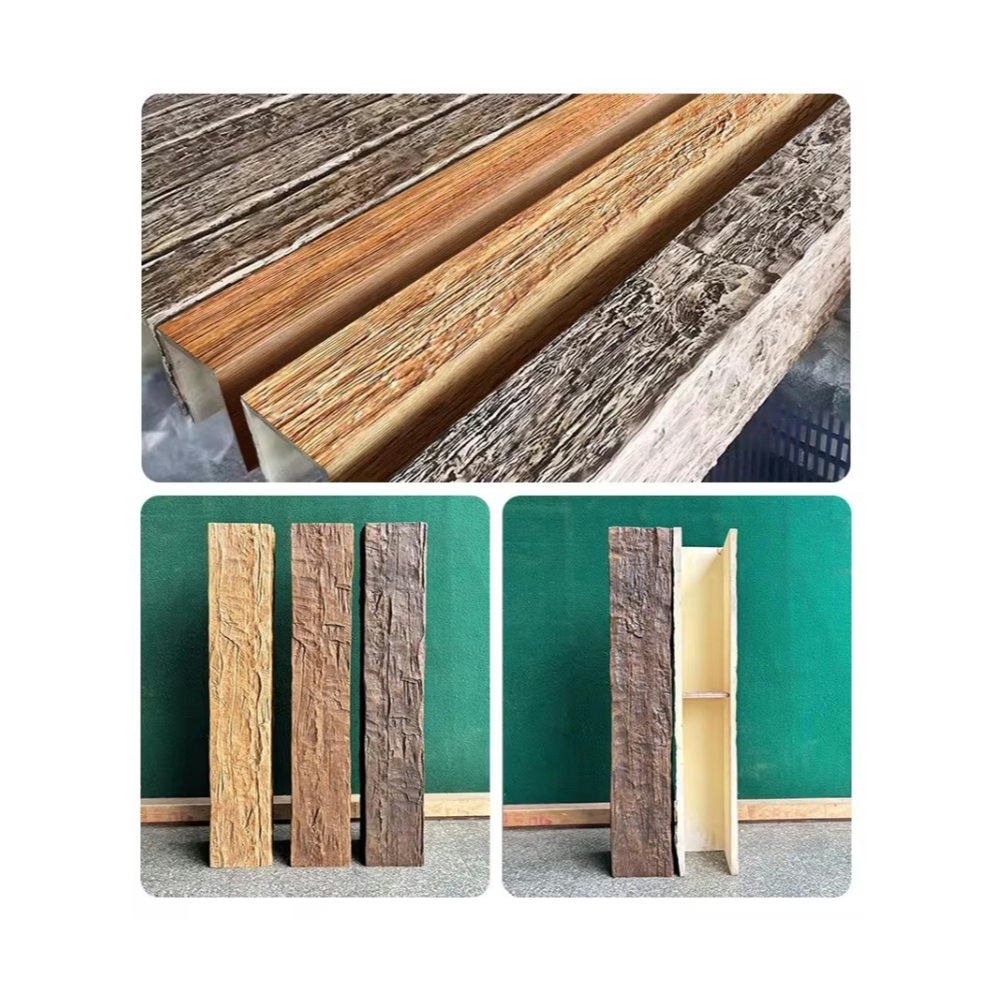
Installation at Commercial Scale
Commercial beam installation involves different considerations than residential work.
Crew Sizing and Composition
Commercial installations typically require larger installation crews than residential projects. Multiple beams installed simultaneously across different building areas accelerates project completion. Crew composition includes lead installers, finishers, and supporting labor.
Experienced commercial installation crews work efficiently with appropriate training on specific product requirements. Manufacturers sometimes provide installation training for their products, particularly for proprietary mounting systems or finish requirements.
Equipment and Access Requirements
Commercial beam installation may require specialized equipment including scissor lifts, boom lifts, or scaffolding systems for high-ceiling applications. Equipment rental and operation represent significant project costs requiring advance planning.
Site access affects equipment selection and installation sequencing. Narrow corridors, limited staging areas, and occupied adjacent spaces complicate logistics. Pre-installation site surveys identify access constraints and inform equipment selection.
Quality Control Protocols
Commercial installations benefit from formal quality control protocols. Inspection checkpoints, finish standards documentation, and punch list processes ensure consistent results across large installations. These protocols also support warranty claims if issues arise.
Document installation quality through photographs and written inspection records. This documentation proves valuable for project closeout, warranty activation, and any future dispute resolution.
Coordination With Other Trades
Commercial projects involve multiple trades working in sequence. Beam installation typically happens after framing, mechanical systems, and electrical rough-in but before final wall finishing. Coordination prevents conflicts with other trades and ensures proper installation conditions.
Communication protocols between trades prevent misunderstandings. Regular coordination meetings, shared project schedules, and clear responsibility definitions help maintain project momentum despite the complexity of multi-trade coordination.
Warranty and Liability Considerations
Commercial projects require careful attention to warranty terms and liability allocation.
Manufacturer Warranty Terms
Review manufacturer warranty terms carefully before specifying products. Commercial warranties may differ from residential offerings. Understanding warranty coverage, exclusions, and claim procedures protects project stakeholders.
Warranty documentation should be included in project closeout packages. Building owners need warranty information for future reference. Property management companies rely on warranty documentation for ongoing maintenance planning.
Installation Warranty Considerations
Installation contractors may offer separate warranties on installation workmanship. These warranties typically cover installation quality rather than material performance. Coordinate installation warranties with manufacturer warranties for comprehensive coverage.
Professional installation by certified or experienced contractors supports both warranty coverage and project quality. Cutting installation costs through unqualified labor often leads to problems that exceed any installation savings.
Liability and Insurance Implications
Commercial projects involve professional liability considerations for architects, contractors, and manufacturers. Product specifications, installation methods, and material selections all affect liability allocation in case of failures or problems.
Work with insurance and legal advisors when specifying products for high-liability projects. Their input helps identify specifications that reduce liability exposure while meeting performance requirements.
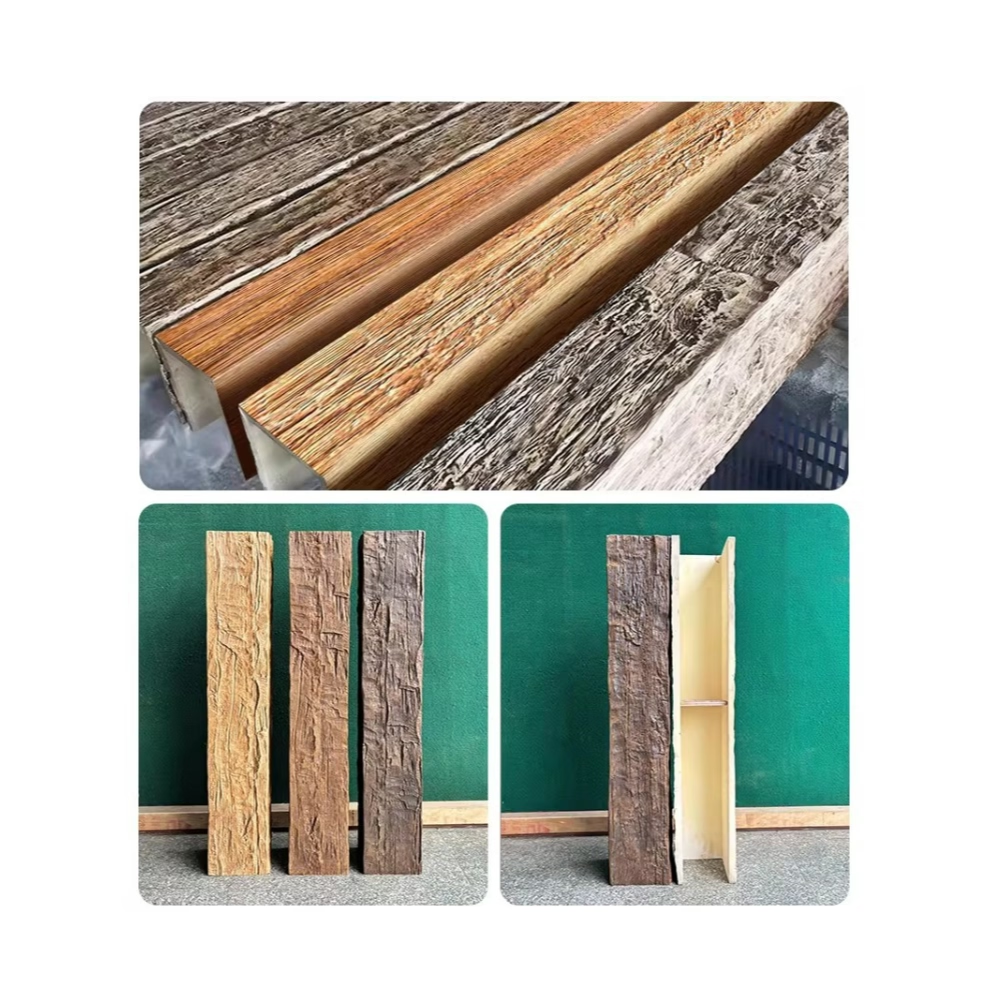
Long-Term Performance in Commercial Environments
Commercial beam installations must perform reliably for many years under demanding conditions.
Maintenance Planning
Develop maintenance plans appropriate for the specific commercial environment. High-traffic areas require more frequent attention than lower-use spaces. Maintenance protocols should address routine cleaning, inspection schedules, and any specific concerns related to the installation environment.
Document maintenance procedures for building operations staff. Clear instructions ensure consistent maintenance quality regardless of staff turnover. Manufacturer maintenance recommendations provide the foundation for these procedures.
Replacement and Refurbishment Cycles
Commercial environments eventually require refurbishment including beam refinishing or replacement. Planning for these future needs during initial specification simplifies long-term building maintenance.
Standardized specifications across multiple properties enable efficient refurbishment using consistent materials and methods. Building portfolios benefit from specification standardization that simplifies procurement and installation across multiple locations.
Performance Documentation for Stakeholders
Building owners, property managers, and tenants benefit from documentation of beam installation performance. Maintenance records, inspection results, and any remediation activities should be documented systematically.
This documentation supports ongoing maintenance decisions, warranty claims if needed, and eventual refurbishment planning. It also demonstrates responsible building management for stakeholders including investors, regulators, and occupants.
Selecting Contractor-Grade Beam Suppliers
Supplier selection significantly affects commercial project success.
Manufacturer Capabilities Assessment
Evaluate potential manufacturers based on production capacity, quality systems, certification holdings, customization capabilities, and commercial project experience. Site visits to manufacturing facilities provide direct insight into operations and quality standards.
Request references from previous commercial projects of similar scope. Speaking with previous clients reveals actual performance against claimed capabilities. References help validate marketing claims through real-world experience.
Technical Support Quality
Commercial projects benefit from strong technical support from manufacturers. Product selection guidance, installation training, field problem resolution, and warranty claim handling all require responsive technical resources.
Evaluate technical support quality during the specification phase. Ask detailed questions, request documentation, and assess response quality. Strong technical support indicates a manufacturer invested in customer success.
Financial Stability Considerations
Commercial projects often involve long-term warranty relationships with manufacturers. Financially stable manufacturers are more likely to honor warranty commitments years after initial purchase. Financial stability assessment protects project stakeholders against manufacturer business failures.
Public companies provide financial information through standard channels. Private companies may provide financial summaries upon request. Financial stability assessment combined with reference checks and credit reports provides reasonable confidence in manufacturer reliability.
Technical References
ASTM standards cited in every specification
Test Data
Lab results from internal testing program
Updated 2026
Reviewed against current product specs