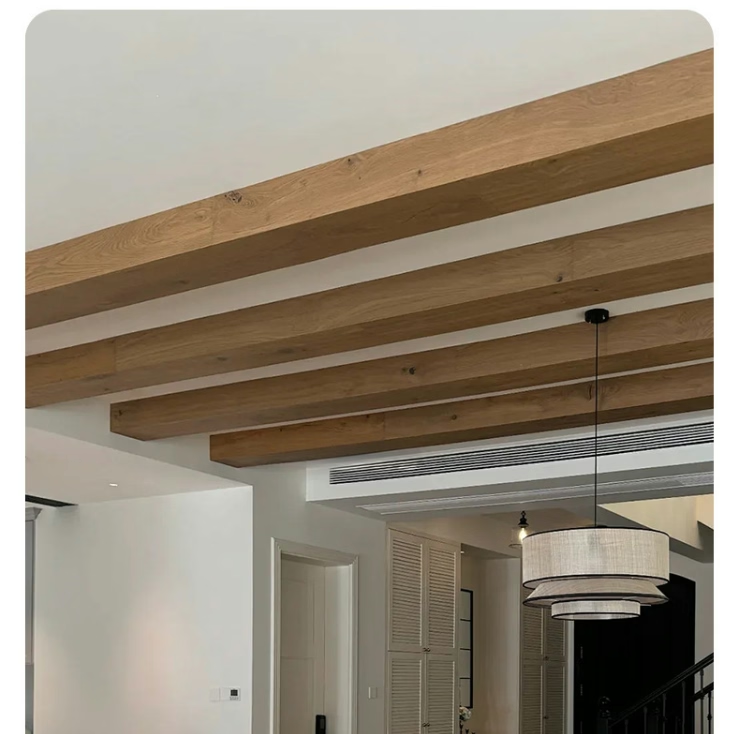
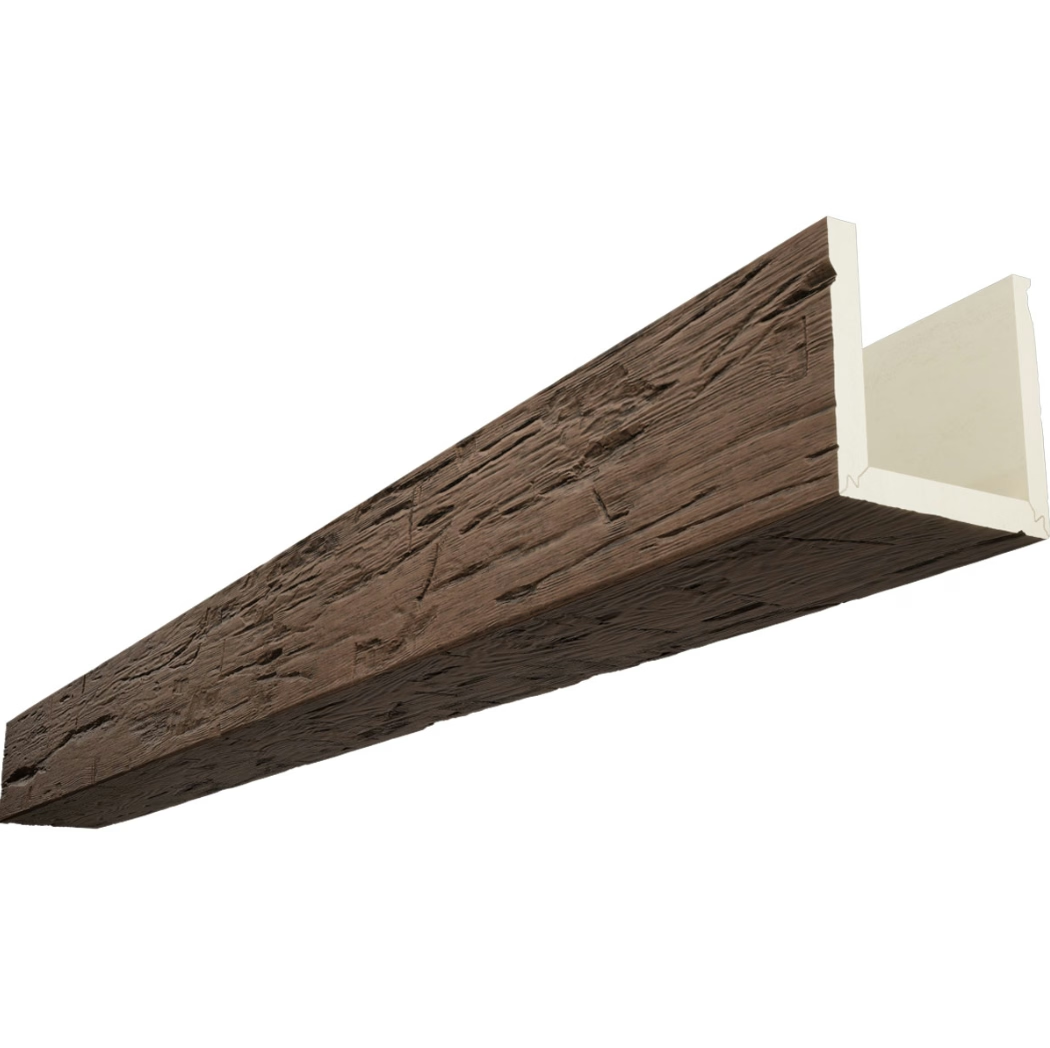
Every retail fit-out tells a story about the brand behind it. Walk into a flagship boutique, an upscale sporting goods store, or a specialty grocer and the ceiling often does more quiet storytelling than the signage does. Faux timber beams have become one of the most flexible storytelling tools a fit-out team can specify, because they deliver the warmth of solid wood without the timeline drag, weight penalty, or future rebrand headache that real timber brings.
This article walks through how experienced retail construction managers use faux timber in store fit-outs — from the first design meeting with the brand team to the final punch walk with the facilities group.
The Retail Fit-Out Reality
Time Is the Most Expensive Thing on the Job
Retail leases count every day. A store that's delayed opening is a store that's burning rent without earning revenue. The brand's marketing calendar, the holiday season, the mall's co-tenancy requirements — all of these create a hard deadline that the construction team can't move. That pressure shapes every material decision.
Faux timber beams compress the timeline in two important ways. First, they arrive from the manufacturer pre-finished or pre-primed, so the painter's time on site drops dramatically. Second, because they're so light, two installers can hang what would otherwise require a four-person crew with a small lift. Multiply that labor savings across every beam in the store and the schedule savings become meaningful.
Brand Warmth Without the Brand Risk
Most retail brands want warmth. Whether the concept is heritage, modern rustic, Scandinavian, or coastal, the design language almost always includes some element that nods to natural materials. Solid timber is the obvious choice, but it brings real risks: warping in a store with a giant glass storefront, color drift under the spotlights, and visible checking within the first year that can read as "old and worn" rather than "heritage and authentic."
Polyurethane faux timber sidesteps all of that. The molded grain pattern reads as natural, the color holds, and the surface stays stable through HVAC swings, intense daylight, and the constant temperature changes that come with shoppers flowing in and out.
Choosing the Right Beam for the Concept
Profile Decisions That Match the Brand
A good fit-out designer thinks about beam profiles in the same way they think about fixtures and signage — they should reinforce the brand language. A few common pairings that work well:
- Thin, repeated rafters (3x5 or 4x6) for coastal, Scandinavian, or modern minimalist brands. They read as architectural rhythm without overwhelming the merchandise below.
- Heavier beams (6x8 or 8x10) in rougher textures for outdoor brands, heritage retailers, and concepts that lean into a workshop or barn vocabulary.
- Hand-hewn texture with dark stains for whiskey shops, leather goods stores, cigar lounges, and similar premium-position concepts.
- Smooth, sandblasted texture with whitewash or pickled finishes for bridal shops, art galleries, and design-forward home goods stores.
The texture and finish matter as much as the profile. A heavy beam in a pristine finish reads as a different brand statement than a heavy beam in a weathered finish, even when the geometry is identical.
Layout Patterns That Earn Their Place
Beyond the individual beam, the layout pattern itself can be a brand device. A few patterns that show up repeatedly in successful fit-outs:
- Parallel runs across a rectangular floorplate — works in most stores, supports clean sightlines, and is fast to install.
- Coffered sections over key merchandise zones — defines the area where the brand wants shoppers to slow down, like a feature display or a fitting room block.
- A single dramatic beam across a feature wall — anchors a flagship entrance or a hero product display.
- Intersecting grids or trusses — gives a store a distinctive architectural identity and supports hanging displays, signage, or lighting.
Whichever pattern fits the brand, the layout should be designed into the plan from day one. Beam locations affect where lighting, sprinklers, signage, and HVAC grilles can land, so it's much easier to design the beam pattern first and fit the other systems around it than the other way around.
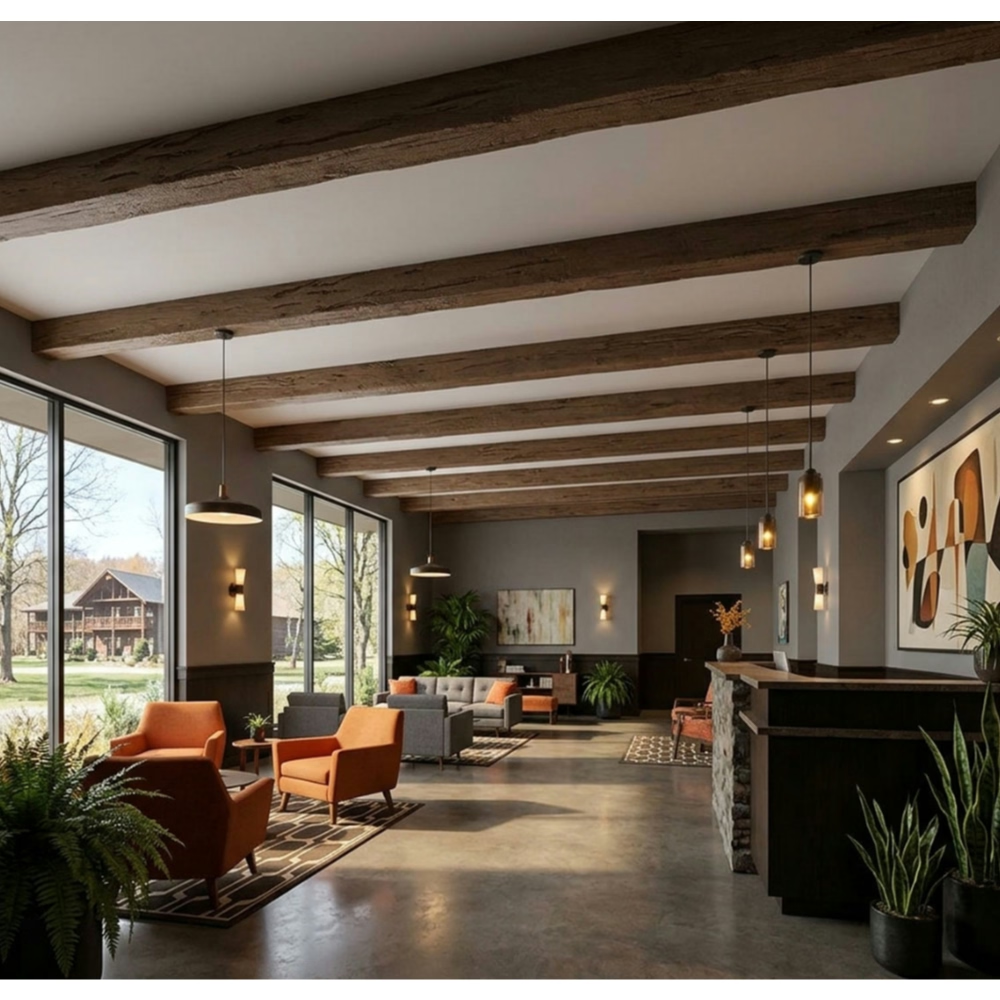
Installation in a Live Retail Environment
Working Around an Active Storefront
Many retail fit-outs happen in second-generation spaces with existing structures to work around. Drop ceilings, old HVAC ductwork, and undersized structural members can all complicate a beam install. The good news is that faux timber beams are forgiving of imperfect host structures because they're so light.
Suspended mounting using threaded rod or steel cable is the standard answer for fit-outs where the existing structure is awkward. A small steel plate anchors to the structure above, a rod or cable drops to a cleat, and the beam slips over the cleat and locks in place. The system is adjustable on site, so the installers can hit perfect ceiling height even when the structure above is uneven.
Coordinating With Lighting and Signage
Retail ceilings are busy with lighting tracks, signage mounts, security cameras, and audio speakers. All of those have to land in the right place relative to the beams. The simplest way to coordinate is a single integrated reflected ceiling plan that shows every system together. Most fit-out teams now do this digitally from the start, which eliminates the field conflicts that used to eat up so much schedule.
A few practical notes from the field:
- Beam direction usually wins over track lighting direction, because beams are more visually dominant. Run lighting tracks parallel to the beams.
- Beam spacing should accommodate the lighting designer's preferred fixture spacing. Standard on-center distances of 24, 32, or 48 inches work well with most retail lighting plans.
- Sprinkler heads can mount directly to the side of a beam, but local code may require a small escutcheon or specific clearance. Confirm with the fire protection engineer early.

Working in Compressed Schedules
Retail fit-out crews are used to working fast, and faux timber beams reward that pace. A typical mid-sized store with 12 to 20 beams can be hung in a single day by a two-person crew, with the painter following behind for touch-ups. Compare that to the multi-day sequence needed for solid timber — including structural reinforcement, lifting equipment, and acclimation time — and the schedule advantage is obvious.
For brands running a multi-store rollout, the savings multiply. The same beam specification can be ordered, finished, and shipped to multiple locations, with local crews following the same installation playbook at each site. Consistency across the chain improves, and the per-store cost drops.
The Rebrand Question
Why PU Beams Are a Fit-Out's Best Friend Long-Term
Retail brands redecorate more often than most people realize. A flagship concept might get refreshed every three to five years, and a tenant improvement cycle might run even faster in a competitive market. The fit-out material choices made today will be evaluated — and possibly painted over, removed, or replaced — before the lease is up.
Polyurethane faux timber handles rebrands gracefully. It can be repainted in place if the brand wants to shift the color story. It can be removed and reinstalled in a new configuration if the floorplate changes. It can be replaced entirely without ripping out structural framing. And because the material is so predictable, the brand team can plan the rebrand years in advance, knowing the existing beams can be refinished on a tight schedule with minimal disruption to operations.
For brands running rolling refresh programs, this rebrand flexibility is one of the strongest arguments for faux timber. Solid timber often becomes a sunk cost the brand has to remove and dispose of, while PU beams can be repurposed.
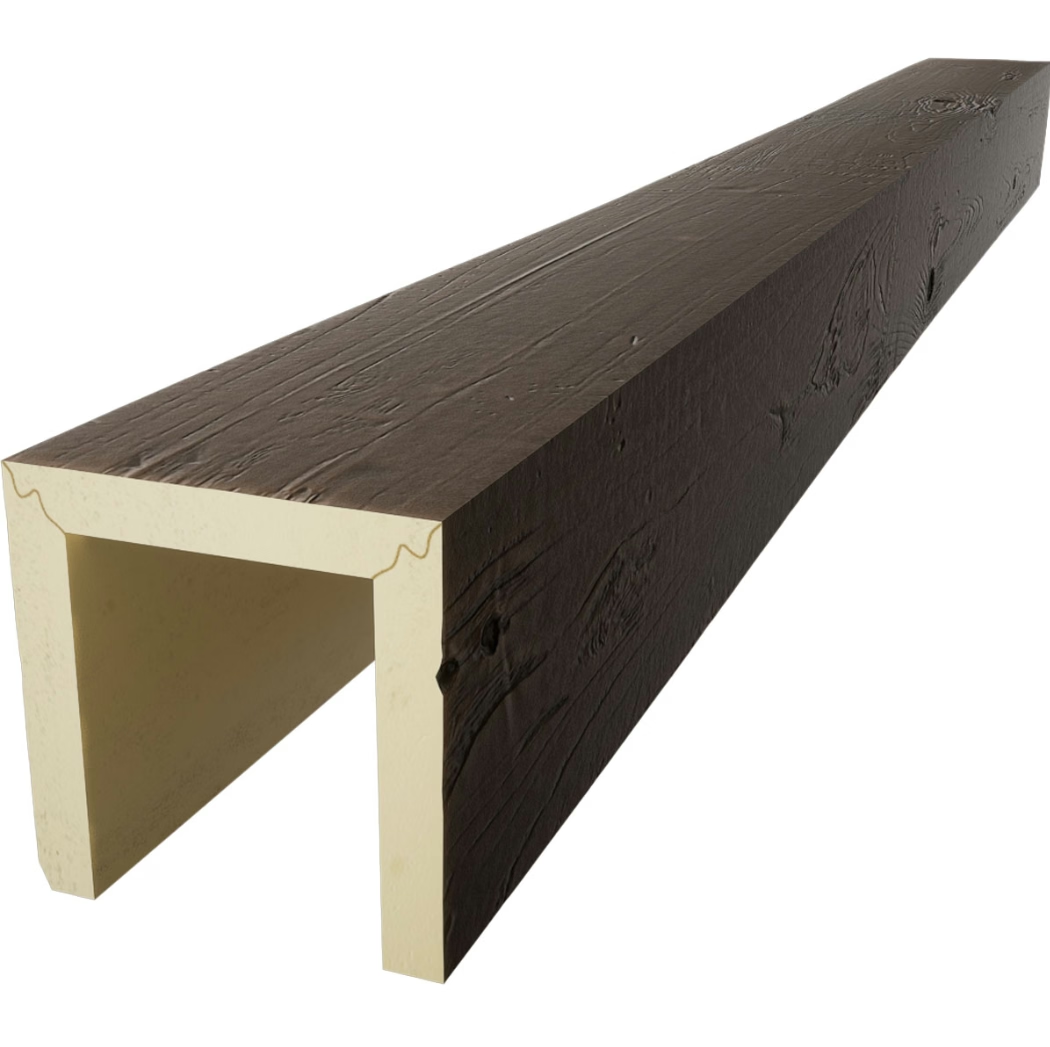
Common Mistakes Retail Teams Make With Faux Timber
Choosing Texture Before Testing It in the Actual Lighting
The texture that looks great in a sample on a designer's desk can look very different under the retail store's actual lighting combination — which usually includes a mix of daylight, accent spots, track lighting, and often some decorative pendants. Always order a sample and look at it under the real lighting before committing to a texture across an entire store.
Forgetting About Acoustic Comfort
Retail spaces with hard floors, glass storefronts, and lots of shoppers can get uncomfortably loud. Solid timber absorbs some sound, but PU beams have a hollow interior that does almost nothing acoustically. If the store's concept calls for a quieter, more intimate feel, consider adding acoustic panels or acoustic ceiling tiles between the beams. The beams themselves shouldn't be expected to solve the acoustic problem.
Skipping the Maintenance Walk-Through
Faux timber is low-maintenance, but it's not zero-maintenance. Spot a real-world issue now: a janitor with a too-tall ladder, a fixture installer drilling into a beam face, a merchandising team hanging a banner with the wrong fastener. Each of these can nick a beam. Train the facilities team on how to spot-repair PU beams, and include a small touch-up kit in the handover package.
Pulling It Together for the Next Fit-Out
Retail fit-outs are pressure cookers, and the materials that survive that pressure are the ones that install fast, look distinctive, and behave predictably. Polyurethane faux timber beams check all three boxes. They give brand designers a vocabulary of texture, color, and proportion that fits almost any concept, and they give construction managers a timeline-friendly material that won't surprise them on site.
For fit-out teams that haven't used faux timber yet, the most practical first step is to mock up a sample beam in a real retail environment — your own store, a sister location, or even a pop-up — and let the brand team live with it for a few weeks under the actual lighting. Once they see how it reads and how it holds up to real shopper traffic, the decision usually makes itself.
Technical References
ASTM standards cited in every specification
Test Data
Lab results from internal testing program
Updated 2026
Reviewed against current product specs