
Hospitality interiors have a tough job. They need to feel inviting the moment a guest walks in. They need to look beautiful in marketing photos that drive the next booking. They need to hold up under thousands of guests a week — sometimes tens of thousands in a busy resort. And they need to do all of this while operating on the kind of maintenance budget that makes a hospital administrator blush. Faux wood beams have become one of the most-used materials in hospitality interiors because they thread that needle beautifully.
What follows is a practical look at how hotel, restaurant, and resort design teams use faux wood beams to build warm, durable, brand-defining interiors.
What Hospitality Brands Want From a Beam
Character That Photographs Well
The first thing a hospitality designer thinks about is the photo. Walk into the lobby of any upper-mid-scale hotel and the design language is doing one job above all others: making the space look great in the wide-angle hero shot on the brand's website. Beams overhead are a big part of that shot. They add height, warmth, architectural rhythm, and a sense of place.
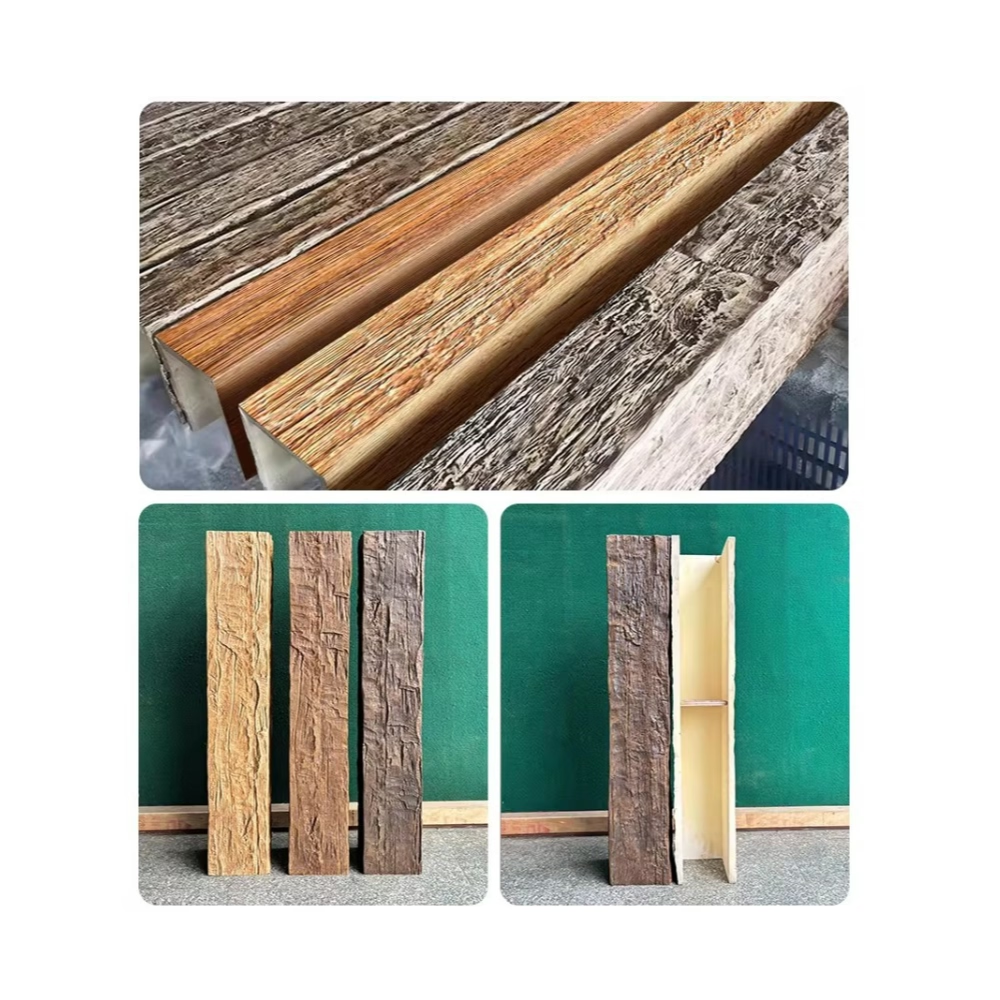
Faux wood beams deliver all four of those qualities convincingly. The molded grain pattern reads as natural at any zoom level, the proportions feel right, and the way light interacts with the texture gives the ceiling depth and dimension in the photograph.
A Sense of Place That Doesn't Date
Hospitality brands also need interiors that feel timeless. A beachfront resort wants coastal warmth without feeling like it was last renovated during the Obama administration. A mountain lodge wants heritage character without looking like a stale themed restaurant. Faux wood beams give designers a vocabulary of profiles, textures, and finishes that can be tuned to fit almost any concept, and the inherent understatement of the material keeps it from looking trendy.
The best hospitality interiors feel like they could have been built yesterday or twenty years ago, and that's exactly the lane faux beams sit in.
Durability That Doesn't Show
The other thing hospitality designers think about, after the photo and the concept, is durability. A hotel lobby might see 5,000 people a day. A resort bar might see 10,000 on a holiday weekend. A restaurant dining room sees three seatings of damage-prone guests who touch, lean, and occasionally spill on every surface they can reach. The materials that survive this reality are the ones that get specified again and again.
Faux wood beams survive because they don't show wear the way real wood does. They don't develop patina in heavy-touch areas, they don't get the small dents that solid timber accumulates, and they don't need to be refinished on a maintenance cycle.
Beam Applications Across Hospitality Spaces
Hotel Lobbies and Reception Areas
The lobby is the focal point of the hotel, and the ceiling is the focal point of most lobbies. Designers tend to use the strongest beam statement in the lobby — deep profiles, long runs, often with coffered details that integrate lighting and signage. The beams give the lobby a grounded, residential feel that distinguishes it from the more institutional corridor spaces beyond.
For chain hotels trying to maintain brand consistency across multiple properties, faux beams are especially valuable because the same specification can be replicated at every location. The look stays consistent, the install stays consistent, and the lifecycle performance stays consistent. That's hard to achieve with real timber.
Guest Rooms and Suites
Guest rooms are a more nuanced use of faux beams. Most designers don't run heavy beams across the entire guest room ceiling, because the room proportions are typically modest. Instead, they use beams selectively: a coffered detail over the bed, a single beam across the desk area, or a feature ceiling in the bathroom.
In suites, designers often bring more dramatic beam patterns in to define the sitting area, the bedroom area, and the entry zone. The beams become part of the suite's layout language, dividing the space without enclosing it.
Restaurants and Bars
Restaurants are where faux beams really shine. The look of exposed timber overhead is one of the most popular design choices in modern restaurant interiors, and faux beams deliver that look on a timeline and budget that restaurant operators actually have.
Bar ceilings in particular benefit from the architectural rhythm that beams provide. A bar with a beamed ceiling reads as considered and crafted, which is exactly the impression the brand wants to make on someone deciding where to spend their evening.
Resort Common Areas
Resort lobbies, restaurants, pool bars, and event spaces all benefit from faux beam treatments. The beams help tie the various indoor spaces together visually, which matters because resort guests experience the property as a sequence of related spaces rather than as individual rooms.
For beach and tropical resorts, faux beams in lighter finishes — whitewash, pickled, weathered gray — give the ceiling that breezy, coastal feel without requiring the actual coastal humidity to age the wood. For mountain and ski resorts, darker stains and hand-hewn textures deliver the lodge vocabulary that guests expect.
Conference and Event Spaces
Hotels with conference facilities often need flexible meeting spaces that can host anything from a corporate board meeting to a wedding reception. Faux beams overhead help make these multipurpose rooms feel more architectural and less like a converted ballroom. The beams also absorb sound better than flat drywall ceilings, which matters when a room is being used for a presentation or a speech.

Installation Considerations for Hospitality
Tight Pre-Opening Schedules
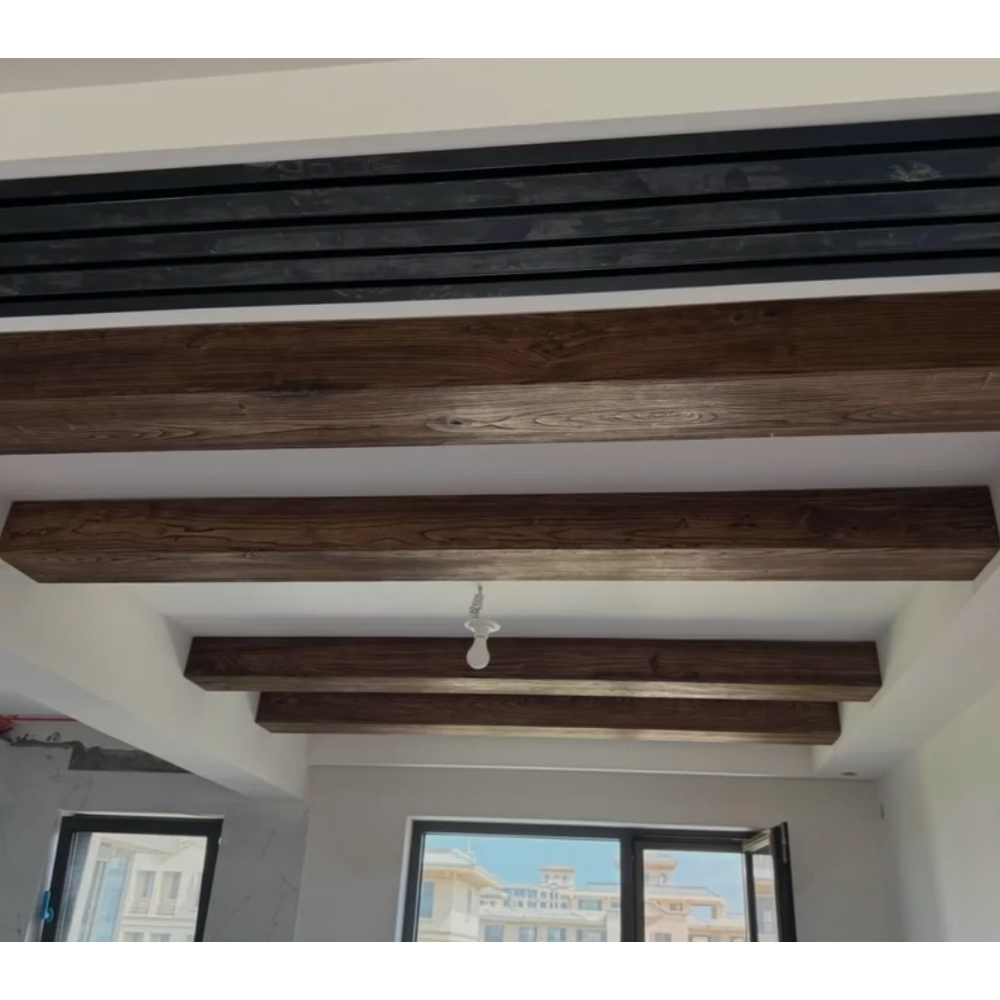
Most hospitality projects open on a specific date that's been marketed for months. There's no slipping the opening, which means the construction schedule is sacred. Faux beams help by compressing the beam-related work into a short, predictable window.
A typical hotel lobby with 15 to 30 beams can be hung in two to three days by a small crew. Compare that to the multi-week process of installing solid timber — including delivery, acclimation, structural reinforcement, and finishing — and the schedule advantage is obvious.
Working Around Brand Standards
Hospitality brands usually have detailed design standards that specify materials, profiles, finishes, and installation methods down to the screw type. Faux beams work with these standards because the manufacturers typically provide detailed documentation for every profile, and the consistency of the molded product means the brand's spec doesn't drift from property to property.
Coordinating With HVAC and Lighting
Hospitality ceilings are busy with mechanical systems, and the beam layout has to coexist with all of them. The most common approach is for the interior designer and the MEP engineer to coordinate the reflected ceiling plan together from the start. Beam directions are chosen first because they're visually dominant, then lighting tracks, sprinklers, and HVAC grilles are fitted around them.
Where a beam conflicts with a mechanical element, faux beams are easy to shorten, step, or notch around the obstruction. The flexibility saves field time and reduces the number of RFIs that get logged during construction.
Maintenance in Operating Properties
Daily Cleaning
Hotel housekeeping teams need materials they can clean quickly and consistently. Faux beams clean with a damp cloth or a quick wipe with a standard wood-surface cleaner. No special products, no special techniques, no special training.
For restaurant and bar areas, the same simple cleaning works. Any food or drink spills wipe off without staining, and the polyurethane surface doesn't absorb liquids the way real wood does.
Periodic Touch-Ups
Even in well-run properties, beams occasionally get damaged by maintenance workers, movers, or rowdy guests. Faux beams are easy to patch with flexible filler and matching finish. The repair is usually invisible, especially if the maintenance team keeps a small touch-up kit on hand with the original finish materials.
Refreshing the Finish
When the property eventually goes through a soft renovation — typically every five to seven years — faux beams can be refinished in place. A light scuff, a new coat of stain or paint, and the beams look new again. The refinishing process is fast and doesn't require the property to close, which is a major operational advantage.
What Hospitality Operators Value Most
Lifecycle Cost
The upfront cost of faux beams is comparable to mid-grade solid timber, and significantly less than premium timber. The lifecycle cost is dramatically lower because there's no refinishing cycle, no replacement cycle, and no surprise repairs when a beam checks or cracks.
For properties on a 20-year financial model, the lifecycle cost advantage translates directly into better returns.
Brand Consistency Across the Portfolio
Hotel and restaurant chains depend on consistent brand presentation across their properties. Faux beams are manufactured to consistent standards, so the same specification looks the same in every location. That consistency is very hard to achieve with real timber, where every beam is unique and where aging varies from property to property.
Flexibility for Future Refreshes
Hospitality interiors get refreshed more often than most commercial spaces. Faux beams handle those refreshes gracefully. They can be repainted, re-stained, or replaced without disturbing the surrounding finishes. The flexibility makes them a strategic asset for brands that want to evolve their look over time without rebuilding from scratch.
Wrapping Up
Faux wood beams give hospitality designers the warmth and character of timber on a timeline and budget that hospitality operators can actually deliver. They hold up under heavy daily use, photograph beautifully, install quickly, and last for decades with minimal maintenance. For hotels, restaurants, and resorts trying to build warm, brand-defining interiors that survive the reality of high-volume operations, faux beams are one of the most reliable materials in the toolkit.
Technical References
ASTM standards cited in every specification
Test Data
Lab results from internal testing program
Updated 2026
Reviewed against current product specs


