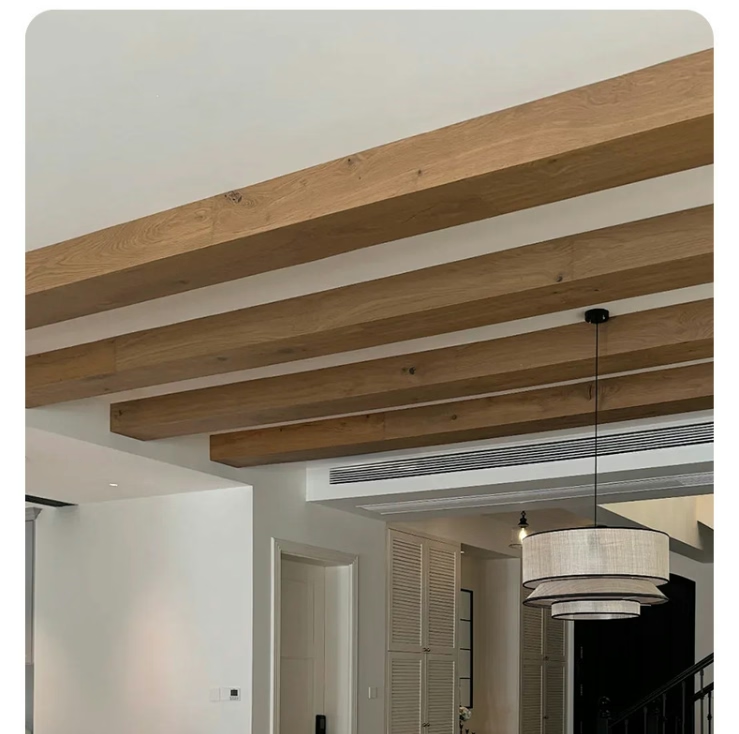
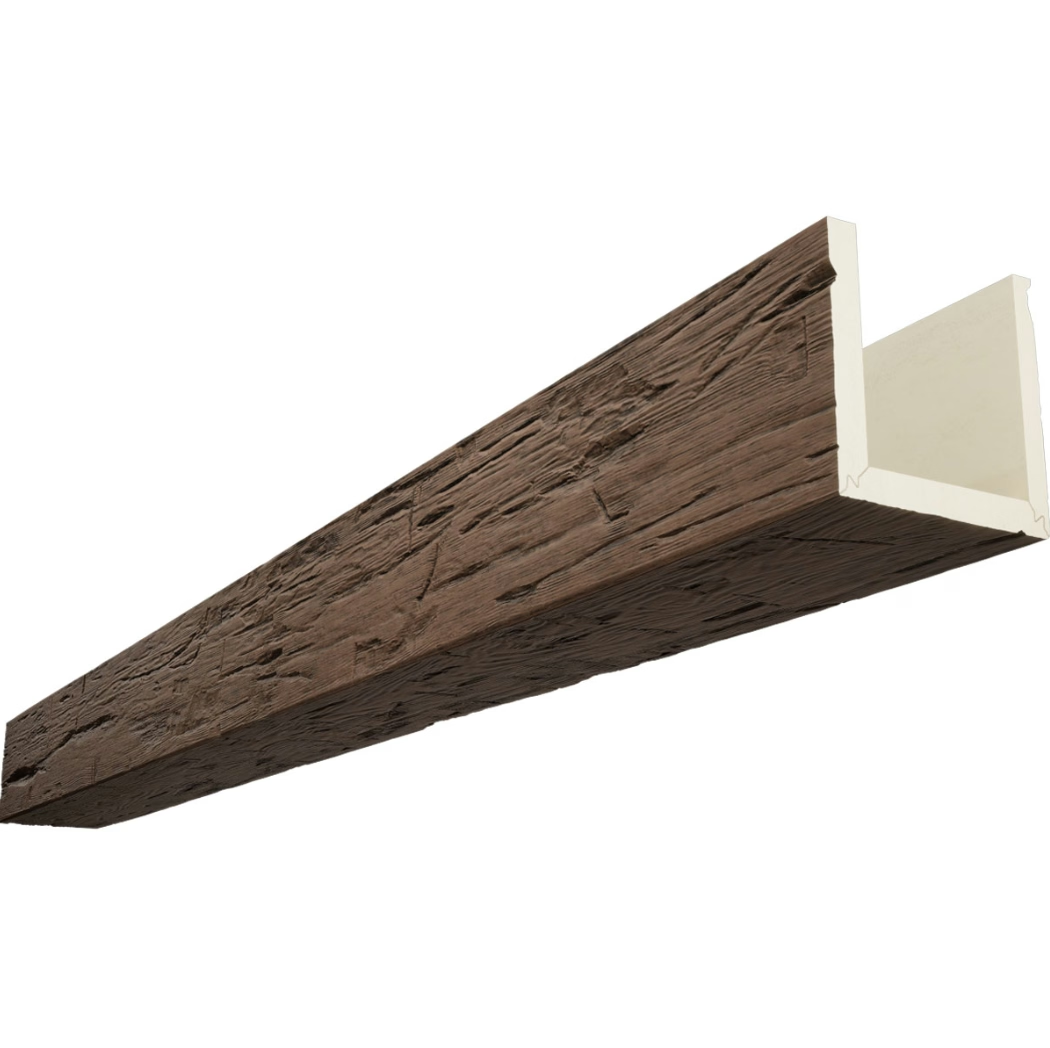
Community centers are some of the most demanding interior environments to design well. They serve everyone from toddlers to seniors, host everything from yoga classes to town meetings, and operate on budgets that are tighter than any commercial user would tolerate. The materials that work in community centers have to be welcoming to a wide range of users, durable enough to handle constant activity, and affordable enough to install and maintain on a public budget. Faux wood beams fit those requirements better than almost any other architectural material.
This article walks through how public architects, interior designers, and facility managers use faux beams to shape community center interiors that work for everyone.
What Community Centers Need From a Material
Welcoming Without Being Institutional
Public buildings have a long history of feeling institutional — flat white ceilings, fluorescent lighting, materials that prioritize function over feeling. Community centers are an effort to move past that history, creating spaces that feel more like a community living room than a government office. Beams overhead are one of the most effective ways to make that shift, because they immediately read as warm, residential, and human-scaled.
Faux beams deliver that residential warmth convincingly. The molded grain and color variations catch the light in ways that flat drywall never does, and the proportions feel grounded and approachable.
Durable Under Hard Use
Community centers see hard use. A multipurpose room might host a dance recital on Saturday morning, a basketball practice on Saturday afternoon, a wedding reception on Saturday evening, and a church service on Sunday morning. The flooring, the walls, and the ceiling all have to survive all of it.
Faux beams survive because they're made of closed-cell polyurethane that doesn't dent, doesn't scratch easily, doesn't absorb moisture, and doesn't show wear patterns the way real wood does. They look essentially the same after a decade of community center use as they did the day they were installed.
Code-Friendly
Public buildings are held to strict building codes, especially for accessibility, fire safety, and indoor air quality. Faux beams that carry appropriate fire ratings make the specifier's job easier, and the lack of VOCs or off-gassing makes them compatible with the strictest indoor air quality programs.
For community centers serving sensitive populations — daycare facilities, senior centers, healthcare clinics — the air quality advantage is often the deciding factor.
Spaces Within a Community Center
Main Multipurpose Rooms
The multipurpose room is the heart of most community centers, and it's where faux beams typically make their biggest statement. Designers often use beams to define the ceiling plane of the multipurpose room, with patterns that scale to the size of the space — heavier profiles for very large rooms, lighter profiles for smaller ones.
A common pattern is to run beams across the short dimension of a rectangular multipurpose room. This compresses the proportions slightly, which makes the room feel more intimate and makes it work better for seated events and smaller gatherings. For very large multipurpose rooms, a coffered pattern with primary and secondary beams creates a more sophisticated ceiling plane that breaks up what would otherwise be an unbroken expanse.
Lobbies and Reception Areas
Community center lobbies are often the first impression visitors get, and the design has to set the right tone — welcoming, organized, and reflective of the community the center serves. Beams overhead give the lobby an architectural anchor that helps visitors orient themselves.
In lobbies with high ceilings, faux beams can drop the perceived ceiling height slightly and make the space feel more human-scaled. They also provide a mounting surface for signage, banners, and wayfinding elements that the center uses to direct visitors to specific rooms and programs.
Activity Rooms and Class Spaces
Smaller activity rooms — yoga studios, art rooms, music rooms, computer labs — benefit from a few well-placed faux beams that add architectural interest without competing with the activity happening in the room. For art rooms specifically, faux beams provide a clean, neutral background that doesn't distract from the artwork displayed on the walls.
For music and performance rooms, beams can support acoustic panel mounting and provide a finished look without requiring expensive specialty ceiling treatments.
Senior and Adult Day Programs
Senior centers and adult day programs have specific design needs. The interior should feel familiar and residential rather than institutional, which is one of the reasons designers often include beams in these spaces. The residential cue helps older users feel comfortable and at home.
Faux beams in senior centers are usually finished in warm, traditional tones — medium oak, warm walnut, classic pine — that read as familiar without being old-fashioned. The finishes should be selected to maximize contrast with the surrounding walls and ceiling, which helps users with reduced vision orient themselves in the space.
Childcare and Early Learning Spaces
Daycare and preschool spaces in community centers often include faux beams for the same reason as senior centers — to make the space feel warm and welcoming rather than institutional. For young children, beams overhead also provide visual interest at the ceiling plane, which is closer to eye level for shorter users.
Beams in early learning spaces are usually finished in lighter, brighter tones that support the playful design language typical of those rooms. They're also finished with extra-durable topcoats that resist the wear and tear of crayon, paint, glue, and the occasional marker.

Installation in Public Buildings
Procurement and Bidding
Community center projects are typically publicly funded, which means the procurement process follows specific rules. Faux beams work well in this environment because they're a standardized product with predictable specifications and pricing. Bidders can quote them confidently, and the awarding authority can compare bids on an apples-to-apples basis.
For projects with procurement requirements like Buy American or local sourcing, faux beams manufactured domestically by established producers often qualify. Many community center projects have found that domestic faux beam manufacturers can meet both the technical specification and the procurement requirements.
Working Around Existing Conditions
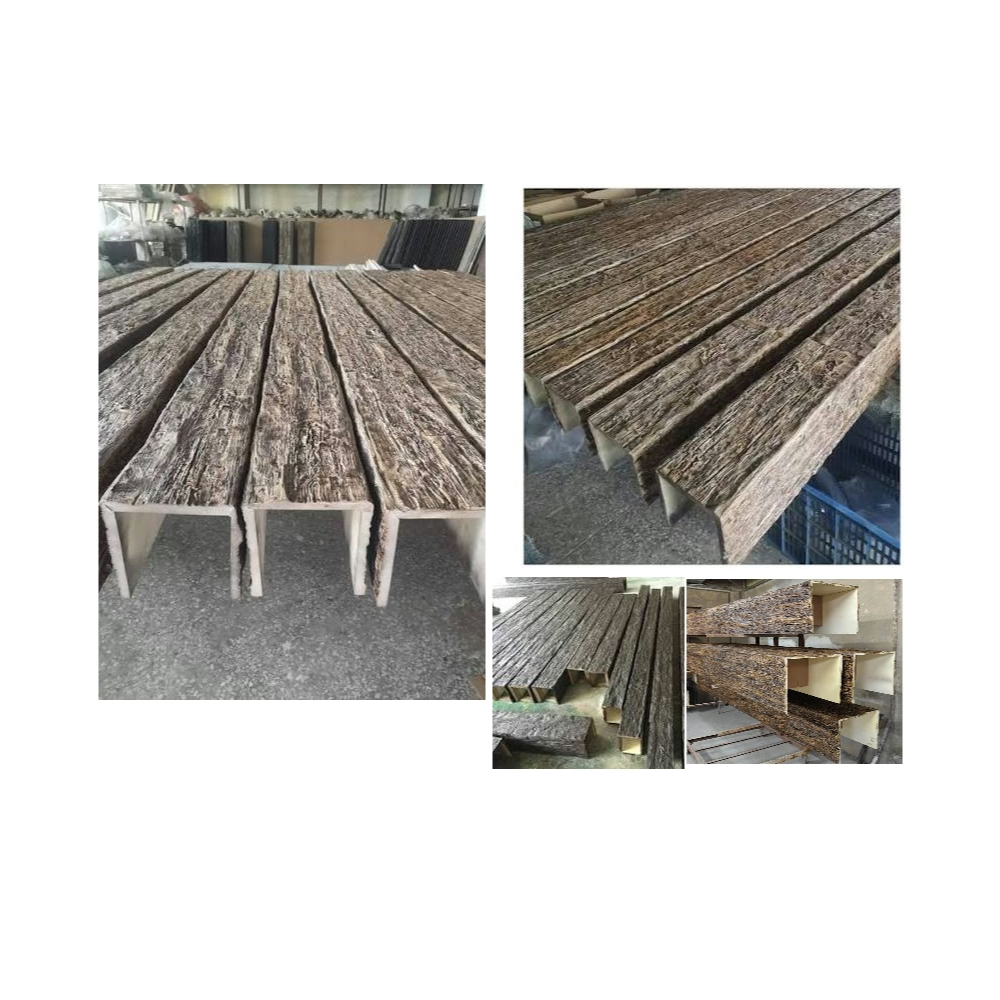
Most community center beam installations happen during renovations or additions to existing buildings, which means the installer has to work around existing conditions. Faux beams handle this gracefully because they can be mounted with various methods to accommodate different structural conditions.
For renovations where the existing ceiling is structurally sound but visually tired, faux beams can often be installed directly over the existing finish. For additions where the structure is new, the beams integrate into the framing plan from the start.
Coordinating With Public Schedules
Community centers rarely close for renovations. Programs continue, users come and go, and the renovation has to happen around an active facility. Faux beam installation is well-suited to this reality because it's quiet, clean, and fast. Most installations can be scheduled during off-hours or in phases that don't disrupt the center's programming.
Long-Term Maintenance Considerations
Cleaning and Upkeep
Community center maintenance teams typically have limited time and budget for detailed cleaning. Faux beams clean with standard wood-surface products and don't require any special maintenance protocols. A periodic wipe-down is usually enough to keep them looking fresh, even in high-traffic areas.
Damage Repair
In a busy community center, beams occasionally get damaged — a ladder leaning against a beam, a piece of equipment bumping into it, a child throwing something at it. Faux beams are easy to repair with flexible filler and matching finish. The repair is usually invisible to the casual observer, especially if the maintenance team keeps a small touch-up kit on hand.
Lifecycle Planning
Community centers are typically designed for 30 to 50 year lifecycles. Faux beams easily meet that lifespan with minimal intervention. There's no refinishing cycle, no replacement cycle, and no major maintenance events. The beams installed in year one will likely still be in service when the building gets its next major renovation.

Working With Diverse User Needs
Accessibility Considerations
Public buildings have to meet accessibility codes, and community centers often serve users with a wide range of physical abilities. Faux beams don't interfere with accessibility — they don't protrude into circulation paths at head height, they don't create tripping hazards, and they don't obstruct wayfinding signage. For users with visual impairments, the beam patterns overhead can actually help with wayfinding by providing visual landmarks in otherwise uniform rooms.
Cultural Considerations
Community centers often serve diverse cultural communities, and the interior design should feel welcoming to everyone. Faux beams in neutral wood tones tend to read as universally welcoming without strong cultural associations. For community centers that want to honor a specific cultural heritage, faux beams can be finished in custom colors and textures that reflect that heritage without requiring specialty sourcing.
Multi-Generational Use
Community centers serve users from toddlers to centenarians, which is a wide range of physical and aesthetic preferences. Faux beams in classic wood tones tend to satisfy users across that range. They don't feel too trendy for older users, and they don't feel too dated for younger users.
Wrapping Up
Community centers are some of the most important public buildings in any community, and the materials that go into them have to work hard for a long time. Faux wood beams deliver warmth, durability, code compliance, and low lifecycle cost in a single package. For public architects and facility managers planning the next community center project, faux beams deserve serious consideration from the earliest design phases.
Technical References
ASTM standards cited in every specification
Test Data
Lab results from internal testing program
Updated 2026
Reviewed against current product specs