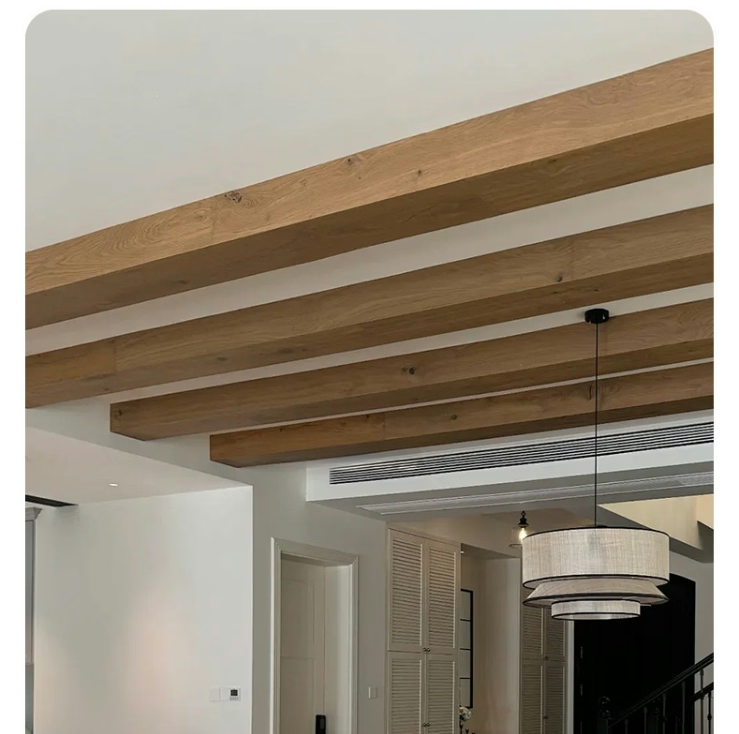
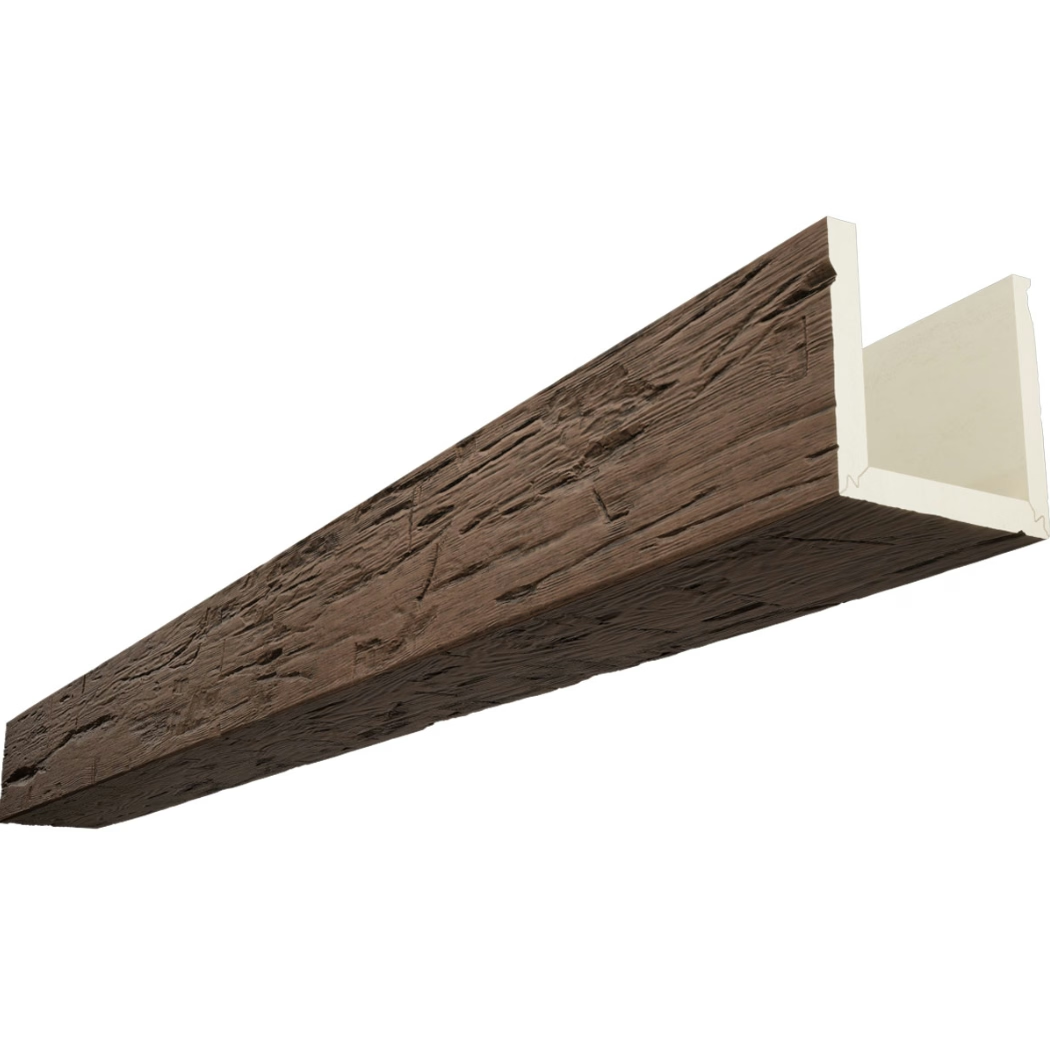
High-traffic interior areas are the ultimate stress test for architectural materials. A lobby might see thousands of people a day, a corridor might see hundreds, and a gathering space might see both plus the wear and tear of events, cleaning crews, and the occasional accident. The materials that survive this reality without looking tired are the materials that designers reach for again and again. Faux wood beams have earned their place in this category over the last decade, and they're showing up in more high-traffic interiors every year.
This article looks at what makes faux beams durable enough for high-traffic use, where they're most commonly specified, and what maintenance teams need to know to keep them looking new.
What "High Traffic" Really Means
Counting the Users
High-traffic interiors aren't just busy — they're busy in a sustained, predictable way. An airport terminal might see 50,000 people a day. A hospital lobby might see 10,000. A shopping mall corridor might see 100,000 on a holiday weekend. The numbers vary, but the implication is the same: every material surface is touched, bumped, leaned against, or photographed thousands of times a day.
Faux beams handle this volume gracefully because they don't show wear the way other materials do. They don't develop patina in heavy-touch zones, they don't show scratches as prominently as solid wood, and they don't fade under continuous bright lighting.
The Damage Patterns
High-traffic interiors develop predictable damage patterns. Ladders and cleaning equipment bump the same surfaces repeatedly. Luggage and rolling cases scuff the same lower wall sections. Ceiling-mounted fixtures get bumped by workers reaching past them. Real wood develops dents and scratches in these patterns within months. Faux polyurethane doesn't dent the same way and doesn't show scratches as visibly, which means the space looks newer longer.
The Cleaning Cycle
High-traffic interiors get cleaned more often than low-traffic ones. A lobby might be wiped down two or three times a day. A corridor might get a quick sweep every hour. A hospital or clinic gets cleaned even more aggressively, often with stronger chemicals. Faux beams tolerate aggressive cleaning because the closed-cell polyurethane surface doesn't absorb cleaning solutions or react to them the way real wood does.
Behaviors in Specific High-Traffic Spaces
Hotel and Resort Lobbies
Hotel lobbies are some of the most demanding high-traffic interiors in any building. They serve guests 24 hours a day, host events, get cleaned constantly, and need to look beautiful in every photograph. Faux beams in these lobbies are usually a strong design statement — deep profiles, long runs, often combined with coffered details.
The performance advantage of faux beams in hotel lobbies is that they look the same at year five as they did at month one. There's no visible aging in heavy-touch areas, no fading under continuous lighting, no refinishing cycle to schedule.
Airport and Transit Terminals
Transit terminals are the highest-traffic interiors most people experience. They see constant flow, they need to be cleaned aggressively, and they need to look clean and presentable at all times. Faux beams in transit terminals usually take the form of long runs across concourses, often in heavier profiles that read at the scale of the large space.
The maintenance story for faux beams in transit terminals is strong because the closed-cell surface doesn't absorb odors, doesn't stain, and doesn't show wear from constant cleaning.
Shopping Centers and Malls
Mall common areas are designed to look fresh and inviting while serving enormous daily populations. Faux beams in mall interiors often take the form of perimeter treatments that define the edge of the space, or feature treatments over key seating and dining areas. The beams add warmth and architectural interest to what would otherwise be a large, flat commercial space.
For mall operators, the lifecycle cost story is especially important. Faux beams installed during the original mall construction can still look good 20 years later with minimal intervention, which is exactly the kind of long-term value mall operators need.
Hospitals and Healthcare Facilities
Healthcare interiors are a special category of high-traffic space. They're cleaned aggressively, they need to meet strict infection control standards, and they serve users who are often under physical and emotional stress. Faux beams in healthcare facilities are usually specified for non-clinical areas — lobbies, waiting rooms, dining areas, corridors — where the warm wood look helps soften what would otherwise be a clinical environment.
For infection control, faux beams are easier to clean and disinfect than real wood, which is one of the reasons facility managers in healthcare settings have started specifying them more often.
Convention Centers and Event Venues
Convention centers see traffic spikes that would destroy most materials within a few years. A major convention might bring 20,000 people through a single space over three days, with the usual setup and teardown chaos on either end. Faux beams in these spaces survive the setup and teardown better than solid timber, because they don't dent from ladder bumps, don't show scratches from equipment contact, and don't need to be refinished after each event.


The Material Science Behind the Durability
Closed-Cell Polyurethane Construction
Quality faux beams are made from closed-cell polyurethane, which means the cells in the material are not connected to each other. That structure makes the beams resistant to moisture absorption, resistant to impact, and resistant to the kinds of chemical exposures that come with aggressive cleaning.
Open-cell materials, by contrast, absorb moisture and chemicals and tend to break down faster under hard use. Closed-cell PU holds its shape and its surface for decades.
UV Stability
Most high-traffic interiors have a lot of artificial lighting, and many have significant daylight through windows or skylights. UV exposure can degrade some materials over time, causing fading, chalking, or surface breakdown. Quality faux beams include UV inhibitors in the polyurethane formulation that slow this degradation dramatically.
For interiors with particularly high UV exposure — atriums, glass-walled lobbies, skylit concourses — it's worth confirming with the manufacturer that the specific beam product has appropriate UV protection for the application.
Surface Coatings
The surface coating on a faux beam is the first line of defense against wear. Quality manufacturers apply a factory finish that's designed for the expected use environment. For high-traffic commercial applications, a heavier topcoat with better abrasion resistance is worth the modest upcharge, because it extends the time between any needed refinishing by years.
Installation Considerations for High-Traffic Areas
Mounting Security
Beams in high-traffic areas need to be mounted securely, because any loose beam in a busy space is a safety hazard and a liability. The mounting method should be specified to handle the expected loading, including any seismic requirements.
For most high-traffic applications, a combination of blocking in the structure plus cleats plus mechanical fasteners gives the most secure installation. The exact specification depends on the building's construction type, but the principle is the same: redundant mounting with multiple attachment points.
Coordination With Security and Surveillance
High-traffic interiors are usually under surveillance, and beams sometimes interfere with camera sightlines. The reflected ceiling plan needs to coordinate beam locations with camera locations to maintain complete coverage. Where conflicts arise, faux beams are easy to step, shorten, or notch to keep the cameras unobstructed.
Future Access
High-traffic interiors need ongoing maintenance, and that maintenance often requires access to the ceiling cavity for lighting, sprinklers, HVAC, and other systems. Faux beams that mount with cleats and screws are easy to remove and reinstall when ceiling access is needed. Adhesive-mounted beams are harder to remove cleanly, so the mounting method should be planned with future access in mind.
Maintenance Protocols for Facility Teams
Daily Cleaning
Daily cleaning of faux beams in high-traffic areas is straightforward. A microfiber cloth or a soft brush removes dust and light soil. For more aggressive cleaning, a standard wood-surface cleaner applied with a soft cloth works well. There's no need for special products, and the closed-cell surface doesn't absorb cleaning solutions.
Periodic Inspection
A quarterly inspection of the beams catches any damage early, before it becomes visible to the public. Small scratches, dents, or fastener pops can be repaired with a touch-up kit before they get worse. The inspection is also a chance to verify that the mounting remains secure and that no structural issues are developing.
Touch-Up Kits
Every high-traffic installation should include a small touch-up kit with the original finish materials and a flexible filler. The kit gets stored with the building's maintenance supplies and used by the in-house team whenever a beam shows minor damage. Most touch-ups take less than 30 minutes and are invisible to the casual observer.
Refinishing Windows
Even the most durable faux beam will eventually need refinishing in a high-traffic environment, typically after 10 to 15 years of service. The refinishing is straightforward — scuff the surface, apply a new topcoat, and the beam looks new. The process is fast and doesn't require the space to close.
Pulling It Together
High-traffic interior areas demand materials that look distinctive, hold up under hard use, and survive aggressive cleaning without losing their good looks. Faux wood beams deliver all three of those qualities, which is why they're showing up in more lobbies, corridors, terminals, and event spaces every year.
For facility teams planning a new build or a major renovation, faux beams are worth specifying early in the design process. They give the interior the warm wood character that designers want, with the lifecycle performance that facility managers need.
Technical References
ASTM standards cited in every specification
Test Data
Lab results from internal testing program
Updated 2026
Reviewed against current product specs