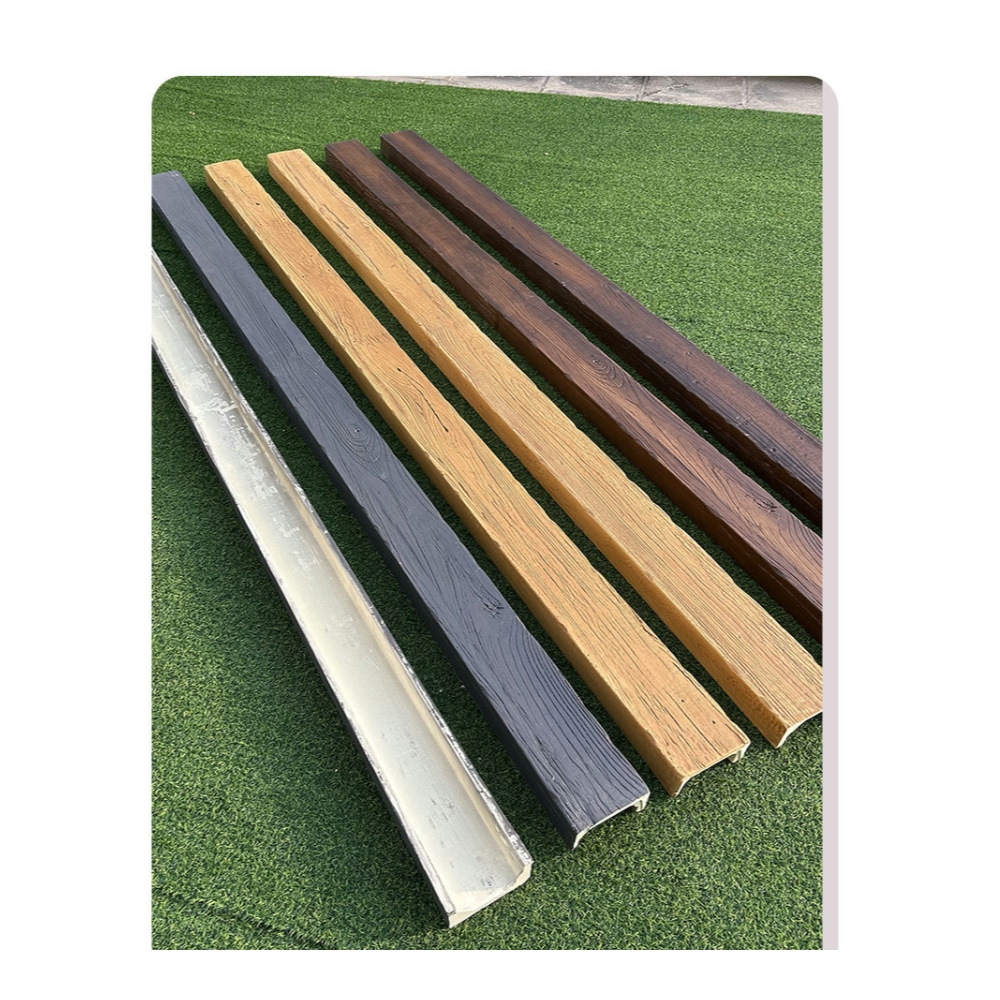
Exterior beams take a beating. Sun, rain, snow, ice, and the constant expansion and contraction of temperature swings degrade even the most durable materials over time. Wooden beams check, crack, and rot. Steel beams rust. Concrete beams spall. Polyurethane beam covers have become a popular renovation solution because they wrap the existing structure with a fresh, attractive surface that handles weather beautifully and lasts for decades with minimal maintenance.
This article looks at how PU beam covers work in exterior renovation projects, what to consider before specifying them, and how installers handle the specific challenges of exterior work.
Why Exterior Beams Need Covers
The Damage Patterns
Exterior beams fail in predictable ways. Wood beams develop checks and cracks as they absorb and release moisture through the seasons. The cracks widen over years, and eventually the wood starts to rot at the moisture entry points. Insects move into the damaged wood and accelerate the deterioration. The result is a beam that looks weathered and tired, and may eventually need full replacement.
Steel beams rust when their protective coatings fail. Rust expands the steel and pushes the coating off in larger and larger patches, accelerating the corrosion. Concrete beams spall when water penetrates the surface and freezes, causing chunks of concrete to break away and exposing the reinforcement underneath.
The Renovation Question
When exterior beams reach this damaged state, owners face a choice: replace the beam entirely, or cover it with a new surface. Replacement is expensive, disruptive, and sometimes impossible without affecting the structure above. Covering is fast, affordable, and can dramatically extend the life of the existing beam.
PU beam covers are one of the most attractive covering options because they look like new wood, handle weather without damage, and install in hours rather than weeks.
Why Polyurethane Specifically
Several materials can be used to cover exterior beams, including wood cladding, vinyl wraps, fiber cement panels, and metal skins. Polyurethane stands out because it:
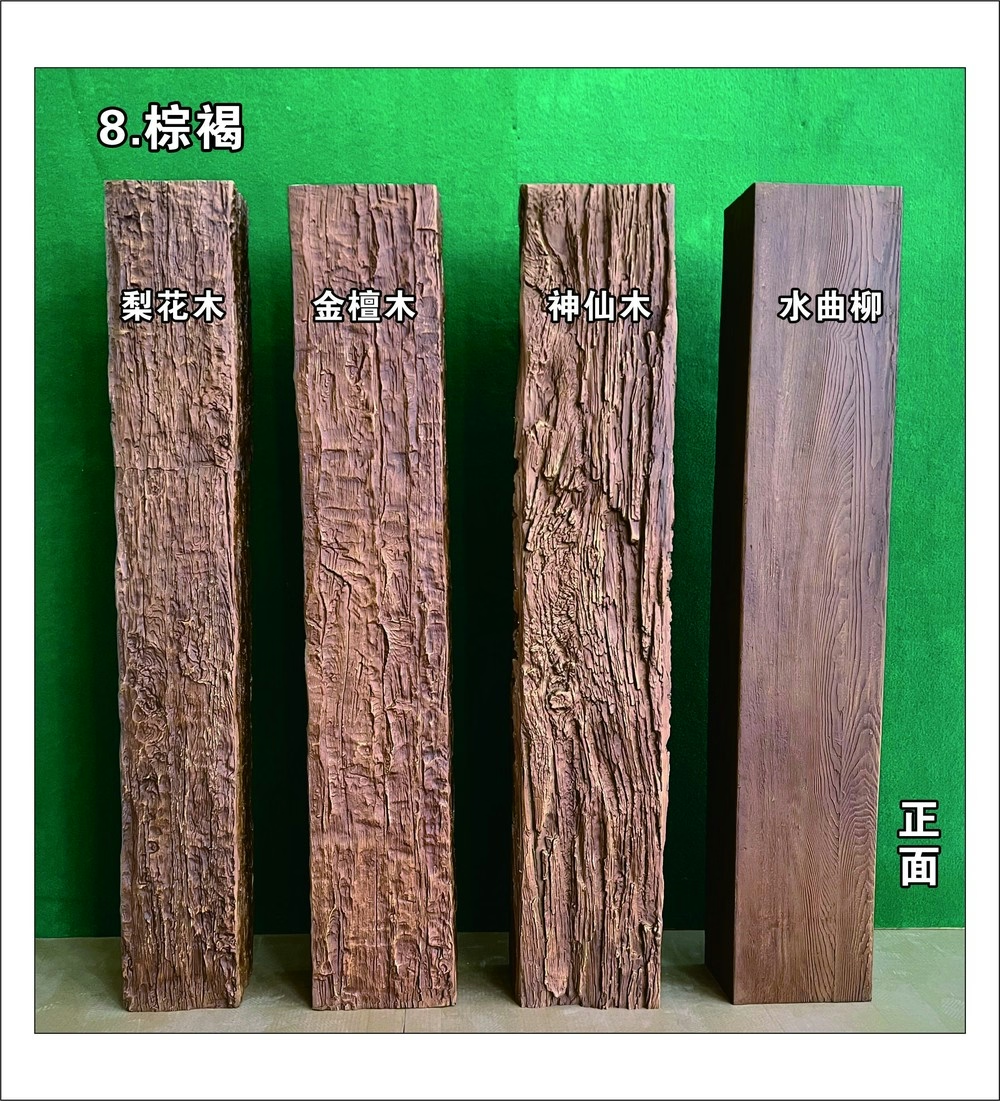
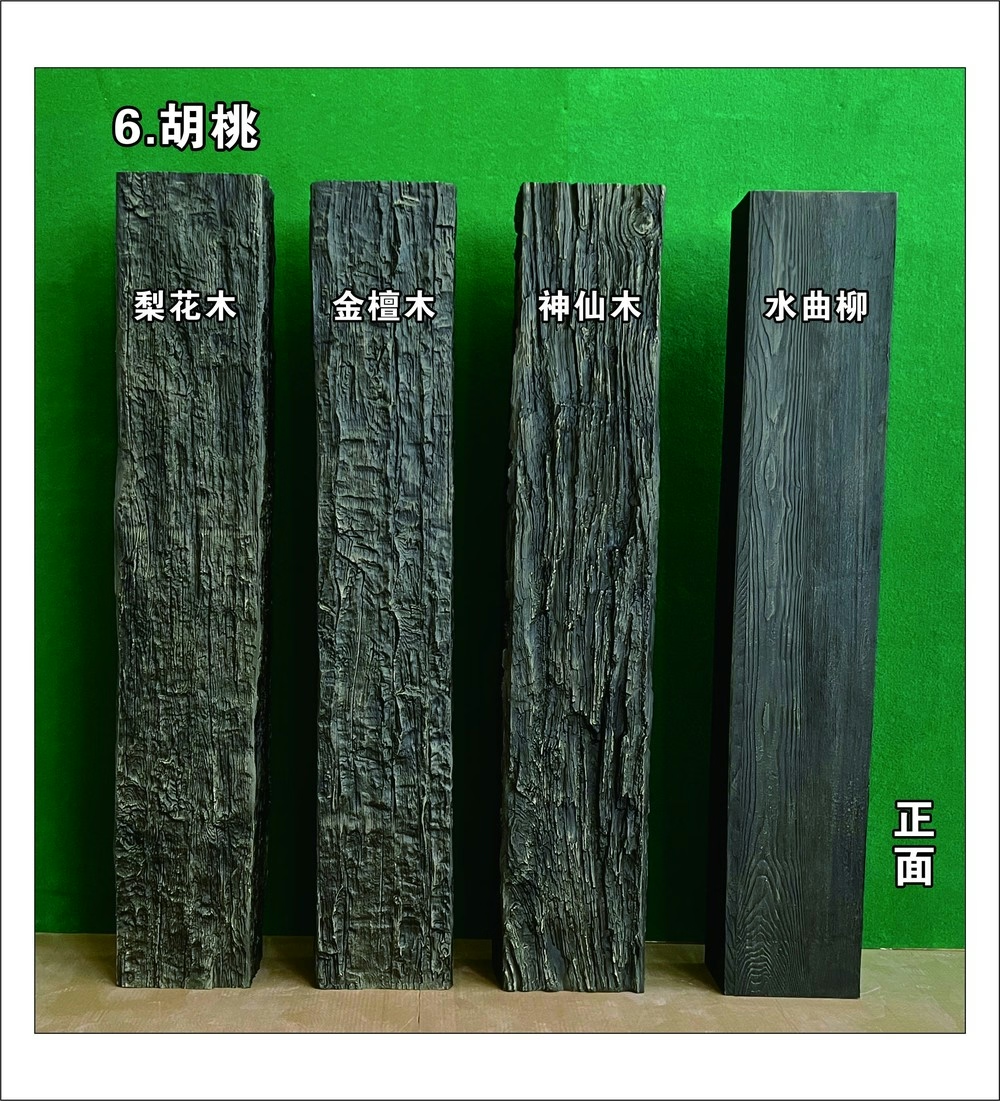
- Looks convincingly like real wood, with realistic grain patterns and natural color variations
- Doesn't absorb water, so it doesn't suffer the moisture damage that real wood cladding faces
- Handles UV exposure with proper inhibitors
- Installs quickly without requiring structural changes
- Costs less than full replacement or premium cladding alternatives
For many exterior renovation projects, PU covers deliver the best combination of appearance, performance, and value.
Where PU Beam Covers Work
Residential Exterior Beams
Many homes have exposed exterior beams — over entryways, on porches, supporting roof overhangs, or as decorative elements on the facade. These beams face the full weather and typically show their age within 10 to 20 years.
PU covers give homeowners a way to refresh those beams without the cost of replacement. The covers install in a day or two, depending on the number and size of beams, and the home looks dramatically refreshed once the work is complete.
Commercial Exterior Beams
Commercial buildings often have more substantial exterior beam structures — porte-cochères, covered walkways, building entries, parking structure edges. These beams face the same weather damage as residential beams, but the scale is larger and the disruption of replacement is greater.
PU covers scale up well for commercial applications. Manufacturers can produce larger profiles and longer lengths for substantial commercial beams. The installation can happen quickly, often without disrupting the building's normal operation.
Historic Restoration Projects
Historic buildings often have exterior beams that are part of the building's character. The beams may be damaged by age and weather, but the owner wants to preserve the original look. PU covers can replicate the original beam appearance convincingly while providing modern weather protection.
For restoration projects, the PU covers can be molded from patterns that match the original beams. The result looks like a faithful restoration rather than a modern replacement.
Coastal and Harsh Climate Applications
Coastal buildings face some of the harshest weather conditions anywhere. Salt air, high humidity, intense UV, and frequent storms destroy most exterior materials within a few years. PU covers handle coastal conditions exceptionally well because the closed-cell polyurethane doesn't absorb salt or moisture, and the UV inhibitors resist the intense sun exposure.
For harsh climate applications, exterior-grade PU covers with the heaviest UV protection and water-shedding surface treatments are recommended. These products have slightly higher cost but dramatically longer service life in challenging environments.
Installation Process
Surface Preparation
The existing beam surface needs to be reasonably sound before PU covers can be installed. Loose material, flaking paint, rust, and rot need to be addressed before the covers go on. The surface doesn't need to be perfect — the covers will hide minor imperfections — but it needs to be stable.
For wood beams, any rotted sections should be cut out and replaced with sound wood. For steel beams, rust should be wire-brushed and treated with a rust converter. For concrete beams, loose material should be removed and the surface patched where necessary.
Mounting Methods
PU beam covers typically install with one of several mounting methods:
- Adhesive and fastener mounting — construction adhesive provides the primary bond, with screws or nails holding the cover in place while the adhesive cures. The fasteners are hidden in the grain pattern.
- Cleat and slip mounting — wood or metal cleats fastened to the existing beam, with the cover slipping over the cleats and locking in place. This method allows for clean removal if ever needed.
- Wrap and strap mounting — for very large or unusually shaped beams, the cover wraps around the existing structure and is secured with straps or brackets. This method is common for steel I-beams and other substantial structural elements.
The mounting method depends on the beam size, the cover profile, and the existing conditions. The installer selects the appropriate method based on the specific project.
Field Cutting and Fitting
Not every beam fits perfectly to a standard cover length. Field cutting is often necessary to fit the covers around corners, transitions, and other architectural features. PU covers cut cleanly with standard woodworking tools — fine-tooth saws make the cleanest cuts.
The cut edges need to be sealed with matching finish to prevent moisture intrusion at the cut. This is straightforward but important for long-term durability.
Coordination With Other Exterior Elements
Exterior beam covers typically need to coordinate with other exterior elements — siding, trim, soffits, gutters, downspouts. The cover installation should be sequenced to work with these other elements rather than against them.
For renovation projects, it's often efficient to coordinate multiple exterior upgrades in the same project. The same crew can handle the beam covers along with other exterior work, reducing the total disruption and cost.
Weather Considerations
Exterior work happens outdoors, which means weather affects the installation schedule. Most PU cover products can be installed in a wide range of conditions, but extreme weather — heavy rain, freezing temperatures, high winds — makes the work difficult and can affect adhesive curing.
Scheduling the work during moderate weather is ideal. For projects where the work has to happen in less-than-ideal conditions, the installer can use weather-resistant adhesives and protective coverings to keep the work moving.

Performance Over Time
UV and Color Stability
UV exposure is the primary degradation factor for exterior materials. Quality PU covers include UV inhibitors that slow color fade dramatically. The specific performance depends on the formulation and the UV exposure level.
For most residential exterior applications, the covers hold their color for 10+ years before any noticeable fade. For commercial or harsh-climate applications, the covers hold their color for 5 to 10 years before a refresh might be desired. A light recoating with exterior-grade finish restores the color quickly.
Moisture Performance
The closed-cell PU structure doesn't absorb moisture, so the covers don't suffer the moisture damage that real wood faces. They don't swell, don't warp, don't develop mold, and don't rot. Even in consistently humid environments, the covers maintain their appearance and structural integrity.
For applications where the covers might face occasional pooling water — flat beam tops, areas with poor drainage — the installer can add a slight slope or a water-shedding treatment to ensure water doesn't sit on the cover surface.
Impact and Physical Damage
PU covers handle the typical physical wear of exterior applications without issue. Hail, falling branches, ladder bumps, and other impacts rarely cause more than surface marks that can be touched up easily.
For applications with unusual physical abuse — vehicle traffic areas, sporting venues, industrial settings — heavier cover profiles or solid PU covers may be more appropriate. The manufacturer can recommend the right product for unusual conditions.
Maintenance Requirements
PU beam covers are among the lowest-maintenance exterior building components. An occasional cleaning with mild soap and water removes accumulated dirt and restores the appearance. There's no refinishing cycle to plan for, no sealing to apply, and no rot to repair.
For buildings with strict maintenance budgets, the low-maintenance profile of PU covers translates directly into lower lifetime costs.
Design Considerations
Matching the Building Style
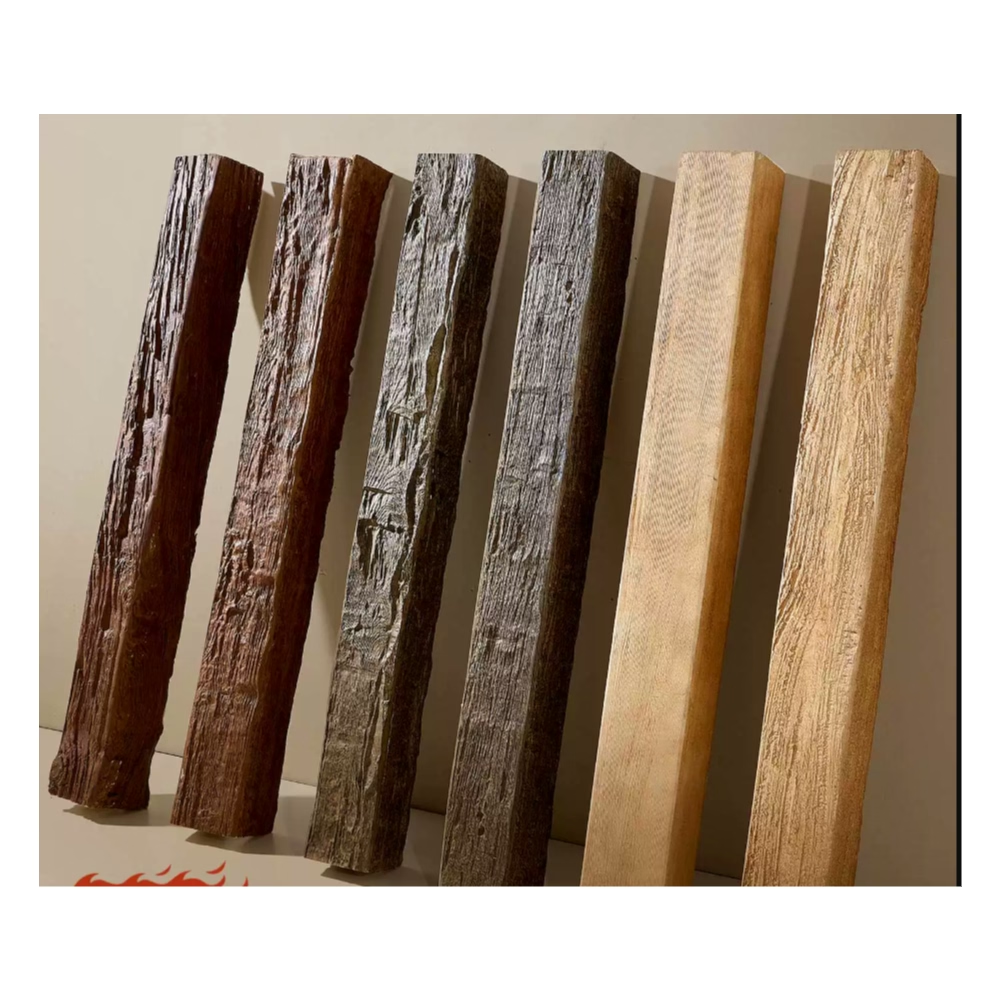
The cover profile and finish should match the building's overall style. A craftsman bungalow looks best with rustic, hand-hewn profiles in warm finishes. A contemporary home looks best with smoother profiles in lighter or more neutral finishes. A commercial building might call for heavier profiles in darker, more architectural finishes.
Working with a designer or architect on the cover specification is worth the investment for major projects. The right cover choice enhances the building's character. The wrong cover choice fights the architecture and looks out of place.
Color Coordination
The cover color should coordinate with the other exterior elements — siding, trim, doors, roof. Complementary colors create harmony. Contrasting colors create emphasis. The choice depends on the design intent.
For residential projects, many homeowners choose colors that match or closely complement the existing trim. For commercial projects, brand colors might inform the cover choice.
Profile Selection
The cover profile affects both the appearance and the practicality of the installation. Larger profiles create more visual impact but require more structural support. Smaller profiles are more subtle but may not provide the desired coverage of the existing beam.
The profile should also match the scale of the building. A small cover on a large commercial beam looks underwhelming. A large cover on a small residential beam looks overwhelming.
Cost Considerations
Material Costs
PU beam covers cost more than some cladding alternatives (vinyl, fiber cement) but less than premium alternatives (real wood cladding, custom metalwork). The material cost is typically 30 to 50% of the total project cost.
Installation Costs
Installation is relatively fast and straightforward, which keeps labor costs manageable. A two-person crew can typically install 50 to 100 linear feet of cover per day, depending on the profile and conditions.
Lifecycle Costs
The lifecycle cost of PU covers is among the lowest of any exterior cladding option. The covers last 20+ years with minimal maintenance, and they don't require the periodic refinishing or replacement that other materials need.
For building owners thinking in terms of total cost of ownership, PU covers deliver strong value over the building's life.
Wrapping Up
Polyurethane beam covers give exterior renovation projects a fast, attractive, and durable way to refresh damaged or outdated beams. They handle weather better than most alternatives, install quickly without major disruption, and last for decades with minimal maintenance. For building owners planning an exterior renovation, PU covers are worth serious consideration as a cost-effective way to dramatically improve the building's appearance.
Technical References
ASTM standards cited in every specification
Test Data
Lab results from internal testing program
Updated 2026
Reviewed against current product specs