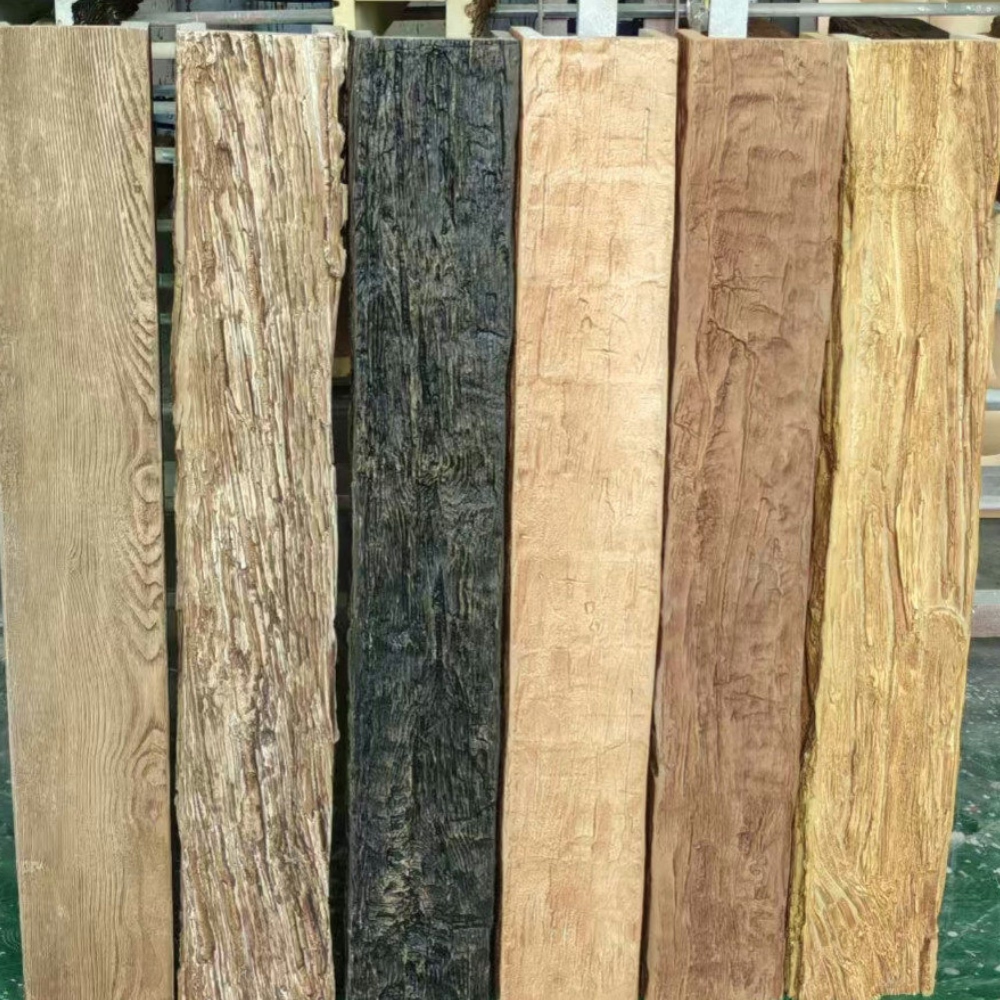
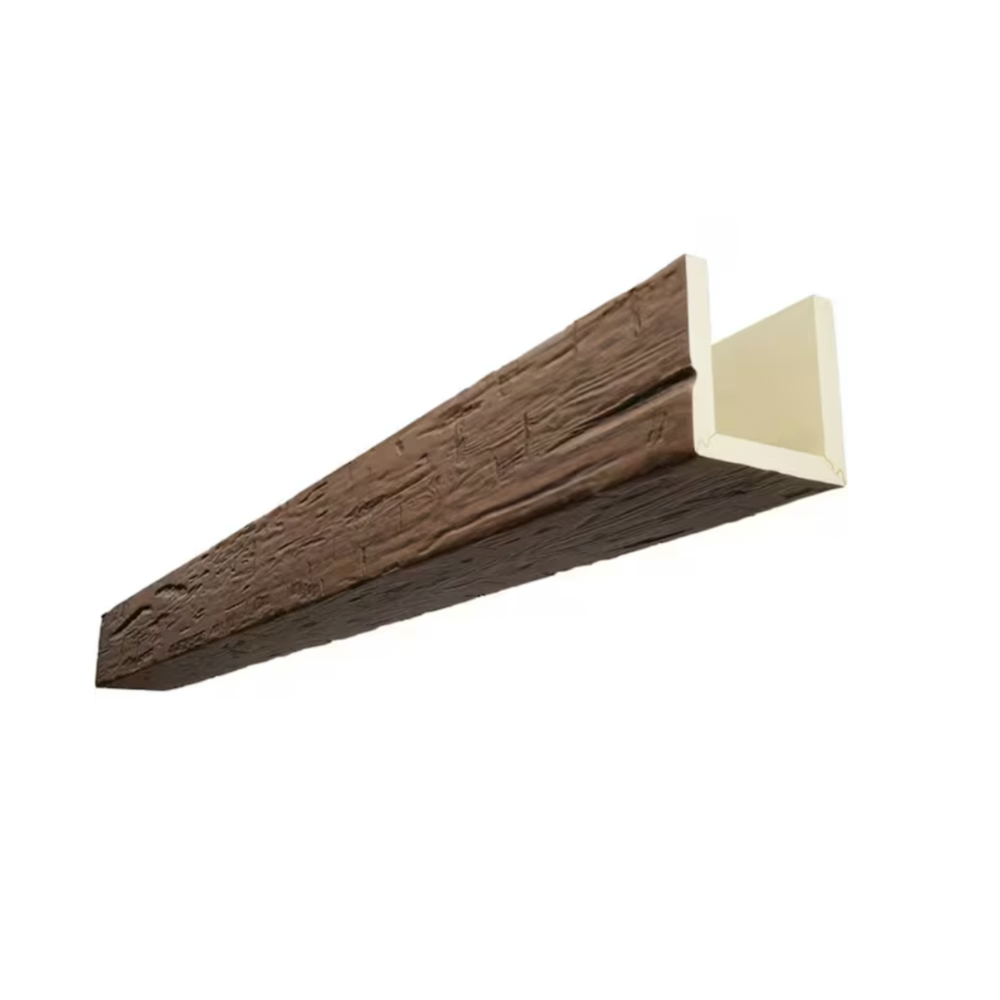
Architectural ornament has a long and storied history. From the carved stone corbels of medieval cathedrals to the elaborate plaster moldings of Victorian mansions, the ornament on a building tells a story about who built it and what they valued. Today's premium architectural projects still embrace ornament, but the materials have evolved. Polyurethane faux beams have become one of the most respected ornament components in contemporary architecture, used in the most demanding projects where craftsmanship, performance, and design integrity all matter.
This article explores how PU beams function as premium building ornament, what sets the premium products apart from commodity alternatives, and how architects and designers integrate them into sophisticated architectural compositions.
The Role of Ornament in Contemporary Architecture
Beyond Minimalism
The late twentieth century architectural trend toward minimalism pushed ornament out of favor for several decades. Flat surfaces, clean lines, and unadorned materials became the visual language of contemporary architecture. The pendulum has swung back in recent years, with contemporary architects rediscovering the value of well-crafted ornament as a way to add meaning, warmth, and human scale to architectural compositions.
Today's ornament isn't the dense, applied decoration of the Victorian era. It's typically more restrained, more integrated, and more thoughtful. A well-placed beam, a carefully detailed cornice, a precisely executed medallion — these elements work together to create architecture that feels considered rather than purely functional.
The Material Shift
Traditional ornament was carved from stone, molded in plaster, or crafted from wood. Each material brought its own constraints — weight, cost, availability, durability. Polyurethane has changed the calculus by offering most of the visual and tactile qualities of traditional materials without the same constraints.
Modern PU ornament components can be produced with remarkable precision, finished to look indistinguishable from traditional materials, and installed with methods that don't require the specialized craftspeople that traditional ornament demands. The result is high-quality ornament accessible to projects that couldn't have afforded it a generation ago.
What Makes PU Beams "Premium" Ornament
Material Quality
Premium PU beams start with high-grade raw materials. The polyurethane formulation is tuned for optimal density, impact resistance, and color stability. The molds are produced from carefully selected timber casts that capture the most natural grain patterns and surface textures.
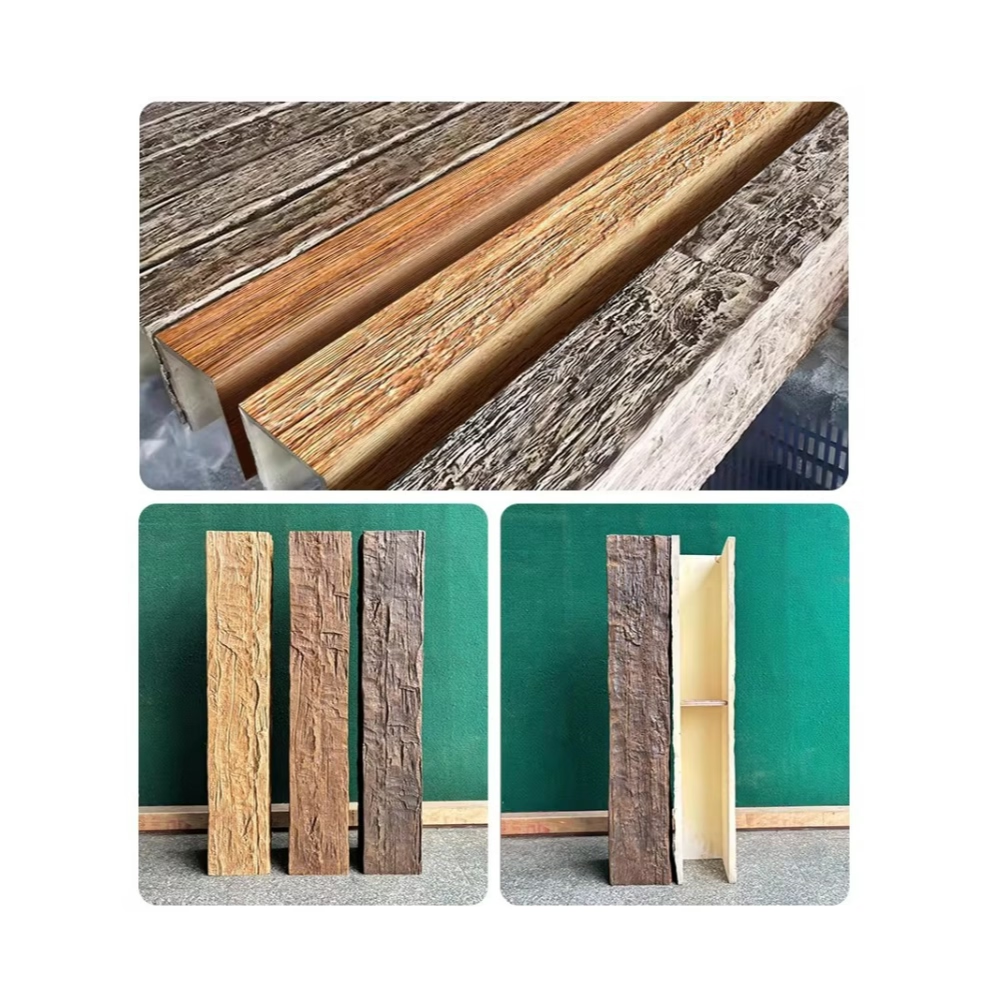
The factory finishes on premium products are multi-step processes that build depth and richness over the molded surface. Base coats establish the color, glazes add depth and variation, and top coats seal the surface with a finish that handles years of service without dulling.
Craftsmanship
Premium PU beams reflect careful craftsmanship at every stage of production. The molding process is controlled to capture fine detail without distortion. The finishing process is done by skilled technicians who understand how to bring out the best in the molded surface.
The result is a product that satisfies close inspection. Premium beams look like crafted objects rather than mass-produced items. The difference is visible at any distance, but especially at conversational range where the eye examines the material.
Design Sophistication
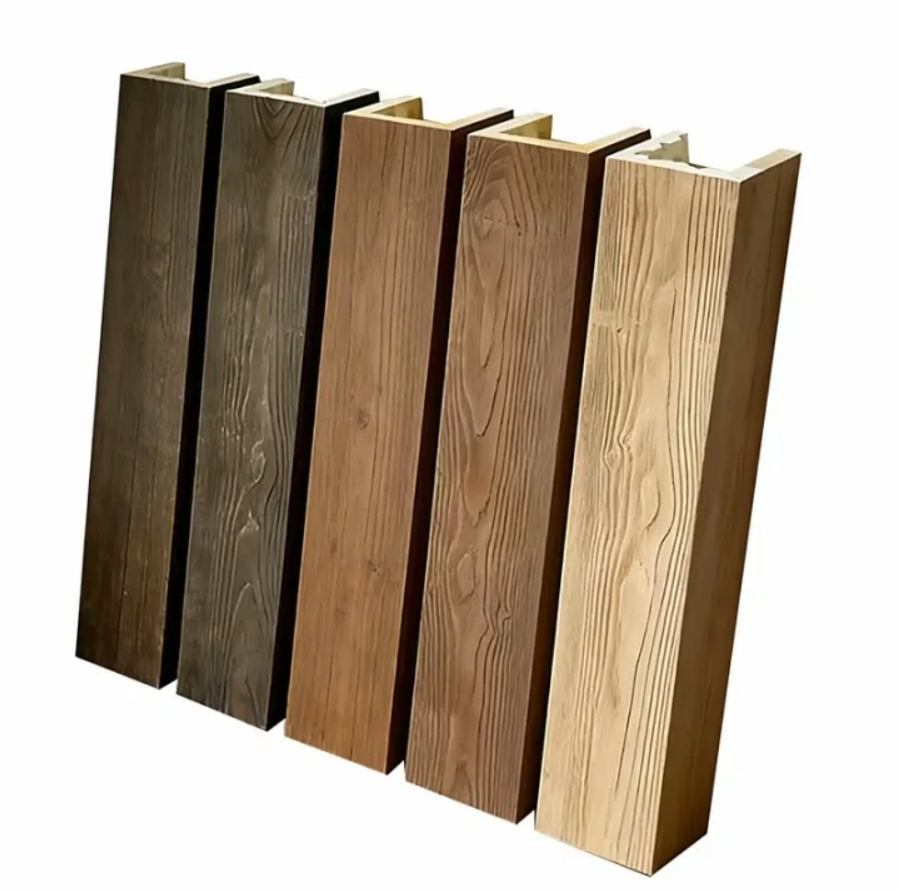
Premium PU beams offer design sophistication that commodity alternatives don't. The profiles are more refined, with subtle proportions and careful detailing. The textures are more varied, with grain patterns that capture the natural variation of real timber. The finishes are more nuanced, with depth and complexity that read as genuinely wood-like.
For architects working on premium projects, this design sophistication is essential. The ornament has to integrate with the overall architectural composition, and that integration requires materials that meet the project's standards.
Performance Consistency
Premium PU beams deliver consistent performance across production runs. Every beam in a project looks like every other beam, and every project looks like the project's specifications called for. The consistency reflects careful quality control and a manufacturing culture that prioritizes meeting specifications.
For architects specifying premium ornament, this consistency is valuable. The building looks the way the drawings intended, regardless of when the components are produced or where they come from in the production run.
Applications in Premium Architectural Projects
Custom Residences
Custom homes often incorporate premium architectural ornament to give the residence a distinctive, considered character. PU beams in these projects might include:
- Heavy, hand-hewn profiles in great rooms with vaulted ceilings
- Refined, smooth profiles in formal living and dining rooms
- Custom-designed profiles that match the architect's specific vision
- Specialty finishes that complement the interior design palette
The premium PU beams in custom residences function as both ornament and structure — they provide visual focal points while also organizing the ceiling plane and integrating with lighting and other systems.
Luxury Hospitality
Luxury hotels, resorts, and restaurants use premium architectural ornament to create the distinctive atmospheres that justify their positioning. PU beams in these projects often serve as the dominant ceiling element, defining the character of lobbies, restaurants, ballrooms, and signature suites.
The premium quality matters in luxury hospitality because the materials are constantly examined and photographed. Guests notice the craftsmanship, and the materials contribute directly to the perception of quality that the brand is selling.
High-End Commercial Spaces
Law firms, financial services firms, executive offices, and other high-end commercial spaces use premium architectural ornament to convey quality and stability. PU beams in these projects might be more restrained than in hospitality, but they still convey the attention to detail that clients expect from premium professional services.
The ornament in commercial spaces often integrates with brand identity. The beam profiles, finishes, and patterns become part of the visual language that the firm uses to express its values and positioning.
Cultural and Civic Buildings
Museums, libraries, courthouses, and other cultural and civic buildings use premium architectural ornament to convey the importance and dignity of the institution. PU beams in these projects often take the form of major ceiling treatments in signature spaces — entrance halls, reading rooms, galleries, courtrooms.
The premium quality matters because these buildings are meant to last for generations. The materials have to hold their appearance over decades of public use, which is exactly what premium PU beams are designed to do.
Restoration and Adaptive Reuse
Restoration projects and adaptive reuse developments often incorporate premium PU beams to recreate the look of historical ornament that would be impractical or impossible to install in original form. The PU beams can be molded to match historical precedents, finished to match historical color palettes, and installed with modern methods that respect the building's structure.
For architects working on historically sensitive projects, premium PU beams offer a way to honor the building's history while delivering modern performance and durability.
Design Integration
Working With the Overall Composition
Premium PU beams don't exist in isolation. They work as part of a larger architectural composition that includes walls, ceilings, floors, lighting, and other elements. The beams need to integrate with these other elements in proportions, finishes, and patterns that create a coherent whole.
The most successful premium projects use beams as one element within a coordinated system. The beams might coordinate with cornice profiles, with column treatments, with fireplace surrounds, with built-in millwork, or with other architectural elements. The coordination creates the sense of a designed whole that defines premium architecture.
Coordinating With Lighting
Lighting is a critical companion to premium beam treatments. The beams provide mounting surfaces and visual anchors for various lighting types, and the lighting design needs to be coordinated with the beam layout from the earliest design phases.
Premium projects often use integrated lighting systems that work with the beam pattern — recessed lights between beams, linear LEDs along beam edges, pendant lights suspended from beams, accent lighting mounted to beam faces. The combination creates layered lighting that supports the architectural composition.
Working With Acoustic Treatments
Premium projects often require sophisticated acoustic performance. PU beams don't contribute meaningfully to acoustic control, so they need to be coordinated with acoustic treatments that do.
The coordination can be elegant — acoustic panels integrated between beams, acoustic baffles suspended from beams, acoustic ceiling treatments visible through beam openings. The combination delivers both the visual impact of the beams and the acoustic performance the space requires.
Working With Mechanical Systems
Mechanical systems in premium projects are typically sophisticated and require careful coordination with the architectural elements. The beam layout needs to accommodate ductwork, sprinklers, lighting, audio-visual systems, security systems, and any other mechanical elements that need to be in the ceiling.
For premium projects, the coordination happens through detailed reflected ceiling plans and 3D BIM models that show every element in the ceiling together. The detailed coordination eliminates field conflicts and ensures the finished ceiling looks the way the design intended.
Specification Considerations
Detailed Product Specifications
Premium projects require detailed product specifications that go beyond profile dimensions and finish colors. The specifications should include:
- Polyurethane density and shell thickness
- Fire rating documentation
- UV performance data
- Finish system description
- Mounting method requirements
- Quality control standards
- Warranty terms
- Manufacturer certifications
The detailed specifications protect both the architect and the owner by ensuring that the delivered product matches the design intent.
Manufacturer Selection
Not all PU beam manufacturers are positioned to serve premium projects. The manufacturers that do premium work typically have:
- Established reputations with documented project histories
- Comprehensive product lines covering a wide range of design needs
- Custom capabilities for project-specific requirements
- Detailed technical documentation
- Strong warranty terms
- Technical support teams
Selecting the right manufacturer is as important as selecting the right profile and finish. The manufacturer contributes to the project's success through product quality, technical support, and reliability.
Mock-Ups and Samples
Premium projects typically require full-scale mock-ups or detailed samples before final specification. The mock-ups allow the architect and owner to evaluate the product in the actual lighting and finish conditions of the project.
The mock-up process catches issues early, when they're easy to address. Color shifts that weren't visible in the designer's studio become obvious in the project's lighting. Scale relationships that looked right on paper become tangible in the mock-up. Surface details that seemed fine in a small sample become apparent at full scale.
The Future of PU Beams in Premium Architecture
Continued Quality Improvements
Polyurethane formulations and manufacturing processes continue to improve. The next generation of premium PU beams will offer even better fire performance, improved UV stability, lower environmental impact, and more refined aesthetic details.
Greater Customization
Digital manufacturing and improved mold-making technology are making customization more accessible. Premium projects can increasingly specify custom profiles and finishes that were previously practical only for large-scale productions.
Sustainability Improvements
The faux wood beam industry has made significant progress on sustainability, with bio-based polyols, recycled content, and improved manufacturing efficiency. Premium projects can now specify PU beams that meet strict environmental standards without sacrificing quality.
Wrapping Up
Polyurethane faux beams have earned their place as premium building ornament components. They deliver the craftsmanship, performance, and design sophistication that the most demanding architectural projects require, while offering practical advantages that traditional ornament materials can't match. For architects and designers working on projects where the ornament matters, premium PU beams are a material that deserves serious consideration from the earliest design phases.
Technical References
ASTM standards cited in every specification
Test Data
Lab results from internal testing program
Updated 2026
Reviewed against current product specs