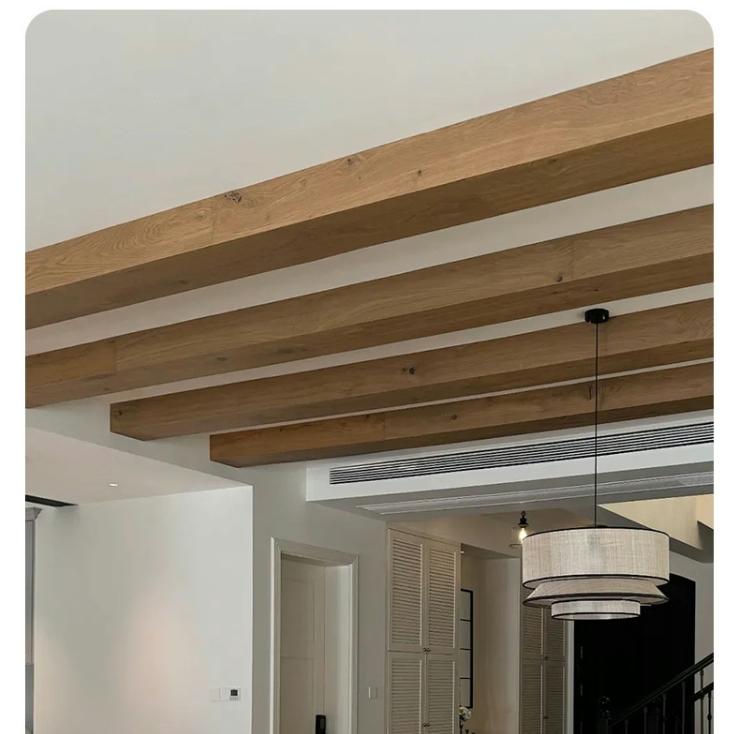
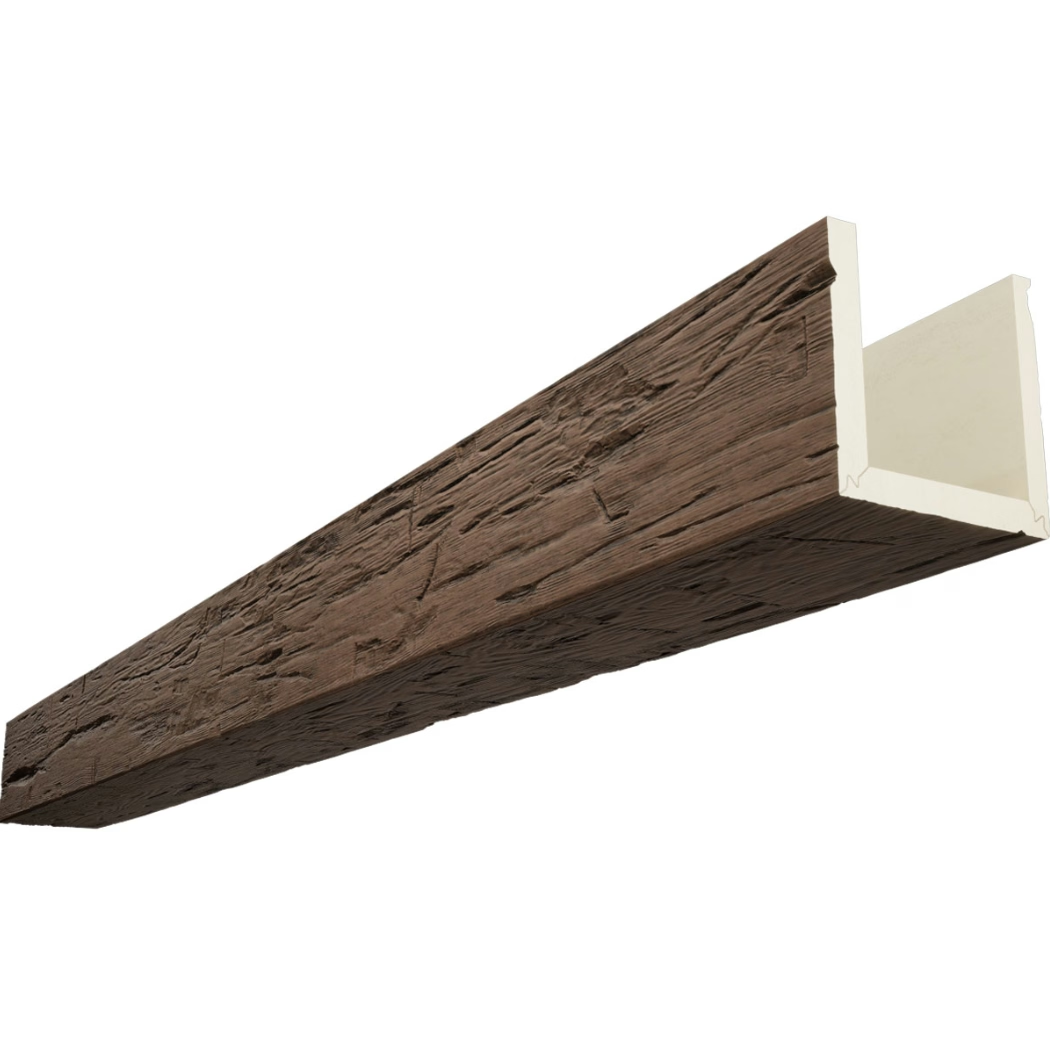
Walk through a school built in the 1970s and the renovation wish list usually begins the same way. The corridors feel cold, the cafeteria is uncomfortably loud, and the library, despite a generous budget for new shelving and seating, still feels like an oversized classroom. The ceiling is rarely at the top of the conversation, but it influences every other element. Replace the flat, fluorescent-lit expanse above with a considered beam grid, and the entire space begins to read differently. Children speak at lower volumes when the room itself feels quieter. Teenagers settle into study carrels that feel enclosed without being closed in. Teachers find that the room does some of their classroom management work for them.
Schools are unusual building types. They serve hundreds or thousands of users daily, with a population that includes children whose developing lungs react strongly to poor indoor air quality. The maintenance crew is often small relative to the campus footprint. Budgets are scrutinized by boards, taxpayers, and parents who expect every dollar to support the educational mission. Decorative elements must justify their existence, not just their installation cost but their lifetime cost. Polyurethane faux beams have become a quiet workhorse in this environment for exactly these reasons.

The Modern Educational Environment
Educational design has shifted dramatically over the past two decades. The rows of fixed desks facing a single blackboard have given way to flexible learning studios, makerspaces, and small-group huddle areas. The ceiling above these spaces needs to support that flexibility without requiring a renovation every time the teaching model evolves.
Acoustic Performance and Learning
Acoustic researchers have established a clear link between classroom reverberation and student comprehension. Hard, parallel surfaces create flutter echoes that interfere with speech intelligibility. Beams interrupt those surfaces. Even a simple grid pattern breaks up sound waves in a way that softens the room without requiring wall-to-wall acoustic panels that may collect dust and present cleaning challenges.
Polyurethane beams contribute to this acoustic softening through their mass and their geometry. The molded surface is not as absorptive as a dedicated acoustic panel, but in spaces already fitted with carpet, acoustic ceiling tile, and upholstered seating, the beam pattern often provides the missing visual and acoustic balance. For libraries, where quiet conversation is expected but not enforced, this balance is particularly valuable.
Daylight Integration
Modern schools prioritize daylight because research links it to better student performance and lower absenteeism. Beams work hand in hand with skylights and clerestory windows by framing the daylight zones and creating visible structure overhead. In renovation projects where existing skylights are being restored or new ones added, a coordinated beam pattern ties the daylighting plan to the rest of the ceiling design.
For schools in colder climates, the ability to coordinate beams with heating and lighting zones is equally important. A beam grid that follows the daylight pattern can also conceal radiant heating elements or support task lighting directly above student work surfaces.
Safety and Code Compliance in Schools
Few building types are as closely regulated as schools. Fire codes, accessibility standards, indoor air quality requirements, and even specific state-level classroom guidelines all apply. Decorative ceiling elements must fit cleanly into this regulatory environment.
Fire Ratings and Egress
Most jurisdictions require school interior finishes to meet specific flame spread and smoke developed indices. Polyurethane faux beams manufactured with fire-retardant additives can be specified to meet these requirements, and the documentation should be available from the supplier before purchase. Unlike surface-applied treatments that can wear away over years of cleaning and repainting, an additive distributed through the wall of the beam maintains its rating for the life of the product.
The other code concern is egress. Beams must not project into required corridor widths or interfere with sprinkler spray patterns. Because polyurethane beams are available in standard depths and can be custom-fabricated to specific dimensions, designers can plan a beam layout that respects egress requirements while still creating the visual rhythm the project calls for.
Indoor Air Quality
Children are more sensitive to volatile organic compounds than adults, and many schools now require low-VOC specifications for interior finishes. Polyurethane formulations have evolved to meet this demand, with several product lines carrying third-party certifications for indoor air quality. For schools pursuing LEED for Schools, WELL Building Standard, or local green school recognition, that documentation contributes directly to the project's certification score.
Maintenance practices also matter for indoor air quality. Polyurethane beams do not require the solvents associated with traditional wood refinishing. Routine cleaning uses the same water-based products already used elsewhere in the building, which simplifies staff training and reduces chemical storage.

Acoustic and Visual Comfort for Learning
A well-designed school interior sends quiet messages to its occupants. The materials above their heads, the texture of the floor underfoot, the rhythm of the lighting; each one shapes behavior in ways that educators have come to appreciate.
Reducing Visual Fatigue
Flat, uninterrupted ceilings can feel oppressive in classrooms with high ceilings. A grid of beams breaks the expanse into manageable visual sections. Students in the back row no longer feel like they are at the bottom of a well. Teachers find that students are more settled, even when the room is at full capacity.
For younger children, beams also offer visual cues about room orientation. A beam running parallel to the front of the classroom subtly orients attention forward. A perpendicular beam pattern can mark group work zones. These cues operate below conscious awareness but contribute to the room's overall functionality.
Calming Common Areas
School cafeterias, gymnasiums, and auditoriums are acoustically challenging by nature. Gymnasiums are usually addressed through dedicated acoustic panels. Cafeterias benefit from ceiling treatments that scatter sound without absorbing it to the point of feeling dead. Polyurethane beams, in combination with proper ceiling tile and wall finishes, can transform a cafeteria from a place where conversation requires shouting into a place where students can actually talk to one another.
Auditoriums and music rooms are specialized spaces where acoustic engineering typically takes precedence over decorative considerations. Even here, polyurethane beams have a role. They can be shaped and finished to complement the acoustic plan, providing visual warmth without compromising the calculated reverberation time.

Installation During Active Academic Calendars
Most schools cannot afford to close for an extended renovation. Summer break is the obvious window, but summer is also short, hot, and increasingly used for summer programs that serve working families. Contractors and administrators need materials that install quickly without compromising quality.
Working with Tight Schedules
Polyurethane beams arrive finished or ready to finish, with no on-site curing time required. A crew that has measured accurately can install a typical classroom beam package in a single day, including trim work and final paint. Compare that with the lead times and acclimation periods associated with solid timber, and the schedule advantages are clear.
For larger renovations that proceed wing by wing, this speed matters even more. Each completed section can be reopened to students faster, allowing the school to maintain as much of its program as possible during construction. Parents and administrators appreciate visible progress, and the renovation team can demonstrate steady movement toward completion.
Minimizing Disruption
Construction in operating schools requires careful coordination around testing schedules, allergy seasons, and student anxiety about change. Polyurethane beams contribute to a quieter, cleaner installation. There is no sawdust to manage, no solvent fumes to ventilate, and no on-site finishing that ties up a room for days. The crew arrives, installs, and leaves, often with less disruption than a typical maintenance project.
Dust containment remains important, but the cleanup at the end of each shift is straightforward. That predictability helps project managers plan around school events, board meetings, and the unpredictable rhythm of a working campus.
Long-Term Value for Educational Facilities
School boards and facility directors measure value across decades, not construction cycles. The materials chosen today will be maintained, painted, and eventually replaced by staff who may not have been involved in the original selection.
Maintenance Over the Decades
Polyurethane beams require little beyond routine dusting and occasional repainting to match a refreshed color palette. There are no fasteners to retighten as wood shrinks, no joints to fill as timber moves with seasonal humidity, and no exposed end grain to seal and reseal. For a maintenance crew responsible for an entire district, that predictability is itself a form of value.
When the ceiling does need to be accessed for new wiring, plumbing, or HVAC work, the beams can be removed and reinstalled with minimal damage if the original installation used a sound blocking and fastening plan. Compare that with plaster ceilings or complex wood assemblies that often require significant repair work after any access.
Supporting Future Program Changes
The most valuable renovation is one that does not box the school into a single teaching model. Polyurethane beams installed today support traditional classrooms tomorrow, flexible learning studios the following year, and a community meeting space the year after that. The beam grid is visually quiet enough to recede into the background of any new layout, and it can be repainted or partially removed without leaving the kind of scarring that solid timber or plaster would.
That adaptability, more than any single performance specification, may be the strongest argument for polyurethane beams in school renovations. Education is changing faster than at any point in living memory, and the buildings that support it need to change with it.
Technical References
ASTM standards cited in every specification
Test Data
Lab results from internal testing program
Updated 2026
Reviewed against current product specs