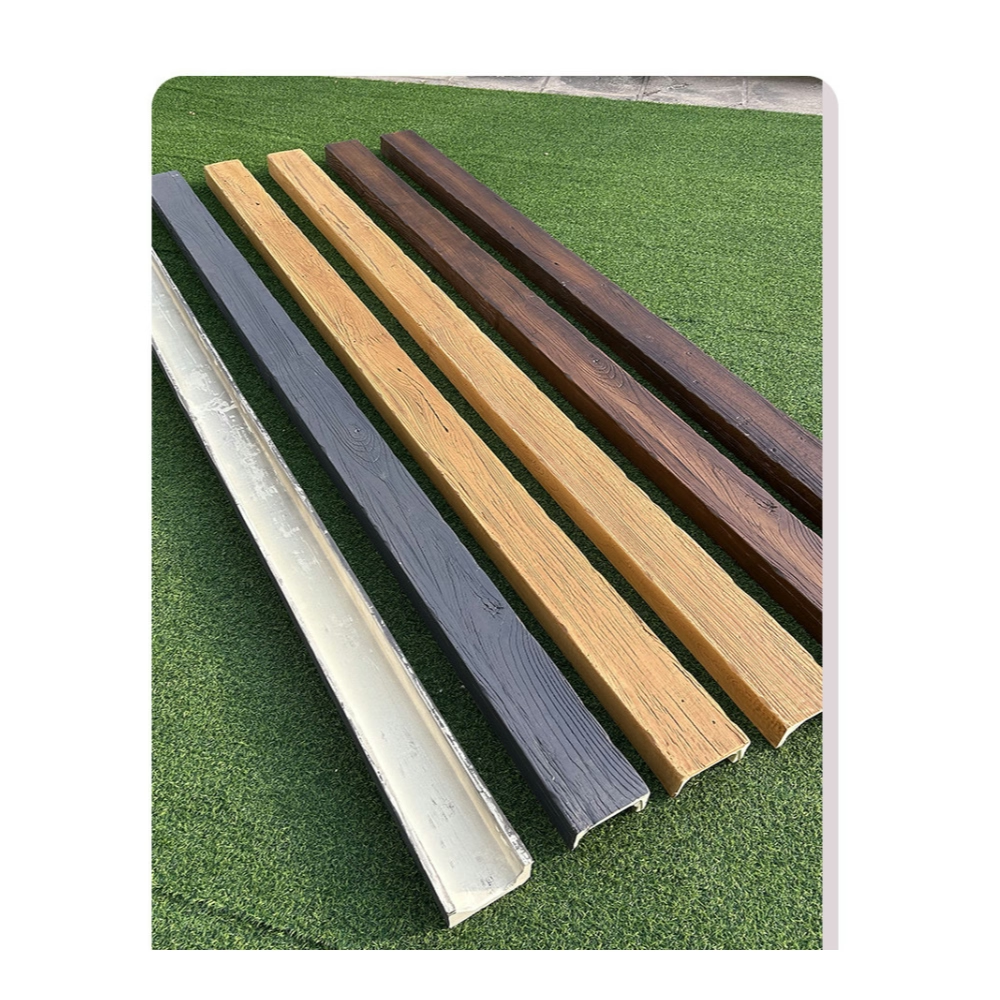
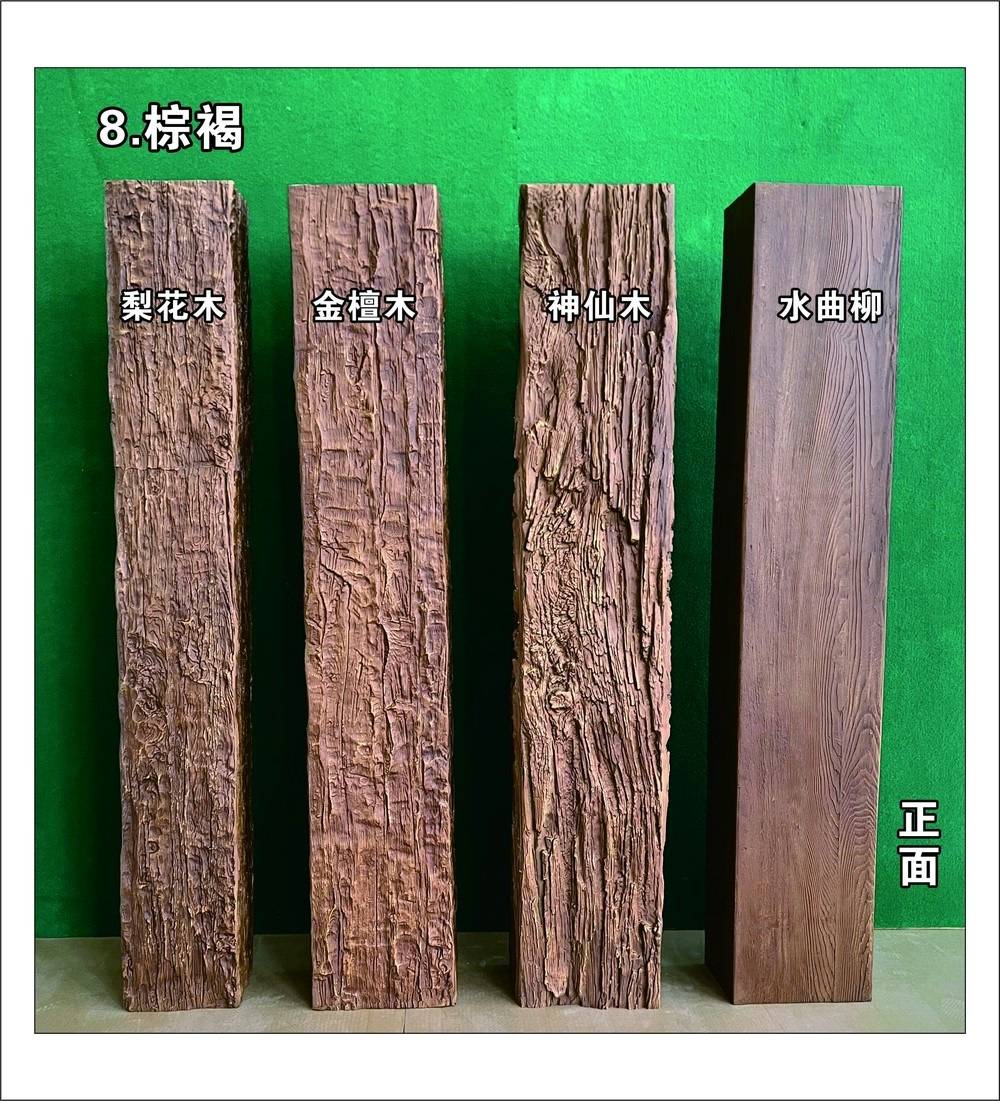
Every beam installation contains joints. Beams meet walls. Beams meet other beams. Beams turn corners, change height, or terminate at architectural features. Each of these intersections is an opportunity for the installation to look professional and considered, or to look like a compromise that the installer hoped nobody would notice. The corner pieces that handle these transitions are among the most important components in any beam system, and the difference between a manufactured polyurethane corner piece and a field-fabricated joint is immediately visible.
The reason is simple. A factory corner piece is molded from tooling that was specifically designed to handle the intersection. The angles are precise. The surfaces are consistent. The finish matches the adjoining beams exactly. A field-fabricated joint, no matter how skilled the carpenter, is an approximation of what the factory can produce. In premium installations, that approximation is no longer acceptable.

The Challenge of Beam Joints
Beam joints have challenged builders since timber framing began. The traditional solution was skilled joinery: mortise and tenon, dovetail, scarf joints, all designed to handle the meeting of two pieces of wood in ways that were both structurally sound and visually clean. These joints took years to learn and hours to execute properly.
Why Field Joints Often Disappoint
In modern renovations, the time and skill required for traditional joinery are rarely available. A carpenter who could execute a clean mortise and tenon in the field is a craftsman in the truest sense, and the cost of that craftsman's time can exceed the cost of the beams themselves. As a result, most contemporary beam joints are simpler: mitered cuts, butt joints with caulk, or screwed connections hidden by filler.
These simpler joints work, but they show their limitations over time. Miters open as materials move. Butt joints reveal gaps. Fillers discolor differently than the surrounding material. Within a few years, the joint that looked acceptable at installation becomes a visible flaw in an otherwise attractive ceiling.
The Factory Advantage
Polyurethane resin corner pieces eliminate this compromise. They are produced in a factory where temperature, humidity, and tooling are controlled. The angles are precise because the molds are machined to tight tolerances. The surface finish matches the beams because the same material formulation is used. The result is a component that arrives on site ready to install and that performs as expected for decades.
For installers, the advantage extends beyond appearance. A factory corner piece installs faster than any field-fabricated joint. The time savings on a complex installation can be substantial, and the reduced skill requirement allows more installers to deliver professional results.
Types of Beam Corner Pieces
Beam installations encounter a variety of corner conditions, and a comprehensive product line offers specific solutions for each.
90-Degree Corners
The most common corner condition occurs at the junction of two perpendicular beams. A 90-degree corner piece handles this transition cleanly, with both faces of the corner pre-finished and ready to receive the adjoining beams.
For outside corners, where the beams wrap around an outside angle, the corner piece includes the visual reveal that mimics traditional mitered joinery. For inside corners, where beams meet at an internal angle, the piece typically includes a return that allows the beam to terminate cleanly against the perpendicular surface.
Variable Angle Corners
Not every corner in a beam installation is exactly 90 degrees. Vaulted ceilings, angled walls, and architectural features sometimes call for corners that deviate from the perpendicular. Some manufacturers offer adjustable corner pieces, while others produce custom angles on order.
Adjustable pieces typically include a flexible joint that allows the angle to be set during installation. They are slightly more expensive than fixed-angle pieces and require more careful installation, but they solve problems that no fixed piece could address. Custom-angle pieces require accurate measurements and longer lead times but deliver factory precision for specific conditions.
Transition Pieces
A different kind of corner occurs where a beam changes height or direction along its length. A transition piece handles this change gracefully, providing a factory-finished component that maintains the beam's profile while accommodating the new orientation.
These pieces are common in vaulted ceilings, where a beam may run flat across part of the room and then rise to follow the roofline. Without a transition piece, this change in angle would require complex field carpentry or an unsightly joint. With the right piece, the transition becomes a feature rather than a flaw.

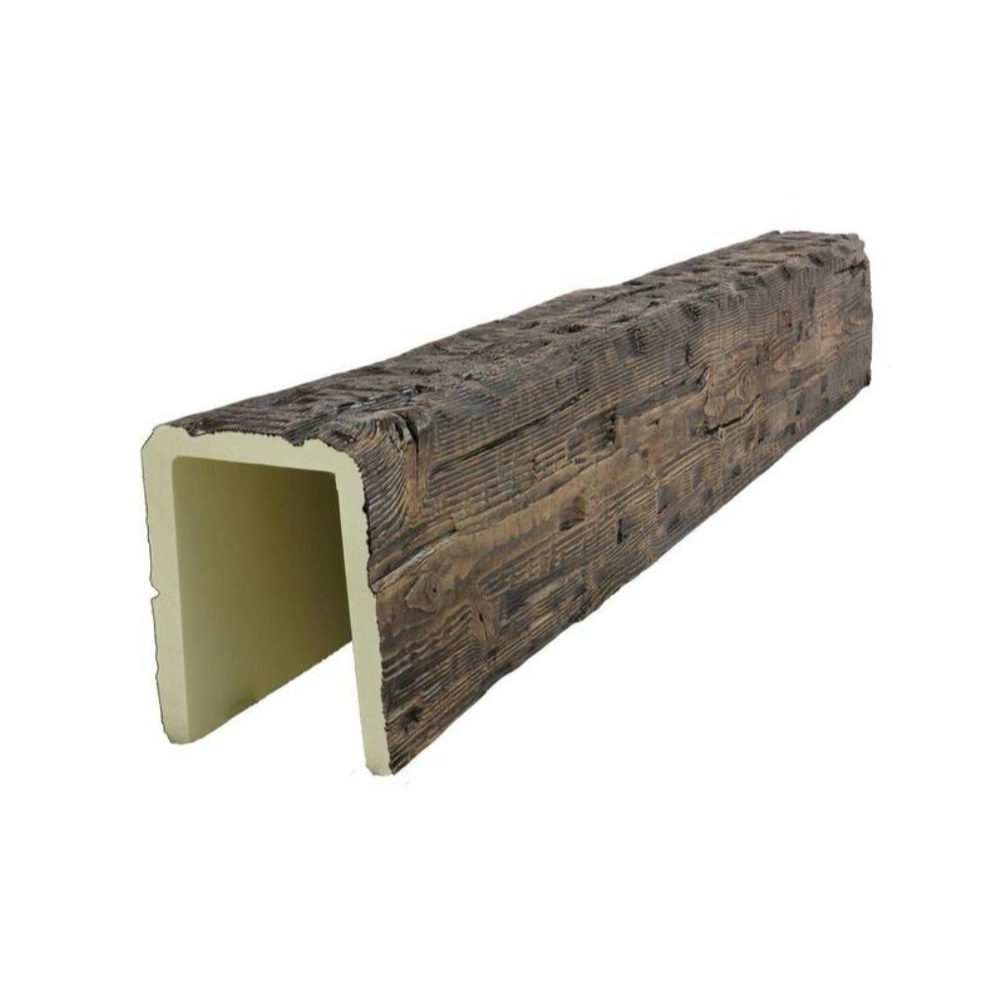
Installation Process
The installation of corner pieces follows the same general process as other beam components, with attention to a few specific details.
Dry Fitting First
Before any adhesive is applied, every corner piece should be dry fitted to confirm that it matches the beam profile and that the angle is correct for the specific installation. This step takes minutes and prevents the kind of mistakes that are difficult to correct after adhesive cures.
Dry fitting is particularly important for custom-angle pieces, where any error in measurement or production shows up immediately. The piece should sit flush against both adjoining beams and align with the wall or ceiling surface. Any gaps or misalignments indicate a problem that must be addressed before proceeding.
Adhesive and Fastening
The same adhesive selection principles that apply to caps apply to corner pieces. Construction adhesives formulated for polyurethane work well, applied in continuous beads along both contact surfaces. Mechanical fasteners add security, particularly in ceiling applications.
For corner pieces that will carry any structural load, the fastening must be designed by an engineer familiar with the specific installation. Decorative corner pieces that simply cover a joint require less rigorous fastening, but the adhesive alone is rarely sufficient for long-term reliability. A combination of adhesive and concealed fasteners typically delivers the best results.
Finishing the Joint
Even with factory-finished corner pieces, the joint between the piece and the adjoining beams may require minor finishing on site. A small amount of color-matched caulk or filler handles any gaps that result from minor variations in wall surfaces or beam alignment. The finishing should be done carefully, with attention to matching the texture of the surrounding material.
For installations where the beams are painted on site, the corner piece should be painted at the same time, using the same products and techniques. Color and sheen differences between the piece and the beams are immediately visible and difficult to correct after the fact.
When Corner Pieces Make the Biggest Difference
Some installations benefit more from corner pieces than others. Recognizing these situations helps prioritize where to invest in factory components.
High-Visibility Ceilings
Ceilings in formal living rooms, dining rooms, and entry foyers are viewed from multiple angles and under varying light conditions. The eye naturally inspects these ceilings carefully, and any joint imperfection is quickly noticed. Corner pieces are particularly valuable in these spaces.
Commercial Lobbies and Public Spaces
Commercial interiors are held to higher standards of finish quality than residential spaces. Building inspectors, property managers, and tenants all scrutinize the visible details. Corner pieces provide the consistent quality that these environments demand.
Complex Beam Patterns
Coffered ceilings, beam grids, and other complex patterns involve many intersections. The more joints an installation contains, the more opportunities there are for visible flaws. Factory corner pieces eliminate the variability that accumulates across many field-fabricated joints.
Premium Residential Projects
Custom homes and luxury renovations often include ceiling details that are central to the design vision. In these projects, the ceiling is a designed element, not just a finished surface. Corner pieces that match the architectural intent contribute to the overall quality of the space.
Common Mistakes to Avoid
A few errors appear frequently in installations where corner pieces are not used correctly.
Mismatched Profiles
Installing corner pieces from a different product line than the beams, or mixing components from different production runs, leads to visible joints that undermine the installation. The pieces may look similar in isolation but reveal their differences when joined to the beams. Always verify profile compatibility before installation.
Inadequate Surface Preparation
Adhesive requires clean, dry, sound surfaces to develop full strength. Dust, grease, or moisture at the joint compromises the bond and can lead to piece separation over time. Wipe down both surfaces before applying adhesive.
Skipping Mechanical Fasteners
Adhesive alone is rarely sufficient for ceiling installations where gravity and seasonal movement place constant stress on the joint. Mechanical fasteners add the security that ensures the piece remains in place for the life of the installation.
Rushed Finishing
The visible joint between a corner piece and the adjoining beam is a place where the eye naturally stops. Any rush in the finishing process shows up immediately. Take the time to apply color-matched filler or caulk, sand smooth if necessary, and touch up the finish to match the surrounding surface.
Corner pieces represent a small fraction of the total cost of a beam installation, but they contribute disproportionately to the perceived quality of the finished work. In any installation where the ceiling is a designed element, they are not optional. They are the components that allow the design vision to be fully realized.
Technical References
ASTM standards cited in every specification
Test Data
Lab results from internal testing program
Updated 2026
Reviewed against current product specs