There is a particular quality of light on a deep veranda in late afternoon that makes any solid beam overhead look like the most important architectural element in the house. The trick is finding a beam material that holds up to the same sun, salt air, and seasonal humidity that gives that light its character in the first place. PU faux timber beams are built for exactly that environment, and they have quietly become the material of choice for verandas from the Gulf Coast to the Pacific Northwest.
A covered veranda is a deceptively harsh place for any building material. It is hot in summer, cold in winter, and bathed in sideways rain whenever the wind shifts. It also tends to trap humidity under the roof deck because airflow is limited. Real wood beams check, cup, and silver within a few years under those conditions. Steel beams rust at every fastener. PVC beams sag and yellow. Polyurethane, by contrast, was engineered from the start to live in exactly this kind of half-sheltered, fully exposed outdoor space.

What "Outdoor-Rated" Actually Means for Faux Beams
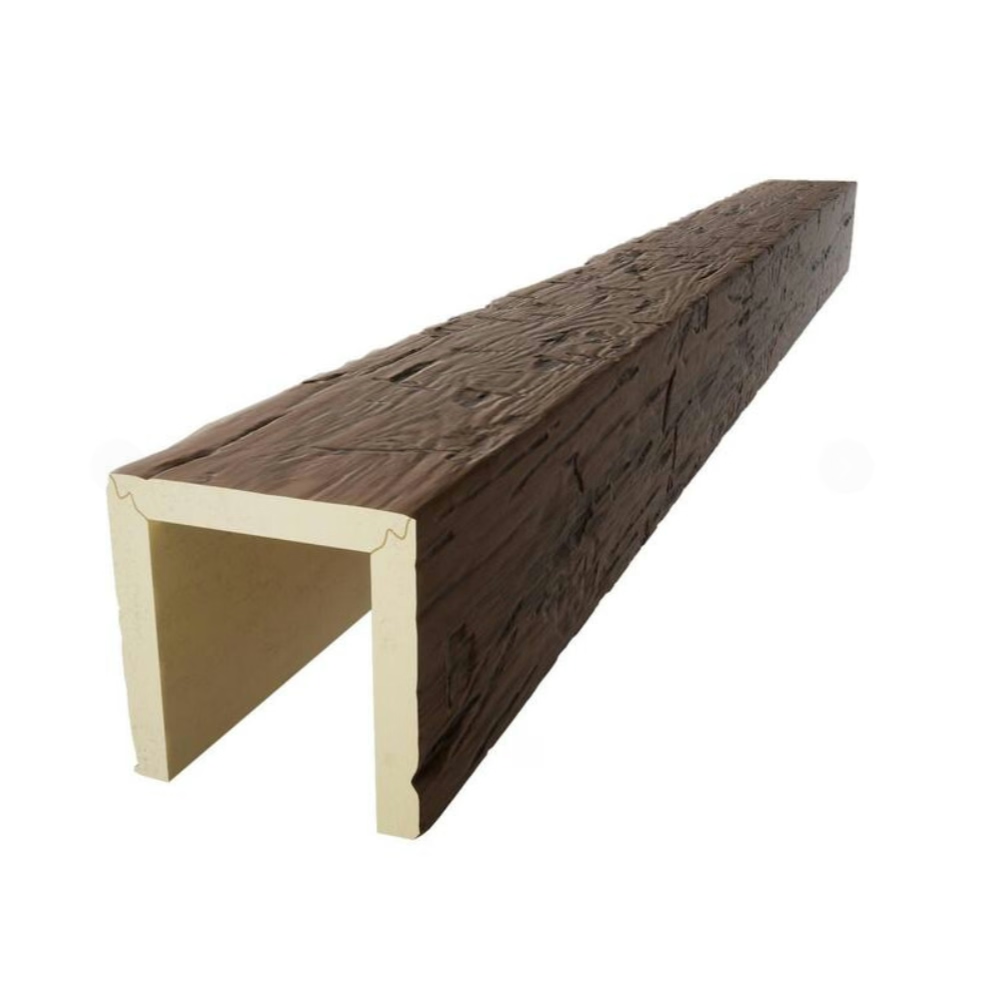
Not every polyurethane beam is rated for outdoor use, and the difference between an indoor-rated beam and a veranda-rated beam is more than just marketing. Indoor beams typically use a closed-cell foam core with a water-based acrylic coating. That coating looks great in a living room but starts to soften and streak after a few wet seasons outside. Outdoor-rated faux timber beams add a UV-stabilized topcoat, a denser foam skin, and a factory-applied base sealer that closes off the cells along any cut edges.
The result is a beam that can sit in direct afternoon sun for a decade without measurable color fade, that shrugs off rain the morning after a thunderstorm, and that does not feed the carpenter ants and powderpost beetles that love to colonize soft, weathered wood. If you have ever had to treat, sand, and refinish a real timber veranda beam, the appeal of that combination is immediate.
The Foam Density Question
One spec worth checking when you are comparing outdoor PU beams is foam density. Most residential-grade wraps fall in the 1.5 to 2 pound per cubic foot range, which is plenty for ceiling applications. For verandas, look for 2 pounds or higher. The denser foam resists denting from falling branches, holds fastener threads better when you hang plants or fans, and tolerates the small bumps and scuffs that come with a working outdoor space.
Density also affects how the beam feels to the touch on a hot day. Lighter foam warms quickly and can feel almost rubbery when the sun has been on it for a few hours. Denser foam stays cooler under the same conditions and feels more like a piece of dried timber. That is not a structural difference, but it matters for verandas where people actually touch the beams when they step up to help with the grill or lean against a post.
Choosing Profiles and Finishes for a Veranda Setting
The style of your home sets the tone for the beam profile. A craftsman bungalow calls for chunky, square-cut beams with visible texture. A coastal cottage looks right with smoother, slightly rounded edges. A modern farmhouse can go either way, though most homeowners in that style pick a beam with squared corners and a subtle, weathered grain.
Texture That Earns Its Keep
Outdoor beams get dirty. Pollen settles, spiders build webs, and the occasional wasp nest has to be scrubbed off. Heavily distressed textures with deep pits and gouges are charming when new but become frustrating to clean because every crevice holds a little grime. Medium textures with visible grain but no deep pockets are the practical compromise. They look like real timber from across the porch but wipe clean with a damp cloth.
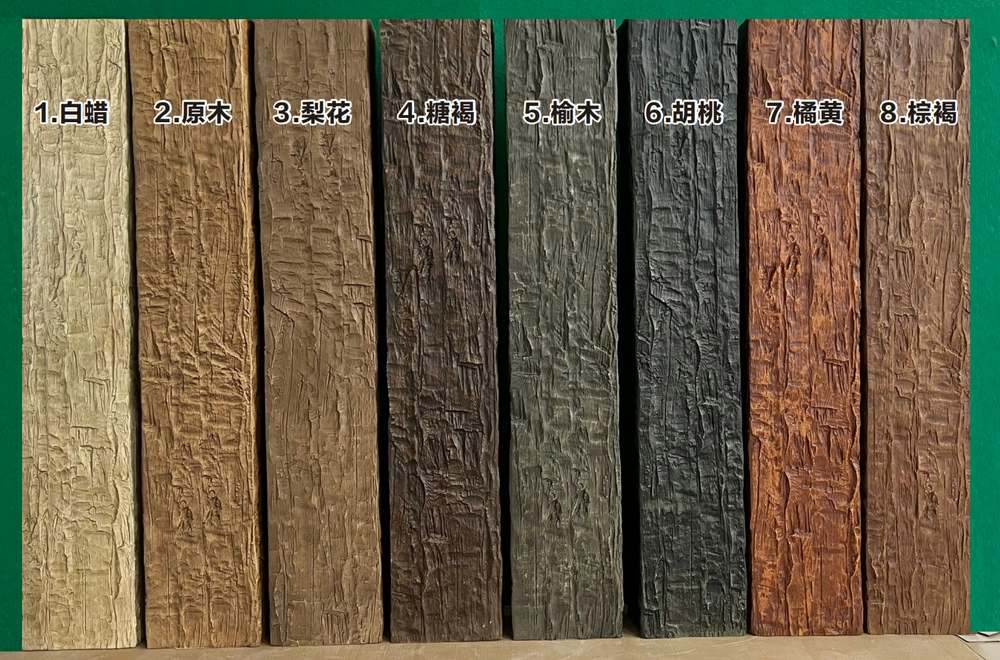
Color matters more outside than in. Indoor faux timber beams are often a rich walnut or warm honey tone. Outdoors, those colors fade unevenly under UV. The finishes that age best are the ones that start out a little closer to weathered gray, driftwood, or faded cedar. A veranda beam in a driftwood gray will look almost the same in year ten as it did in year one. A veranda beam in a deep walnut will look noticeably lighter in year three and noticeably washed out by year seven.
Sizing for Visual Weight
Verandas have a way of swallowing visual mass. Beams that would look dominant in an indoor great room look proportional on a veranda because the open sides let the eye read the ceiling against the sky beyond. As a rule of thumb, scale up one size from what you would pick for the same room indoors. A veranda that would carry a 6-by-8 beam inside will usually look better with an 8-by-10 outside.
Length matters too. Long, unbroken runs of beam read as calmer and more architectural than short, choppy runs. If your veranda has multiple breaks in the ceiling line, consider using the beams to unify the spaces. A continuous beam that turns the corner at the end of the porch and continues down the side return makes a wraparound veranda feel like a single, intentional room.
Mounting Methods for Outdoor Conditions
The mechanical connection between a PU faux timber beam and the veranda structure above it deserves more attention outdoors than indoors. Indoor beams can often be glued and screwed in mild conditions because the climate is stable. Outdoor beams need to handle thermal movement of the framing, wind loads that can tug at the eaves, and the long-term creep of fasteners in treated lumber.
Blocking and Fastener Selection
Install solid blocking between the ceiling joists or rafters wherever a beam will land. The blocking provides a continuous nailing surface and lets you adjust the elevation of each beam to compensate for an out-of-level ceiling. Use stainless steel or hot-dipped galvanized screws and fasteners. Standard zinc-plated screws corrode quickly in veranda conditions, leaving rust streaks down the face of the beam within a couple of seasons.
For most residential verandas, a #10 stainless screw every 16 inches along each side flange of the beam is plenty. Drive the screws through pre-drilled pilot holes that are slightly smaller than the screw threads. PU foam compresses around a screw and holds it tightly, but pilot holes prevent the foam from dimpling around the screw head.
Hanging Loads From Veranda Beams
The appeal of a veranda beam is that it looks heavy enough to support hanging plants, lanterns, or a porch swing. PU faux timber beams will absolutely support those loads within reason, but they need reinforcement at each attachment point. A simple approach is to install a wood backer block between the joists directly above where each hanging fixture will land, then run a stainless eyebolt up through the beam into the backer. The visible hardware becomes a design element, and the load is carried by the structure rather than the foam.
If you want a clean ceiling line with no visible hardware, consider mounting hanging items to blocking that is integrated into the beam itself during manufacturing. Some custom orders allow for threaded inserts molded directly into the foam at specified locations, with matching wooden plugs to fill unused positions. It costs more up front but lets you rearrange the hanging layout over the years without leaving an obvious hardware pattern.

Coordinating With Other Outdoor Materials
A veranda is rarely just a ceiling. It has flooring, railings, columns, and often a stone or brick wainscot. The faux timber beam has to feel like it belongs with all of those elements rather than dropped in from another house.
Pairing With Stone and Brick
If the veranda has stone columns or a brick fireplace, pick a beam finish that echoes the warmer tones in the masonry. A weathered oak beam works beautifully with cream limestone. A driftwood gray beam looks crisp against a deep red brick. Aged barnwood tones bring out the rust and umber in a flagstone wainscot.
Pairing With Paint Colors
Most verandas have painted ceilings, either a crisp white, a soft sky blue, or a statement color like sage or terracotta. PU faux timber beams hold their own against any of these. White ceilings make the beams the unquestioned focal point. Painted ceilings shift the visual interest outward to the trim and railings, with the beams providing warmth and grounding in the middle of the composition.
Pairing With Outdoor Furniture
Verandas get used. Furniture gets dragged, kids climb on it, and the occasional summer storm sends everything sliding. A PU faux timber beam that takes a bump from a wayward chair leg will dent more easily than a solid timber beam, but the dent will be small and easy to patch with a little color-matched caulk. Real timber dents too, and patching a real timber beam to match a stained finish is a much bigger project.
Living With Veranda Beams Year After Year
The maintenance story is what usually tips the decision toward PU faux timber. A real timber veranda beam wants to be inspected every couple of years, cleaned, and resealed on a five-year cycle. That is a half-day project per beam, multiplied by every beam on the porch. A PU beam wants nothing more than an occasional wipe-down with a damp cloth and a visual inspection for caulk failure at the ceiling joint.
When something does go wrong on a PU beam, it is almost always small. A section that starts to yellow in a spot that gets particularly intense sun can be lightly sanded and recoated with a compatible topcoat. A chip from a falling branch can be filled, sanded, and repainted to disappear. A fastener that backs out over time can be driven back in or replaced with a slightly larger screw in the same pilot hole.
That kind of resilience is what makes PU faux timber beams a practical choice for verandas. They look like the warm, weighty wood beams that define great outdoor spaces, and they keep looking that way through the kind of weather that ages most materials out of usefulness long before their time.
Technical References
ASTM standards cited in every specification
Test Data
Lab results from internal testing program
Updated 2026
Reviewed against current product specs


