Most faux wood beams are designed to be installed once and left in place for decades. Reusable PU faux wood beams serve a different purpose. They are built for projects where the beams need to go up, look great for a while, come down, and go back up again later, possibly in a different configuration or a different venue. That sounds simple, but the engineering behind a beam that can survive repeated installation cycles is more complex than the engineering behind a beam that gets screwed up once and stays there.
The category covers both event and display applications as well as long-term installations where the building itself is not permanent. Wedding venues, trade show booths, pop-up retail spaces, film sets, and themed attractions all benefit from the same kind of reusable beam system.

What Makes a Beam Reusable
Reusability in a beam system is determined by three factors: how the beam is finished, how it is mounted, and how the joints between sections are connected.
Factory Finishes That Survive Repeated Handling
A reusable beam gets picked up, set down, carried across a venue, and stacked with other beams at the end of the event. Standard factory finishes are tough enough for permanent installations but can scuff or chip under that kind of handling. Reusable beams typically ship with an extra-thick topcoat and a slightly different texture formulation that resists abrasion.
The colors also tend toward forgiving shades. Pure white and very dark finishes show scuffs and fingerprints more readily than mid-tones. A weathered oak or driftwood gray beam can be handled dozens of times between installations and still look presentable.
Mounting Hardware That Goes Up and Down Quickly
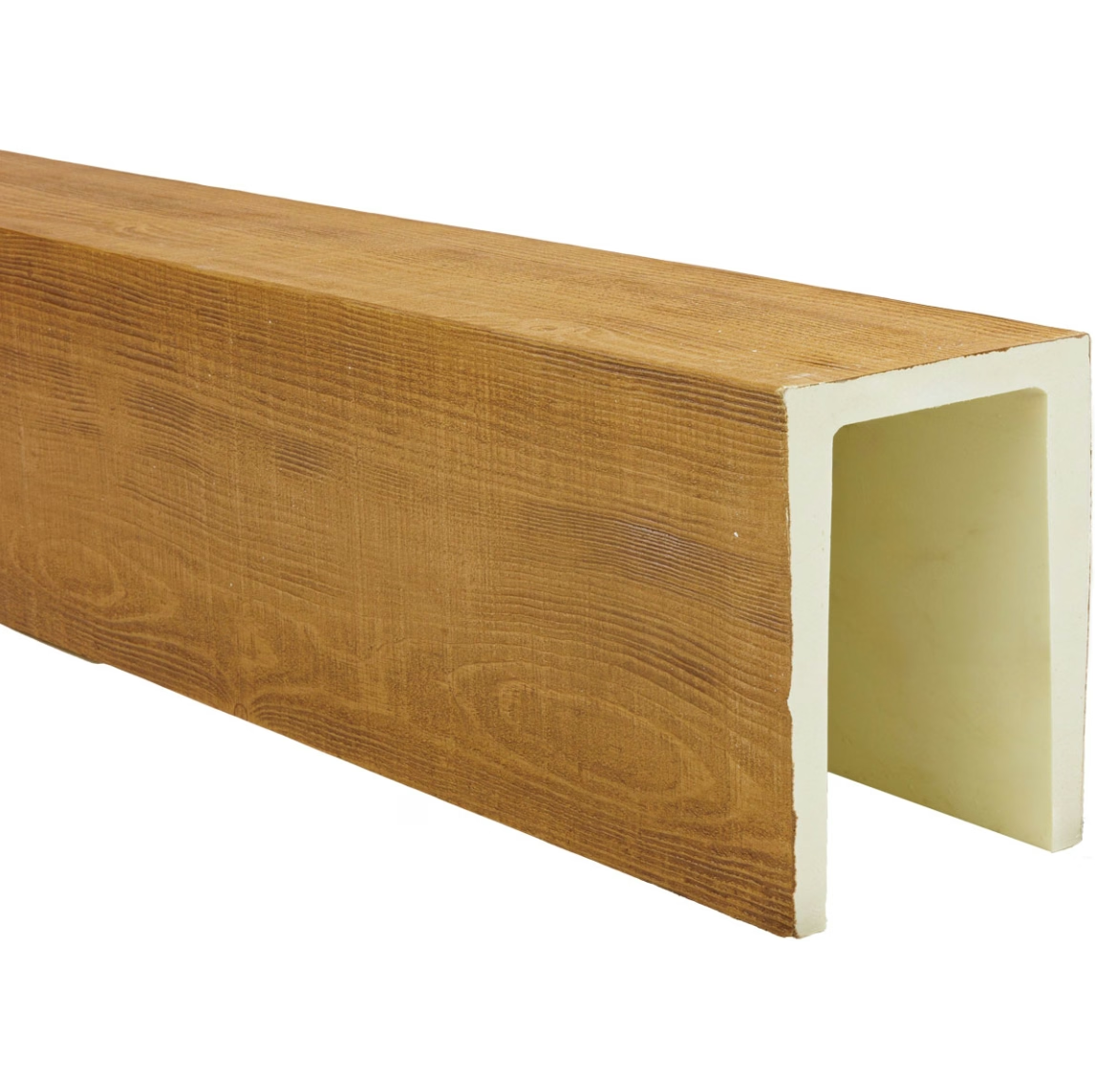
Reusable beams rely on mechanical connection systems rather than adhesives or one-way fasteners. The most common approach is a cleat-and-hook system, where a metal or wooden cleat is mounted to the ceiling or overhead structure and the beam hangs from matching hooks on the back of the shell. The cleat stays in place between events; the beam goes up and comes down with the hooks.
For venues where the cleats cannot be left in place between events, freestanding beam frames can be used. The frames support the beams from the floor rather than the ceiling, and they assemble and disassemble in minutes with hand tools. The frames are typically hidden behind the beams or disguised as columns or other architectural elements.
Joint Systems That Reconnect Reliably
Long beam runs have to be assembled from shorter sections, and the joints between sections are the most vulnerable point during repeated handling. Reusable beams use either internal splines or external connector plates that fit into pre-machined pockets. Both systems locate the sections accurately and provide a mechanical connection that can be tightened or released without tools.
Internal splines are cleaner-looking but require careful alignment during assembly. External connector plates are more visible but faster to install and easier to align in less-than-ideal conditions. Both approaches are widely used; the choice depends on the visibility of the joint and the speed of assembly required.
Common Applications for Reusable Beams
The use cases for reusable PU faux wood beams fall into a few broad categories, each with its own priorities.
Event and Wedding Venues
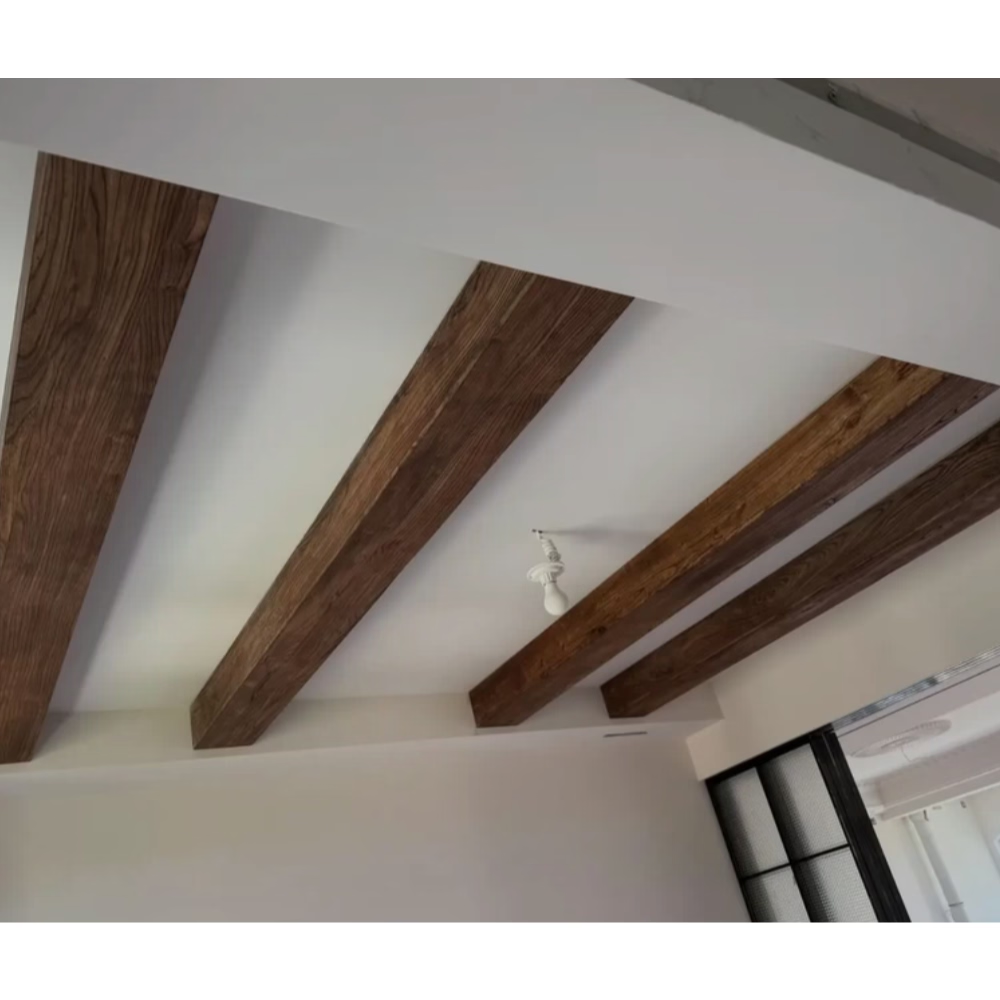
Wedding barns, conference centers, and hotel ballrooms use reusable beams to transform plain spaces into themed environments. A neutral ballroom can become a rustic barn, a Tuscan villa, or a mountain lodge with the addition of a dozen PU beams and matching accents. The transformation takes a few hours, the event lasts a weekend, and the beams come down and go into storage until the next booking.
The economics make sense for high-volume venues. A reusable beam system costs more upfront than a permanent installation, but it serves hundreds of events over its lifespan. The per-event cost is a fraction of what a one-time decorative build would cost.
Trade Show Booths
Trade show booths have to be transported to every show, assembled on site, and disassembled at the end of the week. Reusable PU beams provide the architectural weight that makes a booth feel substantial without the shipping weight and damage risk of solid timber. Many exhibitors invest in custom-finished beams that match their brand identity and use them at every show for years.
The repeatability of the beam system is critical for trade show use. The same beam has to fit the same booth configuration at show after show, which means the connection hardware has to be precise and the sections have to maintain their dimensions over years of handling.
Film and Television Sets
Film sets often need to look like a specific architectural style for a few weeks of shooting. The set is built, filmed, and struck within a tight production schedule. Reusable PU beams allow set designers to create the look of solid timber without the cost or time of working with real wood. After the production wraps, the beams can be reused on the next project.
Pop-Up Retail and Themed Attractions
Retailers that operate seasonal pop-ups, haunted attractions, holiday displays, and themed restaurants all benefit from reusable beam systems. The beams provide the architectural vocabulary that supports the brand experience, and the ability to install and remove them quickly allows the venue to be reconfigured between seasons or events.
Engineering for Repeated Use
A beam that survives 50 installation cycles is a very different product from one designed to be installed once. The engineering reflects that difference.
Shell Thickness and Density
Reusable beams are typically manufactured with a thicker shell than permanent installations. The extra material resists denting and abrasion during handling, and it provides more material around fastener holes so screws can be repeatedly driven and removed without stripping the foam.
Densities also tend toward the higher end of the standard range. A 2.5 to 3 pound per cubic foot foam core provides better impact resistance than a lighter formulation. The extra weight per beam is a worthwhile tradeoff for venues that handle the beams frequently.
Reinforced Connection Points
The areas of the beam that take the most abuse during handling are the ends and the connection points. Reusable beams often include internal wood or metal reinforcement at these locations. The reinforcement distributes fastener loads across a wider area of the foam and prevents the connection hardware from pulling through under repeated stress.
Surface Coatings
The surface coating on a reusable beam has to balance aesthetic appeal with abrasion resistance. A pure matte finish looks beautiful but can show every scuff. A high-gloss finish resists scuffs but reflects lighting in ways that look unnatural on a faux timber product. Most manufacturers settle on a satin finish with a slightly higher than standard topcoat thickness.

Mounting Systems in Detail
The mounting system is the part of a reusable beam installation that gets the most attention, because it determines how fast the beams go up and come down.
Cleat-and-Hook Systems
A cleat-and-hook system starts with a metal or wooden cleat mounted to the ceiling. The cleat is typically a continuous strip that runs the full length of the beam run. Matching hooks on the back of the beam shell engage the cleat and lock the beam in place. To remove the beam, the installer lifts slightly and pulls away from the ceiling.
The cleat itself can be left in place permanently or removed and stored between events. For venues that want a clean ceiling when the beams are not in use, removable cleats with quick-release hardware are the standard approach. They leave small mounting holes that can be filled and painted between events.
Freestanding Frame Systems
For venues where ceiling mounting is not practical, freestanding frames support the beams from the floor. The frames are typically welded steel or heavy-duty aluminum, designed to be assembled with hand tools and broken down into manageable pieces for transport.
Freestanding frames can support very long beam runs and can incorporate lighting, audio equipment, and decorative elements. They also cost more than ceiling-mounted systems and require floor space that may not be available in every venue.
Magnetic and Clamp Systems
Some specialized applications use magnetic mounting for steel-framed venues or clamp systems for truss structures. Both approaches allow beams to be installed and removed in seconds, with no tools and no permanent modifications to the venue. The holding force is lower than cleat systems, but for lightweight decorative applications the magnets and clamps are more than adequate.
Storage and Transportation
A reusable beam system is only as good as the way it is stored and transported between events.
Protective Packaging
Most reusable beams ship with custom-fitted foam inserts or canvas bags that protect the finish during transport. The packaging is sized to fit standard trucks and trailers, and it allows multiple beams to be stacked without damaging each other.
For high-end reusable systems, road cases with internal padding provide the best protection. The cases are heavier and more expensive than simple bags, but they extend the life of the beam finish significantly.
Storage Conditions
Reusable beams should be stored in a climate-controlled space between events. Extreme heat can soften the foam and cause sagging in beams stored horizontally for long periods. Extreme cold makes the foam brittle and more vulnerable to impact damage. A storage area maintained between 50 and 90 degrees Fahrenheit is ideal.
Stacking beams on edge rather than flat reduces the risk of sag over time. Edge storage also takes advantage of vertical space in storage rooms and trailers.
Long-Term Economics
A reusable beam system represents a significant upfront investment. A typical reusable beam costs two to three times as much as the same beam in a permanent installation. The economics work because the reusable beam gets used many times.
A wedding venue that uses its beam system for 100 events over five years recovers the cost premium many times over compared to building and disposing of disposable decor for each event. A trade show exhibitor that uses the same beams at 20 shows a year amortizes the cost across hundreds of brand impressions.
For organizations that frequently host events or produce displays, reusable PU faux wood beams are an investment in consistency and efficiency. The beams look the same at every event, install quickly, store compactly, and last for years of regular use.
Technical References
ASTM standards cited in every specification
Test Data
Lab results from internal testing program
Updated 2026
Reviewed against current product specs


