
Walk into a home that feels immediately comfortable and chances are the palette is doing most of the work. Earthy tones — the soft browns, clay reds, muted ochres, and mossy greens drawn from soil, stone, and weathered timber — create a sense of groundedness that bright modern palettes rarely achieve. When you add rustic wood-look faux beams to a room with that palette, the space stops feeling decorated and starts feeling rooted.
There is a reason designers keep returning to earthy palettes in residential projects. These tones reference outdoor environments our brains are wired to find calming, they pair well with most lighting conditions, and they age gracefully as furniture and accessories change over the years.
This article walks through practical room-by-room ideas for pairing earthy tones with faux beams, including color choices, material pairings, and stylistic decisions that make the combination feel intentional rather than accidental.
Why Earthy Tones Work So Well With Faux Beams
The connection between earthy tones and rustic wood beams is not just aesthetic — it is structural. The browns and reds found in clay walls reference the same pigments that appear in natural timber. When you put a faux beam with warm brown grain above a wall of muted terracotta, the eye reads the two as part of the same color story, even though one is manufactured and the other is paint.
This visual continuity is what gives earthy interiors their characteristic warmth. The ceiling does not feel like a separate architectural element hovering above the room — it feels like an extension of the walls, drawn from the same palette and finishing the room top to bottom.
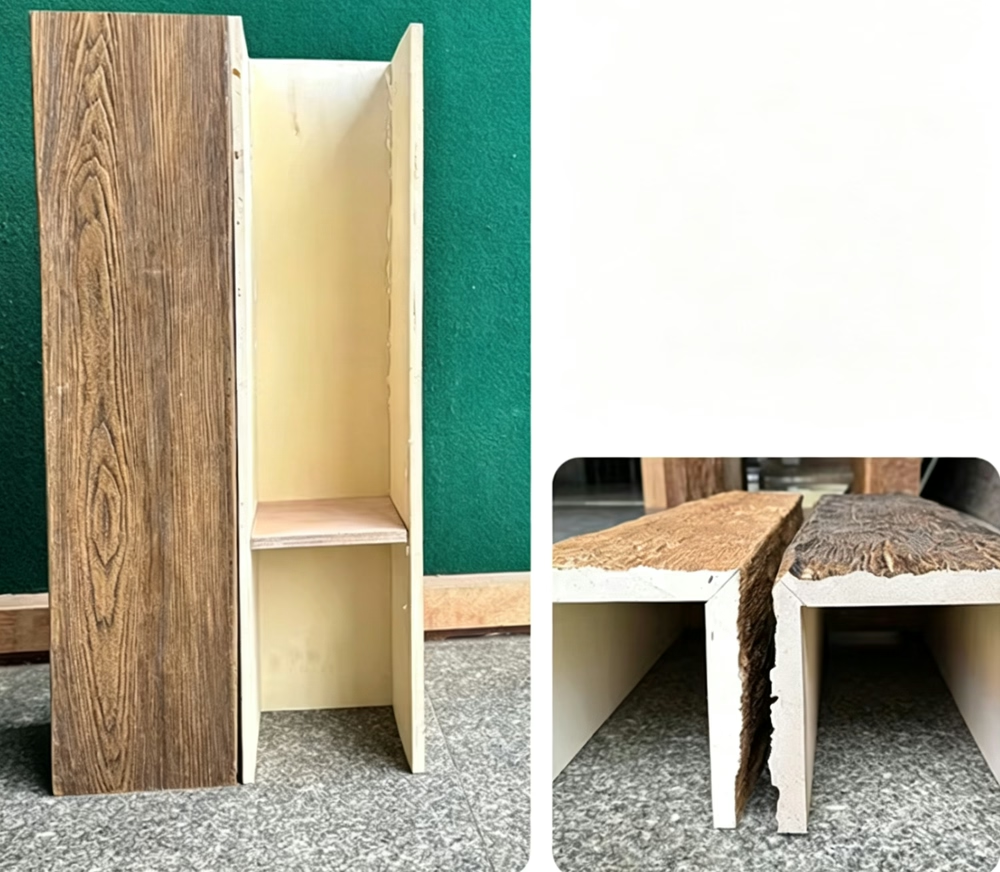
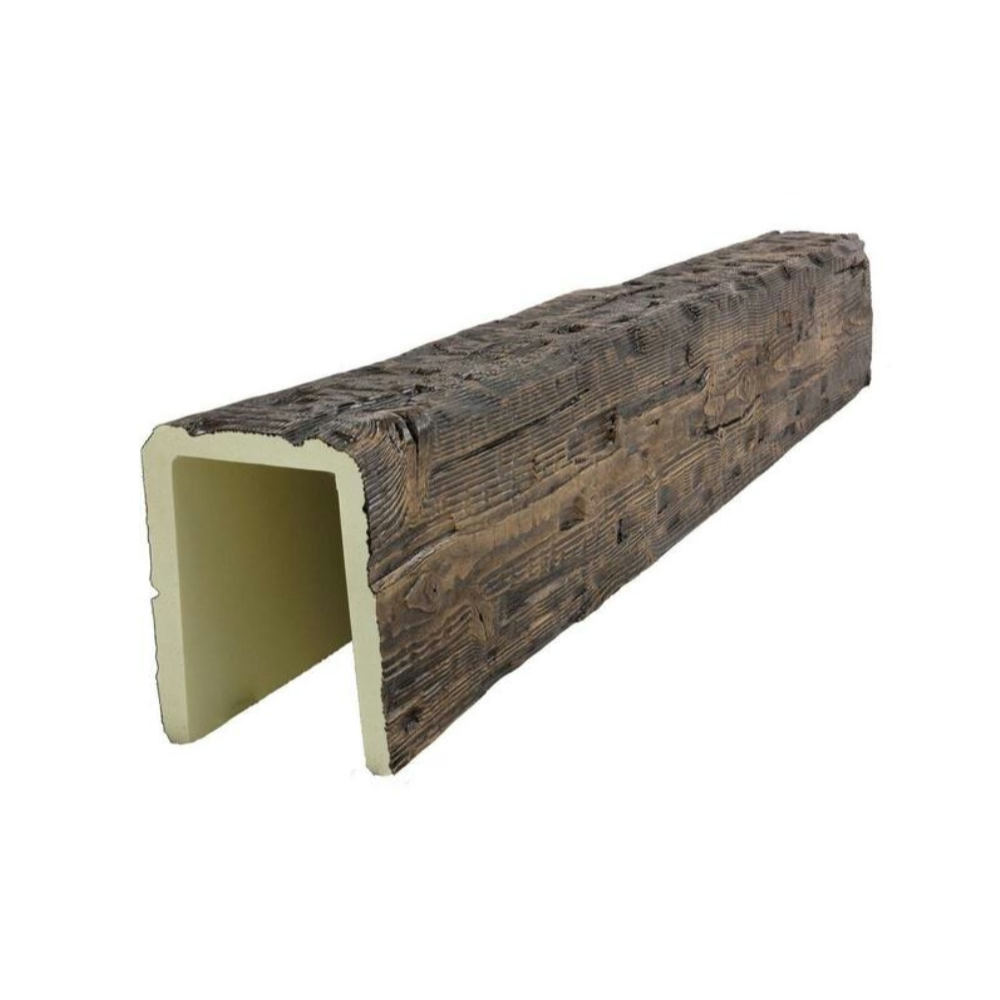
PU faux beams are particularly good partners for earthy palettes because the manufacturing process can replicate the subtle color variations found in real timber. The grain patterns, knots, and tonal shifts are baked into the foam rather than painted on, which means they interact with light the way real wood does. When that realism is paired with clay or ochre walls, the result is convincing enough to fool most visitors.
Color Families That Anchor the Look
Three color families tend to dominate earthy interiors. The first is the clay family — warm reds, oranges, and soft pinks drawn from terracotta and natural pigments. The second is the wood family — golden browns, deep walnuts, and weathered grays. The third is the foliage family — moss greens, sage, and olive tones that reference outdoor plantings.
Most successful earthy interiors use all three families, distributed across walls, beams, and accessories. The ratio varies by room and personal preference, but a common approach is to let the walls carry the clay tones, the beams carry the wood tones, and the textiles and plants carry the foliage tones.
Living Room Combinations
The living room is often the easiest place to introduce earthy tones and faux beams together, because the room typically has high ceilings, natural light, and enough square footage to absorb dramatic color choices without feeling cramped.
A living room with twelve-foot ceilings can comfortably support beams at eight to ten inches wide and twelve to fourteen inches deep. The beams should be in a warm walnut or honey oak tone, with enough color variation to feel organic. Walls in a muted clay color — think Benjamin Moore's "Baked Clay" or Behr's "Terra Cotta Tile" — provide a backdrop that highlights the beams without competing for attention.
Furniture in this kind of room works best in natural materials. Linen sofas in cream or oatmeal, leather chairs in cognac or chestnut, and wooden coffee tables in mid-tone browns all reinforce the earthy palette. Rugs in faded reds or mossy greens add another layer without disrupting the warmth.
Adding Layers Through Textiles
Textiles are where the earthy palette becomes truly lived-in. Throw pillows in textured weaves, blankets in undyed wool, and curtains in raw linen or burlap all add depth to the room. The key is to avoid perfectly matched colors — earthy interiors benefit from slight variations that suggest natural materials rather than manufactured uniformity.
A useful rule of thumb is to include at least one textile in each of the three color families. A linen curtain in natural beige (wood family), a wool throw in moss green (foliage family), and a pillow in faded brick red (clay family) together create a balanced layering that feels collected rather than coordinated.
Bedroom Ideas That Feel Grounded
Bedrooms benefit enormously from earthy palettes because the tones are inherently calming. A bedroom with a single statement beam across the ceiling — running the length of the room above the headboard wall — creates a focal point without overwhelming the space.
For a primary bedroom, consider beams in a deeper tone like aged oak or dark walnut. The deeper color grounds the room and supports better sleep by absorbing light rather than reflecting it. Walls in soft sage or putty gray provide a restful backdrop, while bedding in natural linen or undyed cotton continues the texture story.
In guest bedrooms or children's rooms, lighter beam tones like natural pine or whitewashed oak pair well with softer wall colors. A pale ochre wall with whitewashed beams and white bedding feels fresh and welcoming without losing the earthy character.
Lighting Considerations
Earthy palettes shift dramatically under different lighting conditions. Warm bulbs in the 2700K to 3000K range bring out the golden tones in faux beams and clay walls. Cool bulbs above 4000K can make the same palette feel clinical and washed-out.
For rooms with limited natural light, layering multiple warm light sources — table lamps, sconces, and accent lighting — helps maintain the earthy mood throughout the day. The goal is to create pools of warm light rather than uniform overhead illumination, which reinforces the sense of intimacy that earthy interiors are designed to evoke.
Kitchen and Dining Room Applications
Kitchens are often the most challenging rooms for earthy palettes because they require durable, cleanable surfaces alongside the aesthetic elements. Faux beams work well in kitchens because they are easy to wipe down and do not absorb cooking odors the way real wood can.
A kitchen with faux beams in a warm honey tone pairs nicely with stone or quartz countertops in cream, beige, or light gray. Cabinetry in cream, sage, or muted blue provides contrast while staying within the earthy family. Hardware in aged brass or oil-rubbed bronze ties the look together.
Dining rooms benefit from beams that feel substantial enough to anchor the table. A single beam running the length of the dining table, ideally with a chandelier or pendant lights suspended from it, creates an intimate dining atmosphere. The beam becomes a visual ceiling over the table itself, defining the eating zone within a larger open-plan space.
Open-Plan Considerations
In open-plan layouts where the kitchen, dining area, and living room share one continuous ceiling, beams can be used to define each zone without building walls. A series of parallel beams over the dining table, a perpendicular beam over the kitchen island, and a vaulted beam arrangement in the living area creates distinct areas within the shared space.
This approach is particularly effective in homes with vaulted or cathedral ceilings, where the structural drama of the ceiling itself becomes part of the design. The beams provide both decoration and spatial definition, which is a useful combination in open-plan homes.
Bathrooms and Smaller Spaces
Bathrooms are an underused opportunity for earthy palettes. Smaller rooms benefit from the warmth of clay and brown tones because these colors make the space feel more substantial and less clinical.
Faux beams work in bathrooms as long as the room has adequate ventilation. The closed-cell structure of polyurethane resists moisture, but consistent ventilation prevents any long-term issues with humidity. A bathroom with a beam above the vanity or tub, paired with walls in soft terracotta or muted olive, creates a spa-like atmosphere that feels intentional rather than rustic-by-accident.
In powder rooms, a single decorative beam above the mirror or sink is often enough to set the tone. The small room size means even a modest beam has visual impact, and the earthy palette can be reinforced through towels, soap dispensers, and small accessories.
Ceiling Color Choices
In rooms with low ceilings, painting the ceiling itself in an earthy tone can be transformative. A ceiling in soft putty or warm beige, paired with a faux beam in deeper walnut, creates a sense of depth and warmth that a white ceiling cannot match.
This approach works particularly well in rooms that lack natural light, because the warm ceiling color reflects light around the room in a way that makes the space feel larger and more inviting.
Outdoor and Semi-Outdoor Spaces
Covered patios, sunrooms, and three-season porches are natural fits for the earthy palette and faux beam combination. The beams provide architectural interest overhead without the weight and maintenance concerns of real timber, which matters in spaces that experience temperature and humidity swings.
In these spaces, beams in weathered gray or driftwood tones pair well with outdoor furniture in teak, wicker, or powder-coated metal. Pillows and cushions in mossy greens and faded reds reinforce the connection to outdoor environments.
For fully outdoor covered spaces, it is worth confirming with the manufacturer that the faux beams are rated for exterior use. Most PU faux beams are intended for indoor installation, but some manufacturers offer exterior-grade versions with additional UV protection.
The Common Thread
Across all these room applications, the common thread is authenticity. Earthy palettes and rustic wood beams both work because they reference real materials and natural environments. When the materials themselves — including the faux beams — are convincing, the resulting rooms feel grounded in something real.
For homeowners exploring this design direction, the practical first step is to select a beam color and a wall color that reference each other. From there, the rest of the room builds itself around those two anchors.
Technical References
ASTM standards cited in every specification
Test Data
Lab results from internal testing program
Updated 2026
Reviewed against current product specs


