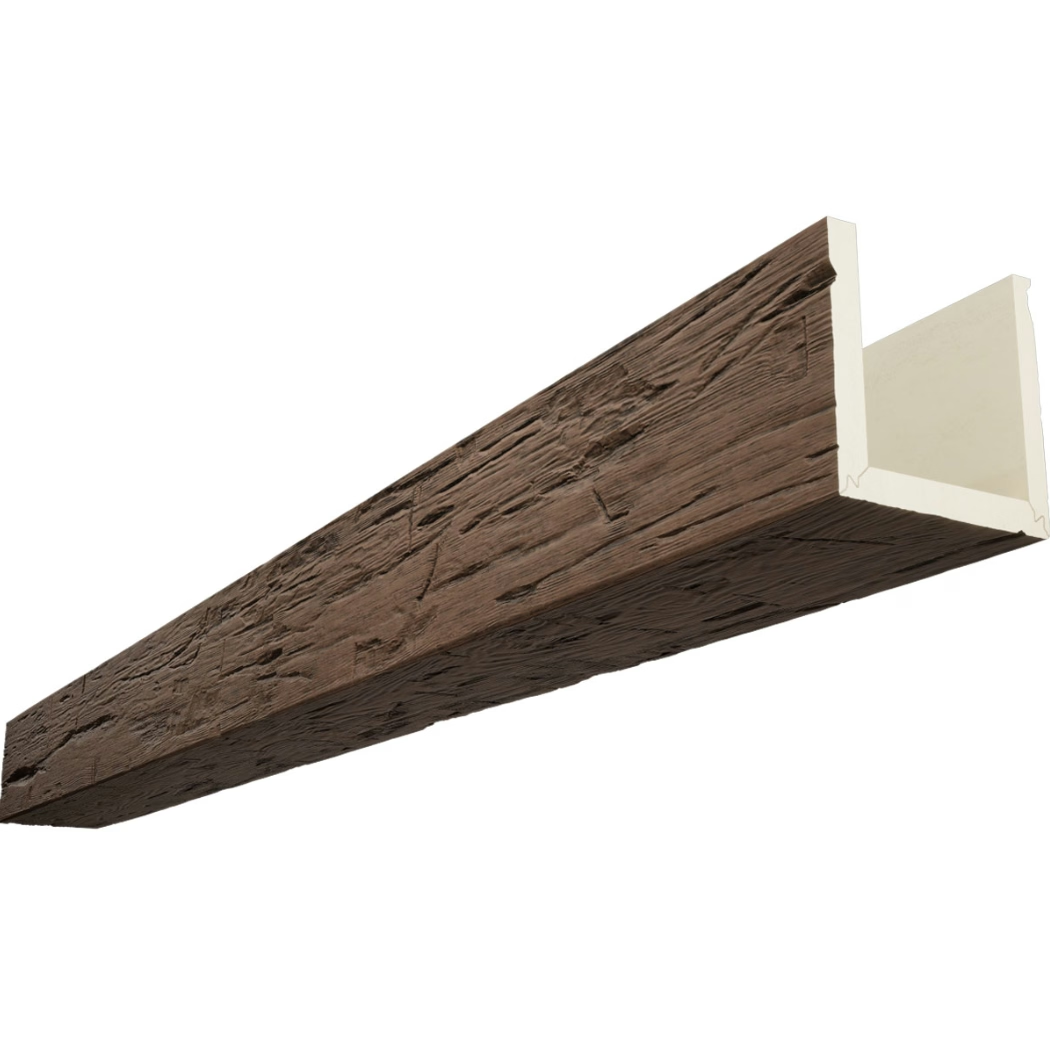
A logistics coordinator at a major faux beam manufacturer once calculated how many linear feet of beams fit into a standard 40-foot shipping container. The answer varied from 8,000 to 14,000 feet depending on the profile, the packaging method, and how carefully the load was planned. That range represented a swing of nearly 75 percent in shipping cost per linear foot. The difference between the best and worst packaging strategies was, in many cases, more expensive than the beams themselves. Bulk shippers who learn to optimize packaging and loading do not just save on freight. They make their entire beam product more competitive.
Why Packaging Matters for Faux Beams
Faux beams present a particular packaging challenge. They are long, lightweight, and easily damaged at the corners and at any surface detail. A solid timber beam can take a dent or a scratch and still be installed without much consequence. A faux beam with a chipped corner or a crushed detail has to be repaired or replaced, since the finish and the molded texture are part of what the customer is paying for.
The traditional packaging approach treats beams like lumber. They are stacked on a pallet, wrapped in plastic, and shipped. That approach works for short local hauls but fails in three important ways for bulk shipments. First, it leaves the beams vulnerable to damage from shifting during transit. Second, it wastes container space, since beams of different lengths cannot be stacked efficiently in a generic lumber configuration. Third, it makes unloading at the destination slow, since the crew has to unwrap and unstack every beam individually to find the right piece.
Packaging Goals for Bulk Shipments
The right packaging strategy for bulk shipments addresses three goals simultaneously. Protect the beams from damage during transit and handling. Maximize the use of container space to keep freight costs down. And simplify the unloading and staging process so the receiving crew can find what they need quickly. Achieving all three requires more thought than simply stacking beams on a pallet.
The first goal, protection, is the easiest to meet. Foam end caps, corrugated wraps, and internal bracing all work well, and most experienced manufacturers have developed proprietary packaging systems that combine these elements. The second goal, container efficiency, requires planning the load around the beam dimensions rather than the other way around. And the third goal, easy unloading, depends on clear labeling and a logical stacking sequence that matches the order in which the beams will be installed on site.

Container Loading Strategies That Work
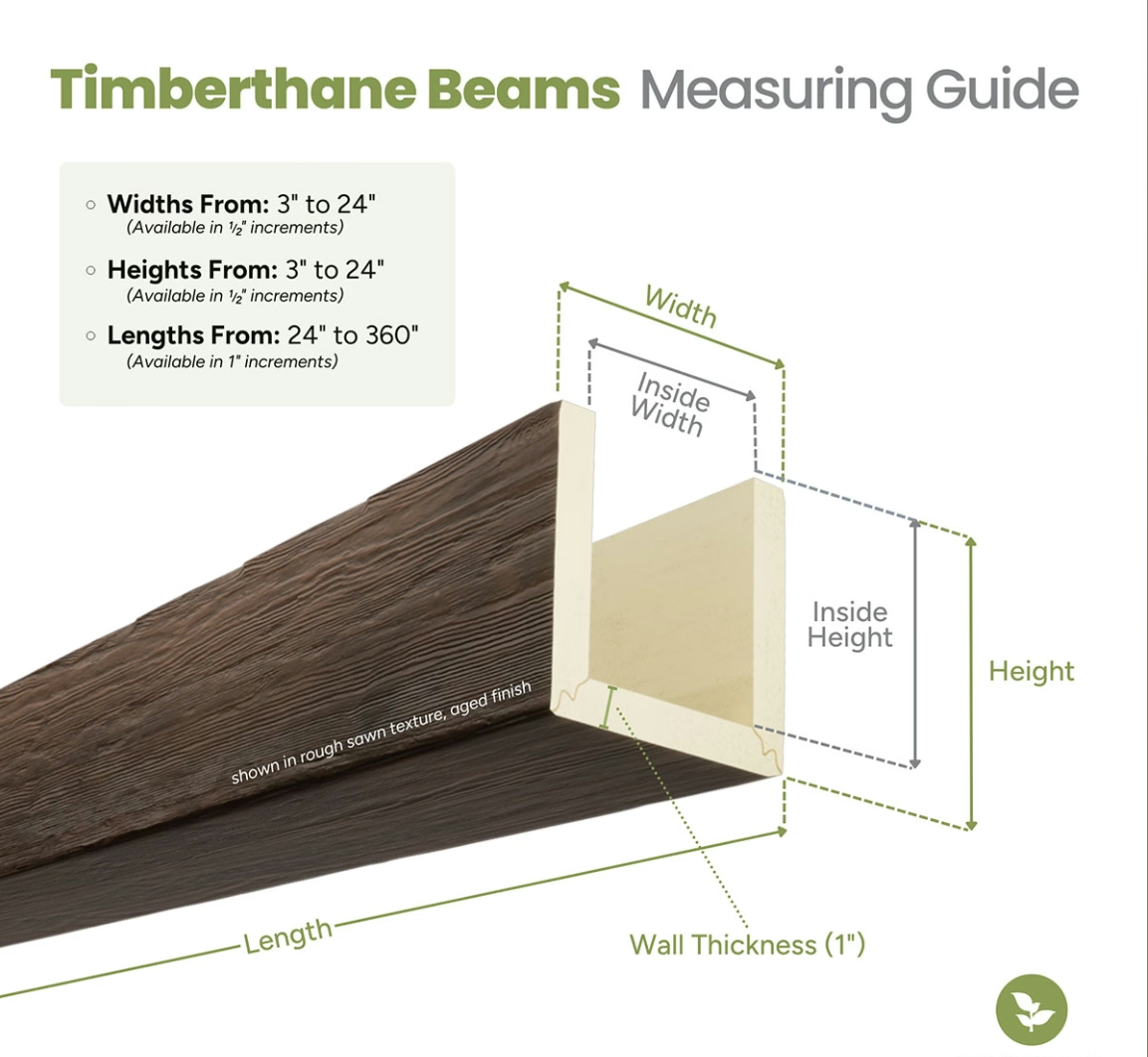
Container loading is a science, and faux beams have their own particular loading logic. The most efficient loads combine beams of similar lengths and profiles into a single container, with shorter pieces nested inside longer pieces where the profiles allow it. Hollow box beams are particularly amenable to nesting, since one beam can slide partially inside another to reduce the overall volume.
For very long beams that exceed standard container length, special high-cube containers or breakbulk shipping may be necessary. Some manufacturers have invested in beam designs that nest efficiently even at longer lengths, allowing the full range of standard sizes to fit within a single 40-foot container without requiring breakbulk or oversized shipping.
Optimizing for Mixed Orders
Most real-world beam orders include multiple profiles, lengths, and finishes. Loading a container with a mixed order efficiently requires planning the stacking sequence so that beams for different areas of a project are grouped together. A residential project might have beams for the great room, kitchen, and entryway, all specified at slightly different lengths. Loading those beams so they can be unloaded in the order they will be installed saves significant time on site.
Coordinating With Destination Logistics
The container is only one part of the journey. Once a beam container arrives at the port, it has to clear customs, get loaded onto a truck, and make its way to the job site. Each step in that chain has its own handling considerations, and the packaging strategy should account for all of them. Beams that are loaded into a container in reverse order, so the last ones loaded are the first ones accessible at the destination, save time at every transfer point along the way.
Packaging Materials Worth the Investment
Not all packaging materials are equal. The cheapest options save money on the front end but often fail during transit, leading to damage claims, replacements, and delays that cost far more than the packaging would have. The right packaging materials for faux beams balance protection, weight, and cost.
Foam end caps are nearly universal in quality beam packaging. They protect the most vulnerable parts of the beam, they are lightweight, and they are inexpensive. Corrugated wraps or sleeves add another layer of protection for the beam body, particularly important for beams with deep surface texture that could be damaged by abrasion against other beams. Internal bracing, in the form of cardboard or foam dividers, keeps stacked beams from shifting against each other during transit.
For ocean shipments specifically, moisture control matters. Corrugated materials can absorb humidity during long voyages, leading to mold or mildew on the beam surface. Manufacturers who ship internationally often use moisture-resistant packaging materials or include desiccant packs inside the container to control humidity during transit.
Reducing Packaging Waste at Destination
Sustainable packaging is increasingly important to buyers, particularly those pursuing green building certifications. Manufacturers have responded with packaging strategies that reduce waste, use recycled content, and minimize the environmental footprint of the shipment itself. Reusable crates, returnable bracing systems, and recycled corrugated materials all contribute to a more sustainable packaging approach without compromising beam protection.
Labeling Systems That Save Time on Site
Clear labeling is one of the cheapest upgrades a manufacturer can make to a beam shipment. Each beam, or each bundle of identical beams, can be labeled with a project reference number, a room or area designation, and the order in which it should be installed. That labeling lets the receiving crew stage the beams correctly the first time, without sorting through a pile to find the right piece. On a large project with hundreds of beams, the time savings add up fast.
Working With Manufacturers on Custom Packaging
For very large or unusual projects, custom packaging configurations can pay off. A hotel renovation that needs 600 identical beams in a single finish, for example, can be packaged very differently from a custom home that needs 30 beams of varying profiles and lengths. Custom packaging might include pre-sorted bundles for specific floors or zones, sequenced loading for efficient unloading, or specialized crating for beams that need to arrive in pristine condition.
Most manufacturers are willing to discuss custom packaging options for significant orders. The conversation usually starts with a detailed order list and a description of the destination logistics. From there, the manufacturer can propose a packaging strategy that balances protection, container efficiency, and ease of unloading. The cost of custom packaging is often recovered many times over in reduced damage claims, faster installation, and lower freight costs.
Communication Between Manufacturer and Recipient
The best packaging strategies come from a clear conversation between the manufacturer and the recipient. The manufacturer knows what is possible with their packaging systems. The recipient knows what is needed at the destination to make installation efficient. When those two parties communicate clearly before the order ships, the result is a packaging strategy that works for everyone involved. When they do not, the result is often a shipment that arrives inefficient, damaged, or both.
The end goal of any packaging strategy is simple. Beams arrive at the job site in perfect condition, organized for efficient installation, with as little wasted container space as possible. Manufacturers and shippers who focus on that goal save money, reduce waste, and deliver a better experience to the customers on the receiving end. For bulk beam orders, packaging is not an afterthought. It is a critical part of the product.
Technical References
ASTM standards cited in every specification
Test Data
Lab results from internal testing program
Updated 2026
Reviewed against current product specs