
The designer walked into the model unit, looked up at the ceiling for a long moment, and then asked a single question. The ceiling beams were clearly the centerpiece of the room, but something about the composition felt incomplete. The answer was brass. The beams had been specified in a beautiful dark walnut finish, but the hardware was a brushed nickel that did not relate to anything else in the space. Adding aged brass straps and matching pendant hardware transformed the ceiling from a handsome feature into a sophisticated composition. The detail made the difference between a ceiling that looked finished and one that looked designed.
Why Brass Works With Dark Wood
The combination of brass and dark wood is one of the longest-running partnerships in interior design. The warmth of brass complements the depth of dark wood, and the metallic quality of the hardware provides visual relief from what can otherwise be an overwhelming mass of dark material. Used thoughtfully, brass turns a dark beam ceiling from heavy to anchored, from imposing to inviting.
The psychological effect matters too. Brass reads as warm and traditional, which softens the visual weight of dark wood and makes the room feel more welcoming. In a room with a lot of dark material, that warmth is essential. Without it, the room can tip into feeling formal or even oppressive.
Choosing the Right Brass Tone
Not all brass is the same. Polished brass is bright and reflective, reading as glamorous and contemporary. Brushed brass is softer and more understated, reading as transitional. Aged brass or antique brass has a patina that suggests age and craftsmanship, reading as traditional or even historic. The right tone depends on the style of the room and the other metal finishes present.
For a room with a strong modern vocabulary, polished or brushed brass with clean lines works well. For a room that leans traditional or transitional, aged brass with more detailed profiles fits the architectural language. Mixing brass tones within the same room is generally a mistake, as it creates visual confusion and undermines the cohesion of the design.
Coordinating With Other Metals in the Space
Brass rarely exists alone in an interior. Door hardware, light fixtures, plumbing fixtures, and appliances all contribute their own metal finishes. The most successful designs coordinate these metals carefully. A room where the beams carry brass hardware, the light fixtures carry brass details, and the door hardware carries brass levers feels intentionally designed. A room where the beams carry brass, the lights carry chrome, and the doors carry matte black feels visually conflicted.
The coordination does not have to be absolute. Brass and matte black, for example, are a popular combination that allows for layered interest without chaos. Brass and chrome can coexist if one is clearly the dominant finish and the other appears only as a minor accent. The key is intentionality. Every metal finish in the room should feel like a deliberate choice rather than an accident of which fixtures happened to be available.
Hardware Styles for Beam Mounting
Brass hardware on dark wood beams serves two functions. It anchors the beams visually, providing detail at the mounting points. And it adds decorative interest, breaking up the long runs of beam with periodic focal points. The hardware choices range from simple to elaborate, and the right choice depends on the architectural language of the room.
Beam straps are flat brass pieces that wrap over the top of the beam at the mounting point. They read as structural even when they are purely decorative, which adds to the sense of permanence. Strap styles range from simple flat bands to detailed forged pieces with visible rivets. The simpler styles work in modern and transitional rooms, while the more detailed styles work in traditional and historic interiors.
Beam hangers are more three-dimensional, often L-shaped or U-shaped, and they wrap around the beam at the mounting point. They read as more substantial than straps and work well in rooms with heavier architectural details. Like straps, hangers come in styles ranging from simple to elaborate.
Decorative bolts or rosettes at the mounting points provide a more subtle hardware treatment. They read as fasteners even when they are purely decorative, and they add visual interest without dominating the beam. This style works particularly well in modern and transitional rooms where the goal is refinement rather than rustic character.

Finish Coordination Across Hardware and Beam
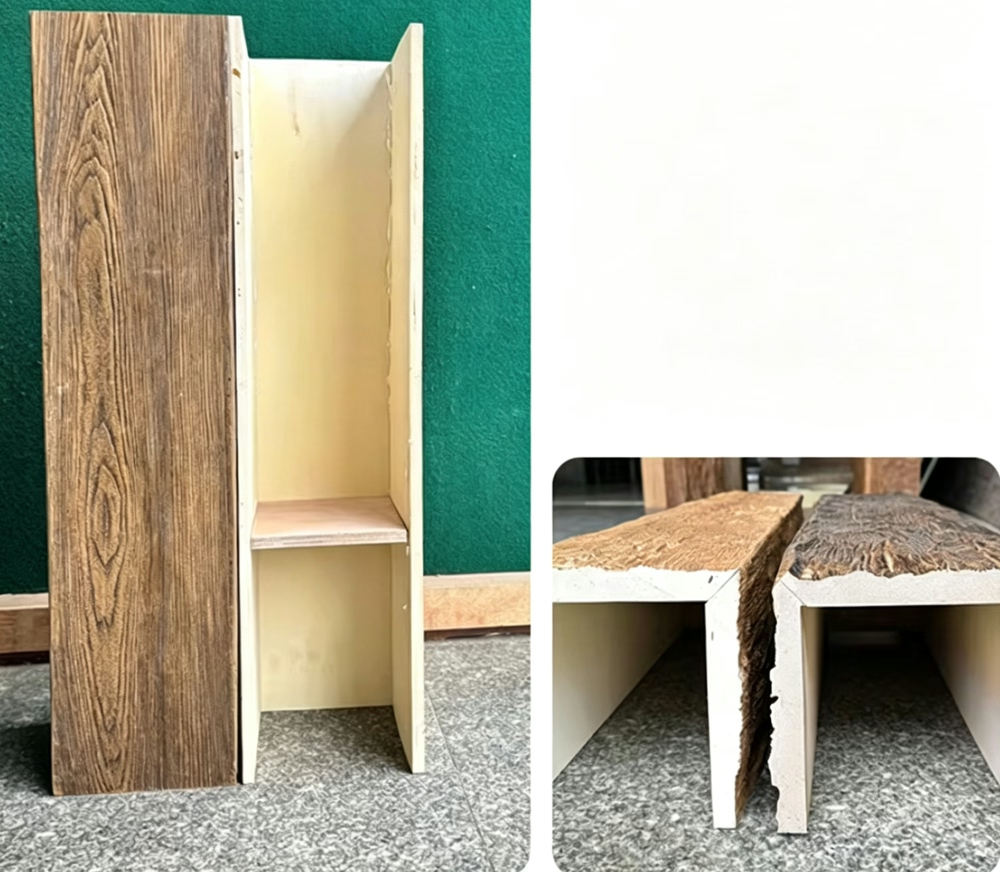
The beam finish and the brass finish have to work together. A dark walnut beam with bright polished brass reads as contemporary and slightly formal. The same beam with aged brass reads as warmer and more traditional. The same beam with brushed brass reads as transitional and contemporary. The brass tone can shift the entire feel of the room without changing anything else.
The beam finish itself can be adjusted to coordinate. A beam with very dark espresso tones pairs differently with brass than a beam with slightly warmer dark walnut tones. The most successful combinations typically share a dominant undertone. A warm brass paired with a warm walnut finish feels cohesive. A cool polished brass paired with a slightly cool dark wood finish also feels cohesive. Mixing warm and cool within the same combination feels unsettled.
Considering Patina and Aging
Brass and dark wood both age gracefully, and that aging can become part of the room's character. An aged brass finish on hardware looks better as it picks up a natural patina over time. A dark wood beam looks richer as the finish develops subtle variations through years of use. Designers who plan for this aging, rather than fighting it, create rooms that feel more authentic and inviting than rooms designed to look exactly the same in year twenty as they did in year one.
Handling Lighting Integration
Brass hardware on dark wood beams often pairs with brass light fixtures or brass fixture hardware. The coordination extends beyond the beam itself to include the chandelier above the dining table, the pendants above the kitchen island, the sconces in the hallway, and the recessed lighting trim if visible. A consistent brass tone across all of these elements creates a layered, intentional design. A mix of brass, nickel, and bronze across the same room's fixtures creates visual noise that distracts from the beam feature.
Installation Notes for Hardware on Faux Beams
Brass hardware on polyurethane faux beams requires some installation care. The hardware is typically mounted with screws that pass through the brass piece and into the beam itself. Pre-drilling the beam prevents splitting or cracking, particularly at the ends or corners where the polyurethane density may be slightly different than the center. Most manufacturers recommend a specific screw type and pilot hole size for their products.
The hardware placement should be planned before the beams are installed. Marking the mounting points on the beams and on the ceiling before installation ensures that the hardware lines up correctly with the structural mounting points. Adjustments after installation are possible but more difficult, particularly if the beam has already been finished.
If the hardware is being added to beams that have already been installed, a careful mockup is essential. The hardware should be held in position and the mounting holes marked before any drilling begins. A small error in placement can leave visible holes in the beam surface that are difficult to conceal.
Coordinating Hardware Finishes With Beam Finish
The brass hardware and the beam finish should ideally be coordinated before either is ordered. Sample chips from the beam manufacturer and small samples of the brass hardware, evaluated together in the actual room lighting, give the most reliable indication of whether the combination will work. The eye sees the relationship between finishes, and the only way to know whether that relationship works is to see it in the actual space.
Long-Term Maintenance
Brass hardware and dark wood beam finishes both require minimal maintenance, but a small amount of attention goes a long way. Dusting the brass periodically with a soft cloth keeps it looking bright. Occasional application of a brass polish, if the desired look is the bright reflective finish, restores the shine. For aged brass finishes, a light dusting is usually all that is needed. The beam itself can be wiped down with a damp cloth as needed, with no special cleaners or treatments required.
The combination of brass hardware and dark wood faux ceiling beams is a design choice that rewards careful planning. The two materials have a natural affinity, and when they are coordinated well, they create ceilings that feel both grounded and refined. Whether the design leans traditional, transitional, or modern, the right brass tone and the right beam finish can anchor the entire room in a way that few other ceiling treatments can match.
Technical References
ASTM standards cited in every specification
Test Data
Lab results from internal testing program
Updated 2026
Reviewed against current product specs


