
A contractor was finishing up a whole-house renovation and stopped to admire the front entry before installing the door. The opening had good proportions, but the surrounding wall was flat and unremarkable. The homeowner had asked for something to make the entry feel more significant without major structural changes. The solution was a faux wood lintel that spanned the top of the opening, projecting just enough from the wall to cast a subtle shadow and add architectural weight to the threshold. The lintel installation took less than an hour. The visual transformation was immediate. The entry went from a simple opening to a threshold with presence, and the homeowner understood immediately why they had asked for the detail.
What Faux Wood Lintels Do
A lintel is a horizontal element that spans the top of a door or window opening. In traditional construction, lintels serve a structural function, supporting the weight of the wall above the opening. In modern construction, the structural support is provided by the framing itself, and the lintel is purely decorative. That decorative role is where faux wood lintels shine.
A decorative lintel gives the opening visual weight and architectural significance. It frames the door or window in a way that draws the eye and creates a sense of arrival. It can also provide a transition detail between the wall surface and the opening, hiding minor irregularities and creating a clean, finished edge. The effect is subtle but powerful. A doorway with a decorative lintel reads as designed. A doorway without one reads as a hole in a wall.
When to Use Faux Wood Lintels
Faux wood lintels work in a wide range of applications. In residential settings, they frame front entries, interior doorways, passageways between rooms, and significant window openings. They add character to builder-grade homes, where the original construction is functional but unremarkable. They provide architectural detail in renovations where the homeowner wants to suggest a more established architectural style without the cost of structural changes.
In commercial settings, faux wood lintels frame entryways, conference rooms, and reception areas. They add warmth to corporate environments that might otherwise feel cold. They reinforce brand identity in hospitality and retail spaces by suggesting craftsmanship and permanence. And they provide architectural rhythm across long corridors with multiple door or window openings.
Why Polyurethane Is the Right Material
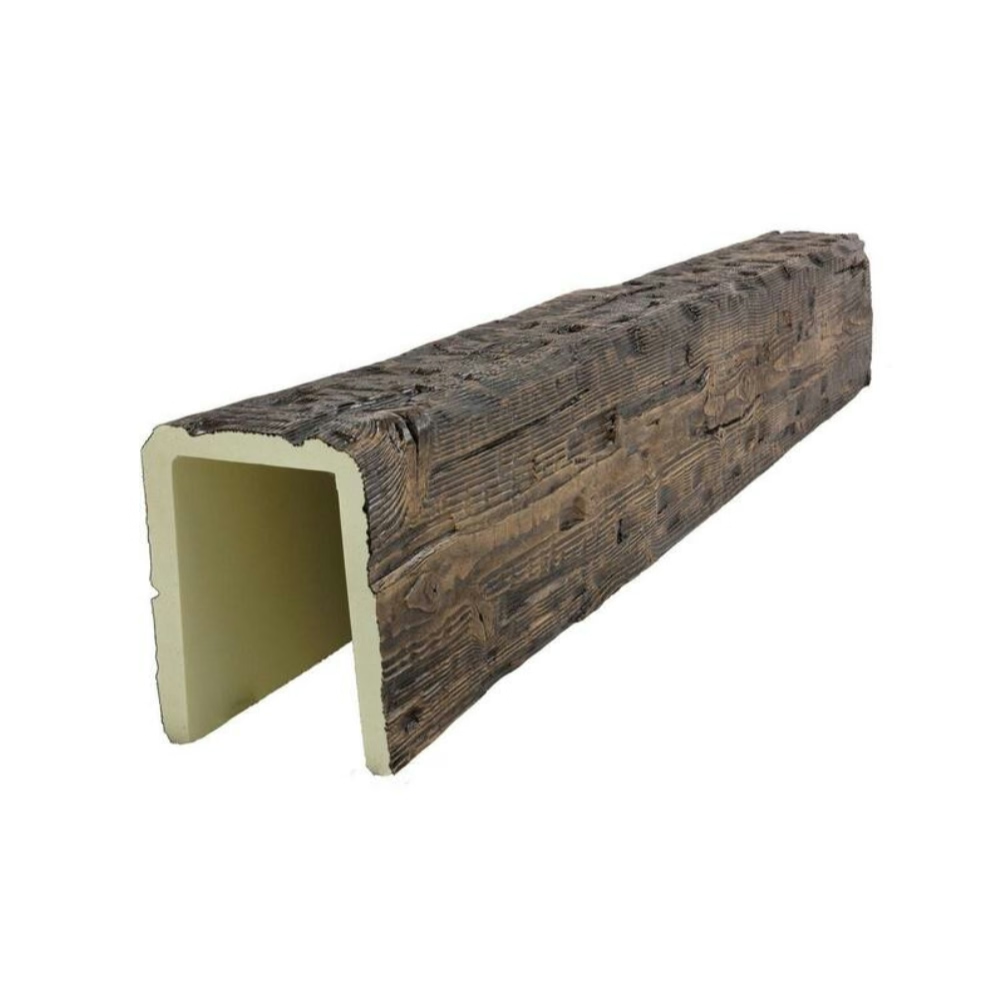
Polyurethane faux wood lintels offer several advantages over solid timber alternatives. The closed-cell foam structure is dimensionally stable, which means the lintel will not warp, crack, or check over time the way solid timber can. The lightweight material is easy to handle and install, requiring only basic tools and adhesive rather than the structural mounting hardware that heavier timber would need. And the casting process captures fine surface detail, allowing the lintel to carry convincing wood grain and texture at a fraction of the cost of the equivalent solid timber piece.
For projects that require a consistent appearance across multiple openings, polyurethane casting offers a level of uniformity that solid timber cannot match. Each lintel cast from the same mold is essentially identical, which creates a coherent look across an entire building. For projects that require custom profiles or unusual dimensions, the casting process accommodates customization more readily than solid timber fabrication.
Profile and Finish Choices
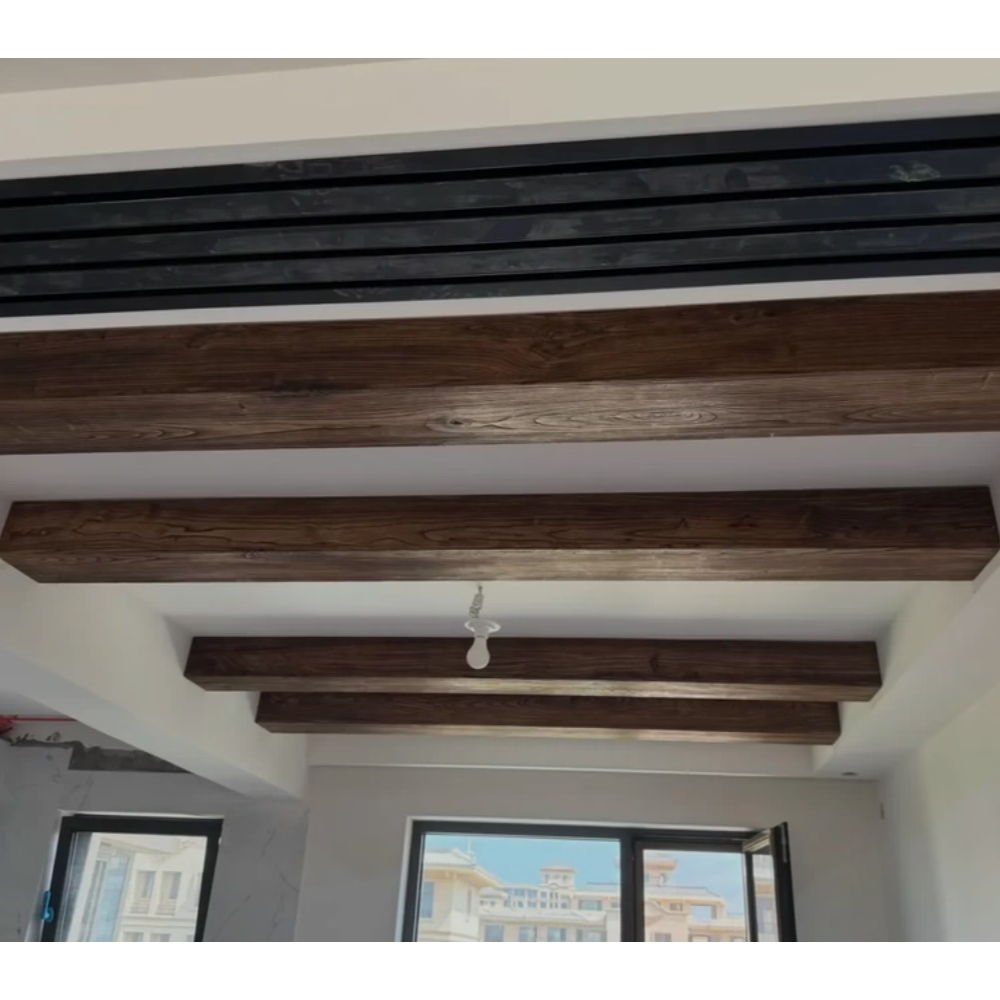
Lintels come in a range of profiles, from simple to elaborate. The right profile depends on the architectural language of the building and the role the lintel is meant to play. A simple flat profile reads as clean and modern, suitable for contemporary interiors. A slightly stepped or beveled profile reads as transitional, suitable for homes that bridge traditional and modern styles. A more detailed profile with molded edges or carved transitions reads as traditional, suitable for classic and historic-style architecture.
The depth of the lintel affects how it reads from below. A shallow lintel, projecting only a small distance from the wall, reads as subtle and refined. A deeper lintel, projecting further from the wall, reads as more substantial and architectural. The right depth depends on the wall construction, the width of the opening, and the visual impact the design calls for.
Finish Options
The lintel finish has to relate to the surrounding materials. A lintel that matches the door and window trim creates a cohesive look. A lintel that contrasts slightly with the trim creates a focal point at the opening. A lintel that matches the flooring or other major wood elements in the room ties the architecture to the furnishings.
For residential applications, warm wood tones in oak, walnut, or cherry are common choices. They pair well with traditional and transitional interiors and create a sense of warmth at the threshold. For commercial applications, darker tones or painted finishes are often preferred. They convey formality and refinement and work well in upscale hospitality and corporate settings.

Installation Considerations
Installing a faux wood lintel is a straightforward project that most homeowners can complete with basic tools. The lintel arrives pre-finished or ready for finishing, depending on the specification. The mounting surface should be clean, dry, and structurally sound. Construction adhesive provides the primary holding power, with finish nails or brads added for temporary support while the adhesive cures.
For longer lintels or those installed above wider openings, additional support during installation helps ensure proper alignment. A temporary brace or a helper holding one end while the other is secured makes the installation easier and more accurate. The lintel should be checked for level and proper projection from the wall before the adhesive fully sets.
Handling Wide Openings
For openings that span more than a single lintel can accommodate, the lintel can be built up from multiple pieces with a tight joint at the center. The joint should fall at a point where any minor imperfection will be invisible, such as behind a planned decorative element or at a natural visual break in the wall. Most manufacturers can produce lintels in custom lengths to minimize or eliminate joints entirely.
For very wide openings, the lintel may need to be supported by decorative corbels or brackets at the ends. These elements can serve both a structural and an aesthetic function, providing additional support while reinforcing the architectural detail of the opening. The corbels should match the lintel profile and finish for a cohesive look.
Coordinating With Trim and Millwork
A lintel rarely exists in isolation. It shares the opening with door or window trim, casing, and other millwork details. The lintel profile and finish should coordinate with these elements, either matching them exactly for a unified look or contrasting slightly for a layered composition. Inconsistency between the lintel and the surrounding trim reads as a mistake rather than a design choice, so the coordination deserves careful attention.
Working With Existing Construction
For renovations where the existing wall and opening are already in place, the lintel installation has to account for any irregularities in the surrounding construction. Walls that are not perfectly flat may require shimming behind the lintel to ensure even contact. Openings that are not perfectly square may require scribing the lintel ends to fit the actual wall surfaces. These adjustments are usually straightforward but should be planned for before installation begins.
Long-Term Performance
Polyurethane faux wood lintels require minimal maintenance and provide long service life. The closed-cell structure resists moisture absorption, so the lintel will not swell, warp, or develop mold the way solid timber can in humid environments. The surface finish, whether factory-applied or field-applied, can be refreshed periodically with a light coat of the same finish material to keep the lintel looking fresh.
For lintels installed in exterior applications, additional considerations apply. UV exposure, temperature extremes, and weather can all affect the finish over time. Selecting a lintel with appropriate UV protection and a durable exterior-rated finish extends the service life significantly. Most manufacturers offer specific exterior-grade products for these applications, and the manufacturer's recommendations should be followed carefully.
Decorative polyurethane faux wood lintels are a small detail that makes a significant difference in how a room or building reads. They give openings weight, presence, and architectural character. They do it at a cost that fits comfortably into most project budgets. And they install with basic tools in a fraction of the time that solid timber alternatives would require. For any project where door or window openings deserve a little more visual emphasis, decorative lintels are one of the most effective and affordable improvements available.
Technical References
ASTM standards cited in every specification
Test Data
Lab results from internal testing program
Updated 2026
Reviewed against current product specs


