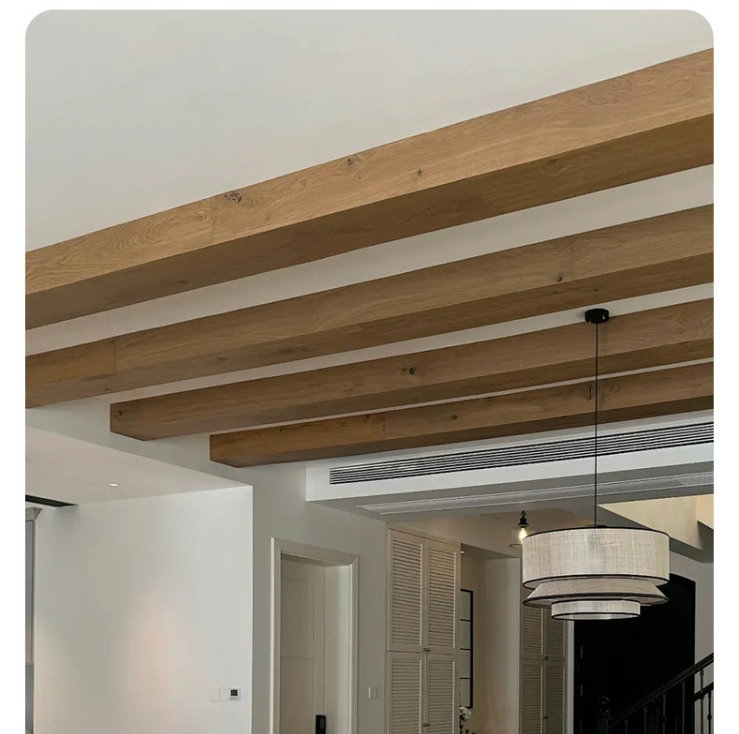
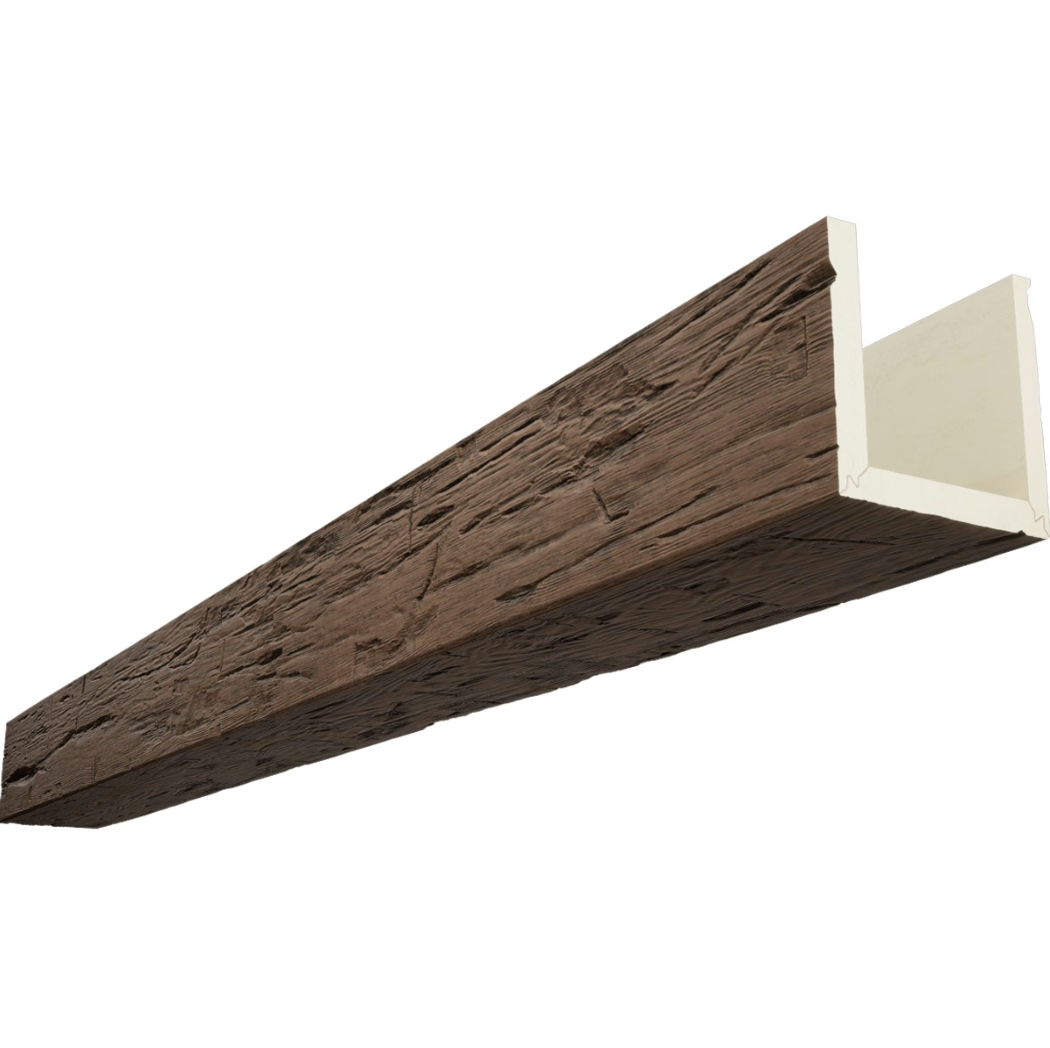
A polished concrete floor and matte white walls can feel almost too clean when a curator is trying to slow visitors down. Art galleries often need a third element overhead, something that anchors the eye and provides a quiet architectural cadence between canvases. PU faux wood beams deliver that element without the structural noise of solid timber.
Why galleries reach for polyurethane over solid timber
Solid oak or reclaimed pine beams have a romantic appeal, but they also bring real-world problems. A 6-meter beam can weigh 80 kilograms or more, which means coordinating with structural reinforcement, mounting points, and a crew willing to lift overhead. The polyurethane equivalent arrives at roughly one-fifth that weight, slides into place by two installers, and attaches with simple screws and brackets to standard ceiling framing.
Beyond weight, solid timber moves with humidity. In climate-controlled gallery spaces, the constant flux of opening doors and evening humidity can cause cupping or hairline cracks along the grain. Polyurethane is dimensionally stable. The texture stays where it was molded, and the color does not shift with seasonal moisture swings.
The visual rhythm curators are after
An art gallery ceiling is rarely a uniform field. It is segmented by track lighting, sprinkler heads, HVAC ducts, and the occasional structural column. A series of evenly spaced beams creates a horizontal grid that ties these elements together. Visitors feel the rhythm even when they cannot name it, and that rhythm becomes a calm counterpoint to the visual intensity of the walls.
Acoustics that do not disrupt the tour
Hard gallery surfaces reflect footsteps and conversation, which can build into a distracting hum during a crowded opening. Faux beams introduce additional surface area overhead, breaking up the flat reflective plane and softening the room's reverberation. For galleries that host talks or video presentations, this effect is more than decorative. It is functional.
Practical installation considerations
Polyurethane beams arrive in long sections that can be trimmed on site with standard carpentry tools. Most suppliers offer lengths from 1 to 6 meters, with matching end caps and connector sleeves that hide seams. For galleries with angled ceilings or skylight wells, fabricators can pre-cut miters to keep the line consistent around corners.
Mounting hardware
The simplest approach uses L-brackets screwed into blocking installed between joists or directly into a concrete deck with appropriate anchors. For longer spans, a continuous mounting cleat distributes load evenly. Because polyurethane is light, the bracket spacing can often exceed what solid timber would require, which means fewer penetrations in the ceiling and a cleaner finished look.
Finishing the seams
A quality installation team will run a small bead of paintable caulk along the seam where two beam sections meet, sand lightly after it cures, and finish with a tinted touch-up that matches the beam's stain. The seam becomes invisible at typical viewing heights, and the beams read as continuous members overhead.
Choosing the right profile
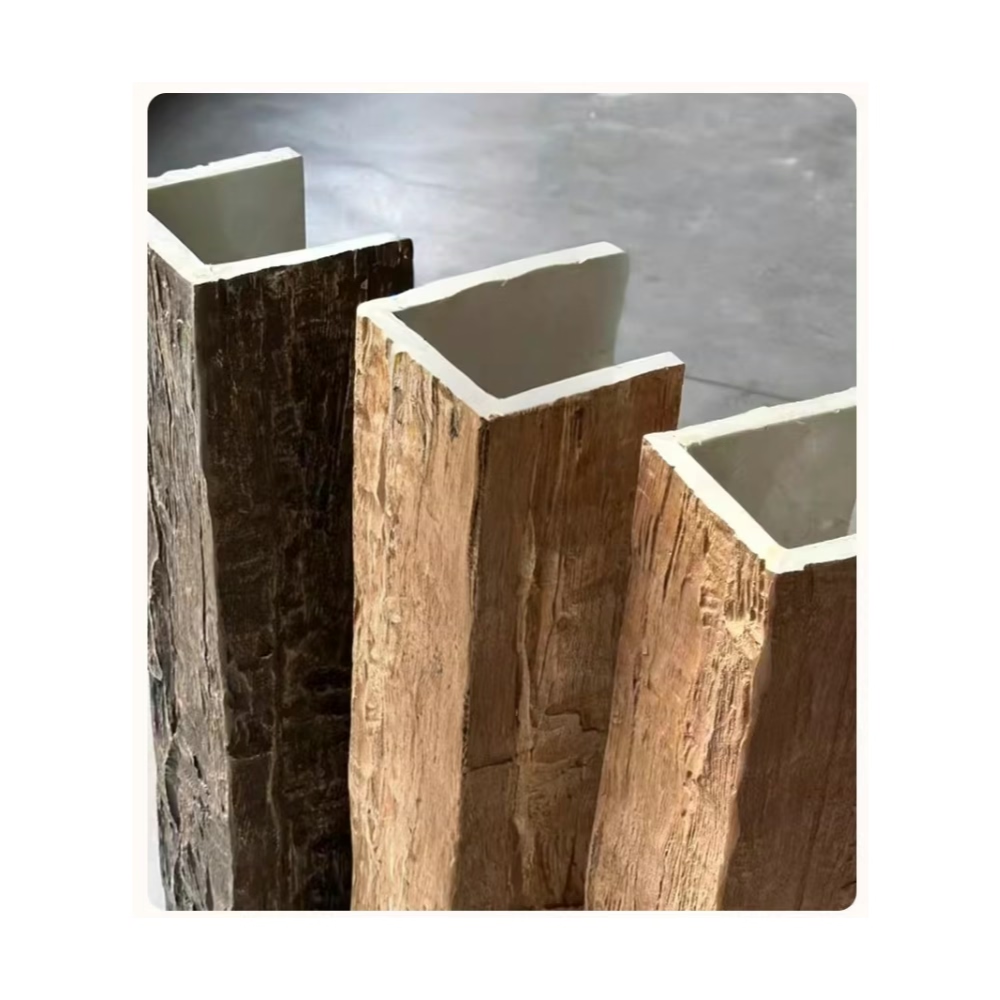
Galleries tend to favor one of three families of profiles.
The first is the classic hand-hewn look, with deep grain and slightly irregular edges. This pairs well with traditional painting collections, sculpture, or rooms meant to evoke an artist's loft. The second is a smooth, square-edged beam, almost minimalist in feel. It suits contemporary photography, video, and mixed-media installations where the ceiling should stay quietly architectural. The third is a vaulted or arched profile, useful for galleries housed in converted warehouses or churches with tall vertical volumes. The arched soffit hides modern services while echoing the building's heritage.
Color and tone
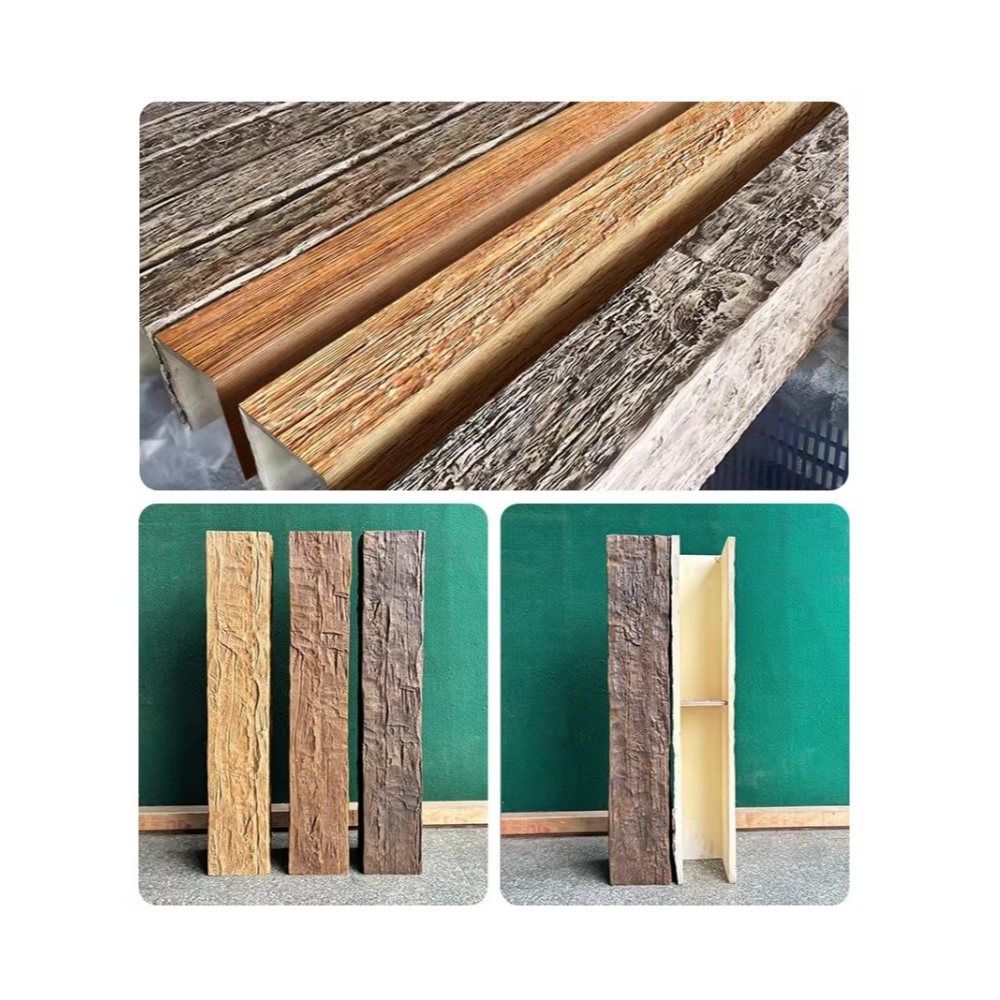
Color choice is rarely accidental in a gallery. Warm walnut or aged oak tones warm up white walls and complement figurative work, while driftwood gray and whitewashed finishes recede into minimalist interiors. Some curators prefer matte black or charcoal beams as a deliberate graphic gesture, especially when the exhibition program leans industrial or conceptual.
Working with curators and lighting designers
Lighting designers plan their track layouts around the beam grid. The relationship is symbiotic: beams break up the ceiling plane and give tracks a place to recess or hide, while track lighting washes the beams themselves and emphasizes their texture. When PU beams are planned in advance, lighting pockets can be built between them for a tailored look. When beams are added later, surface-mounted track simply attaches to the beam faces with no special hardware.
Acoustic panels and display hardware
Many galleries hang large canvases with security hangers that bolt directly into overhead structure. Polyurethane beams are not structural members, so any load-bearing hardware must anchor into the ceiling behind them, not into the beam itself. The good news is that the beam's hollow core hides cables, picture rail hooks, and even small sensors for occupancy-based climate control.
Maintenance between exhibitions
Between shows, the gallery team paints, cleans, and reconfigures the space. Polyurethane beams accept a light wipe-down with a damp cloth and, if the finish becomes scuffed, a careful spot-paint with the original stain color. They do not require the periodic re-oiling that solid timber would demand, which keeps maintenance budgets predictable.
Sustainability and budget notes
Polyurethane is a petroleum-based product, which is a fair concern for environmentally focused institutions. The counterargument is twofold. First, faux beams preserve the existing structure, avoiding the carbon cost of harvesting, milling, and shipping heavy timber. Second, modern PU formulations include recycled content, and the long service life offsets much of the upfront footprint. Galleries that track LEED or BREEAM credits should request the manufacturer's environmental product declaration and include it in their documentation.
On the budget side, faux beams typically run 30 to 60 percent below the cost of comparably sized reclaimed timber, once installation, transport, and finishing are included. For a 200-square-meter gallery, that difference can fund a substantial portion of the inaugural exhibition.
A short checklist before ordering
Before placing an order, the design team should confirm the beam profile, length, and finish on a physical sample board. They should walk the gallery with a laser measure and mark any ceiling irregularities that might require custom cuts. They should also confirm lead times, because custom finishes and matching accessories often extend the production window beyond the stock offering.
With the right specification, PU faux beams give a gallery a ceiling that quietly supports the art without competing with it. The timber warmth overhead frames each viewing experience, anchors the architectural composition, and stays out of the curator's way.

Long-term performance in climate-controlled spaces
Art galleries tend to maintain strict humidity and temperature ranges to protect sensitive works, often between 20 and 22°C with relative humidity held near 50 percent. This kind of stable environment is actually kind to polyurethane as well. Unlike natural wood, which absorbs and releases moisture with each seasonal shift, PU beams remain dimensionally constant. They will not swell, shrink, or check at the seams. For a gallery curator who is thinking in decades rather than years, this stability is a quiet but meaningful advantage.
Compatibility with sprinkler and HVAC systems
Sprinkler heads and HVAC diffusers frequently sit in the ceiling plane. Where a beam would intersect with one of these systems, installers can either notch the beam on site or order a pre-cut opening from the manufacturer. Because polyurethane is so easy to work with, on-site notching is straightforward and does not compromise the structural integrity of the beam. HVAC diffusers can be trimmed to fit neatly against the beam face, and sprinkler escutcheons can be painted to match, preserving a unified look overhead.
How to brief a fabricator for a custom profile
When a gallery has an unusual ceiling height or a need to integrate with existing millwork, custom fabrication becomes worthwhile. The brief should include a dimensioned drawing of the ceiling with the proposed beam layout, photographs of the site showing ceiling conditions and lighting, and a finish reference such as a physical sample or a Pantone chip. The fabricator will usually return a shop drawing for approval within a week, and production typically follows in two to four weeks depending on the queue.
Specifiers should also ask for matching accessories in the same finish, including end caps, T-junctions, and any corbels or knee braces. A coherent accessory package is what separates a professional installation from one that looks improvised. The beams themselves carry the look, but the small fittings are what make it feel finished.
Technical References
ASTM standards cited in every specification
Test Data
Lab results from internal testing program
Updated 2026
Reviewed against current product specs