
A wedding is one of the most photographed events most people will ever attend. The dress, the flowers, the cake, and the couple are obvious subjects, but the venue ceiling is in nearly every photograph taken from below. Wedding venue owners who invest in the ceiling see that investment pay off across every booking. PU faux wood beams give any venue the warm, romantic overhead architecture that wedding photography loves.
Why wedding venues are uniquely suited to faux beams
A wedding venue serves a single purpose for a few hours, but the visual identity of the venue is what couples book. The ceiling is part of the marketing. Venues with bare ceilings or industrial finishes lose bookings to venues with finished ceilings, even when the rest of the venue is comparable. Polyurethane beams give venue owners a fast, affordable way to upgrade the overhead architecture and the marketing at the same time.
Lightweight for fast installation
Wedding venues often have multiple event spaces that need to be turned around between bookings. A solid timber ceiling installation would take weeks and shut down the venue during the work. Polyurethane beams can be installed in a few days, with minimal disruption to the booking calendar.
Themable finishes
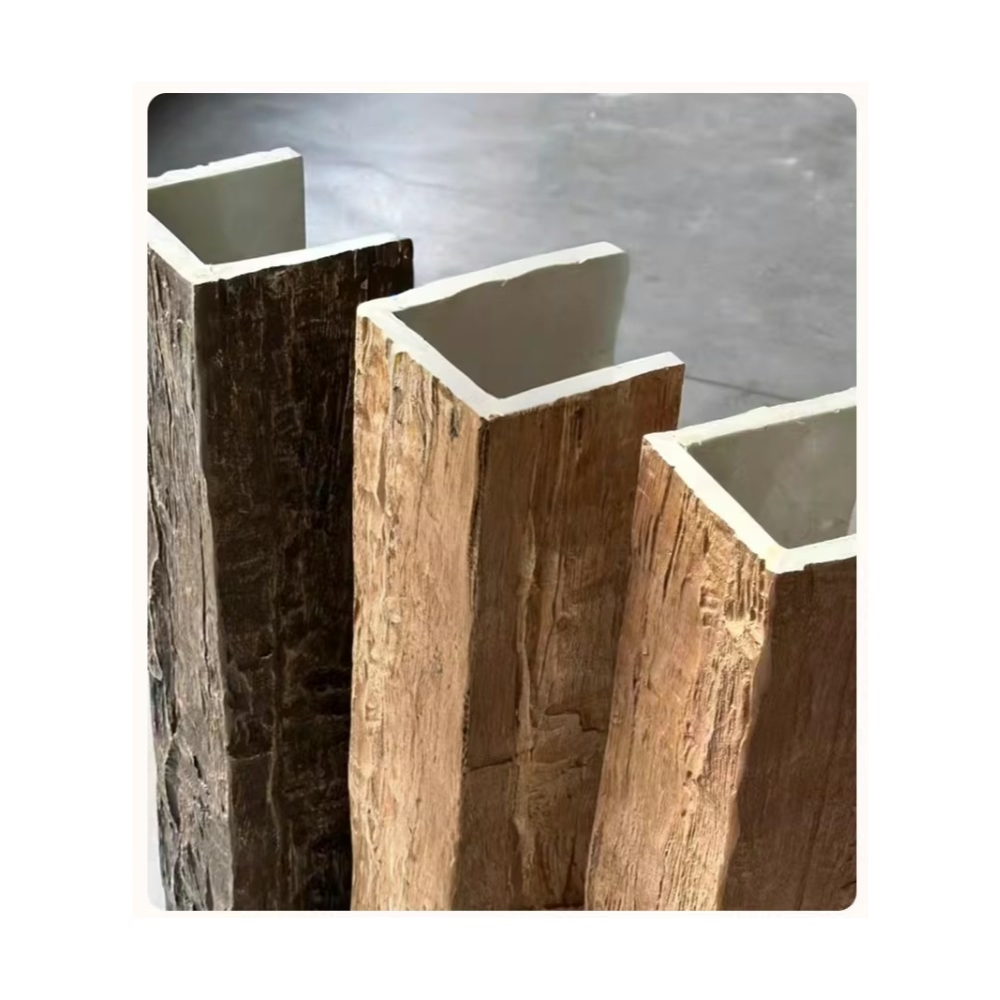
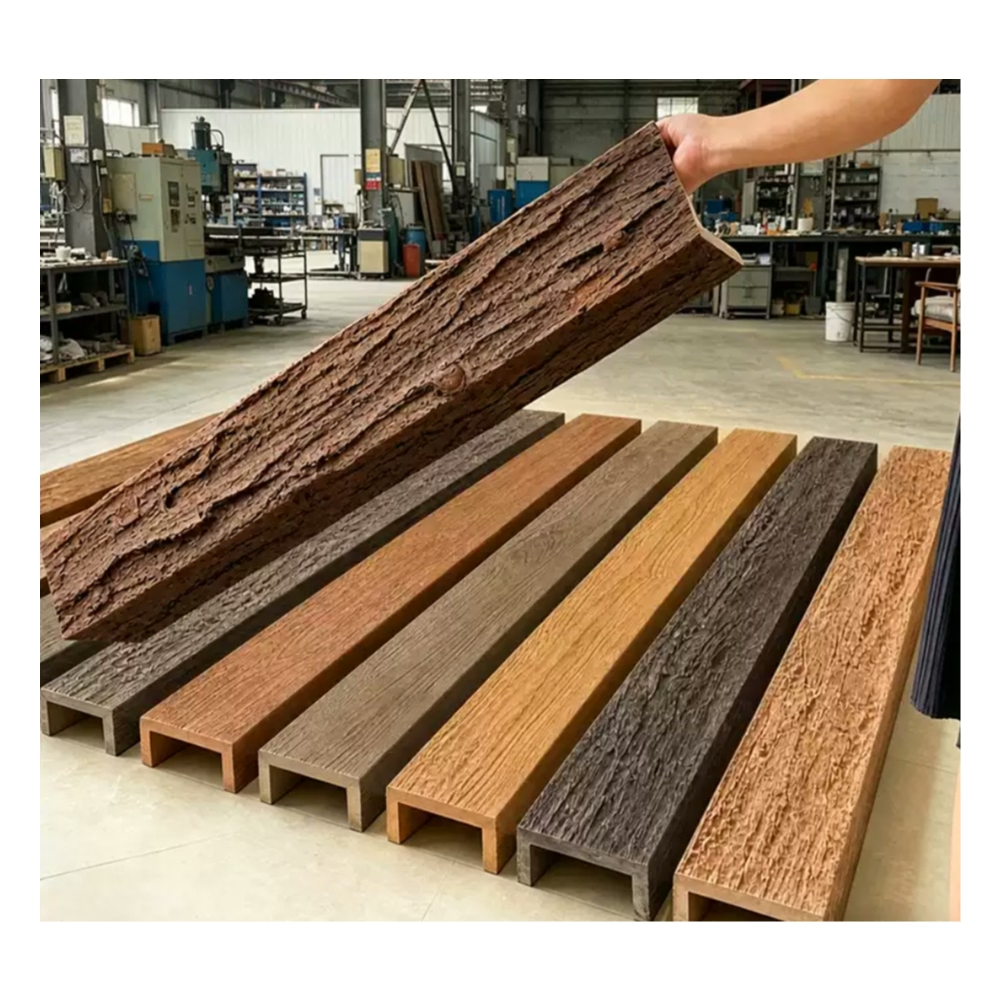
Couples have wildly different preferences for wedding aesthetics. A rustic barn wedding calls for rough-sawn oak beams. A formal ballroom wedding calls for dark walnut beams. A coastal wedding calls for whitewashed beams. PU faux beams arrive in a range of factory finishes that can match virtually any wedding theme without custom staining.
Reusable across events
Unlike flowers or paper decorations, faux beams stay in place across many weddings. The investment amortizes over years of bookings, and the maintenance is minimal. A wedding venue that installs polyurethane beams recovers the investment faster than almost any other venue upgrade.
How venue owners think about the ceiling
Venue owners balance a few competing concerns. They want the venue to feel polished for every event, but they also need to keep costs predictable. They want the venue to be distinctive so couples remember it, but they also want it to be flexible enough to host different styles of wedding. PU faux beams hit both marks.
Distinctive without being too themed
A beamed ceiling reads as romantic and timeless across many wedding styles. It does not impose a specific aesthetic. Couples can decorate with flowers, fabric, lights, or other elements that suit their theme, while the beams provide a consistent architectural backdrop.
Photogenic from every angle
Wedding photography captures the venue from many angles. The ceiling overhead the couple during the ceremony, the ceiling over the dance floor during the reception, and the ceiling over the head table during dinner are all in frame. A beamed ceiling photographs beautifully in every one of these contexts.
Acoustic considerations
A wedding venue is loud. Music, conversation, laughter, and applause combine into a high-energy acoustic environment. The textured undersides of faux beams scatter sound and reduce the harsh echo that bare ceilings produce. The improvement is significant in venues with hard floors and minimal soft furnishings.
Patterns that work for wedding venues
The right beam pattern depends on the venue's architecture and the event styles it hosts.
Parallel beams for long, narrow venues
For long, narrow venues, parallel beams running across the width create a clear architectural rhythm. The beams visually widen the space and create a series of natural photo zones. Each beam can host a different lighting effect, which is useful for separating the ceremony space from the reception space within a single room.
Coffered ceilings for grand ballrooms
A coffered ceiling created by beams is one of the most popular wedding venue upgrades. Each coffer can host a small chandelier, a hanging floral installation, or a draped fabric panel. The result is a classical, romantic overhead that photographs beautifully.
Perimeter beams for tented or temporary structures
For outdoor or tented venues, perimeter beams around the edges of the tent create a sense of enclosure without closing off the sides. The beams host lighting, fabric, and greenery that frame the event space. This is a popular application for venues that host outdoor weddings and need to manage the visual transition between the venue and the surrounding landscape.
Truss and beam combinations for industrial venues
For industrial venues with exposed steel trusses, adding wood-finished faux beams alongside the steel creates a softer, warmer atmosphere. The beams complement the steel without competing with it, and they provide additional surfaces for hanging decor and lighting.
Coordinating with event lighting
Event lighting is a major part of any wedding. The ceiling needs to support the lighting design rather than constrain it.
Uplighting on the beams
Uplighting on the beams creates a dramatic, romantic effect. Small LED fixtures mounted on the floor point up at the beams, washing the wood finish with a colored glow. The effect photographs beautifully and can be coordinated with the wedding's color palette.
Pendant lights and chandeliers
Hanging pendants, chandeliers, and lanterns from the beams adds vertical layering. The beams provide anchor points that look more architectural than rigging points, which is important for venues that photograph well. The fixtures can be permanent features of the venue or rentals that arrive with the wedding decorator.
String lights and fairy lights
String lights draped between beams create a canopy effect that is one of the most popular wedding lighting styles. The beams provide natural attachment points, and the lights create a soft, twinkling overhead that works for ceremonies, receptions, and dances.
Pin spots and focused lighting
Pin spots focused on the head table, the cake table, or the floral arrangements create dramatic focal points. The pin spots attach to the beams or to the ceiling between them, and the focused light draws the eye to the elements the couple has chosen to feature.
Working with hanging decorations
Wedding venues need to support hanging decorations: floral installations, fabric drapes, paper lanterns, and ribbon canopies. Beams provide architectural anchor points for all of these.
Floral installations
Large floral installations hanging from the ceiling have become a signature element of upscale weddings. The installations weigh significant amounts and need to be hung from structural anchor points. PU beams can support reasonable loads if the anchoring goes through the beam and into the structural ceiling above. The beam itself acts as a decorative cover for the anchor hardware.
Fabric drapes and canopies
Fabric drapes hung from the beams soften the space and create intimacy. The fabric can be ceiling-to-floor panels, overhead swags, or full canopies over the dance floor. The beams provide a clean anchor line for the drapes, and the fabric conceals the rigging hardware.
Paper lanterns and origami installations
Paper lanterns and origami installations are popular for bohemian and whimsical weddings. They hang at varying heights, creating a layered effect. The beams provide anchor points that distribute the load across the ceiling rather than concentrating it at a single rigging point.
Practical considerations for venue owners
Venue owners need to think about a few practical concerns beyond the design.
Installation between events
A venue cannot afford to close for weeks during installation. Polyurethane beams install in days, and most venues can complete the work between bookings or during slow seasons. A phased installation, with one section completed at a time, lets the venue stay operational throughout the project.
Maintenance between events
Beams need minimal maintenance between events. A wipe-down with a damp cloth removes most marks, and touch-up paint handles the occasional scuff. The beams do not require any special cleaning products or techniques, which is important for venue staff who are cleaning multiple event spaces in a single day.
Replacement of damaged sections
If a section of beam is damaged by an event, it can be replaced individually. The damaged section is cut out, a matching piece is cut and installed, and the seam is finished to match the original. The repair is fast and minimally disruptive.
Safety and code compliance
Venues must meet fire codes, accessibility requirements, and other regulations. PU beams should be specified to meet the local flame-spread and smoke-development requirements. Designers should confirm the rating with the manufacturer and document compliance for the venue's records.

The business case for venue upgrades
Wedding venues are competitive businesses. Couples book venues 12 to 24 months in advance, often based on photographs and reviews. A venue with a beautifully finished ceiling photographs better, gets more inquiries, and commands higher prices than a venue with bare ceilings.
The cost per booking
A polyurethane beam installation that costs $20,000 can be amortized over 200 weddings at $100 per booking. Most venue owners raise their prices after the upgrade, recovering the cost faster than the straight amortization suggests. The ROI on the upgrade is generally 18 to 36 months.
The marketing impact
A finished ceiling shows up in every photograph taken at the venue. These photographs become marketing material that the venue uses on its website, social media, and advertising. The cumulative effect of thousands of photographs featuring the ceiling is a strong brand association between the venue and beautiful weddings.
The customer experience
Couples who book a venue with a finished ceiling feel that they are getting more value than they would at a comparable venue with bare ceilings. The experience from the moment guests arrive is more polished, more romantic, and more memorable. This translates into better reviews, more referrals, and a stronger reputation in the local wedding market.
Coordinating the beam finish with the venue's brand
Most wedding venues have a brand identity expressed through their name, their logo, their marketing, and their physical finishes. The beam finish should align with this brand.
Rustic venues
Rustic venues pair with rough-sawn oak or aged pine beams. The finish should look weathered and slightly imperfect, which suits the brand's aesthetic.
Elegant ballrooms
Elegant ballrooms pair with smooth walnut or mahogany beams. The finish should look refined and slightly formal, which suits the venue's upscale positioning.
Modern industrial venues
Modern industrial venues pair with painted or pale-toned beams. The finish should look clean and contemporary, which suits the venue's modern positioning.
Coastal and outdoor venues
Coastal venues pair with whitewashed or driftwood-toned beams. The finish should look weathered and sun-bleached, which suits the natural setting.
A short note on multi-purpose venues
Many wedding venues host corporate events, galas, and private parties in addition to weddings. The beam finish should work across all of these uses. A neutral finish that suits multiple aesthetics is often the best choice. Warm walnut or medium oak work for most event types, while very dark or very rustic finishes can be too specific.
Venue owners who want maximum flexibility should consider a beam finish that can be dressed up or down with lighting, fabric, and decor. The beams provide the architectural canvas, and the event-specific elements provide the personality. This approach gives the venue maximum booking potential across different event types.
Technical References
ASTM standards cited in every specification
Test Data
Lab results from internal testing program
Updated 2026
Reviewed against current product specs


