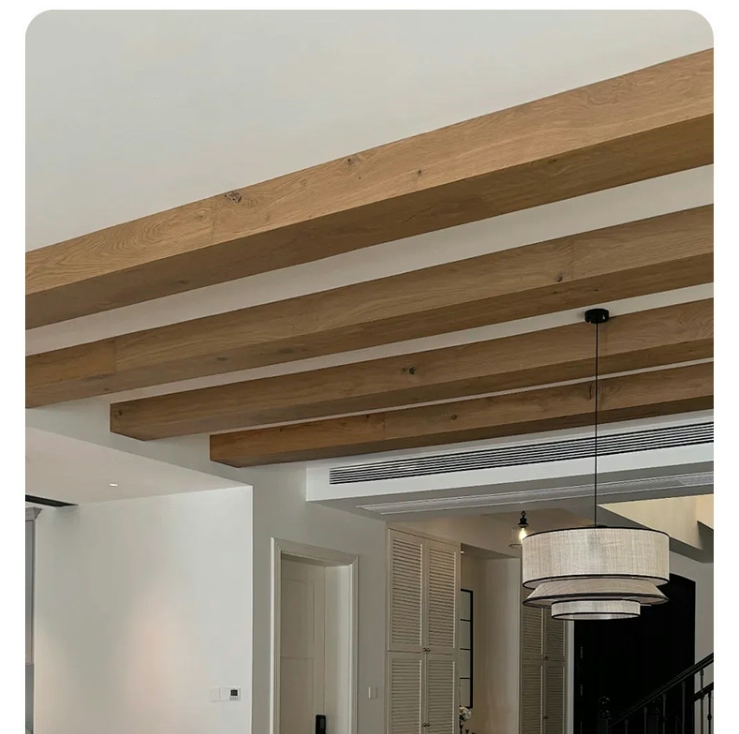
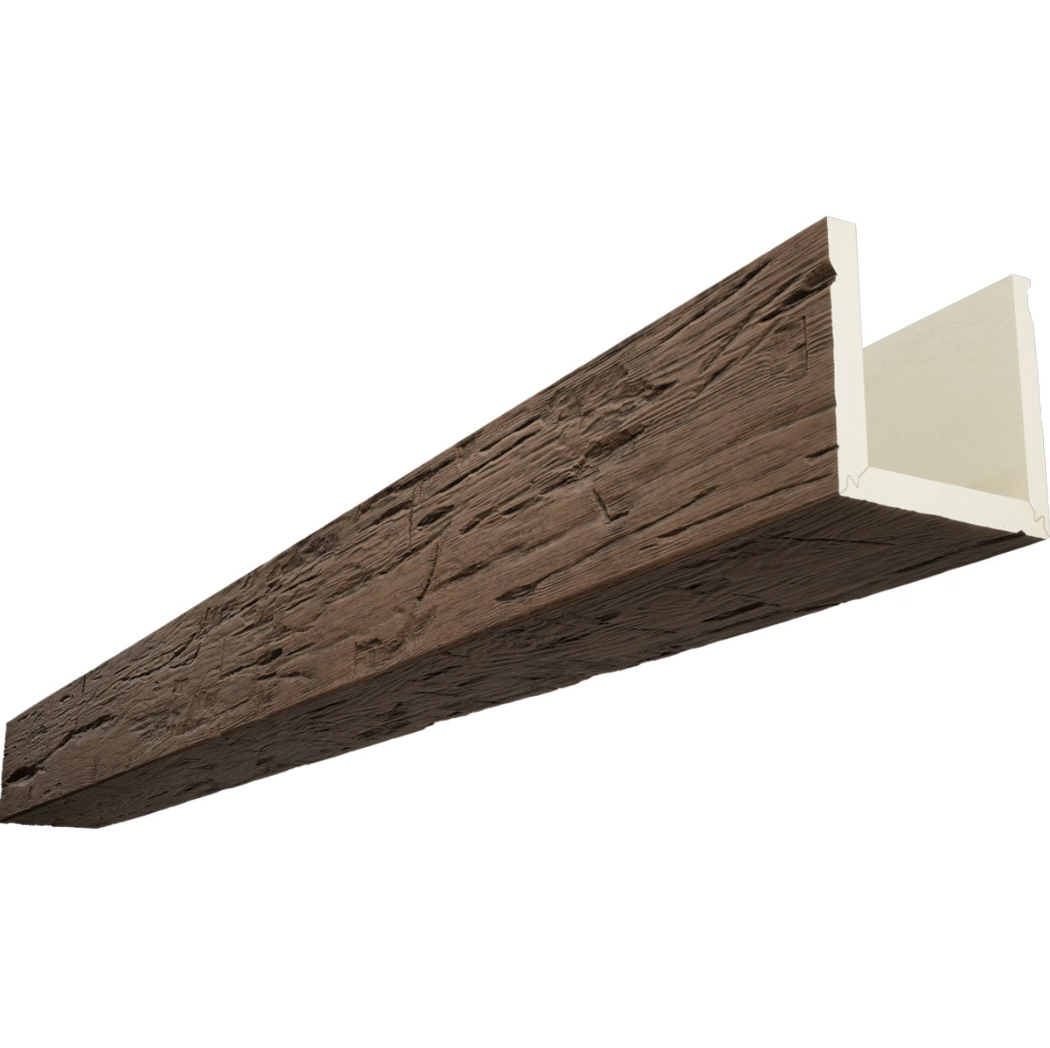
A wine cellar is more than storage. It is a room that protects the wine, but it is also a room that reflects the wine's history and value. Visitors who tour a wine cellar or enjoy a tasting there form an impression of the collection based on the entire environment, including the ceiling overhead. PU faux wood beams give a wine cellar the vintage character of an old-world vault without the moisture problems that solid timber would introduce.
The unique environmental challenges of wine cellars
A wine cellar maintains a specific climate: cool temperatures, often 55 to 60°F, and relatively high humidity, often 60 to 70 percent. This climate is ideal for wine but challenging for many building materials. Solid timber swells, twists, and can develop mildew in these conditions. Polyurethane is far more stable, holding its shape and finish through years of humid, cool conditions.
Why solid timber struggles in cellars
Solid timber beams absorb moisture from the air. Over time, they can warp, cup, or develop surface mold. They may also off-gas volatile organic compounds that can affect wine flavors, although this is more of a concern with new timber than with old timber. The traditional wine cellar uses old, well-seasoned timber that has already released most of its volatile compounds, but this is not always practical or affordable.
Polyurethane's stability in humid environments
Polyurethane is dimensionally stable across a wide range of humidity levels. It does not absorb moisture in the same way that solid timber does, and it does not warp or twist with seasonal changes. The factory finish remains consistent for years, even in the demanding environment of a wine cellar.
Compatibility with cellar cooling systems
Wine cellar cooling systems often produce localized humidity variations near the cooling units. Polyurethane beams are unaffected by these microclimates, while solid timber would respond to the variations with movement and possible finish degradation.
Selecting the right faux beam finish for a wine cellar
The finish is the most important decision in a wine cellar. The wrong finish breaks the vintage atmosphere that the cellar is trying to create.
Aged oak
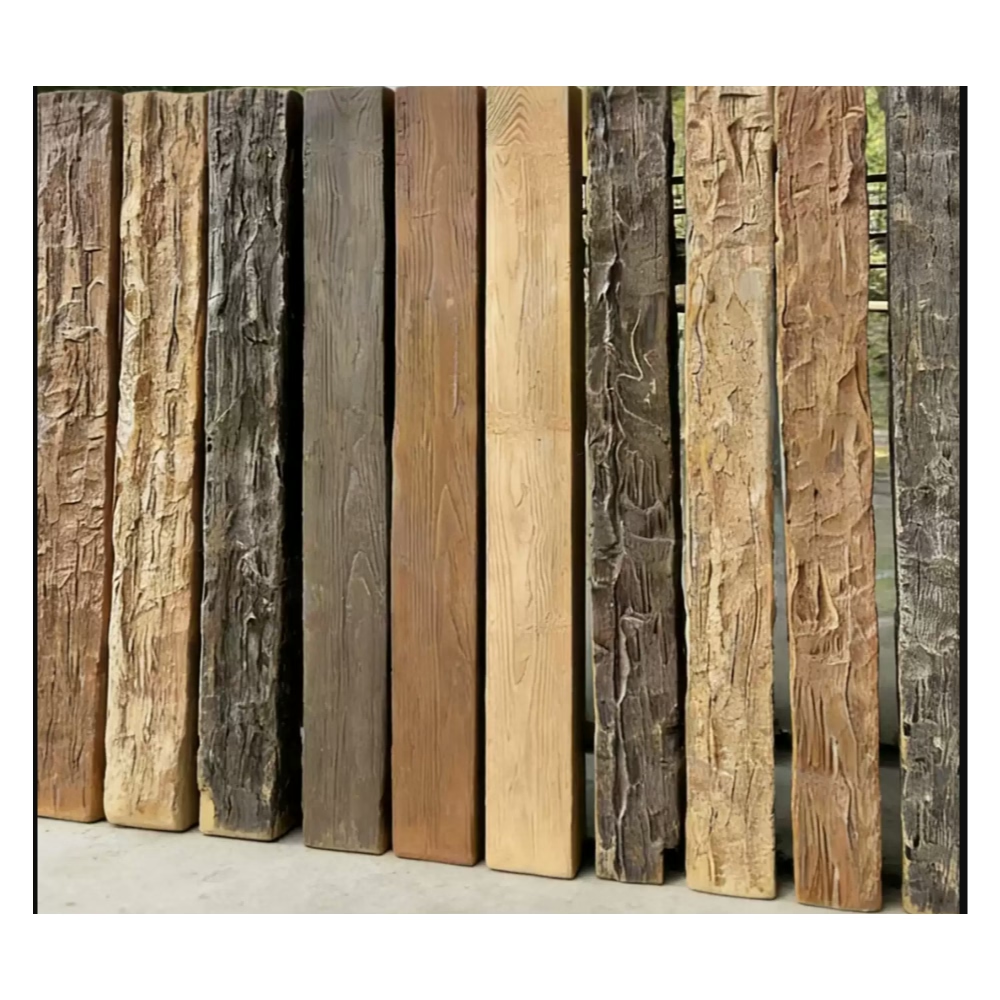
Aged oak is the most popular choice for traditional wine cellars. The finish should have visible grain, slight color variation, and a warm undertone. Aged oak pairs with brick or stone walls, terra-cotta floors, and wrought-iron details.
Reclaimed pine
Reclaimed pine has a more rustic character, with knots, cracks, and visible weathering. This suits country-style cellars and cellars in converted barns or farmhouses. The finish should look slightly silvery in the grain depressions, which gives the impression of decades of aging.
Dark walnut
Dark walnut is appropriate for more formal wine cellars with a refined aesthetic. The finish should be rich but not glossy. Matte or low-sheen finishes age better in cellar environments than high-gloss options.
Distressed and weathered finishes
Some wine cellars use deliberately distressed or weathered finishes that look as if the beams have been in place for centuries. These finishes work particularly well in cellars that are part of a tasting room, where the visual atmosphere is important.
Coordinating with the racking
The beam finish should coordinate with the wine racking finish. If the racking is in mahogany or cherry, the beams should match or complement that tone. If the racking is in pine or oak, the beams should match. A consistent finish across the racking and the ceiling creates a coherent cellar interior.
Working with the cellar's layout
Most wine cellars have a specific layout determined by the racking system, the cooling equipment, and the access points. The beam layout should respect these elements.
Working around racking walls
Wine racking often runs floor to ceiling along two or three walls. The beam layout should not interfere with the racking. Beams run perpendicular to the racking walls can pass over the top of the racks without issue. Beams running parallel to the racking walls should be located where the racks are not present, such as in the central access area.
Working with cooling and humidity equipment
Wine cellar cooling equipment, including evaporator units and ductwork, requires clearance for proper operation and airflow. The beam layout should not obstruct the equipment's intake or discharge. Designers should confirm the equipment specifications before installing any beams in the equipment's clearance zone.
Working with cellar doors
Cellar doors are typically solid, weather-stripped, and made of wood. They swing open to provide access to the cellar. Beams should not interfere with the door swing, the door frame, or the weather stripping. A beam placed too close to the door can damage the weather stripping when the door swings fully open.
Working with tasting areas
Many wine cellars include a small tasting area inside the cellar itself. The tasting area is often furnished with a small table, stools, and possibly a small bar. Beams overhead the tasting area can create an intimate zone, with the beam placement defining the area without requiring a physical partition.
Lighting in the wine cellar
Wine cellar lighting requires care. The light should illuminate the space without damaging the wine or creating excessive heat. LEDs are the standard choice for cellar lighting, and beams support LED integration well.
Low-heat LED fixtures
LED fixtures produce very little heat, which is important in a cellar where temperature stability matters. Beams can host LED strips, puck lights, or small directional fixtures. The wiring runs through the hollow beam profile, with the fixtures mounted to the beam faces or in the ceiling between beams.
Focused lighting on the racking
Focused lighting on the racking helps visitors read the wine labels. Small directional LED fixtures mounted to the beams point at the racking faces, with the light grazing the bottles. The effect is dramatic and functional.
Ambient lighting for the tasting space
The tasting area benefits from ambient lighting that does not glare off the wine glasses. Indirect lighting from LED strips tucked into the beam-corners creates a soft glow that is ideal for tasting. The light reflects off the ceiling, providing even illumination without harsh direct light.
UV considerations
Wine is sensitive to ultraviolet light. Cellars should minimize UV exposure, which means avoiding fixtures that emit significant UV. LEDs are safe, but the overall lighting plan should account for any natural light entering the cellar. Beams should not interfere with blackout measures that the cellar may use to control light exposure.
Acoustic behavior in the cellar
Wine cellars are typically quiet rooms. Bottles are moved carefully, conversations are low, and the cooling equipment is the loudest element. Beams scatter sound and reduce the reverberation that bare concrete or stone ceilings would produce.
Softening the cooling equipment noise
Wine cellar cooling equipment produces a low hum that can become noticeable in a quiet cellar. Beams help scatter this sound, and combined with acoustic panels, they can reduce the perceived noise level significantly.
Comfortable conversation in the tasting area
Tasting conversations benefit from a controlled acoustic environment. Beams contribute to this without requiring additional acoustic treatment. A few beams across the ceiling make a noticeable difference in the room's overall acoustic comfort.

Coordinating with barrel displays
Many wine cellars display oak barrels as decor. The barrels are often stacked, displayed on their sides, or used as tasting tables. Beams overhead the barrel displays create a coordinated composition, with the wooden barrels and the wooden beams reading as part of the same architectural vocabulary.
Beam finish matching the barrels
The beams can match the barrel oak finish or complement it. A slightly darker beam against the lighter barrel oak creates contrast. A matching finish creates a unified composition. Both approaches work; the choice depends on the cellar's overall design language.
Beam profile for barrel display areas
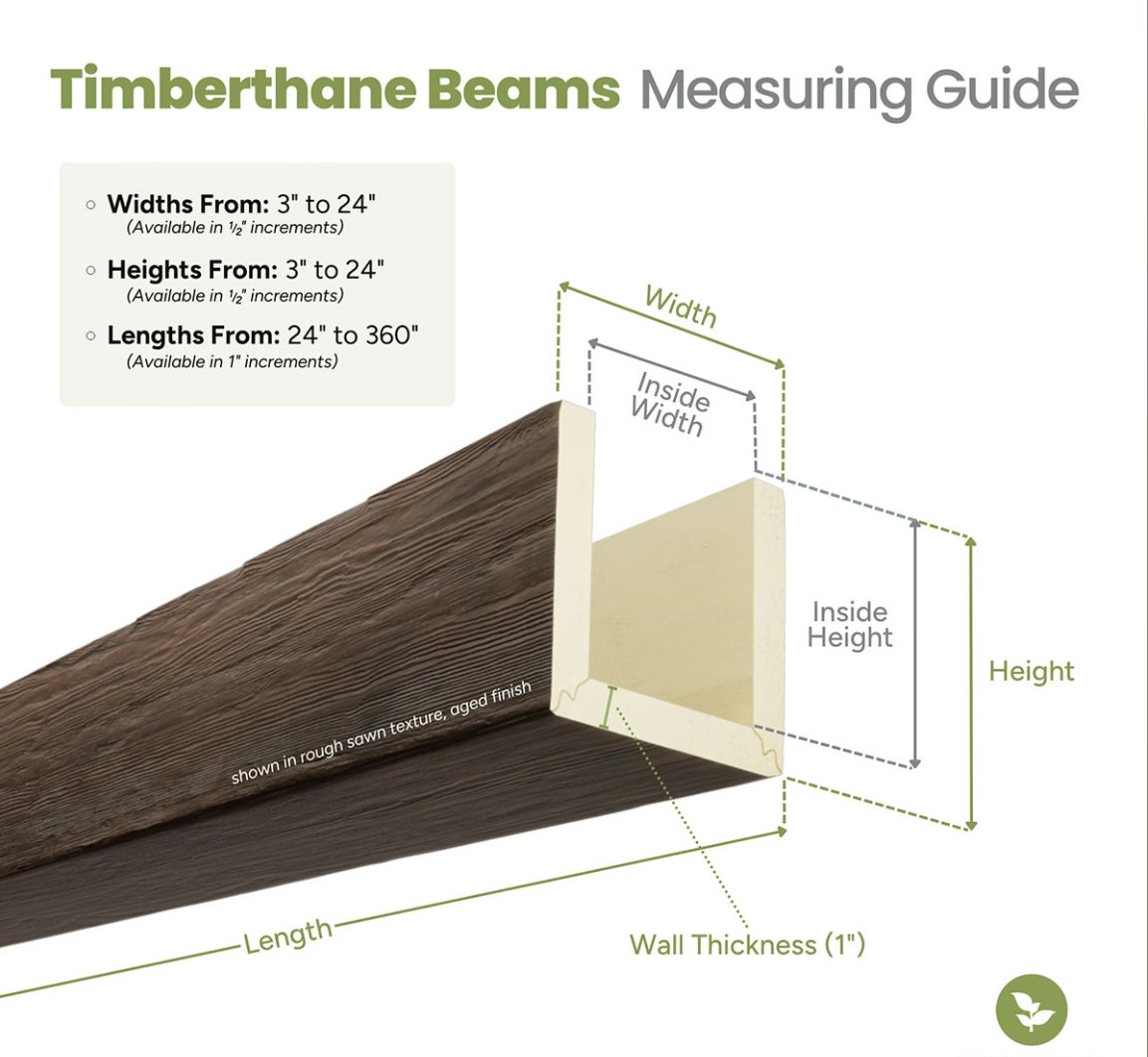
Heavier beam profiles in the 8-by-10 or 10-by-12 inch range suit barrel display areas. The beams should feel as substantial as the barrels themselves, which reinforces the sense of weight and history in the cellar.
Working with barrel lighting
Barrel displays often benefit from focused lighting. Beams overhead the barrels can host small directional fixtures that highlight the barrels without creating glare on the metal hoops or the wax seals.
Working with brick, stone, and other wall finishes
Wine cellars often feature brick, stone, or stucco walls. The beams should coordinate with these finishes.
Brick walls
Brick walls pair with most beam finishes. Aged oak and reclaimed pine work well with red brick, while walnut and darker finishes work with painted brick or stone.
Stone walls
Stone walls pair with heavier beam profiles and more rustic finishes. The combination reads as old-world and substantial.
Stucco walls
Stucco walls pair with cleaner beam profiles and more refined finishes. This combination suits Mediterranean-style cellars with a lighter, brighter atmosphere.
Plaster walls
Plaster walls are common in older European cellars. Beams pair with plaster in both rustic and refined finishes, depending on the overall design.
The role of faux beams in new cellar construction
New wine cellars are often built in basements, in converted spaces, or as additions to existing homes. The construction process is a natural time to install beams.
Coordinating with the framing
New cellar construction involves framing the walls, the ceiling, and the door openings. The framing should account for the beam installation. Blocking between joists or studs provides solid mounting points for the beams, and the framing should be designed with the beam layout in mind.
Coordinating with the cooling system
The cooling system is usually installed before the beams. The ductwork, the evaporator, and the controls all need to be in place before the beams go up. The beam layout should account for the cooling system's location and clearance requirements.
Coordinating with the racking
Wine racking is often custom-built to fit the cellar's specific dimensions. The racking installation can happen before or after the beams. If the beams run over the racking, they should be installed first. If the beams are only in the central area, the racking can be installed first.
The role of faux beams in existing cellar renovations
Existing wine cellars are often renovated to update the design, improve the cooling system, or expand the storage capacity. Beams are a natural element to add during a renovation.
Upgrading an older cellar
Older cellars may have plain ceilings that no longer suit the homeowner's vision. Adding faux beams is a fast way to upgrade the visual character of the cellar without disturbing the racking or the cooling system.
Expanding an existing cellar
Cellar expansions often involve adding new sections to an existing space. The new sections can be beamed to match the existing sections, creating a coherent design across the expanded cellar.
Combining with new racking
A renovation that includes new racking is a good opportunity to add beams that match the racking finish. The combined effect of consistent racking and matching beams is a fully designed cellar that feels deliberate and considered.
A short note on the visitor experience
Wine cellars are often visited by guests, by clients in commercial settings, or by family and friends during tastings. The visitor's experience includes the visual environment as much as the wine itself. A cellar with beautiful beams overhead creates a stronger memory than a cellar with bare ceilings. For commercial wineries, this visitor experience translates into stronger brand associations and higher wine prices. For private collectors, it translates into a more enjoyable space to share with friends and family.
The investment in faux beams pays back through years of use and through the subtle but real impact on every visitor's impression of the wine and the cellar that holds it.
Technical References
ASTM standards cited in every specification
Test Data
Lab results from internal testing program
Updated 2026
Reviewed against current product specs