
A show home has to do a lot of work in a short time. It has to photograph well for the developer's marketing, it has to feel aspirational for prospective buyers, and it has to survive heavy visitor traffic during the weeks or months it is on display. PU faux ceiling beams satisfy all three requirements while fitting into the build timeline and budget that developers operate under.
Why show homes need a distinctive ceiling
Buyers walk through a show home and form an impression within seconds. The impression is shaped by sightlines, ceiling heights, surface finishes, and the overall composition of the rooms. A finished ceiling with architectural beams signals quality. A bare ceiling signals a builder-grade home.
The marketing advantage
Show home photographs appear on the developer's website, in brochures, in sales offices, and in online listings. The photographs need to stand out in a competitive market where buyers compare multiple properties online. A beautifully beamed ceiling shows up in every photograph, providing a consistent visual element that buyers remember.
The buyer experience
Buyers touring a show home expect to see a home that looks better than the home they currently own. Beams add architectural character that helps the show home feel like an upgrade. This emotional response influences the buyer's willingness to pay the asking price and to commit to the purchase.
The staging flexibility
Show home staging changes over the life of the display. Furniture is moved, accessories are updated, and seasonal decor is added. The beamed ceiling provides a constant architectural backdrop that works with many different staging configurations. The ceiling stays while the furniture changes.
Installation within the build timeline
Show homes are built on tight schedules. A development that takes 18 months cannot afford to delay the show home opening because of beam installation. PU faux beams fit the schedule because they install in days rather than weeks.
Coordinating with the construction sequence
Beams can be installed late in the build, after the drywall, painting, and most finishing work is complete. This sequencing prevents damage during the construction phase and ensures the beams arrive at the show home in perfect condition.
Working with the staged furniture delivery
Show home staging happens after the beams. Furniture movers need to be aware of the beams' presence and location to avoid damage during the staging process. A simple floor plan showing the beam locations helps the staging team work around them.
Quick turnarounds between displays
Some show homes are relaunched with new staging after a few months. The beams stay in place through these relaunches, providing continuity across the property's display life. Only the furniture, accessories, and finishes change.
Durability under heavy traffic
Show homes see more visitors in a week than most homes see in a year. Every visitor walks through the rooms, touches surfaces, and examines the finishes. The ceiling needs to survive this traffic without showing wear.
Polyurethane's resilience
Polyurethane beams resist scuffs, scratches, and dents far better than drywall or paint. The factory finish holds up through years of visitor traffic, and the beam surfaces do not require any special cleaning products to maintain.
Easy touch-up between displays
When a show home relaunches with new staging, the beams benefit from a quick inspection and minor touch-up. Any scuffs or marks are addressed with the manufacturer's recommended touch-up products, and the beams return to a like-new appearance.
Resistance to repeated cleaning
Show home staff clean the property regularly. Polyurethane beams handle repeated cleaning with standard household products. There is no special maintenance routine and no need for periodic refinishing.
Coordinating with the show home's design language
Show homes have a clear design language that the developer has chosen to position the property in the market. The beam finish should match this language.
Family-oriented communities
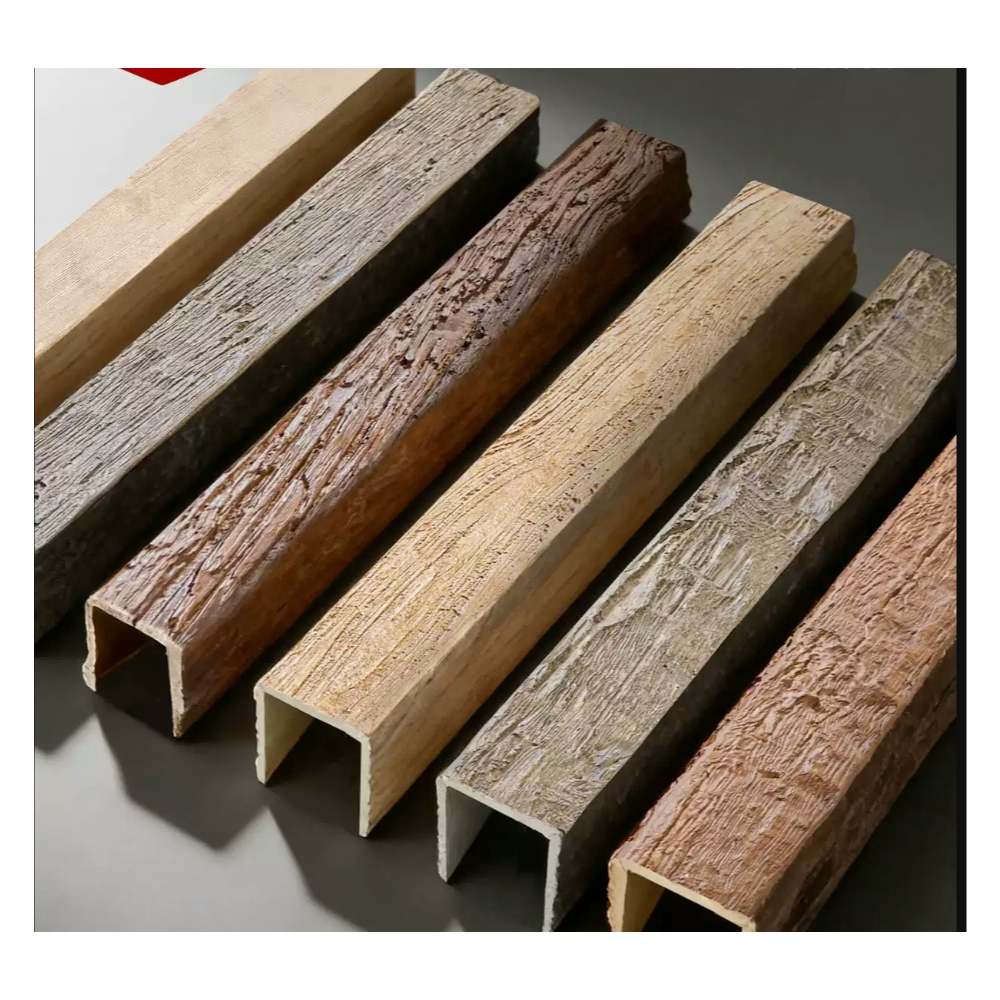
Family-oriented communities often use warm wood finishes that feel welcoming and comfortable. Walnut or oak beams in family-oriented show homes pair with traditional or transitional furniture and warm wall colors.
Upscale communities
Upscale communities use refined finishes that signal quality and sophistication. Dark walnut or mahogany beams in upscale show homes pair with formal furniture and rich wall colors.
Modern urban communities
Modern urban communities use clean, contemporary finishes. Pale oak, driftwood, or painted beams in modern show homes pair with minimalist furniture and pale wall colors.
Resort or coastal communities
Resort or coastal communities use weathered, relaxed finishes. Whitewashed or driftwood beams in coastal show homes pair with casual furniture and bright wall colors.
Working with photographers and marketing teams
Show home photography is a specialized skill. The photographer needs to capture the property in its best light, which often involves coordinating with natural light, artificial light, and the home's design features.
Photography-friendly ceiling design
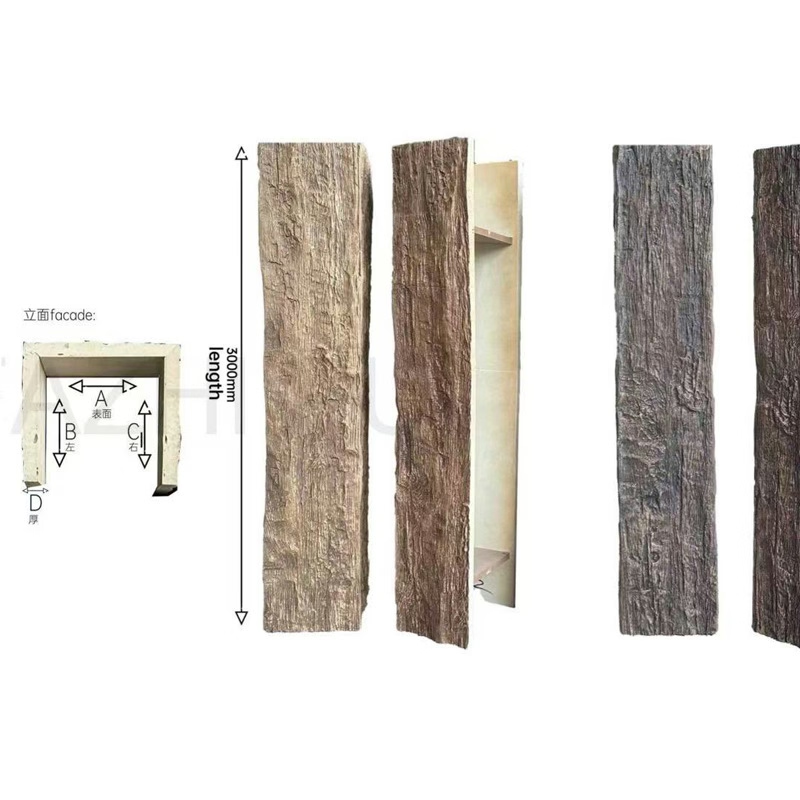
Beams create natural lines that the photographer can use to frame shots. A bed positioned under a beam, a kitchen island centered between two beams, or a dining table with a beam above it all create compositional anchors that the photographer can leverage.
Avoiding photography problems
Beams that cast unflattering shadows, that block important sightlines, or that interfere with the photographer's lighting equipment can create problems. The beam layout should account for typical photography setups, including the use of tripods, light stands, and ceiling-mounted lighting.
Coordinating with videography
Many developers now produce video walkthroughs of show homes. The camera's movement through the home should reveal the beams in flattering ways. Beams overhead the camera's path create a sense of motion and progress through the space.
Working with sales staff
Sales staff use the show home as a sales tool. They walk buyers through the property, point out features, and answer questions. The ceiling is often a feature they highlight.
Telling the design story
Sales staff can use the beams as a starting point for conversations about design, quality, and lifestyle. A beam overhead the dining table becomes a talking point about family dinners. A beam in the master bedroom becomes a talking point about restful nights.
Handling buyer questions
Buyers often ask about the beams. Sales staff should be prepared to explain that they are polyurethane, that they are installed for both aesthetic and practical reasons, and that the same finish can be replicated in the buyer's own home if they choose to upgrade.
Managing buyer customization
Buyers who purchase a home in a development often want to customize their own home. Beams are a popular customization request. The developer's design team can offer beams as an upgrade option, with the same finish and profile used in the show home.
Show home display longevity
Show homes stay on display for varying lengths of time. Some are sold quickly and closed within weeks. Others stay on display for a year or more while the development is being built out. The beams need to perform well across this entire display life.
Short-term display considerations
For show homes that will be sold quickly, the beams need to look perfect for the first few weeks. This is the easiest scenario, because the beams arrive new and the display period is short.
Long-term display considerations
For show homes that stay on display for a year or more, the beams need to look perfect across the entire period. The polyurethane finish holds up well, and a periodic inspection confirms that everything remains in good condition.
Transitioning to a model home
Some show homes transition to model homes once the development is sold out. The beams continue to serve the model home function, providing a backdrop for design center consultations and customer meetings.
Working with the developer on budget
Developers operate on tight budgets, and every line item has to be justified. PU faux beams offer a strong value case.
Comparing to alternative ceiling treatments
Alternatives to faux beams include coffered ceilings built from drywall, decorative paint treatments, and solid timber beams. Faux beams compare favorably on cost to all three alternatives while delivering a more authentic look than paint and a more practical installation than solid timber.
Lifetime cost of the upgrade
The beams last for the life of the show home and beyond. If the show home is sold and the buyer keeps the beams, the upgrade continues to provide value. If the beams are removed before the home is sold, they can be reused in another show home or sold to recoup some of the cost.
Marketing value as a budget line
Show home marketing is a significant budget line for developers. A beamed ceiling that improves every photograph, every video, and every in-person visit delivers marketing value that justifies the investment.
Common design choices in show home installations
A handful of beam-related design choices appear over and over in successful show home installations.
First, the master bedroom feature beam. A single beam above the bed in the master bedroom is one of the most photographed elements in any show home. The beam creates a focal point that anchors the bedroom's design.
Second, the great room rhythm. Three or four beams across the great room create a sense of architectural rhythm that makes the largest room in the home feel designed and proportioned.
Third, the dining room statement. A beam configuration above the dining table creates a defined dining zone in an open plan. The beam layout is simple but powerful.
Fourth, the kitchen integration. Beams that run from the great room into the kitchen create a sense of continuity between the two spaces. The kitchen ceiling feels connected to the great room, even when the kitchen has a different surface treatment.
Fifth, the entry accent. A single beam in the entry creates a strong first impression. The beam is simple but effective.
The role of faux beams in the development's brand
Many developers have a recognizable brand that they want to maintain across their developments. The brand is expressed through consistent design choices, including ceiling treatments. PU faux beams in a consistent profile and finish can become a signature element of the developer's brand.
Consistent brand expression
Developers who use the same beam profile and finish across multiple developments create a consistent brand expression that buyers recognize. The beams become a signature feature of the developer's work.
Different communities, same quality
Different communities can have different design languages, but the same quality of ceiling treatment. Beams in different finishes allow the developer to adapt to different markets while maintaining a consistent quality standard.
The show home as a brand ambassador
The show home is the developer's brand ambassador in each community. The beams in the show home communicate the developer's commitment to quality and design. This message reaches buyers before they speak to a sales representative, and it sets the tone for the entire sales conversation.
Final thoughts on show home beam design
PU faux ceiling beams give show homes the architectural character that buyers expect at a cost and timeline that fits the developer's build cycle. The installation is fast, the durability is proven, and the marketing value is significant. For developers who want their show homes to stand out in a competitive market, beams are one of the highest-return investments available.
Technical References
ASTM standards cited in every specification
Test Data
Lab results from internal testing program
Updated 2026
Reviewed against current product specs


