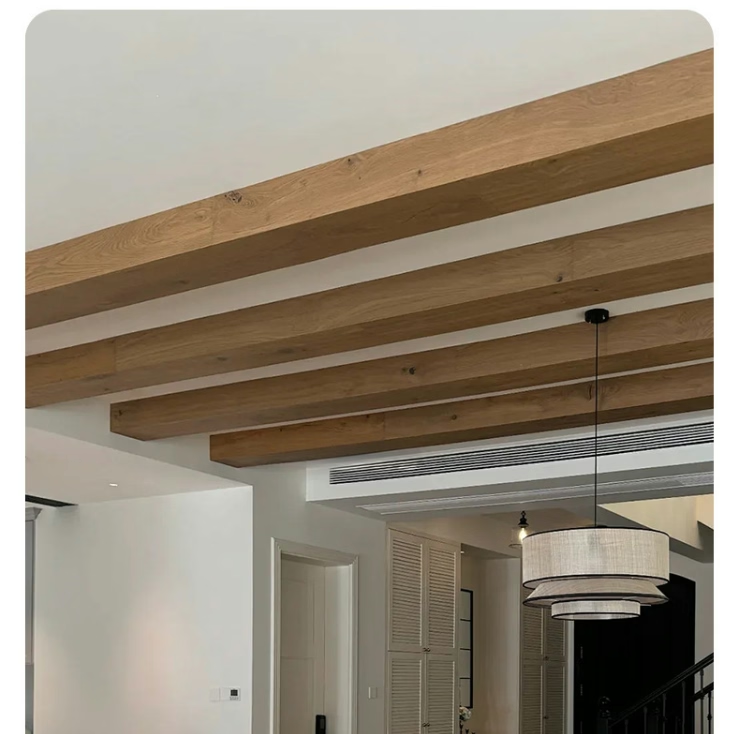
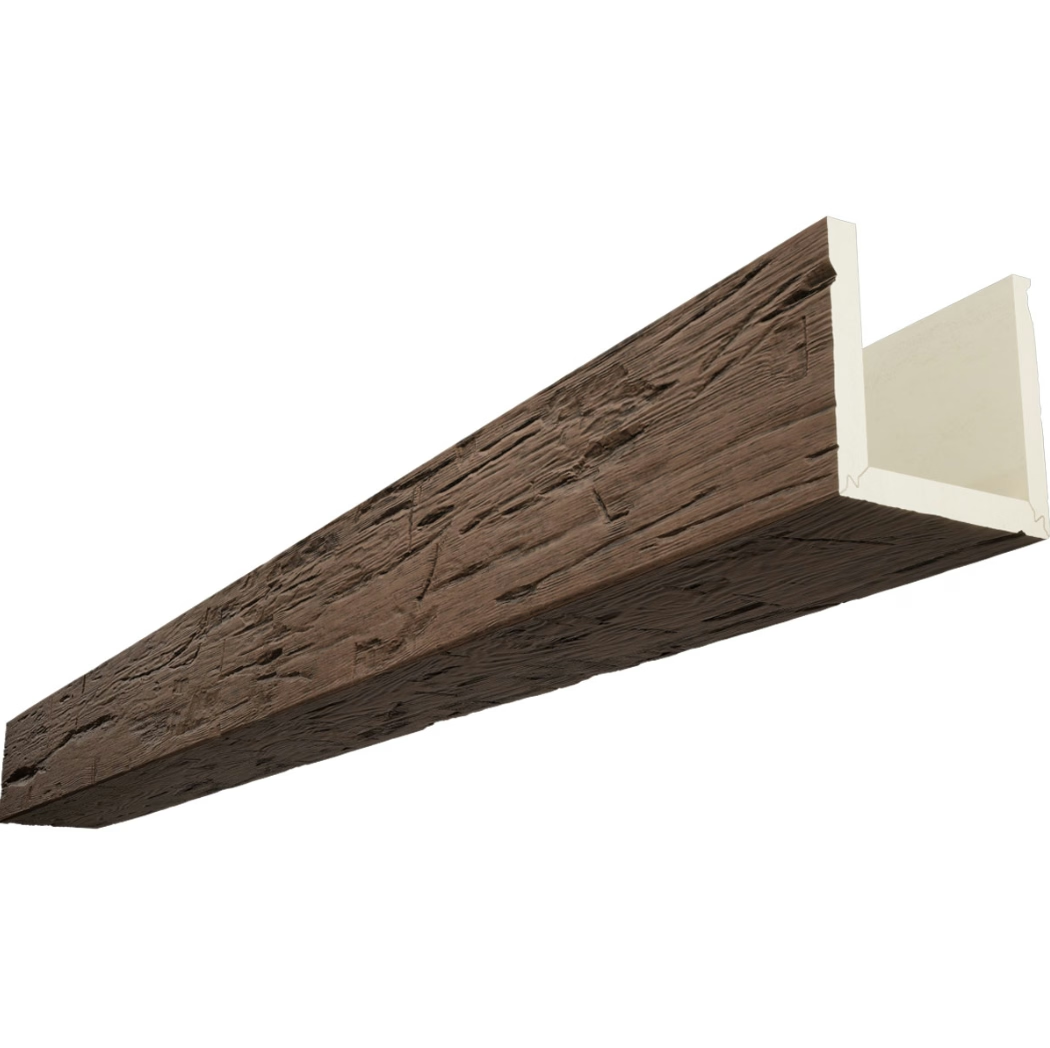
When a construction project crosses national borders, every material that arrives has to clear customs inspections, survive long-haul transport, and arrive ready to install without lengthy quarantine or reconditioning. Faux wood beams are no exception. Export-grade polyurethane beams are produced specifically to meet these demands, with consistent batch quality, sealed packaging, and the technical documentation that importers and contractors need to move product smoothly through any major port.
International construction supply chains reward consistency. A contractor in Dubai or São Paulo cannot afford to receive a container where two beams in the same crate have different shades or slightly mismatched profiles. That is why export-grade production lines run under tighter quality protocols than domestic stock. Every beam passes inspection before crating, and each batch is photographed and logged so any deviation is caught before the container is sealed.
What Makes a Beam Export-Grade
The label is more than marketing. An export-grade faux wood beam meets several practical criteria that make it suitable for international distribution. The polyurethane resin is formulated for stability across wide temperature ranges, since a container leaving a Chinese port in winter may pass through a tropical port during transit. Additives in the foam prevent brittleness at low temperatures and resist softening or surface tackiness at high humidity.
The surface coating is similarly engineered. UV inhibitors are blended into the pigmented topcoat to resist fading during weeks of sun exposure on a vessel deck or in a staging yard. The textured grain pattern is molded at sufficient depth to survive minor abrasion during handling, but the surface remains visually rich enough that a small scuff will not be obvious in the finished installation.
Beyond material formulation, export-grade beams follow strict dimensional tolerances. Lengths are accurate to within two millimeters over a five-meter run, which simplifies on-site planning for installers who rely on consistent measurements to align mounting hardware. Cross-sectional dimensions are similarly controlled so that beams, end caps, and accompanying corbels all mate cleanly without field-fitting.
Packaging Standards That Protect the Product
Export packaging is its own discipline. Each beam is wrapped in protective foam sheeting that prevents abrasion against neighbors in the crate. End caps and small accessories are placed in reinforced cartons with foam inserts. The outer crating uses fumigated timber compliant with ISPM 15 international standards, which is required for wooden dunnage entering many countries including the United States, the European Union, Australia, and New Zealand.
The crates themselves are sized to optimize container loading. A 40-foot high-cube container can typically accommodate a carefully planned quantity of standard eight-foot beams with room to spare for matching accessories. Loading plans are provided to the buyer ahead of time so the receiving team understands what is in each numbered crate and can prioritize unpacking.
Documentation That Simplifies Customs Clearance
Cross-border shipments depend on clean paperwork. Export-grade suppliers provide commercial invoices that match the packing list exactly, certificates of origin where preferential tariff treatment applies, and material safety data sheets that describe the polyurethane composition for any authority that requests them. Fumigation certificates for wooden crates are included as standard, along with any product-specific test reports that may be relevant.
For projects in jurisdictions that require fire-rating documentation, export-grade beams typically ship with ASTM E84 or EN 13501 test results already on file. For projects that need to demonstrate sustainability claims, recycled-content declarations or VOC emission reports can be prepared in advance. The goal is to give the importing party a single package of paperwork that satisfies customs, port health inspections, and on-site compliance officers without follow-up calls.
Coordinating with Project Schedules
International construction projects operate on tight schedules, and a missed delivery can delay an entire tower of work. Export suppliers who specialize in faux wood beams understand that their product often sits in the critical path for ceiling installation. Production lead times are quoted in calendar days with buffer included, and shipping schedules are coordinated with the buyer’s nominated forwarder.
Some suppliers also offer EXW, FOB, CIF, and DDP terms depending on what the buyer prefers. EXW works for buyers who already have a logistics partner. FOB is standard for buyers who want to control ocean freight. CIF is helpful when the buyer wants the supplier to arrange both ocean transport and insurance. DDP is increasingly popular for buyers who would rather receive the shipment at their warehouse with all duties and taxes already settled, and a small number of export suppliers now offer that as a standard option.
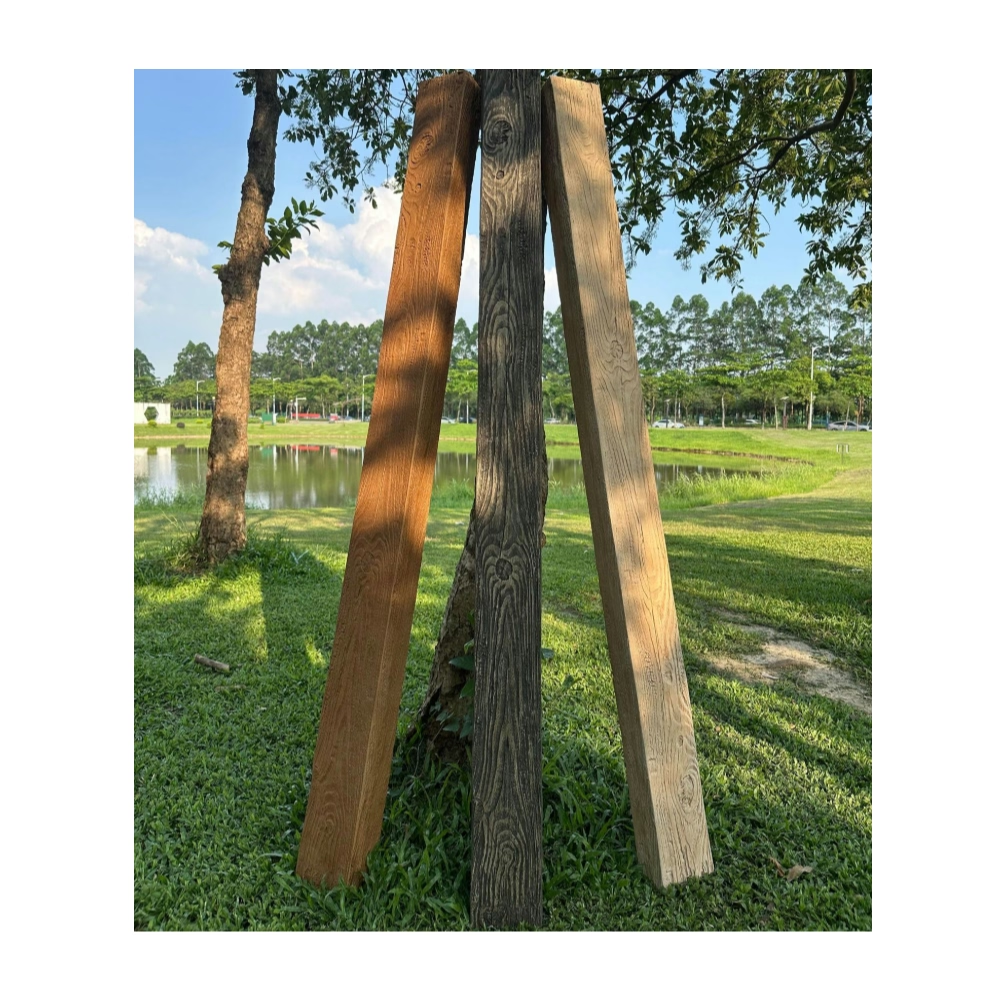
Sizing, Profiles, and Color Matching Across Borders
One of the most practical advantages of working with export-grade faux wood beams is the ability to specify a wide range of profiles and finishes from a single source. Standard profiles include rough-sawn timber, hand-hewn rustic, smooth four-sided, boxed beam, and coffered variants. Cross-sectional dimensions range from modest residential sizes up to commercial-scale members. Lengths can be customized to ship economically without sacrificing design intent.
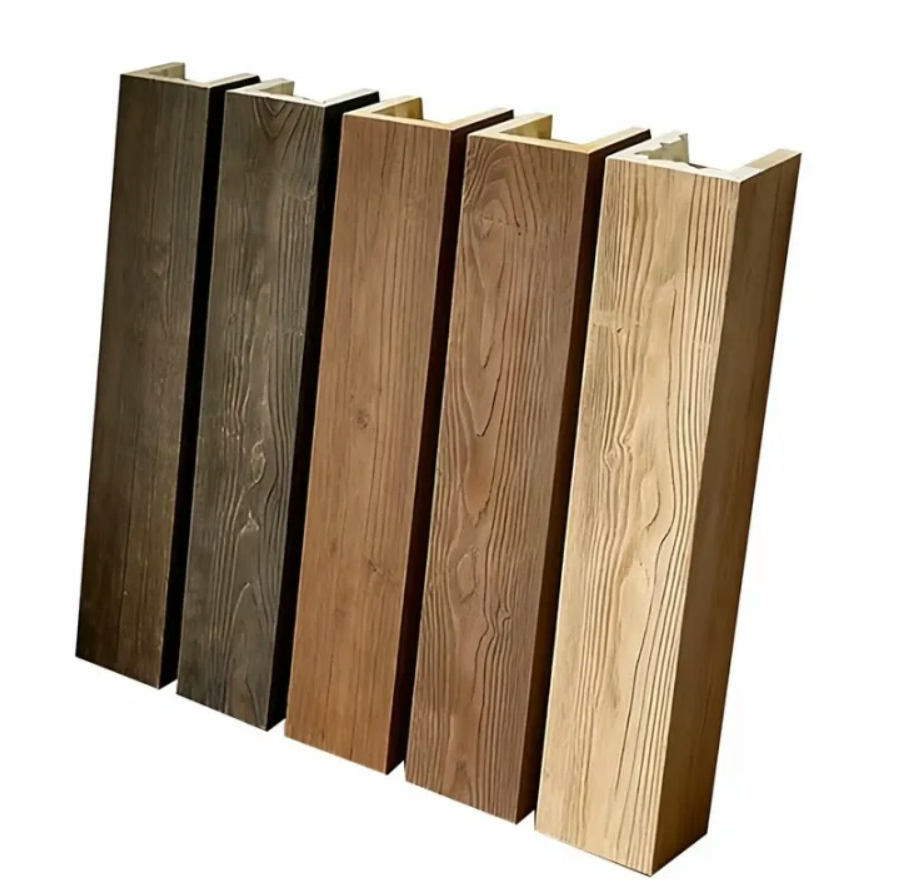
Color matching is another area where export suppliers tend to outperform local alternatives. The factory finish line uses controlled spray booths and calibrated pigment batches, which means a hundred beams in a single order will arrive with identical color. That level of consistency is difficult to achieve when sourcing from multiple local vendors or trying to stain raw wood on-site.
For projects where the faux beam system needs to integrate with cabinetry, flooring, doors, or other millwork imported from different suppliers, color samples can be sent to the beam factory in advance. The factory then matches the new batch to the submitted reference. This service is increasingly common in the export market and removes a major source of delay and frustration on multi-source interior projects.
Where Export-Grade Beams Are Used Most
The demand for export-grade faux wood beams has grown steadily in markets where solid timber is expensive, restricted by sustainability regulations, or simply difficult to source in the volumes needed for large projects. The Middle East has been a major destination, with resorts, hospitality venues, and high-end residential developments favoring the consistent appearance of polyurethane over the variability of imported solid timber. Southeast Asia, where humidity challenges real wood, has also become a strong market.
In Latin America and Africa, faux wood beams are valued for the speed of installation and the reduced logistical weight compared to solid timber. A faux beam that weighs one-tenth of its real-wood equivalent dramatically reduces the cost of moving product inland from coastal ports. In Europe and North America, the drivers are different but equally compelling: builders want the look of reclaimed wood without the cost, the inconsistencies, or the supply-chain uncertainty.

The expanding international market is also seeing growth in custom-designed export orders. A developer in one country may commission a specific beam profile for a hotel chain that will be built in several other countries over the next decade. The factory works with the developer’s design team to perfect the profile once, then replicates it across future orders. The consistency of polyurethane production makes that kind of multi-phase rollout far more practical than it would be with real timber.
Choosing the Right Export Partner
Not every faux beam producer is set up for serious export work. Buyers evaluating suppliers should look for several indicators. First, ask to see recent shipment records and customer references from the regions where the buyer plans to distribute. Second, request sample documentation including a commercial invoice, packing list, certificate of origin, and fumigation certificate to verify that the paperwork is real and accurate. Third, ask about the production capacity in units per month to confirm that the supplier can scale with the project.
Quality certifications matter as well. Look for ISO 9001 quality management certification and any product-specific certifications such as CE marking for Europe, UAE conformity for the Gulf, or CCC for China-based exporters serving domestic and regional markets. None of these certifications guarantee perfect product, but they indicate a supplier that has invested in processes and audits, and that is usually a reliable proxy for consistency.
Finally, communication and project management often distinguish the best export suppliers from the rest. A dedicated export sales representative who responds promptly, provides clear shipping schedules, and follows up after delivery is worth more than a slightly lower price from a supplier who is harder to reach. International projects run on relationships, and the best faux beam suppliers understand that.
Logistics Considerations for Large International Orders
For projects requiring full container loads, the logistics plan starts weeks before the production run finishes. The supplier coordinates loading dates with the buyer’s forwarder, prepares all export documents in advance, and stages the container at the port of loading. For less-than-container-load orders, the supplier may consolidate shipments with other building material exporters to keep freight costs manageable.
Insurance is another consideration. Ocean cargo insurance is inexpensive and is typically purchased for at least 110 percent of the invoice value to cover the cost of any replacement plus the original freight. Reputable export suppliers can introduce brokers who specialize in construction material cargo and who understand the typical risk profile of a beam shipment.
Once the shipment arrives at the destination port, the receiving team should inspect the container as soon as it is released. Any visible damage to the outer crating should be photographed before the container is opened, and any internal damage should be noted on the cargo receipt before the container is emptied. These records are critical for any insurance claim and should be sent to the supplier immediately.
Looking Ahead
The international construction market continues to favor materials that are consistent, light to ship, easy to install, and visually convincing. Polyurethane faux wood beams satisfy all four of those criteria, which is why export-grade production has expanded rapidly over the past decade. As supply chains mature and certification regimes become more sophisticated, the difference between a domestic-grade beam and an export-grade beam will likely widen further, giving importers and contractors an even stronger case for sourcing from factories that specialize in international distribution.
Technical References
ASTM standards cited in every specification
Test Data
Lab results from internal testing program
Updated 2026
Reviewed against current product specs