
A well-designed exterior composition is more than a collection of parts. The beams, the corbels, the rafter tails, the brackets, and the trim all have to work together as a unified statement. When any one of these elements looks out of place, the entire composition suffers. The eye notices the inconsistency even when it cannot identify what is wrong.
The cleanest way to ensure a unified exterior composition is to source all of the elements from the same supplier, manufactured with the same finish, and designed to work together. Polyurethane suppliers now offer complete exterior packages that include beams, corbels, rafter tails, brackets, and trim in matching finishes. The result is a composition that looks as if it was carved from a single timber, with every element in perfect harmony.
Why Matching Elements Matter
The visual impact of an exterior composition comes from the relationships between elements. A beam that terminates at a wall needs a corbel that transitions from the beam to the wall. A rafter that runs from the ridge to the eave needs a rafter tail that finishes the rafter at the eave. The beam, the corbel, and the rafter tail are part of a single design language.
When these elements are sourced from different suppliers or finished at different times, the consistency can break down. The color may be slightly different. The texture may not match. The proportions may feel awkward. Each inconsistency is small on its own, but the cumulative effect is a composition that feels assembled rather than designed.
Polyurethane suppliers solve this problem by producing all of the elements in a composition from the same factory, using the same molds, the same pigment system, and the same finish line. The result is a guaranteed match across all elements, regardless of when they are produced or how many pieces are involved.
The Components of a Complete Exterior Package
A complete exterior composition typically includes several categories of elements. The beams provide the primary structural rhythm. The corbels provide the transition between the beams and the supporting elements. The rafter tails finish the rafters at the eave. The brackets and braces add detail to specific junctions. The trim covers the joints and the transitions.
Each category of element has its own design vocabulary and its own installation requirements. Beams are typically the largest elements and provide the dominant visual statement. Corbels are smaller and provide visual punctuation at specific points. Rafter tails are at the eave and provide the visual termination of the roof structure. Trim pieces are the smallest and provide the finishing touches.
Matching these elements in finish, proportion, and style is what creates a composition that feels intentional rather than assembled. The supplier who produces all of the elements in a single factory has the ability to control every variable and to deliver a package that works as a unified whole.
The Role of Corbels in Exterior Compositions
Corbels are the brackets that support the visible end of a beam where it meets a wall, a column, or another structural element. In traditional timber construction, corbels were often structural, transferring the load from the beam to the supporting element. In modern construction with hidden structural framing, corbels are typically decorative, providing the visual appearance of support without actual structural function.
Polyurethane corbels are cast from molds that capture the detail of hand-carved originals. The surface texture, the edge treatment, and the proportions of the corbel can be specified to match the design intent of the composition. Common corbel styles include simple brackets, scrolled brackets, curved brackets, and tapered brackets.
The finish of the corbels should match the finish of the beams exactly. The same pigment system, the same application process, and the same quality control procedures ensure that the corbels are visually identical to the beams. The eye reads the composition as a single statement, with the corbels and beams working together.
The size of the corbels should be proportional to the beams. A heavy beam calls for a substantial corbel with deep relief. A lighter beam can be paired with a more restrained corbel. The supplier can provide guidance on the appropriate corbel size for each beam size and design style.
Rafter Tails as Design Elements
Rafter tails are the exposed ends of the rafters at the eave. In traditional architecture, rafter tails were often decorative, with carved or shaped ends that added visual interest to the eave. In modern construction, rafter tails are typically plain cuts, but the decorative tradition has been preserved in many architectural styles.
Polyurethane rafter tails are designed to be applied over the ends of the rafters, providing a decorative profile without requiring actual modification of the rafter. The rafter tail can be cast in any of several traditional profiles, including stepped, curved, scrolled, and tapered designs.
The finish of the rafter tails should match the finish of the beams and the corbels. The same factory, the same pigment system, and the same application process ensure that the rafter tails are visually identical to the other elements. The eye reads the composition as a single statement, with the rafter tails working with the beams and corbels.
The size of the rafter tails should be proportional to the rafters and the overall scale of the building. Substantial rafter tails create a sense of weight and importance. Smaller rafter tails create a more restrained appearance. The supplier can provide guidance on the appropriate rafter tail size for each application.
Matching Finishes Across Multiple Elements
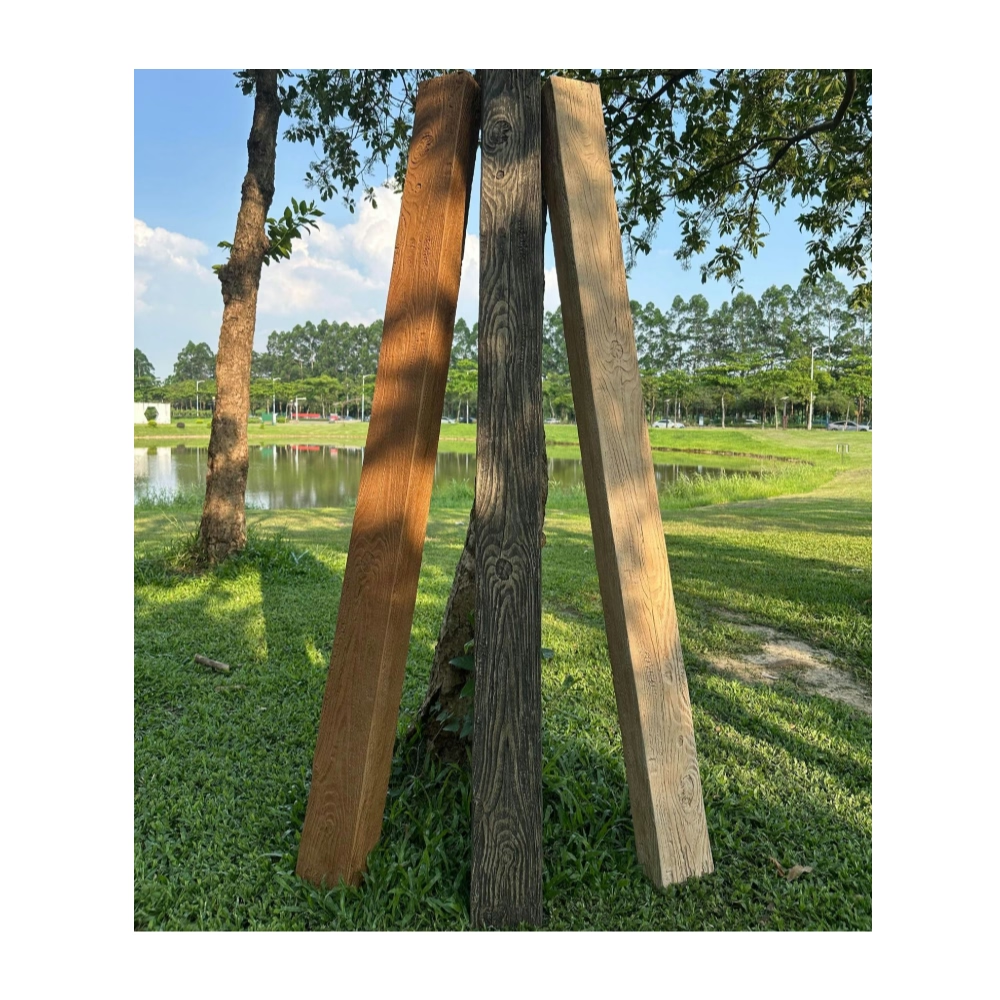
The key to a unified exterior composition is matching finishes across all elements. The beams, corbels, rafter tails, brackets, and trim must all have the same color, the same texture, the same gloss level, and the same weathering characteristics. Any inconsistency disrupts the visual harmony of the composition.
Polyurethane suppliers achieve this consistency by producing all of the elements in the same factory using the same processes. The pigment system is controlled with calibrated equipment. The application process follows the same procedures for every element. The quality control inspections use the same reference standards for every element.
The result is a finish that matches across all elements, regardless of the production batch or the timing of the order. The buyer can order additional elements years after the original order and receive pieces that match the original elements exactly. This consistency is impossible to achieve with elements sourced from multiple suppliers.
Custom Finishes for Unique Projects
For projects with unique aesthetic requirements, custom finishes can be developed to match a specific reference. The custom finish process involves submitting a reference sample to the supplier, who develops a matching formulation in the factory. The formulation is applied to a sample for approval before production begins.
The custom finish adds some lead time and cost to the project, but the result is a finish that exactly matches the desired aesthetic. For projects with specific brand colors, historic preservation requirements, or unique design visions, the custom finish is often the only way to achieve the desired result.
The custom finish is applied to all elements of the composition, ensuring that every piece matches the reference. The same quality control procedures are used for custom finishes as for standard finishes. The result is a composition that meets the unique requirements of the project while maintaining the consistency of a unified package.
Installation Coordination
A complete exterior composition requires careful coordination during the installation process. The beams, corbels, rafter tails, brackets, and trim must be installed in the correct sequence to ensure proper fit and alignment. The installation sequence is typically specified by the supplier and should be followed precisely.
The beams are usually installed first, as they are the primary elements and the mounting reference for the other elements. The corbels are installed at the junction of the beams and the supporting elements. The rafter tails are installed at the eave, after the rafters are in place. The brackets and braces are installed at the specific junctions where they are needed. The trim is installed last, covering the joints and the transitions.
Each installation step should be completed and inspected before the next step begins. Any issues with alignment, fit, or finish should be addressed before proceeding. The cumulative effect of small issues can compromise the overall appearance of the composition.
The installation should be performed by experienced crews who are familiar with the specific elements being installed. The supplier can often provide installation training or recommend qualified installers in the project area. The quality of the installation has a major impact on the final appearance of the composition.
Working With Existing Structures
Many exterior compositions are installed on existing structures, either as part of a renovation or as an addition. The installation on existing structures requires additional coordination to ensure that the new elements fit with the existing framing and finish.
The existing structure should be inspected before the installation begins. Any damage to the framing or the finish should be repaired before the new elements are installed. The mounting locations for the beams, corbels, and rafter tails should be verified to confirm that adequate support is available.
The new elements should be measured against the existing structure to confirm proper fit. Custom fabrication may be necessary to accommodate irregularities in the existing structure. The supplier should be made aware of any irregularities before fabrication begins to allow time for adjustments.
The transition between the new elements and the existing structure should be finished carefully. The trim pieces should cover the joints between new and existing elements. The color match between new and existing elements should be verified before the installation begins.

Design Vocabulary for Exterior Compositions
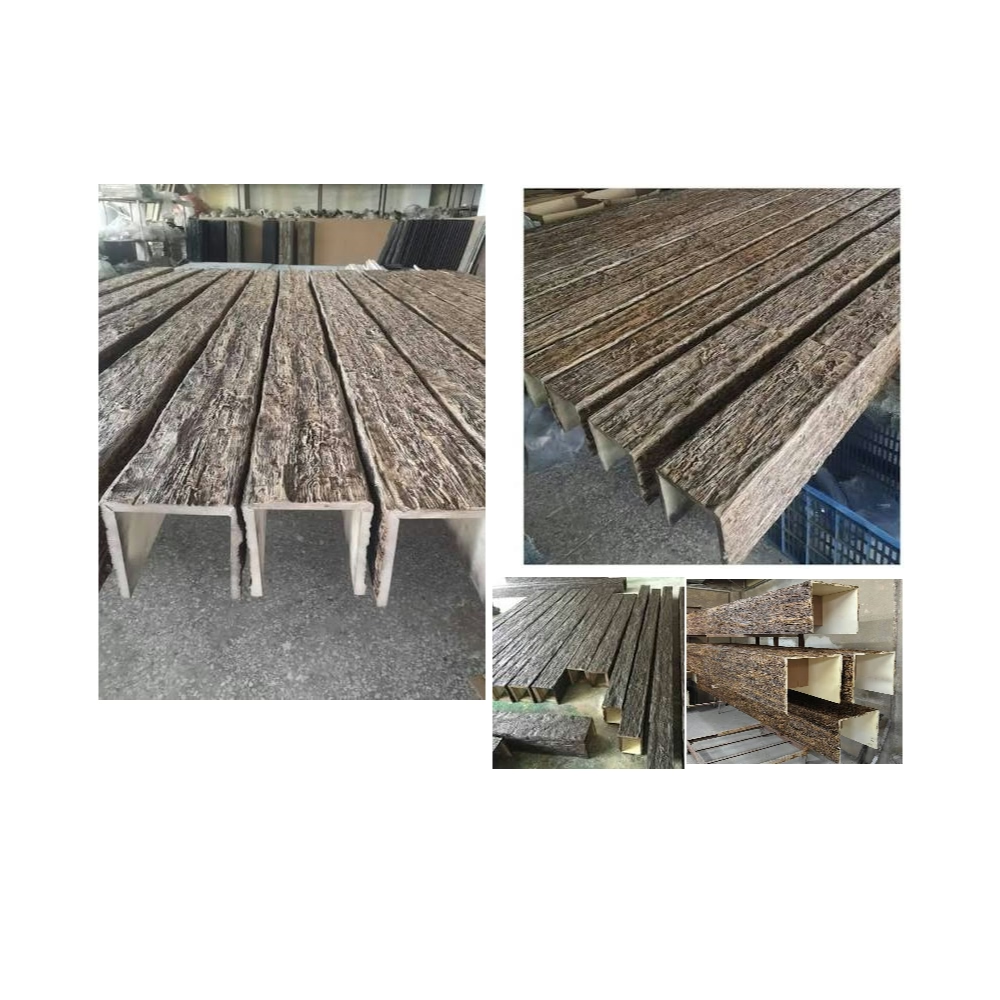
The design vocabulary for exterior compositions varies by architectural style. The vocabulary determines the appropriate beam profile, corbel style, rafter tail profile, and bracket design. The supplier should be familiar with the vocabulary for the relevant style and able to provide guidance on the appropriate elements.
Craftsman-style architecture favors exposed rafter tails, tapered columns, and substantial beams with simple corbels. The vocabulary is restrained but substantial. The elements work together to create a composition that feels honest and well-crafted.
Tudor-style architecture favors heavier beams with carved corbels, decorative rafter tails, and substantial trim. The vocabulary is more ornate than craftsman style. The elements create a composition that feels romantic and historical.
Mediterranean-style architecture favors rough-hewn beams with simple corbels and modest rafter tails. The vocabulary is influenced by Spanish, Italian, and Moorish traditions. The elements create a composition that feels warm and inviting.
Modern architecture favors clean lines, simple profiles, and minimal ornament. The vocabulary may include beams without corbels, flush rafter tails, and minimal trim. The elements create a composition that feels contemporary and refined.
Custom Elements for Unique Compositions
For projects with unique design requirements, custom elements can be produced to complete the composition. Custom corbels, custom rafter tails, custom brackets, and custom trim can be developed to match a specific design vision.
The custom element development process typically involves submitting a design drawing or reference image to the supplier. The supplier creates a prototype for approval. Once the prototype is approved, the supplier produces the required quantity. The process takes several weeks and adds cost compared to standard elements.
Custom elements are particularly valuable for historic preservation projects, where the existing elements may have unique profiles that are no longer available from standard sources. The custom process allows the new elements to match the existing elements exactly, preserving the historic character of the building.
For themed projects, such as resort developments with a specific aesthetic, custom elements allow the entire composition to reflect the theme consistently across all elements. The custom process ensures that the corbels, rafter tails, brackets, and trim all work together as a unified statement.
The Aesthetic Impact of a Unified Composition
The aesthetic impact of a unified composition is significantly greater than the sum of its parts. A composition where all elements match in finish, proportion, and style creates a feeling of intentional design and quality craftsmanship. Visitors notice the composition even when they cannot identify the specific elements that make it work.
A composition where the elements do not work together creates a feeling of assembled parts. Visitors may not consciously notice the inconsistency, but they perceive the composition as less impressive than a unified alternative. The cumulative effect of small inconsistencies is a composition that fails to make the desired statement.
Polyurethane suppliers have made unified compositions practical by offering complete exterior packages with guaranteed match. The buyer can specify the entire composition from a single source, with confidence that every element will match in finish, proportion, and style. The result is a composition that delivers the aesthetic impact that the design intends.
For residential projects, the unified composition adds value to the property and creates a sense of quality that homeowners appreciate. For commercial projects, the unified composition creates a professional appearance that reflects the quality of the business. For hospitality projects, the unified composition creates the kind of memorable impression that guests associate with a positive experience.
Long-Term Performance of Complete Packages
A complete exterior package from a single supplier provides long-term performance advantages beyond the matching finish. The materials are formulated with the same UV protection, the same weather resistance, and the same additives. The elements weather at the same rate, maintaining the visual consistency over the life of the installation.
The maintenance requirements are also similar across all elements. The same cleaning procedures, the same inspection schedule, and the same touch-up products work for all elements of the composition. The property maintenance staff does not need to learn different procedures for different elements.
The replacement elements, when needed, can be sourced from the same supplier with confidence that they will match the existing elements. The color and texture match is guaranteed by the same factory and the same pigment system. The replacement elements integrate seamlessly into the existing composition.
For property owners and managers, the long-term performance advantages of a complete package from a single supplier are substantial. The maintenance is simpler, the replacements are easier, and the composition maintains its visual impact for longer. The total cost of ownership is lower than for compositions assembled from multiple sources, even when the initial cost is similar.
Technical References
ASTM standards cited in every specification
Test Data
Lab results from internal testing program
Updated 2026
Reviewed against current product specs


