Resort hotels compete on experience. The room itself is important, but the spaces that guests remember are often the transitional ones. The covered veranda where morning coffee is served. The loggia where the afternoon is read away. The outdoor lounge where evening cocktails are enjoyed. These spaces define the resort's relationship to its setting, and the ceiling overhead plays a major role in how the space feels.
Polyurethane faux wood beams have become the standard ceiling treatment for these transitional spaces at resort hotels around the world. The beams provide the warm timber aesthetic that guests expect from a tropical or coastal resort, while delivering the weather resistance and low maintenance that hotel operators require.
The Role of Verandas and Loggias in Resort Design
Verandas and loggias serve as the bridge between the indoor and outdoor environments at a property. They provide shelter from sun and rain while maintaining the connection to the surrounding landscape, ocean, or garden. The ceiling of these spaces is a critical design element because it is what guests see most often during their stay.
The ceiling finish sets the tone for the entire space. A bare concrete or metal ceiling feels industrial and uninviting. A fabric or canvas ceiling feels temporary. A timber-look ceiling feels warm, established, and integrated with the natural setting. For resort hotels, the timber-look ceiling is almost universal because it signals quality, comfort, and connection to place.
The challenge is that real timber in these applications faces severe conditions. Direct sun exposure, high humidity, salt air in coastal locations, and large temperature swings between day and night all stress real wood. Maintenance becomes a continuous burden, and the timber eventually degrades despite the maintenance. Polyurethane faux wood beams handle these conditions without the maintenance burden.
What Guests Notice About the Ceiling
Most guests would not consciously describe the ceiling of a veranda or loggia, but they absolutely register how it makes them feel. A ceiling with substantial timber beams overhead creates a feeling of shelter and quality. A ceiling with thin, sparse elements feels flimsy. A ceiling with poorly proportioned elements feels institutional.
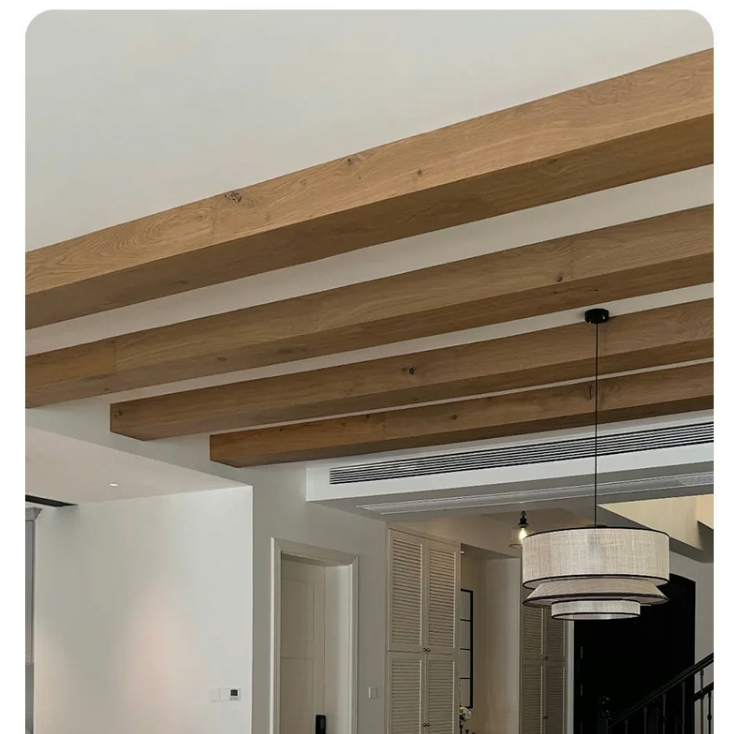
The proportions of the beams matter. Substantial cross-sections, typically 8 by 10 or larger, create a feeling of permanence and quality. Smaller cross-sections can feel out of place in a large resort space. The spacing between beams also matters. Beams that are too close together create a cluttered feel. Beams that are too far apart lose the rhythm that gives the ceiling its character.
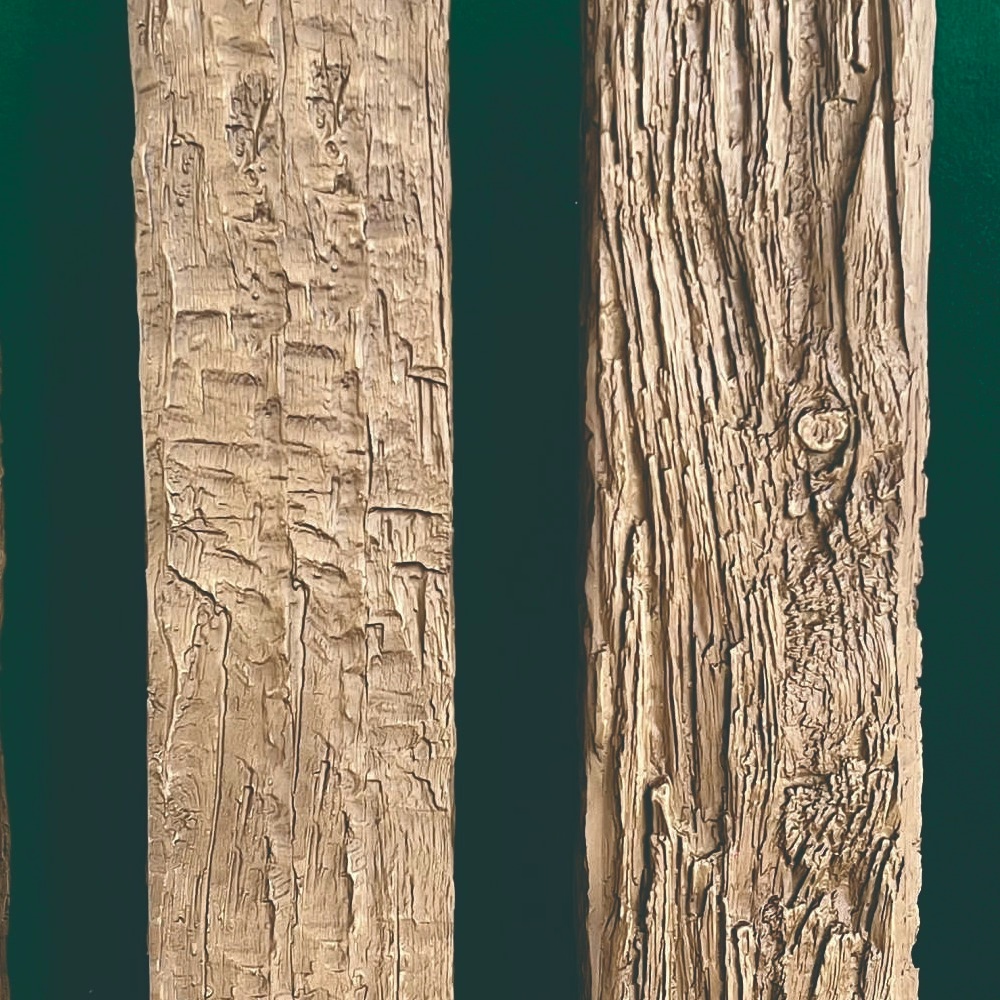
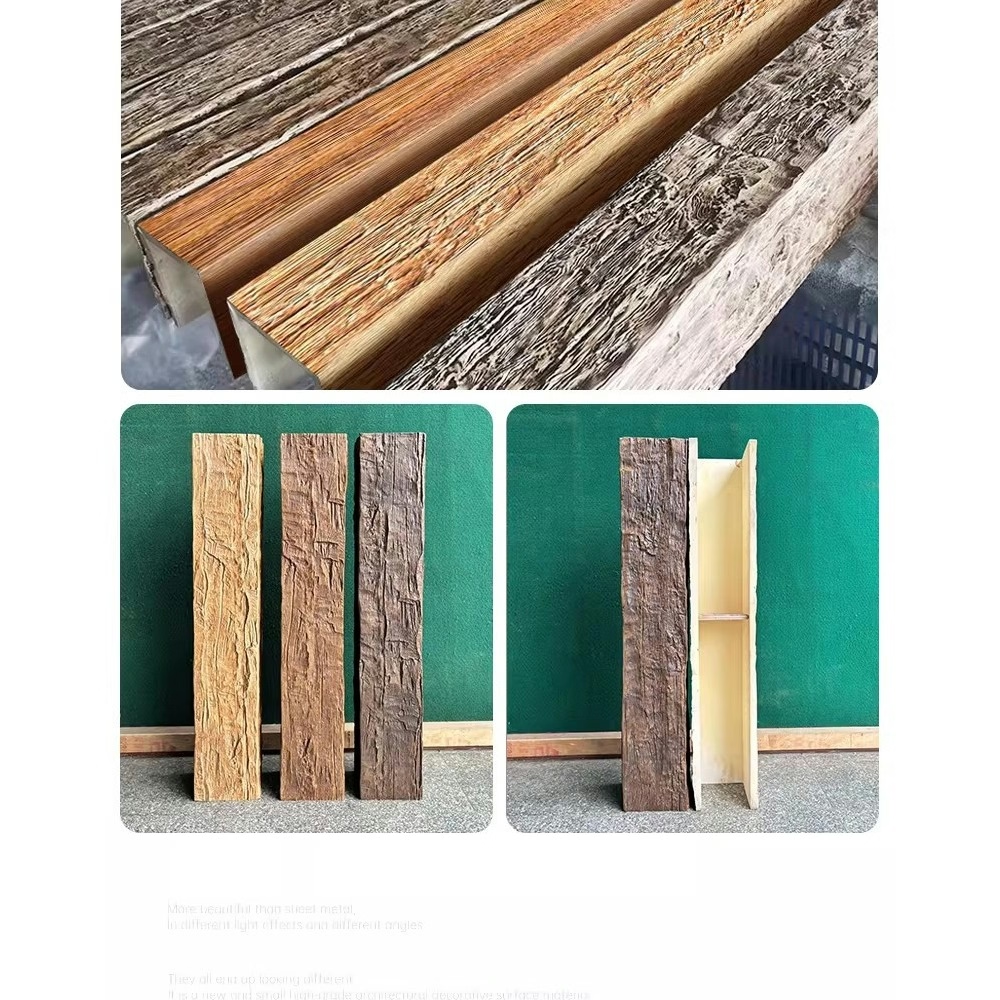
The color of the beams contributes to the overall atmosphere. Warm browns, soft grays, and weathered driftwood tones all work in resort settings. The specific color should complement the surrounding architecture and the broader color palette of the resort. Faux wood beams can be custom-finished to match any desired palette.
What Operators Care About in Beam Selection
Resort hotel operators care about maintenance, durability, and total cost of ownership. Real timber beams require periodic refinishing, treatment against rot and insects, and occasional replacement of damaged sections. The labor and material costs of this maintenance can be substantial over the life of a resort.
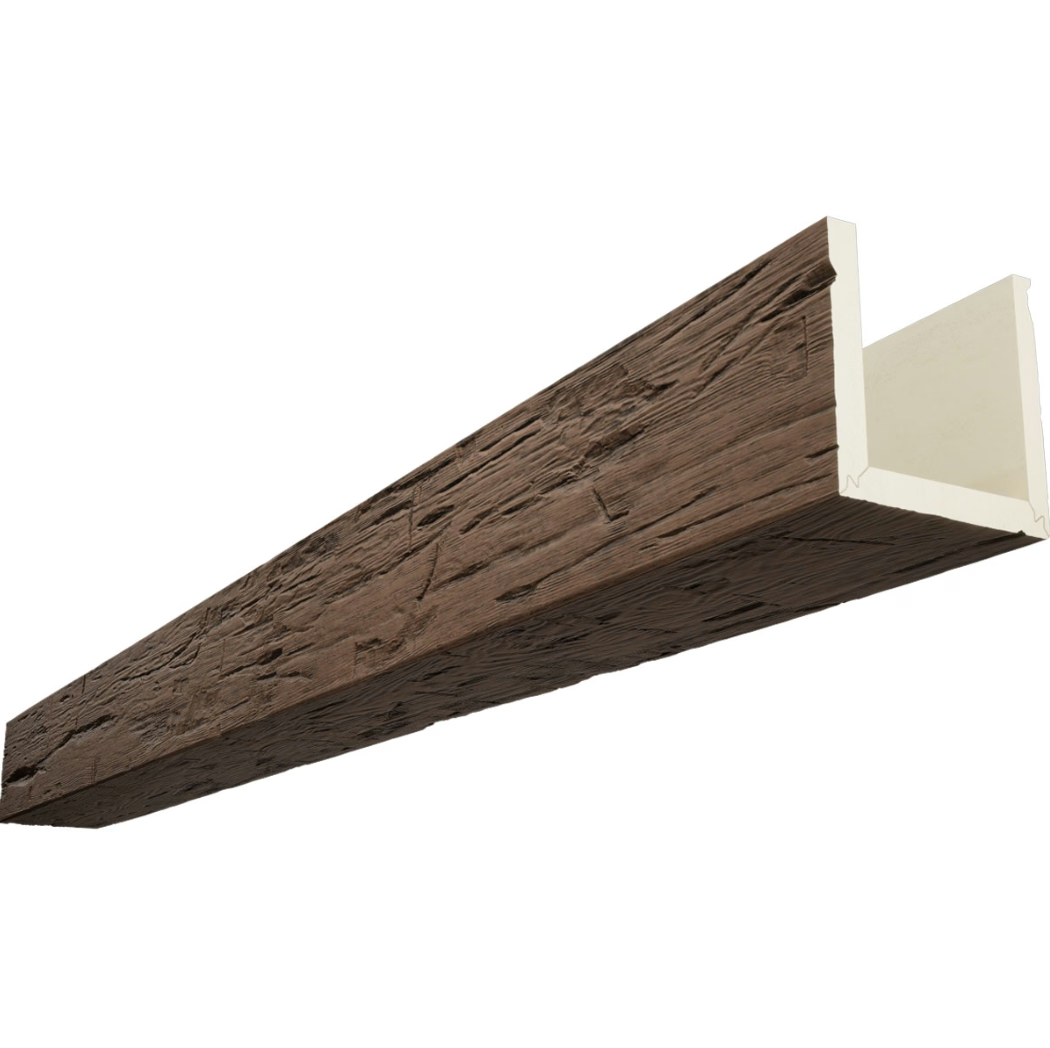
Polyurethane faux wood beams eliminate most of this maintenance. The factory finish is designed for outdoor exposure and does not require refinishing on a regular schedule. The closed-cell foam core does not absorb water and does not support rot or insect infestation. The result is a ceiling that looks like new timber for many years with minimal intervention.
The total cost of ownership calculation strongly favors faux wood for resort applications. The initial cost is similar to or slightly higher than real timber. The maintenance cost over a 20-year period is dramatically lower. The replacement cost is avoided entirely. The financial case for faux wood is clear.
Design Considerations for Resort Applications
The design of a veranda or loggia ceiling has to balance several factors. The beams must provide the visual weight and warmth that guests expect. The beams must allow for integration with lighting, speakers, fans, and other ceiling-mounted elements. The beams must work with the surrounding architecture rather than competing with it.
The beam layout is typically coordinated with the structural layout of the veranda or loggia. Beams run perpendicular to the primary support beams, parallel to the slope of the roof, or in a grid pattern across a flat ceiling. The specific layout depends on the architecture and the desired visual effect.
Lighting integration is a critical design consideration. Pendants are typically hung from the beams, with the beam providing both the visual anchor and the structural support. The pendants should be proportional to the beam size and the ceiling height. Linear lighting can be recessed into the sides of the beams for an indirect lighting effect. Spot lighting can be mounted to the beams to highlight specific features.
Ceiling fans are common in resort verandas and loggias, particularly in warm climates. The fans can be hung from the beams or from the structure between beams. Beam-hung fans use the beam as a natural mounting point and create a layered effect with the beams as the primary structure and the fans as secondary elements.
Speakers and other audio equipment are typically integrated into the beam design or mounted between beams. The hollow interior of polyurethane beams provides a clean way to route speaker wire and to mount speakers without visible cables.
Coordinating With Surrounding Architecture
Verandas and loggias are part of a larger architectural composition that includes the main building, the surrounding landscape, and any adjacent outdoor spaces. The beam treatment should be coordinated with these elements to create a unified design.
In tropical resort settings, the beams often coordinate with the surrounding timber and palm materials. The beam finish might match the timber of the main building, or it might be a complementary finish that creates visual interest. The beams may extend from the main building into the outdoor space, creating a sense of continuity.
In coastal resort settings, the beams often take on the weathered, salt-air-aged appearance of coastal timber. Driftwood gray tones, silvered browns, and bleached wood finishes all work well in coastal settings. The beams complement the natural materials of the beach environment.
In mountain or desert resort settings, the beams often have a richer, darker finish that complements the natural surroundings. Deep walnut, weathered cedar, and dark-stained oak tones work well in these settings. The beams create a sense of warmth and refuge in the outdoor environment.
Material Specifications for Resort Applications
Faux wood beams for resort applications require specific material properties to handle the demanding outdoor environment. The polyurethane formulation should be rated for exterior use with UV inhibitors and weather-resistant additives. The closed-cell structure prevents water absorption and provides long-term dimensional stability.
The surface finish is particularly important for resort applications because the beams are constantly visible to guests. The finish must resist UV fading, chalking, and abrasion. The color must remain stable over many years of exposure. The texture must be deep enough to read at normal viewing distances.
Premium suppliers offer finishes specifically engineered for resort applications. The finishes include multiple layers of UV protection, mildew resistance, and abrasion resistance. The pigments are selected for outdoor lightfastness. The topcoat is formulated for the specific climate conditions of the resort location.
For coastal resorts, the finish system should include additional salt-spray resistance. For tropical resorts, the finish should include mildew and algae resistance. For high-altitude resorts, the finish should include enhanced UV protection. The specific formulation is matched to the resort's location and exposure conditions.
Installation Considerations
The installation of faux wood beams in resort applications follows a predictable sequence but requires careful coordination with other trades. The veranda or loggia structure must be complete before beam installation begins. The mechanical and electrical rough-in must be in place. The finish work on adjacent surfaces must be either complete or properly protected.
The beam installation typically takes a few days for a medium-sized veranda or loggia. The crew arrives with the pre-finished beams, the mounting hardware, and a layout drawing. The beams are positioned and secured using the specified mounting method. The electrical and audio connections are made during the installation process.
The installation schedule should account for the weather conditions. Outdoor installations are best done during dry weather with moderate temperatures. Extreme heat or cold can affect the foam and the finish. Most manufacturers recommend installation within a specific temperature range for best results.
Quality control during installation is important. Each beam should be inspected before installation to confirm that it matches the specified finish and dimensions. The installation should be checked for proper alignment, secure mounting, and correct integration with other systems. Any issues should be addressed before the next beam is installed.
Coordinating With Property Operations
Resort installations have to consider the ongoing operation of the property. The beam installation may need to be scheduled around peak occupancy periods. The work area may need to be screened from guests. The noise and dust from the installation may need to be managed to minimize guest disruption.
Working with the property's operations team to develop an installation plan is essential. The plan should identify the work areas, the schedule, the safety measures, and the guest communication strategy. The plan should be reviewed and approved by the operations team before the installation begins.
The beam installation typically takes a few days for a single space, so the disruption to guests is limited. The benefits of the finished installation are immediate and long-lasting. The improved ceiling appearance enhances the guest experience from the moment the space is reopened.

Long-Term Maintenance
Faux wood beams in resort applications require minimal maintenance, but some periodic attention is appropriate. Annual inspection of the beams identifies any issues that need to be addressed. Cleaning removes dirt and biological growth that can accumulate on outdoor surfaces. Touch-up addresses any minor damage that may occur.
The maintenance schedule should be coordinated with the resort's overall maintenance program. The beam maintenance can be combined with other annual maintenance tasks to minimize disruption. The maintenance crew can be trained to perform the basic cleaning and inspection tasks, with more complex repairs handled by the supplier or a specialized contractor.
The total maintenance cost over a 20-year period is typically a small fraction of the maintenance cost for real timber. The savings can be redirected to other aspects of the property's operation or invested in additional improvements. The financial benefits of faux wood beams extend well beyond the initial installation.
The Veranda and Loggia Aesthetic
The aesthetic that verandas and loggias create is one of the defining features of a resort hotel. The ceiling overhead sets the tone for the entire space. Polyurethane faux wood beams provide the warm timber aesthetic that guests expect, with the practical performance that resort operators require.
As resort design continues to evolve, the use of faux wood beams is likely to expand. New resort properties in challenging climates are discovering the value of beams that perform well without constant maintenance. Established resort properties are replacing their aging timber ceilings with faux wood alternatives that look like new timber without the upkeep.
The result is a class of resort architecture that delivers consistent quality over decades of operation. The verandas and loggias maintain their appeal from the day they open through many seasons of guest use. The faux wood beams contribute to that consistency by providing a reliable, attractive ceiling finish that does not require constant attention. For resort designers and operators, that combination of aesthetics and performance is exactly what the application demands.
Technical References
ASTM standards cited in every specification
Test Data
Lab results from internal testing program
Updated 2026
Reviewed against current product specs