
There is something quietly perfect about a beam that runs from one wall to the other without a seam in sight. The eye reads it as a single confident line, the room gains a kind of architectural completeness, and the ceiling looks like it was built that way rather than assembled from pieces. Extra-long single-piece PU faux wood beams were developed specifically to make that seam-free look practical at spans where solid timber either cannot reach or cannot be trusted to stay straight.
Why Seams Become a Problem
Visible seams in a beam run are not just a small detail. They are the kind of thing that quietly undermines an otherwise beautiful ceiling. Designers know this, builders know it, and homeowners feel it even when they cannot name what is bothering them.
The Optical Truth About Joints
Even the most carefully executed scarf joint in a timber beam catches light differently from the surrounding wood. The grain direction shifts slightly, the end grain absorbs stain at a different rate, and any filler used to level the joint reads as a faint line under raking light. Across a long run, those small inconsistencies add up. The beam looks like a beam, but it doesn't quite look like one piece.
The Long-Term Reality of Splices
Seams in timber expand and contract with humidity. The filler used to hide them stays stable, but the wood around it moves, and over the seasons tiny cracks develop where the joint meets the filler. In a commercial space with strong HVAC cycling, those cracks can show up within a year. In a residential space with seasonal humidity swings, they may take two or three years. Either way, the seam becomes something the eye returns to, particularly in raking daylight from a side window.
The Single-Piece Manufacturing Approach
Polyurethane faux beams can be produced in single continuous lengths that eliminate the seam problem entirely. The manufacturing process accommodates lengths that would be impossible to source in solid timber without heroic logistics.
Production Lengths and Reinforcement
Standard catalog faux beams typically max at four to five meters in a single piece. Custom manufacturers can extend that to six, seven, or even eight meters with internal reinforcement cores that keep the beam straight during curing, shipping, and installation. The reinforcement is invisible once the beam is in place, but it does the critical work of preventing sag and twist across the long span.
Mold Design for Long Profiles
Pouring or extruding a beam longer than five meters requires carefully designed molds that maintain dimensional accuracy across the entire run. Manufacturers serving the long-beam market have invested in long-bed mold systems, climate-controlled curing rooms, and quality control protocols that catch any out-of-tolerance sections before they ship. The result is a beam that arrives straight, true, and ready to install without the field adjustments that plague spliced assemblies.
Where Joint-Free Beams Change the Design Conversation
Some applications depend on a seamless beam run for the design to work at all. Others simply benefit from the cleaner finish. The list below covers the spaces where single-piece beams make the biggest difference.
Great Rooms and Open Living Spaces
Custom homes with open great rooms often span the full width of the house in a single open volume. The ceiling above carries a beam that runs wall to wall, marking the transition between kitchen and living zones. A single-piece run reads as a deliberate architectural gesture rather than a structural necessity. Designers reach for it because it gives the room a kind of confident proportion that a spliced beam simply cannot.
Cathedral Ceilings and Vaulted Spaces
Cathedral ceilings peak at the center of the room and slope down to the eaves. A long beam running perpendicular to the peak at the transition between ceiling and wall plane has to cover a wide span without breaking. Single-piece PU beams make that run practical at lengths that would otherwise require field splicing or acceptance of a visible joint in the middle of the slope.
Hospitality and Retail Ceilings
Hotel lobbies, restaurant dining rooms, and flagship retail stores depend on ceiling finishes that read as clean and intentional. Visitors look up, they photograph the space, and any visible joint in a beam becomes a comment thread on social media. Single-piece beams eliminate that risk and keep the ceiling reading as designed across years of use.
Gallery and Museum Spaces
Gallery and museum ceilings need to support exhibitions without competing with them. A joint-free beam overhead provides a confident architectural line that frames the room without introducing distractions. The clean profile also photographs well in installation shots and architectural publications.

Design Details That Benefit from Single-Piece Construction
Beyond the obvious advantage of no splices, single-piece construction enables other design details that would be difficult or impossible with joined sections.
Continuous Grain Direction
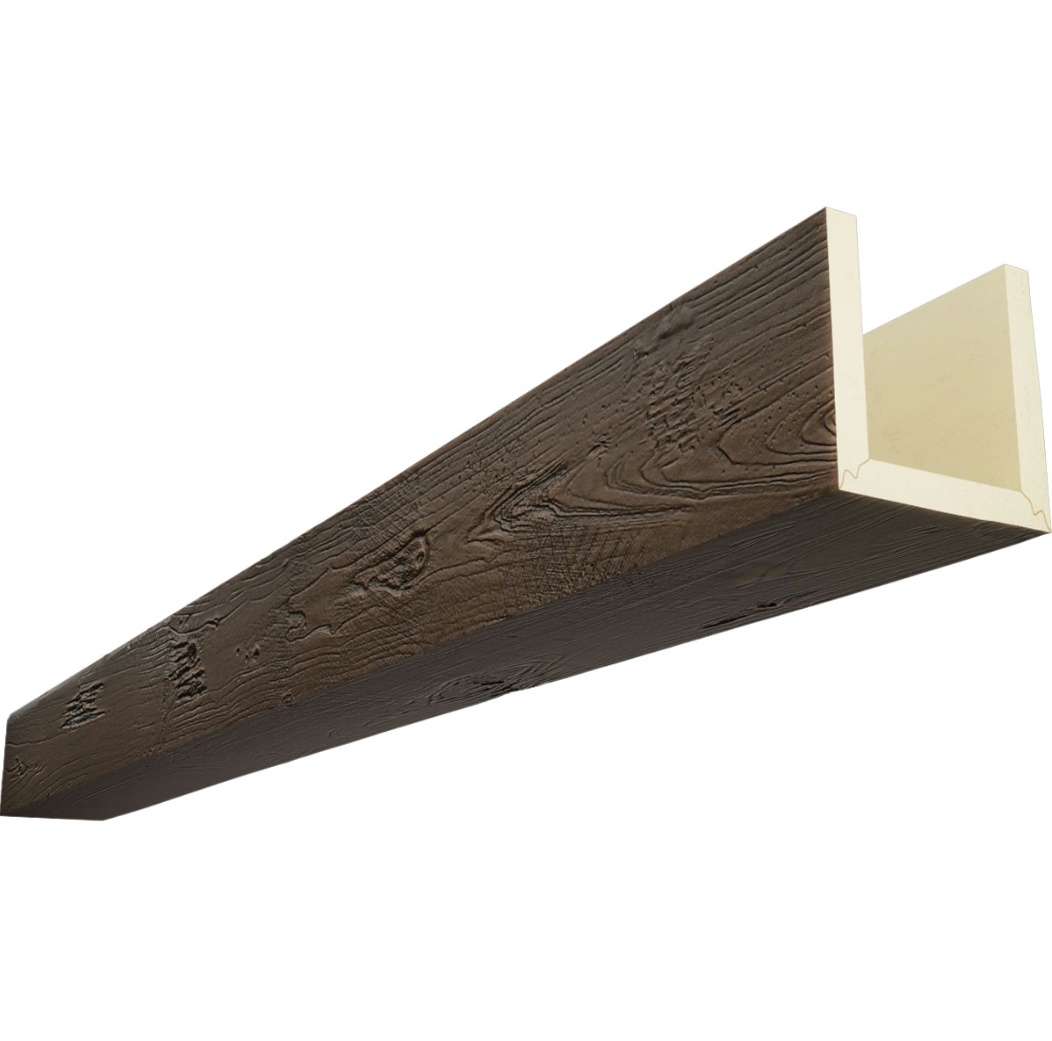
Real timber grain runs the length of the beam. When two pieces are joined end-to-end, the grain direction often shifts, creating a visual rhythm that the eye picks up on. A single-piece PU beam is molded with grain detail that flows continuously from end to end, matching what solid timber would look like if the tree were large enough to yield that length.
Consistent Stain and Weathering
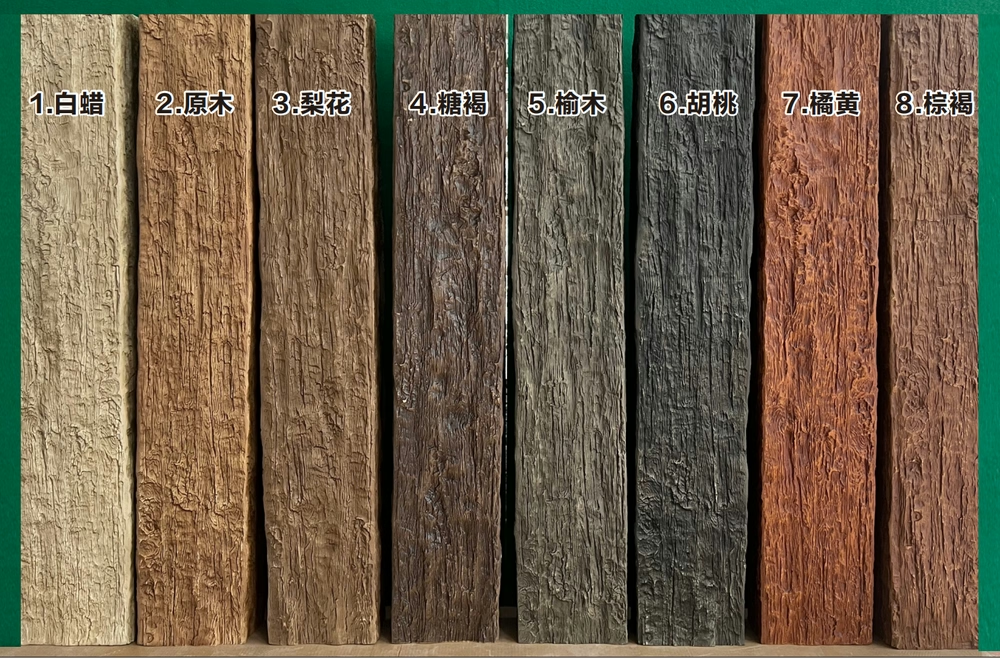
Hand-applied finishes on a single piece can be laid down continuously without interruption. The base color, grain highlights, and weathering effects all flow from one end to the other without the color shifts that happen when a finisher has to stop at a joint and start fresh on the adjoining piece. The result is a beam that looks like it has aged in place as a single object.
Detail Consistency Along the Profile
Hand-hewn marks, wire-brushed texture, and other surface details need to repeat consistently along a beam for the look to read as authentic. Single-piece production ensures that the same mold details apply across the entire length, while joined sections can show subtle variations where different pieces meet. The single-piece beam reads as one crafted object rather than an assembly of similar parts.
Practical Considerations for Specifying Long Single-Piece Beams
Long single-piece beams require more planning than standard catalog products, but the planning pays back in the finished result.
Ceiling Measurement and Field Verification
Before ordering, installers and designers should verify the actual ceiling span rather than relying on plan dimensions. Walls are rarely perfectly parallel, and ceiling spans can vary by several centimeters from one side of a room to the other. Field measurements ensure the beam is ordered to the right length and that any required field trimming is planned in advance.
Mounting Hardware for Long Runs
Single-piece beams need mounting hardware that supports them at multiple points along their length. Blocking cleats installed into ceiling joists or structural framing are typically the primary attachment method, with hidden brackets or back-channel receivers at each blocking point. For very long runs, mid-span support may be required to prevent deflection under the beam's own weight.
Handling and Access on Site
A long single-piece beam needs a clear path from delivery to installation point. Installers plan the lift path in advance, identify staging areas, and confirm that the beam can be maneuvered through doorways, around corners, and up to ceiling height without damage. For commercial sites with material lifts, the beam often goes in through a service entrance and travels to the installation point through back-of-house corridors.
Lead Times and Sample Approval
Custom single-piece production takes longer than standard catalog orders. Typical lead times run three to five weeks for sample approval, three to five weeks for production, and additional time for shipping depending on distance. Early engagement with the manufacturer gives the project time for sample review, finish adjustments, and any profile tweaks without pushing the construction schedule.
Working With Manufacturers on Custom Orders
Most long single-piece beams are custom orders rather than stock items. Working with the right manufacturer makes the difference between a smooth project and a frustrating one.
Capabilities to Look For
Manufacturers serving the long-beam market typically have extended-length molds, internal reinforcement capability, hand-applied finishing facilities, and packaging systems designed for oversized products. They provide finish samples on stub beams, supply shop drawings when needed, and offer engineering support for challenging installations.
Communication During Production
Good manufacturers keep clients informed during the production cycle. Sample shipments are tracked, production photos are shared, and shipping arrangements are coordinated well in advance of completion. That level of communication prevents surprises and keeps the project on schedule even when the beam itself is taking longer than standard catalog items would.
A Ceiling That Reads as One Thought
Extra-long single-piece PU faux wood beams give designers and builders a way to deliver the seam-free timber look that solid wood can no longer provide at architectural scales. The single-piece construction eliminates visible splices, keeps grain and finish continuous across the full run, and lets the ceiling read as one thought from wall to wall. For projects where the ceiling is part of the experience, that continuity is the difference between a room that photographs beautifully and one that quietly draws attention to its joints.
Technical References
ASTM standards cited in every specification
Test Data
Lab results from internal testing program
Updated 2026
Reviewed against current product specs


