
A room rarely needs every ceiling beam to make a statement. Often, just one well-placed accent beam is enough to give a ceiling the character it has been missing. Eye-catching accent faux wood beams work in that role beautifully. They let designers introduce timber warmth to a ceiling in a focused gesture that draws the eye exactly where the room wants attention, without committing to the heavier visual weight of a structural beam treatment.
What an Accent Beam Does That Other Treatments Cannot
Ceiling treatments come in many forms. Crown molding, coffered panels, painted patterns, and decorative tile all have their place. Accent beams occupy a particular niche because they introduce the texture and warmth of timber at a fraction of the visual weight of a structural installation.
The Power of a Single Gesture
A single accent beam across a ceiling does several things at once. It draws the eye upward. It introduces a horizontal line that anchors the room's proportions. It signals a transition between zones without requiring a wall. And it adds the kind of texture that flat ceiling finishes cannot provide. The same beam in a different position would feel like a different design entirely. Placement matters as much as the beam itself.
When an Accent Reads as a Focal Point
Accent beams become focal points when they are placed where the eye naturally rests. Above a seating area, a dining table, a kitchen island, or an entry console, an accent beam signals that the ceiling is paying attention to what's happening below. The beam becomes part of the room's storytelling, marking the spot where people gather, eat, or pause to take in the space.
Common Placement Patterns for Accent Beams
Designers reach for accent beams in several recurring patterns, each with its own effect on how the room feels.
Above the Bed in a Primary Bedroom
A single accent beam centered above the bed creates a kind of architectural headboard. It anchors the bed visually, introduces warmth above what is often the largest piece of furniture in the room, and gives the ceiling a focal point that pulls the entire bedroom composition together. Designers typically specify a beam in the same finish as the bed frame or a contrasting tone for visual interest.
Over a Kitchen Island
Kitchen islands are natural gathering points, and an accent beam above the island signals that intentionality. The beam provides a mounting point for pendants, breaks up the flat expanse of kitchen ceiling, and creates a visual link between the cooking area and the surrounding living space. In open-plan homes, this single beam often does more work than any other ceiling treatment.
Across a Living Room Seating Area
A living room with multiple seating areas sometimes needs a beam overhead to define which grouping is the primary one. An accent beam above the main seating zone, with the lighting and conversation focused there, signals that this is the room's center of gravity. Secondary seating areas feel like overflow rather than competing focal points.
Along a Hallway or Corridor
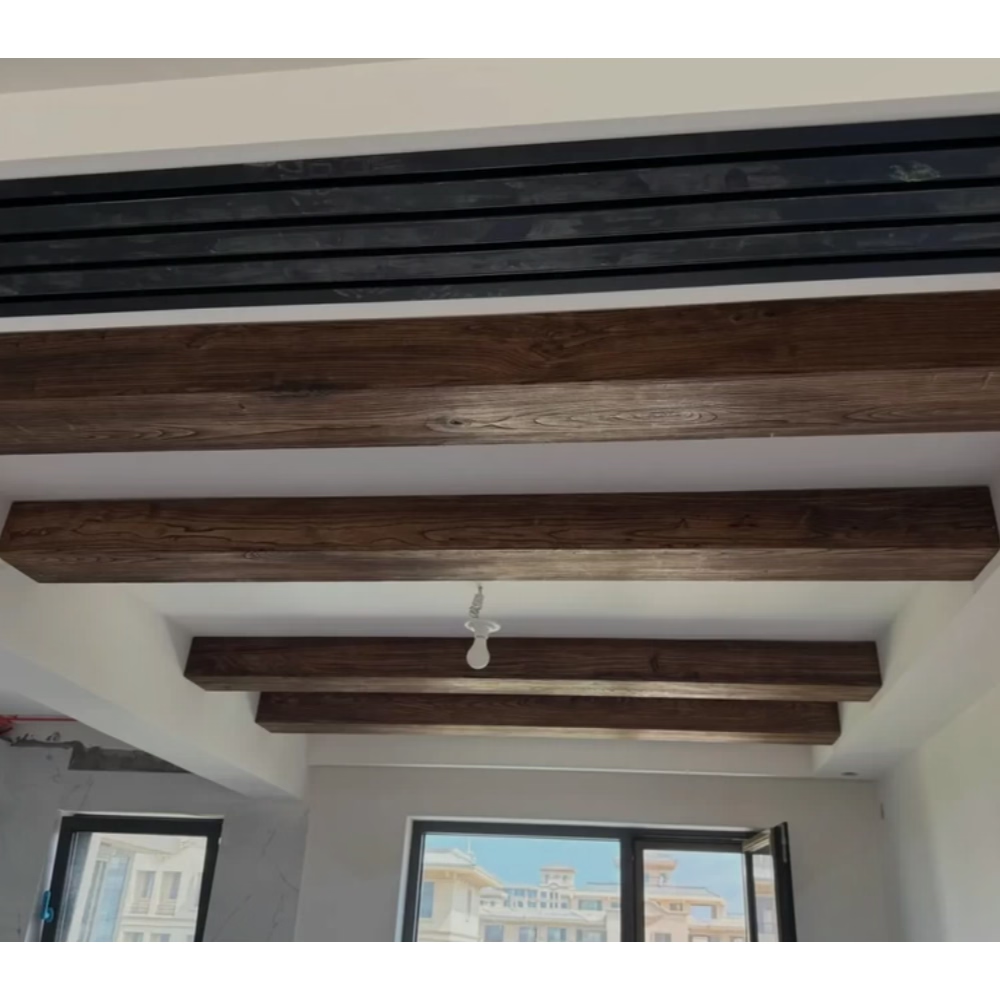
Long hallways are uncomfortable spaces unless the ceiling gives them some interest. A series of accent beams running perpendicular to the hallway direction breaks up the length, creates rhythm, and provides a reference point as visitors move through the space. Hallway accent beams are typically narrower than room-defining beams, sized to add character without dominating the relatively low ceiling height.
Profiles and Finishes for Accent Applications
Accent beams work with almost any profile and finish, but certain choices tend to land better than others. Designers usually think about the room's existing finishes and the statement the beam is meant to make.
Subtle Profiles for Quiet Statements
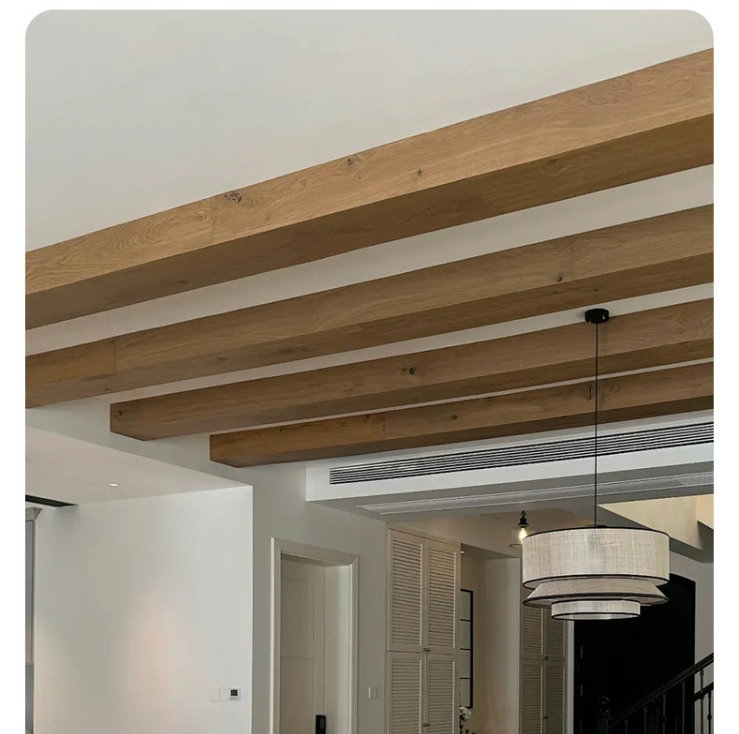
Not every accent beam needs to announce itself. A smooth-planed profile in a mid-tone oak or whitewashed finish works well in modern and contemporary interiors where the ceiling is meant to feel refined rather than rustic. The beam adds warmth and a horizontal line without competing with other architectural features.
Textured Profiles for Character
Hand-hewn, rough-sawn, and distressed profiles give a room a more grounded, traditional character. The beam reads as authentic reclaimed timber and pairs well with stone fireplaces, exposed brick, and other rustic material stories. Designers reach for textured profiles in farmhouses, lodges, and homes with strong traditional design languages.
Painted Beams for Specific Effects
Some accent beams are painted rather than stained. A matte black beam across a white ceiling creates a graphic, almost editorial effect that works in modern lofts and converted industrial spaces. A crisp white beam over a pale wall introduces subtle texture and shadow detail without adding color contrast. Painted accent beams are common in Scandinavian, coastal, and modern farmhouse interiors.

Two-Tone and Custom Finishes
Custom finishes are common in accent beam applications. A beam might be stained to match a specific floor plank, finished to coordinate with a nearby piece of furniture, or glazed to pick up tones from artwork on the adjacent wall. The accent beam becomes part of the room's color story rather than a separate decorative element.
Why Designers Choose Faux Wood for Accent Work
Accent beams don't typically carry loads, hide structural members, or wrap existing framing. They're decorative elements that happen to look like timber. Faux wood is the natural fit for that role.
Lighter Weight, Easier Installation
Because accent beams don't carry structural loads, designers can specify lighter faux profiles that install quickly and don't require heavy-duty blocking. Two installers can typically lift and mount an accent beam in under an hour, which makes accent beam projects affordable even when several beams are installed across a single ceiling.
Design Flexibility Across Many Rooms
Faux accent beams can be specified in different sizes, profiles, and finishes for different rooms throughout a home, while still reading as part of a coherent design language. A textured beam in the great room, a smooth beam in the primary bedroom, and a painted beam in the hallway all share the same fundamental material but adapt to the character of each space.
No Maintenance Concerns
Accent beams are decorative and don't usually get touched, bumped, or stressed. Faux wood in those conditions holds up indefinitely with virtually no maintenance beyond occasional dusting. There's no finish to refresh, no joints to fill, no fasteners to check. The beam looks the same in year ten as it did on installation day.
Coordinating Accent Beams with Lighting
Accent beams often carry lighting as well as decorative weight. Pendants, chandeliers, recessed fixtures, and LED tape integrate into the beam profile to create layered lighting effects.
Pendant and Chandelier Mounting
A pendant or chandelier hanging from an accent beam signals intentionality. The fixture is no longer just a light source; it's a design choice that draws the eye to both the beam and the space below it. Designers typically coordinate beam placement with electrical rough-in so the fixture hangs exactly where intended, and the beam can be specified with integrated reinforcement to carry the fixture weight.
Recessed and Integrated Lighting
For more subtle effects, accent beams can be specified with channels for LED tape along the edges, recessed uplighting that washes the ceiling, or downlighting that illuminates the wall below. Polyurethane beams accommodate these details during production, with the wiring channels hidden inside the profile and the fixture openings pre-cut before the beam ships.
Sizing and Proportion in Accent Applications
Accent beams look right when their size matches the room and the statement being made. Too small and the beam disappears into the ceiling. Too large and it dominates the space.
Width and Depth Scaled to Room Size
A standard residential accent beam in a typical ceiling height might be 200 millimeters wide and 200 millimeters deep. Larger rooms with higher ceilings benefit from wider profiles up to 300 or 350 millimeters. Very small rooms with low ceilings might use narrower beams in the 150 millimeter range. The relationship between beam size and ceiling height matters more than the absolute dimensions.
Length Considerations
Accent beams don't always run the full width of a room. A beam that stops short of the walls, framed by shorter decorative brackets or corbels, can create a more contained focal point. A beam that runs wall to wall makes a more architectural statement. The choice depends on the visual weight the designer wants and the proportions of the surrounding space.
Working With Samples Before Ordering
Accent beam projects benefit from finish samples viewed in the actual room. Lighting conditions, surrounding finishes, and ceiling color all influence how a beam reads.
The Importance of In-Situ Approval
A finish that looks perfect in a showroom can read differently under the specific lighting conditions of the actual room. Natural light, warm incandescent bulbs, cool LED fixtures, and dimmable accent lighting all change how a stain color appears. Sample approval in the room where the beam will live eliminates surprises and ensures the finished product matches the design intent.
Coordinating Multiple Beams in One Project
Homes with accent beams in several rooms often want the beams to share a finish or finish family while adapting to each room's character. Sample approval lets the designer view multiple finish options side by side and confirm that the variations work together as a coordinated set rather than as disconnected choices.
A Beam That Says Something Specific
Eye-catching accent faux wood beams give designers a focused way to add character, warmth, and visual interest to interior ceilings. They work across a wide range of styles, they install quickly, and they hold up to years of use with virtually no maintenance. For projects where the ceiling needs a single confident gesture rather than a full timber treatment, accent beams are often the right answer.
Technical References
ASTM standards cited in every specification
Test Data
Lab results from internal testing program
Updated 2026
Reviewed against current product specs


