
Most rooms have a ceiling that gets almost no design attention. It gets painted, gets a light fixture, and otherwise fades into the background. Eye-catching faux wood beam accents change that dynamic completely. They turn the ceiling into an active part of the room's composition, adding character, warmth, and a focal point that the rest of the interior can build on. The transformation is dramatic but practical, and it works in nearly every style of home.
Why Ceilings Often Get Overlooked
Interior designers spend hours selecting flooring, finishes, furniture, and lighting, but the ceiling frequently gets the same flat treatment it has had for decades. The reasons are partly practical and partly habitual.
Practical Constraints
Ceiling work happens high up, often requires scaffolding or ladders, and adds labor cost that builders and homeowners try to minimize. A flat painted ceiling is the cheapest and fastest option, which makes it the default in most new construction. Designers who want ceiling detail have to argue for it specifically, and the argument has to be strong enough to overcome the practical and economic pressures pushing toward a flat finish.
Habitual Underdesign
Even when budgets allow for ceiling treatment, the ceiling is often the last surface considered in the design process. By the time lighting, furnishings, and finishes are finalized, there is little time or budget left for additional overhead detail. Faux wood beam accents solve this problem by being quick to install, easy to specify, and effective even when added late in the design process.
What Faux Wood Beam Accents Accomplish
A single beam accent changes how a ceiling reads. A few well-placed beam accents change how the entire room feels.
Direction and Rhythm
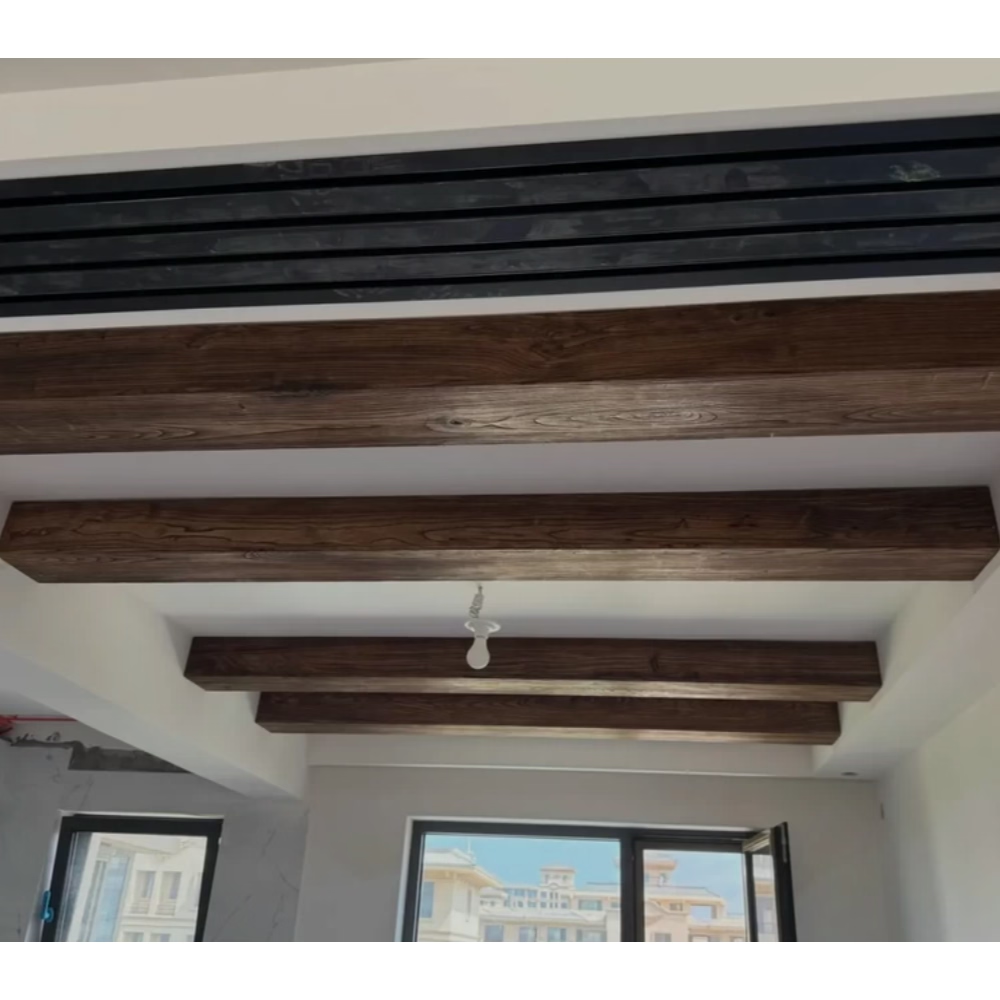
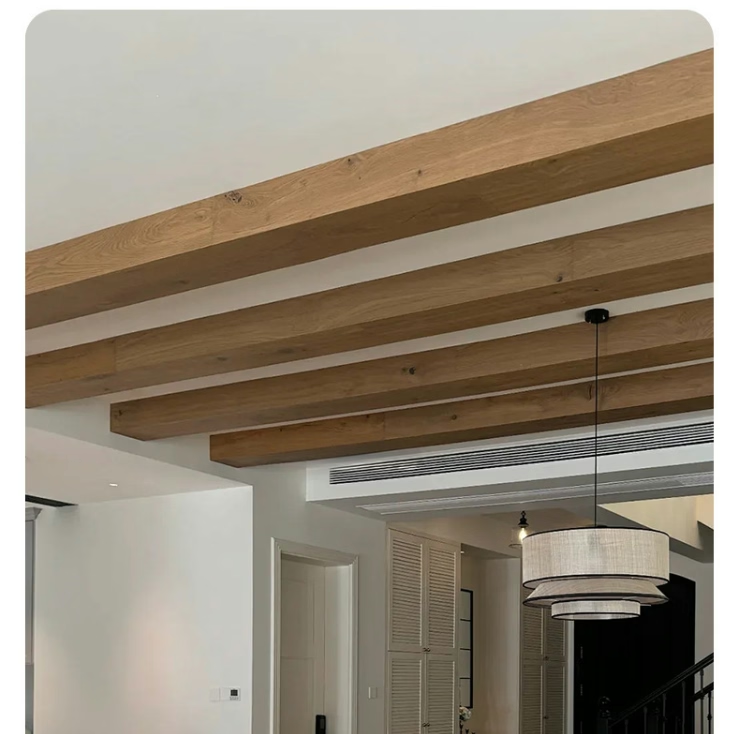
Beam accents running parallel to one another introduce rhythm to a ceiling that would otherwise feel flat. The eye reads the spacing and consistency as intentional design rather than structural necessity. In rooms with long proportions, parallel beams break the length into sections that feel more manageable and visually interesting.
Texture and Warmth
The natural warmth of wood tone, combined with the texture of a milled or molded profile, gives the ceiling a material character that painted drywall cannot provide. Even a single beam accent introduces this warmth and signals that the ceiling has been considered as part of the overall design.
Focal Point and Hierarchy
A beam accent above a fireplace, dining table, kitchen island, or bed creates a focal point that pulls the eye upward and gives the room a clear visual hierarchy. The beam signals that what happens below it matters, and the ceiling becomes part of the composition rather than a neutral backdrop.
Zone Definition in Open Plans
Open-plan layouts need help defining different functional zones without walls. Beam accents running above specific zones — the kitchen, the dining area, the seating area — give each function its own architectural identity. The ceiling itself becomes a kind of map that visitors read instinctively as they move through the space.

Common Placement Patterns
Beam accents show up in several recurring patterns across residential interiors. Each placement strategy has its own effect on how the room feels and how the space is used.
Centered Above a Bed
A beam accent centered above the bed creates a kind of architectural headboard for the entire wall. The beam reinforces the bed's role as the room's focal point and gives the ceiling a confident gesture above the most important piece of furniture. Designers often specify the beam in a finish that coordinates with the bed frame or headboard for visual continuity.
Over a Kitchen Island
A beam accent above the kitchen island signals the island's importance in the room's layout. In open-plan homes, this single beam accent does more to define the kitchen zone than any other single treatment. Pendants, recessed lights, or LED tape integrated into the beam provide task lighting for the island while reinforcing the architectural statement.
Across a Dining Area
A beam accent above the dining table creates a canopy effect that signals the table's role as a gathering space. The beam and a chandelier or pendant cluster beneath it become a paired composition that defines the dining area in open-plan layouts and gives the table a kind of permanence and importance in the room.
Along a Hallway or Entry
Hallways and entries benefit from beam accents at regular intervals. The beams break up what would otherwise be a long, undifferentiated space, give visitors a sense of progression as they move through, and introduce ceiling detail in spaces that often feel institutional.
Above a Reading Nook or Window Seat
A beam accent above a reading nook or window seat signals the spot as a destination. The beam provides a visual anchor for the seating arrangement, gives the eye a place to settle, and often serves as the mounting point for sconces, picture lights, or task lighting.
Profiles and Finishes for Beam Accents
The profile and finish choices for beam accents depend on the room's existing design language and the statement the beam is meant to make.
Profiles That Match the Style
Smooth-planed profiles suit contemporary, modern, and Scandinavian interiors. Wire-brushed profiles work in modern farmhouse and transitional spaces. Hand-hewn and rough-sawn profiles fit traditional, rustic, and lodge-style homes. Custom profiles can be developed for projects where no standard option matches the design intent.
Finishes That Coordinate With the Room
Pale oak and whitewashed finishes suit bright, airy interiors. Mid-tone walnut and warm brown finishes work in transitional and traditional rooms. Deep mahogany and ebony finishes anchor formal spaces. Custom finishes can be matched to specific flooring, cabinetry, or furniture pieces when the design calls for precise coordination.
Mixing Finishes Across Multiple Beams
Homes with beam accents in several rooms often vary the finish slightly from room to room while keeping the same general character. A pale oak beam in the great room might be matched by a slightly warmer tone in the primary bedroom and a more weathered finish in the entry. The variations keep each room feeling distinct while maintaining a coherent design language throughout the home.
Why Faux Wood Works for Beam Accents
Beam accents don't carry structural loads and don't typically need to wrap existing framing. They're decorative elements, and faux wood is the natural fit for that role.
Easy Installation
Faux wood beam accents install quickly and without heavy equipment. Most accents are light enough for two installers to handle, with mounting hardware that attaches to blocking in the ceiling structure. The work can be done in a few hours per beam, with no special tools required.
Consistent Quality
The manufacturing process for faux wood produces consistent results across multiple beams. Texture, profile, and finish match from beam to beam, which matters in projects where several accents share the same ceiling or appear in adjacent rooms. Solid timber rarely achieves that level of consistency, even with careful selection.
Cost-Effective Across Projects
Beam accents in every room of a home add up quickly in solid timber. Faux wood delivers the same visual impact at a fraction of the cost, allowing designers and homeowners to specify beam accents throughout a project without breaking the budget. The cost savings often free up budget for other design elements that wouldn't otherwise be possible.
No Maintenance Required
Beam accents in residential settings are typically out of reach, which means they don't get touched, bumped, or stressed. Faux wood holds its finish and profile indefinitely in those conditions, with no need for refinishing or repair. The accents look the same in year ten as they did on installation day.
Coordinating Beam Accents With Lighting and Hardware
Beam accents frequently carry or coordinate with lighting and hardware. Designers think about these integrations early so the ceiling composition works as a complete system.
Pendant and Chandelier Integration
Pendants and chandeliers hanging from beam accents signal that the fixture is part of the ceiling composition. The beam provides the architectural support, the fixture provides the illumination, and together they create a layered statement that defines the room's focal point. Designers typically coordinate the beam finish with the fixture material for a cohesive look.
Recessed and Hidden Lighting
Recessed downlights or LED strips integrated into the beam profile provide illumination without visible fixtures. This approach works well in modern interiors with minimalist lighting schemes, where the architectural beam provides visual interest and the integrated lighting provides functional illumination.
Blocking for Future Changes
Beam accents are often installed with concealed blocking that supports heavier fixtures or future modifications. The beam looks the same, but its internal structure is engineered to accept a chandelier, ceiling fan, or hanging installation without further modification. That flexibility makes the beam a long-term asset rather than a fixed decorative element.
Installation Best Practices
Beam accent installation is straightforward but benefits from careful planning, particularly when multiple beams are involved or the ceiling geometry is complex.
Measuring and Layout
Beam accents require accurate measurements and layout before installation begins. Laser levels, chalk lines, or snap lines mark the mounting points across the ceiling, ensuring consistent spacing and alignment. Field measurements verify that ceiling dimensions match the plans and that any required adjustments are identified before the beams arrive.
Blocking and Mounting Hardware
Mounting blocking is installed at marked points before the beam goes up. The blocking screws into ceiling joists or framing through small access holes that are patched after installation. The beam then mounts to the blocking with concealed brackets or clips that hide the hardware once the beam is in place.
Coordination With Finishes
Beam accents typically install after the ceiling is painted and before fixtures are mounted. The beam arrives pre-finished, with no on-site finishing required beyond touch-up at any field-cut locations. Painters cut in around the beam edges after installation, and fixtures are mounted once the finish work is complete.
A Ceiling That Joins the Conversation
Eye-catching faux wood beam accents give ceilings a real role in interior design. They introduce direction, texture, warmth, and focal points that flat ceilings cannot provide, and they do it quickly, affordably, and with consistent quality. For designers and homeowners who want every surface in a room to contribute to the composition, beam accents are one of the easiest ways to make the ceiling part of the conversation.
Technical References
ASTM standards cited in every specification
Test Data
Lab results from internal testing program
Updated 2026
Reviewed against current product specs


