
A ceiling without focal point treatment is a ceiling waiting for someone to notice it exists. Eye-catching focal point PU faux beams change that situation decisively. They introduce the kind of visual weight and architectural intent that makes visitors look up, take in the room's full volume, and understand immediately that the ceiling has been designed with care. The beams become the visual anchors that the rest of the room's design builds around, and they do it with a flexibility that solid timber simply cannot provide.
The Concept of Ceiling Visual Highlighting
Ceiling visual highlighting is the deliberate use of architectural detail to direct the eye upward and shape how a room feels. Most ceilings are designed to fade into the background, but a highlighted ceiling becomes part of the room's identity.
Beyond a Painted Plane
A painted ceiling does its job quietly. It reflects light, defines the room's volume, and otherwise stays out of the way. That's appropriate for some rooms, but in spaces where the architecture deserves more attention, a highlighted ceiling provides the kind of detail that elevates the entire interior. Focal point beams are the most common way to add that detail, because they introduce form, texture, and a clear architectural gesture.
How Focal Point Beams Work
A focal point beam runs across a ceiling at a height and direction that draws the eye. The beam can be centered above a key feature like a fireplace or dining table, or it can run perpendicular to a room's main axis to provide rhythm and direction. Either way, the beam creates a visual anchor that gives the ceiling purpose and gives the room a kind of architectural completeness.
Where Visual Highlighting Changes the Room
Some rooms benefit more than others from ceiling focal point treatment. The decision depends on the room's existing architecture, the focal points that are already present, and the statement the designer wants to make.
Great Rooms with Vaulted Ceilings
Vaulted ceilings already have a kind of built-in drama, but they often need a horizontal element to anchor the volume. A focal point beam running across the ceiling at the transition between the sloped and vertical planes provides that anchor. The beam gives the eye a reference point, defines the room's proportions, and signals that the architecture has been considered as a complete composition.
Living Rooms with Statement Fireplaces
Living rooms organized around a statement fireplace benefit from a focal point beam that runs above or across the fireplace wall. The beam and the fireplace work as paired architectural gestures, with the fireplace providing vertical interest and the beam providing horizontal direction. Together they create a composition that anchors the entire room.
Dining Rooms with Centered Tables
Dining rooms built around a centered table have always had an implicit relationship with the ceiling above. A focal point beam above the table makes that relationship explicit. The beam and a chandelier or pendant cluster beneath it become the room's defining feature, signaling the table's role as a gathering space and providing the architectural support for the lighting that illuminates it.
Open-Plan Living Areas
Open-plan living areas that combine kitchen, dining, and living functions under a single ceiling often need help defining individual zones. Focal point beams above each zone provide that definition without walls. The ceiling itself becomes a kind of diagram that visitors read instinctively, with each beam signaling the function of the space below it.
Foyers and Entry Halls
Foyers and entry halls are transitional spaces that visitors pass through quickly, which makes them ideal candidates for focal point beams. A single beam overhead signals that the home has been designed with intention and gives visitors an immediate sense of the architectural language they can expect throughout. A well-designed foyer beam often sets the tone for the entire home.

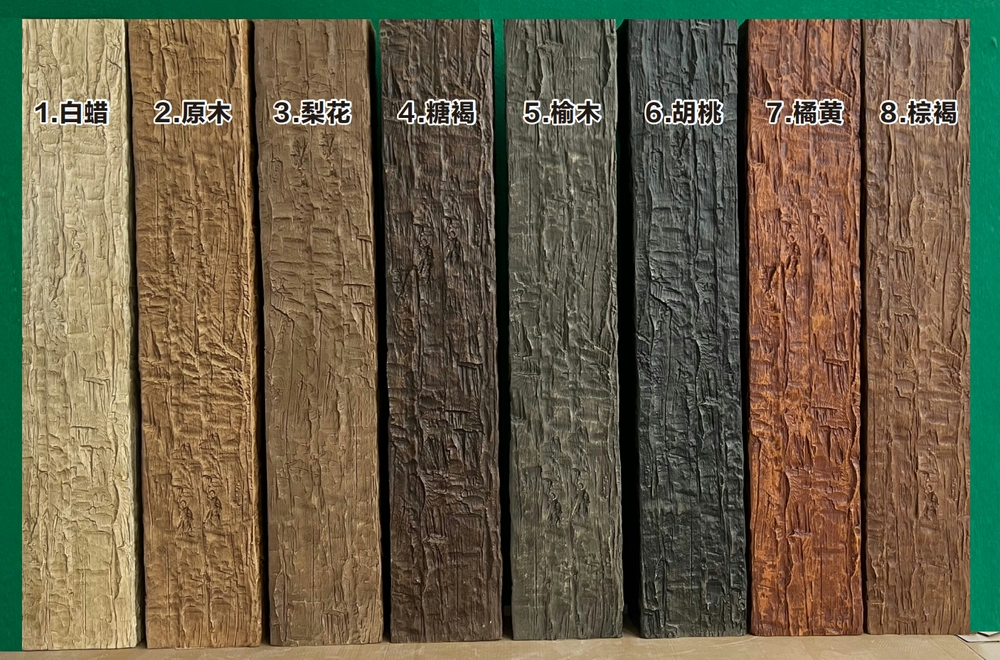
Profiles and Finishes for Visual Highlighting
The profile and finish choices for focal point beams determine how strongly the beam commands attention. Designers think about whether the beam should dominate or support the room's other features.
Profiles That Command Attention
Hand-hewn, rough-sawn, and deeply distressed profiles catch light and shadow at varying angles throughout the day, creating a beam that feels alive and present. These profiles work in rooms where the beam is meant to be a primary feature, and they pair well with rustic, traditional, and transitional interiors.
Profiles That Refine the Statement
Smooth-planed, wire-brushed, and lightly textured profiles give the beam a more controlled character. The beam still commands attention, but it does so through proportion and finish rather than aggressive surface detail. These profiles work in modern, contemporary, and transitional interiors.
Custom Profiles for Unique Statements
Projects with strong brand identity or distinctive design language often call for custom profiles that no catalog can provide. Custom mold development allows designers to specify edge details, integrated corbels, or unusual proportions that make the focal point beam truly unique.
Finish Tones for Different Effects
Deep walnut, ebony, and mahogany finishes make the beam a strong focal point that the eye notices immediately. These finishes work in rooms where the beam is meant to be the dominant architectural feature. Mid-tone oak and warm brown finishes provide direction without overwhelming the room. Pale oak, ash, and whitewashed finishes create subtle shadow lines that direct attention without dominating.
Hand-Applied Finishes for Depth
Focal point beams benefit from hand-applied finishes that add depth and variation across the entire length. Base colors are layered with highlights, shadows, and weathering effects that create a beam that reads as authentic timber rather than a molded product. Hand-applied finishes matter especially on focal point beams because the eye has time to notice the details from across the room.
Why PU Faux Beams Are Ideal for Focal Point Applications
Focal point beams need to look right, install efficiently, and hold their finish for years. Polyurethane checks every one of those boxes, which is why it's the material of choice for most focal point beam installations.
Visual Quality That Holds Up to Scrutiny
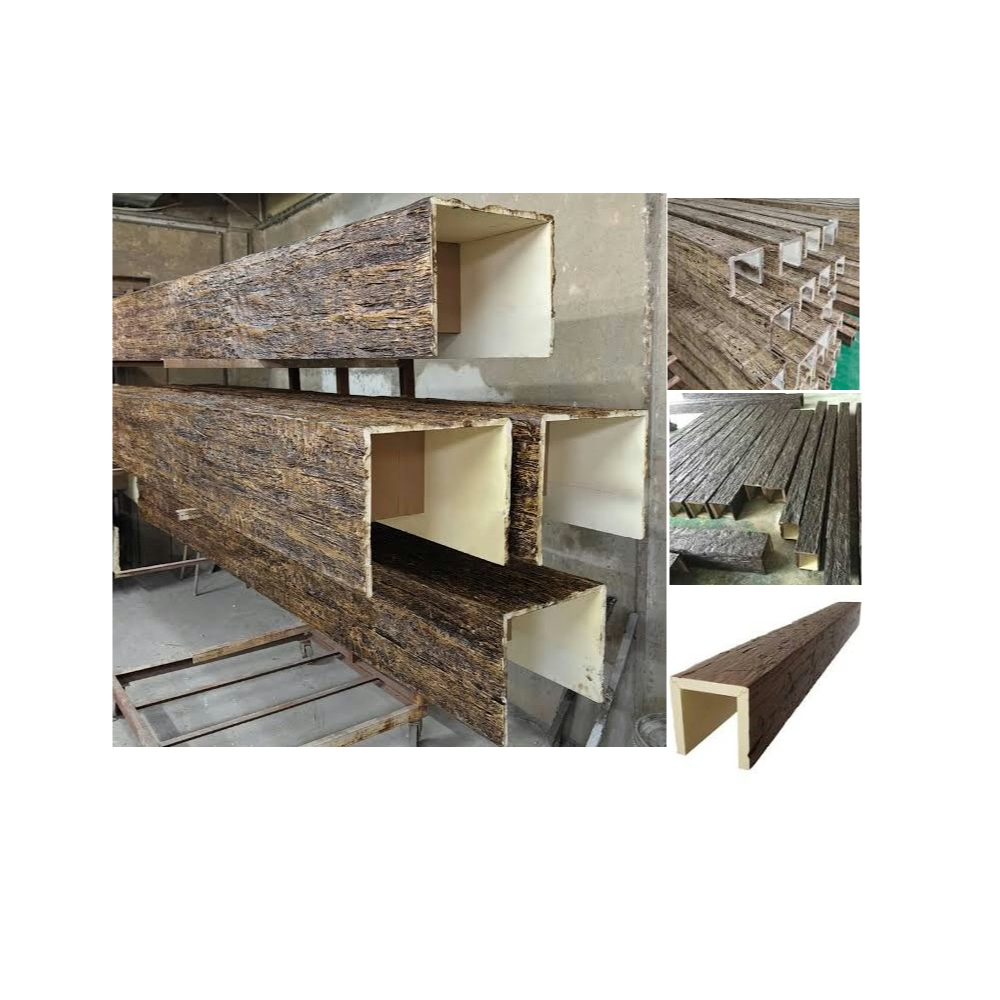
PU faux beams are manufactured with detailed textures and hand-applied finishes that read as authentic timber from any viewing distance. The molding process captures fine surface detail that hand-finished solid timber often lacks, and the factory-applied finishes are consistent across every meter of the beam's length.
Long Lengths for Confident Statements
Solid timber in long lengths is expensive and difficult to source. PU faux beams can be produced in single-piece runs that exceed what solid timber can practically deliver. Focal point beams that run wall to wall or across large rooms benefit from this length capability, because they can maintain a continuous line without visible splices.
Lightweight Handling and Installation
Focal point beams typically install faster and with less equipment than their solid timber counterparts. Most PU faux beams are light enough for two installers to handle, with mounting hardware that attaches to standard ceiling blocking. The installation can happen in a few hours per beam, with no need for mechanical lifting equipment.
No Maintenance Concerns
Focal point beams are usually installed high enough that they don't get touched, bumped, or stressed. PU faux beams in those conditions hold their finish indefinitely, with no need for refinishing, repair, or special cleaning. The beam looks the same in year ten as it did on installation day.
Coordinating Focal Point Beams With Other Design Elements
Focal point beams rarely stand alone. They typically coordinate with lighting, hardware, and adjacent finishes to create a complete ceiling composition.
Lighting Integration
Pendants, chandeliers, recessed fixtures, and LED tape all integrate with focal point beams in different ways. Designers typically think about lighting early in the specification process so the beam profile accommodates the fixtures and the wiring runs cleanly through the structure.
Coordination With Wall Finishes
Focal point beams often tie into wall finishes above or below them. A beam that runs into a stone accent wall, a wood-paneled feature, or a textured plaster surface creates a seamless transition between ceiling and wall that reinforces the room's design language.
Matching Multiple Beams in One Project
Homes with focal point beams in several rooms often want the beams to coordinate without being identical. Designers work with manufacturers to develop a finish family that allows each beam to adapt to its room's character while maintaining a recognizable relationship with the others.
Installation Considerations for Focal Point Beams
Focal point beam installation requires more planning than a standard decorative beam, particularly when the beam carries lighting or other integrated elements.
Pre-Installation Planning
Designers, builders, and manufacturers coordinate before the beam is produced. Ceiling dimensions are verified, mounting points are identified, electrical requirements are documented, and finish samples are approved in the actual room. This planning prevents expensive rework and keeps the project on schedule.
Coordinating With Multiple Trades
Focal point beam installation coordinates with electrical, mechanical, and finish trades. Electricians rough in wiring before the beam goes up, painters finish the ceiling around the mounting area, and flooring contractors complete the floor before scaffold moves into place. Good project management sequences these trades so the installation proceeds without delays or rework.
Quality Control During Installation
Focal point beams are visible features, which means installation quality matters. Crews verify alignment with laser levels, check that mounting hardware is properly secured, and confirm that integrated lighting and other features function as designed before the beam is finalized.
The Beam That Changes How a Room Reads
Eye-catching focal point PU faux beams give ceilings the kind of visual weight and architectural intent that flat finishes cannot provide. They direct attention, define spaces, and create the kind of memorable architectural moments that visitors notice and remember. For designers and homeowners who want every room to feel intentional and complete, focal point beams are one of the most effective tools available.
Technical References
ASTM standards cited in every specification
Test Data
Lab results from internal testing program
Updated 2026
Reviewed against current product specs


