
Every room needs a focal point, and the most overlooked place to put one is the ceiling. Eye-catching PU faux beams work beautifully as interior feature focal points because they command attention from above, frame the room's most important elements, and give visitors an immediate sense that the space has been designed with intention. They do all of it at a price point that puts this kind of architectural statement within reach of almost any project.
The Focal Point Hierarchy in a Room
Most well-designed rooms have a hierarchy of focal points. There is usually one primary feature that the room organizes around, supported by secondary features that add interest without competing for top attention. Focal point beams fit into this hierarchy in a specific way: they sit above everything else and direct attention downward to what matters most below.
What Makes a Focal Point Work
A focal point needs to be visible from the entry point of the room, large enough to register at a glance, and consistent enough in its presence that the eye returns to it naturally. A fireplace, a piece of art, or a striking piece of furniture can serve as a focal point on its own, but a beam overhead reinforces it and gives the room a kind of architectural completeness that isolated features cannot provide.
How Beams Reinforce Other Focal Points
A beam above a fireplace, a bed, or a dining table creates a paired composition. The lower feature has vertical interest, the upper beam has horizontal direction, and together they create a layered focal point that the eye reads as a complete architectural gesture. Even modest rooms benefit from this kind of composition, because the paired focal point gives the space a kind of confidence that no single element could provide on its own.
Where Focal Point Beams Make the Biggest Difference
Some rooms benefit more than others from focal point beams. The decision depends on the room's existing architecture, the focal points that are already present, and the statement the designer wants to make.
Living Rooms with Statement Fireplaces
Living rooms built around a fireplace benefit enormously from a focal point beam. The beam runs above the mantel, frames the fireplace vertically, and gives the entire wall a sense of architectural completeness. In rooms with vaulted or cathedral ceilings, the beam provides the horizontal anchor that the vertical volume needs.
Primary Bedrooms with Architectural Bed Walls
Primary bedrooms with a defined headboard wall or a feature wall behind the bed benefit from a focal point beam that runs the full width of the wall. The beam echoes the horizontal line of the headboard and creates a sense of completeness overhead. In rooms with vaulted ceilings, the beam also breaks the vertical volume into sections that feel more human-scaled.
Dining Rooms with Centered Tables
Dining rooms organized around a centered table have an implicit relationship with the ceiling above. A focal point beam makes that relationship explicit, with the table gathering people and the beam gathering attention. The composition works equally well in formal dining rooms and casual eat-in kitchens.
Open-Plan Living Areas
Open-plan living areas that combine multiple functions under a single ceiling often need help defining each zone. Focal point beams above each zone create that definition without walls. The ceiling becomes a kind of map that visitors read instinctively as they move through the space.
Foyers with Tall Ceilings
Foyers with tall or double-height ceilings need something to give the vertical volume meaning. A focal point beam across the foyer provides that anchor, signals that the home has been designed with intention, and gives visitors an immediate sense of arrival.

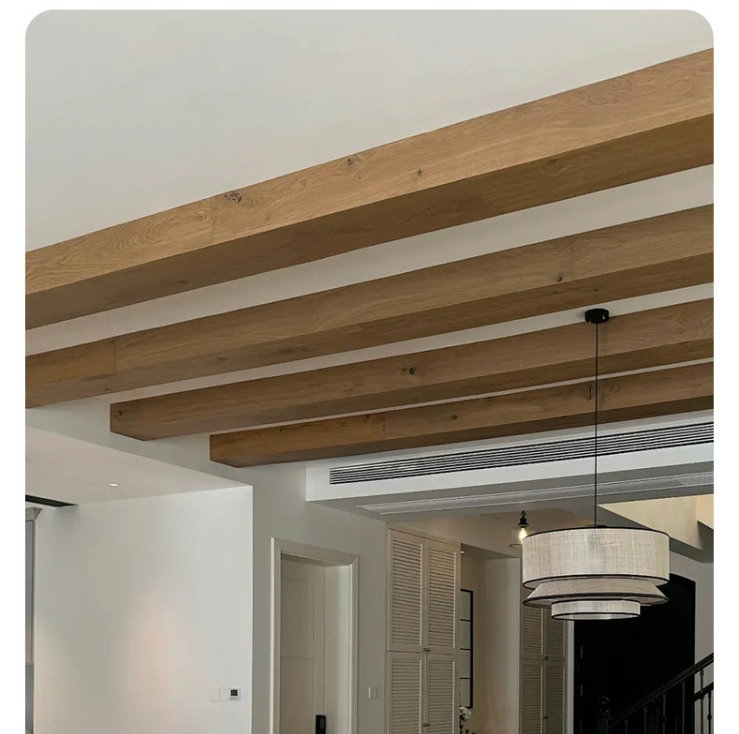
Profile and Finish Choices for Focal Point Beams
The profile and finish choices for focal point beams depend on the room's design language and the statement the beam is meant to make. Both contribute to how strongly the beam commands attention.
Profiles for Different Room Styles
Smooth-planed profiles work in modern, contemporary, and Scandinavian interiors where the design language is clean and refined. The beam introduces warmth and direction without aggressive surface detail.
Wire-brushed profiles work in transitional and modern farmhouse interiors where the design language bridges contemporary and traditional. The beam has subtle surface character that suits spaces with a balance of modern and natural materials.
Hand-hewn and rough-sawn profiles work in traditional, rustic, and lodge-style interiors. The beam has strong visual presence and supports design language that emphasizes natural materials and craftsmanship.
Custom profiles can be developed for projects where no standard catalog option matches the design intent. Custom work is common in luxury residential projects and in commercial spaces with strong brand identity requirements.
Finish Tones for Different Effects
Deep walnut, mahogany, and ebony finishes make the beam a strong focal point that pulls attention upward. These finishes work in rooms where the beam is meant to be a primary feature, and they pair well with rich material palettes like leather, brass, and natural stone.
Mid-tone oak, pecan, and warm brown finishes provide direction without dominance. The beam anchors the ceiling without overwhelming the room, and it coordinates well with most residential material palettes.
Pale oak, ash, and whitewashed finishes create subtle shadow lines that direct attention without introducing strong color contrast. These finishes work in bright, airy interiors and in spaces where the room's other finishes are meant to carry the visual weight.
Custom finishes can be matched to specific flooring, cabinetry, or furniture pieces when the design calls for precise coordination. Custom finishing is common in luxury residential work and in design-forward commercial projects.
Why PU Faux Beams Are Ideal for Feature Focal Points
Focal point beams need to look right, install efficiently, and stay within a reasonable budget. PU faux beams check every one of those boxes, which is why they're the most common material for focal point beam installations in residential and commercial work.
Quality That Holds Up to Scrutiny
PU faux beams are manufactured with detailed textures and hand-applied finishes that read as authentic timber from any viewing distance. The molding process captures fine surface detail that hand-finished solid timber often lacks, and the factory finishes are consistent across every meter of the beam's length.
Long Lengths Without Splicing
Focal point beams often run wall to wall or across large rooms. Solid timber in those lengths is expensive and difficult to source. PU faux beams can be produced in single-piece runs that exceed what solid timber can practically deliver, which means the focal point beam can maintain a continuous line without visible splices.
Lightweight Handling and Installation
Focal point beams typically install faster and with less equipment than their solid timber counterparts. Most PU faux beams are light enough for two installers to handle, with mounting hardware that attaches to standard ceiling blocking. The installation can happen in a few hours per beam, with no need for mechanical lifting equipment.
Budget-Friendly Across Projects
Focal point beams in solid timber can dominate a project's material budget. PU faux beams deliver the same visual impact at a fraction of the cost, which makes feature-beam specifications practical across a wider range of projects. The savings often free up budget for other design elements that wouldn't otherwise be possible.
Coordinating Focal Point Beams With Lighting
Focal point beams rarely stand alone. They typically coordinate with lighting and hardware as part of the ceiling composition.
Statement Pendants and Chandeliers
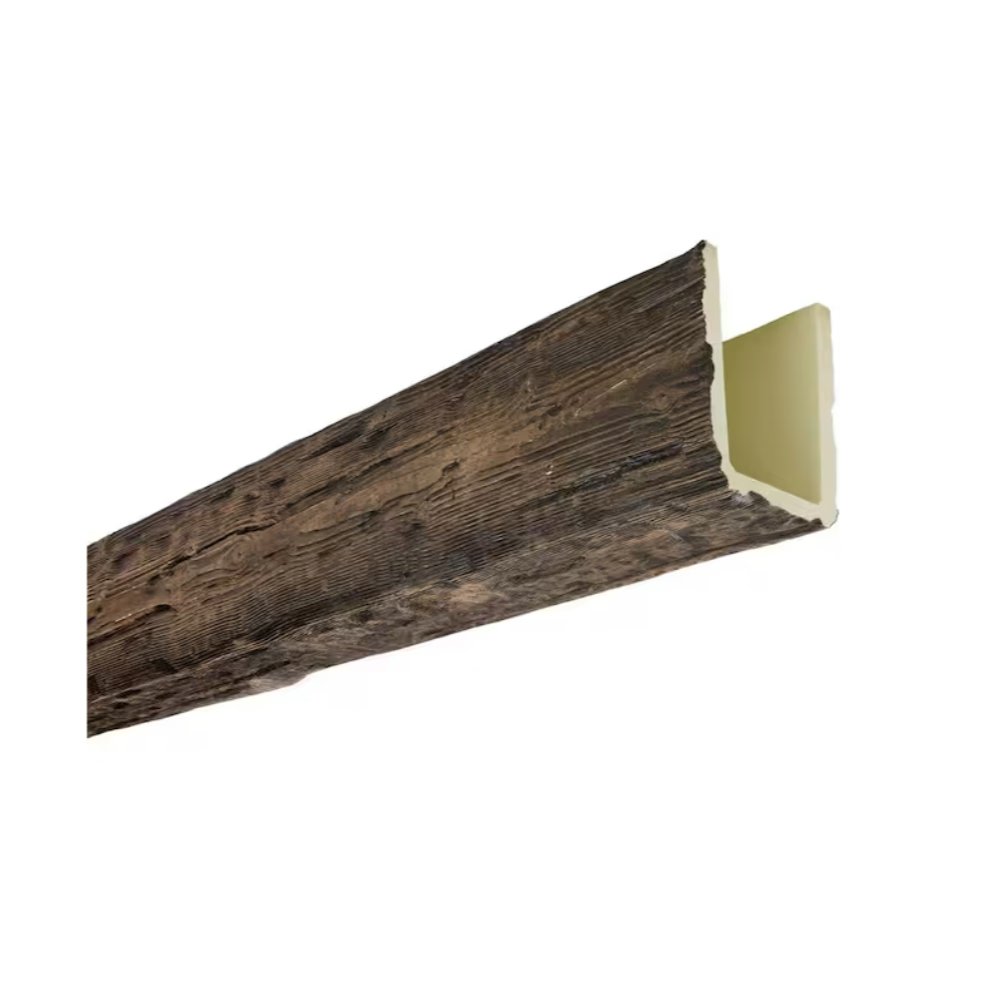
A statement pendant or chandelier hanging from a focal point beam creates a layered focal point that anchors the entire room. The beam provides the architectural support, the fixture provides the illumination, and together they create a composition that visitors notice immediately. Designers typically coordinate the beam finish with the fixture material for a cohesive look.
Recessed Downlights for Clean Effects
Recessed downlights integrated into the beam profile provide direct illumination of the focal point below without visible fixtures. This approach works in modern interiors where exposed fixtures would feel out of place.
LED Tape for Indirect Effects
LED tape mounted along the edges of the beam can create indirect lighting that washes the ceiling above or the wall behind the focal point. The beam becomes both an architectural feature and a lighting element, providing layered illumination that designers can control independently.
Installation Best Practices
Focal point beam installation is more involved than a standard decorative beam, but it follows the same general workflow.
Pre-Installation Coordination
Designers, builders, and manufacturers coordinate before the beam is produced. Ceiling dimensions are verified, mounting points are identified, electrical requirements are documented, and finish samples are approved in the actual room. This planning prevents expensive rework and keeps the project on schedule.
Coordinating With Other Trades
Focal point beam installation coordinates with electrical, mechanical, and finish trades. Electricians rough in wiring before the beam goes up, painters finish the ceiling around the mounting area, and flooring contractors complete the floor before scaffold moves into place. Good project management sequences these trades so the installation proceeds smoothly.
Sample Approval for Color Matching
Focal point beams should always be approved with a finish sample viewed in the actual room. The beam is meant to be a focal point, and any mismatch between the sample and the room's lighting is immediately obvious. Sample approval eliminates surprises and ensures the finished beam matches the design intent.
A Beam That Earns the Eye
Eye-catching PU faux beams as interior feature focal points give designers and homeowners an affordable way to introduce timber character to any room. They direct attention, define spaces, and create the kind of memorable architectural moments that elevate the entire interior. For projects where the ceiling is meant to be more than a flat painted surface, focal point beams are one of the most effective tools available.
Technical References
ASTM standards cited in every specification
Test Data
Lab results from internal testing program
Updated 2026
Reviewed against current product specs


