
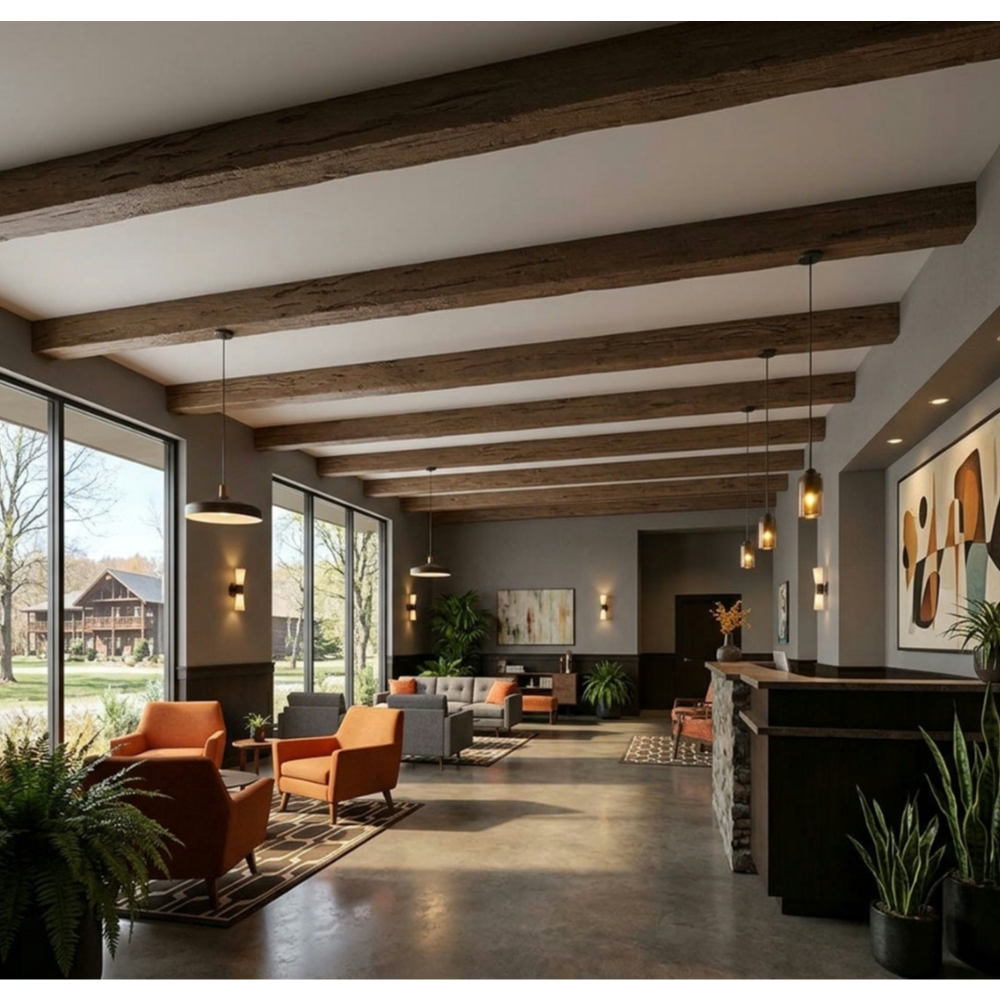
A ceiling accent focal point is the architectural detail that draws the eye and gives the room a sense of completeness. Eye-catching PU faux wood beams work in that role better than almost any other ceiling treatment, because they introduce the warmth and character of timber at a price and weight that solid wood cannot match. Designers reach for them when they want a focal point that anchors the room, frames a key feature, and adds character that flat ceilings lack.
Why Ceiling Accents Matter
A room without a ceiling accent has a ceiling that does nothing. A room with a well-placed ceiling accent has a ceiling that participates in the design. That difference shapes how visitors experience the entire space.
The Ceiling as a Design Surface
The ceiling is the largest unbroken surface in most rooms. It defines the room's volume, reflects light back into the space, and provides the visual boundary that the rest of the design works within. Designers who ignore the ceiling leave the largest surface in the room untreated, which is like hanging artwork on every wall of a gallery while leaving the floor bare.
How Accent Focal Points Direct the Eye
A ceiling accent focal point draws the eye upward and then directs it back down to the room's primary features. The beam overhead becomes a kind of architectural arrow that points toward what matters most below. In a living room, that might be a fireplace or a statement seating arrangement. In a bedroom, it might be the bed. In a dining room, it might be the table. The accent beam reinforces the room's hierarchy and makes the entire composition feel intentional.
Common Placement Patterns for Ceiling Accent Focal Points
Accent focal point beams work in several recurring patterns. Each placement strategy has its own effect on how the room feels and how the space is used.
Centered Above a Fireplace
A beam centered above a fireplace creates a paired composition with the fireplace as the lower element and the beam as the upper frame. The combination gives the wall a kind of architectural completeness that neither element could provide alone. Designers often use this placement in living rooms where the fireplace is the room's primary feature.
Centered Above a Bed
A beam centered above a bed creates a kind of architectural headboard for the entire room. The beam reinforces the bed's role as the room's focal point and gives the ceiling a confident gesture above the most important piece of furniture. This placement works in primary bedrooms with vaulted or cathedral ceilings and in standard-height rooms where the beam sits at the transition between ceiling and wall.
Over a Dining Table or Kitchen Island
A beam above a dining table or kitchen island signals that the gathering space is the room's anchor. The beam provides a visual canopy that pulls attention to the table or island, and it often serves as the mounting point for pendants or a chandelier that illuminates the space below. In open-plan layouts, this placement defines the dining or cooking zone without requiring walls.
Across a Room's Long Axis
A beam running across a room's long axis breaks the length into sections that feel more manageable and visually interesting. This placement works in long living rooms, narrow dining rooms, and corridors where the eye needs a reason to settle. The beam provides that reason and gives the room a kind of rhythmic direction.
Along a Vaulted Ceiling's Transition Line
A beam running along the transition line between a vaulted ceiling and the wall plane provides the horizontal anchor that the vertical volume needs. The beam gives the eye a reference point at the height where the ceiling slope meets the wall, and it ties the vaulted ceiling to the rest of the room's architecture.
Profiles and Finishes That Work as Accent Focal Points
The profile and finish of an accent focal point beam determine how strongly it draws attention. Both should coordinate with the room's existing finishes and the statement the beam is meant to make.
Profiles for Different Design Languages
Smooth-planed profiles suit modern, contemporary, and Scandinavian interiors. The beam introduces warmth and direction without aggressive surface detail, which keeps the focus on the beam's proportion and finish rather than its texture.
Hand-hewn and rough-sawn profiles suit traditional, rustic, and lodge-style interiors. The beam has strong visual character and supports design language that emphasizes natural materials and craftsmanship.
Wire-brushed and lightly distressed profiles suit transitional and modern farmhouse interiors. The beam has subtle texture that bridges contemporary and traditional design languages, which makes it versatile for rooms with mixed material palettes.
Finishes That Coordinate With the Room
Deep walnut, mahogany, and ebony finishes make the beam a strong focal point. They pair well with rich material palettes like leather, brass, and natural stone, and they work in rooms where the beam is meant to command attention.
Mid-tone oak, pecan, and warm brown finishes provide direction without dominance. These finishes work in most residential interiors and coordinate well with a wide range of flooring, cabinetry, and furniture finishes.
Pale oak, ash, and whitewashed finishes create subtle shadow lines that direct attention without introducing strong color contrast. These finishes suit bright, airy interiors and rooms where the focus is meant to stay on other design elements.
Hand-Applied Finishes for Authenticity
Ceiling accent beams benefit from hand-applied finishes that add depth and variation. The base color is laid down, then highlights, shadows, and weathering effects are added by hand before the finish sets. The result reads as authentic timber aged by light and use, which makes the focal point feel more substantial and considered.

Why PU Faux Wood Is the Material of Choice
Most accent focal point beams today are made from polyurethane faux wood, and for good reason. The material combines the visual quality of solid timber with practical advantages that fit the way modern projects are designed and built.
Visual Quality That Holds Up to Scrutiny
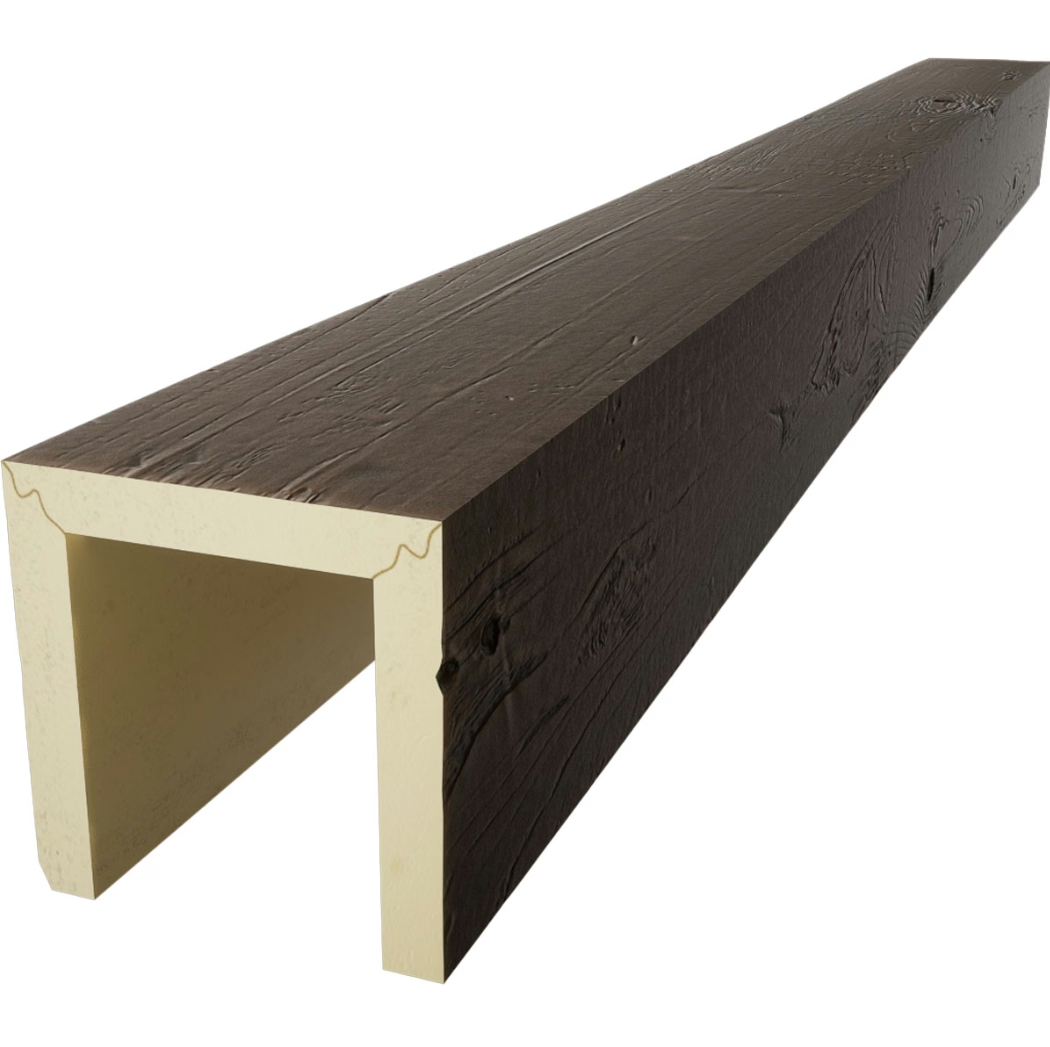
PU faux beams are molded with detailed textures and finished by hand to match the appearance of authentic timber. From any viewing distance, the beam reads as solid wood. This matters for accent focal points because the eye has time to study the beam and notice any quality issues. Faux wood holds up to the scrutiny.
Length Options That Fit Any Project
Solid timber in long lengths is expensive and difficult to source. PU faux beams can be produced in single-piece runs that exceed what solid timber can practically deliver. Accent focal point beams that run wall to wall or across large rooms benefit from this length capability, because they can maintain a continuous line without visible splices.
Lightweight Handling on Site
Most PU faux beams are light enough for two installers to handle without mechanical lifting equipment. The installation process is fast, safe, and inexpensive compared to solid timber, which often requires rigging and multiple crew members. For accent focal points that need to be installed in occupied homes or active commercial spaces, that difference is significant.
Cost-Effective Across Many Rooms
Accent focal point beams in solid timber can dominate a project's material budget. PU faux beams deliver the same visual impact at a fraction of the cost, which makes accent specifications practical across multiple rooms in a home or across multiple locations in a commercial project.
Coordinating With Lighting and Hardware
Ceiling accent focal points rarely stand alone. They typically coordinate with lighting and hardware as part of the ceiling composition.
Pendants and Chandeliers
A pendant or chandelier hanging from an accent beam creates a layered focal point that anchors the entire room. The beam provides the architectural support, the fixture provides the illumination, and together they create a composition that visitors notice immediately. Designers typically coordinate the beam finish with the fixture material for a cohesive look.
Recessed Downlights
Recessed downlights integrated into the beam profile provide direct illumination of the focal point below without visible fixtures. This approach works in modern interiors where exposed fixtures would feel out of place, and it keeps the ceiling composition clean and minimal.
LED Tape for Indirect Effects
LED tape mounted along the edges of the beam can create indirect lighting that washes the ceiling above or the wall behind the focal point. The beam becomes both an architectural feature and a lighting element, providing layered illumination that designers can control independently.
Installation Best Practices
Accent focal point beam installation is straightforward but benefits from careful planning, particularly when the beam carries lighting or coordinates with other architectural elements.
Pre-Installation Coordination
Designers, builders, and manufacturers coordinate before the beam is produced. Ceiling dimensions are verified, mounting points are identified, electrical requirements are documented, and finish samples are approved in the actual room. This planning prevents expensive rework and keeps the project on schedule.
Coordinating With Other Trades
Accent beam installation coordinates with electrical, mechanical, and finish trades. Electricians rough in wiring before the beam goes up, painters finish the ceiling around the mounting area, and flooring contractors complete the floor before scaffold moves into place.
Sample Approval for Color Matching
Accent beams should always be approved with a finish sample viewed in the actual room. The beam is meant to be a focal point, and any mismatch between the sample and the room's lighting is immediately obvious. Sample approval eliminates surprises and ensures the finished beam matches the design intent.
A Beam That Completes the Room
Eye-catching PU faux wood beams as ceiling accent focal points give designers and homeowners a practical way to add character, warmth, and architectural intent to any room. They direct attention, frame features, and provide the kind of ceiling detail that flat finishes cannot deliver. For projects where the ceiling is meant to be part of the design rather than a neutral backdrop, accent focal point beams are one of the most effective tools available.
Technical References
ASTM standards cited in every specification
Test Data
Lab results from internal testing program
Updated 2026
Reviewed against current product specs


