
Some ceilings are meant to fade into the background. Eye-catching statement ceiling PU faux beams belong to the opposite category. They are the kind of architectural gesture that announces itself the moment you walk into the room, that visitors remember weeks later, and that photographs beautifully in every lighting condition. They define a room by being the most distinctive thing in it, and they do it with the timber character and modern precision that PU faux manufacturing provides.
What Makes a Ceiling Beam a Statement
The difference between an accent beam and a statement beam is the same as the difference between a whisper and a declaration. Both communicate, but one does it quietly while the other commands the room.
The Beam That Visitors Remember
A statement beam is the kind of detail that becomes part of the room's identity. Visitors notice it immediately, photograph it, and reference it later when they describe the space to others. In design-forward homes, restaurants, hotels, and retail environments, a statement beam often appears in marketing materials, on social media, and in design publications.
How Statement Beams Differ From Accent Beams
Accent beams support a room's other features. Statement beams become a feature themselves. Accent beams blend with the existing design language. Statement beams add a new design language that the rest of the room responds to. Accent beams are measured. Statement beams are bold.
Where Statement Ceiling Beams Make Sense
Statement beams work in rooms where the architecture deserves a bold gesture. They also work in rooms where the existing finishes are restrained enough that the beam can carry significant visual weight without overwhelming the space.
Living Rooms with Vaulted or Cathedral Ceilings
Vaulted ceilings already have built-in drama, and a statement beam completes the composition. The beam runs perpendicular to the peak at the transition between ceiling and wall plane, providing the horizontal anchor that the vertical volume needs. In rooms with cathedral ceilings, the statement beam often defines the room's proportions more clearly than any other single element.
Hotel Lobbies and Atrium Spaces
Hotel lobbies are designed to make first impressions, and a statement beam overhead provides the kind of immediate visual impact that sets the tone for the entire guest experience. The beam signals that the hotel has invested in design, and it gives guests an architectural reference point that they'll remember from check-in to check-out.
Restaurant Main Dining Halls
Restaurants need ceiling treatments that work across breakfast, lunch, dinner, and late-night service. A statement beam above the dining room signals the room's importance, provides a mounting point for signature lighting, and gives the space a kind of architectural confidence that flat ceilings cannot provide.
Open-Plan Great Rooms
Great rooms that combine kitchen, dining, and living functions under a single ceiling benefit from statement beams that define each zone. The beams become a kind of architectural map, with each one signaling the function of the space below it. Statement beams in great rooms are often larger and more dramatic than beams in single-function rooms, because the open volume demands proportional gestures.
Retail Flagship Stores
Flagship retail stores treat their ceilings as part of the brand environment, and statement beams overhead reinforce the brand identity. The beams signal exclusivity, craftsmanship, and design intent, all of which support premium positioning and elevated customer experience.

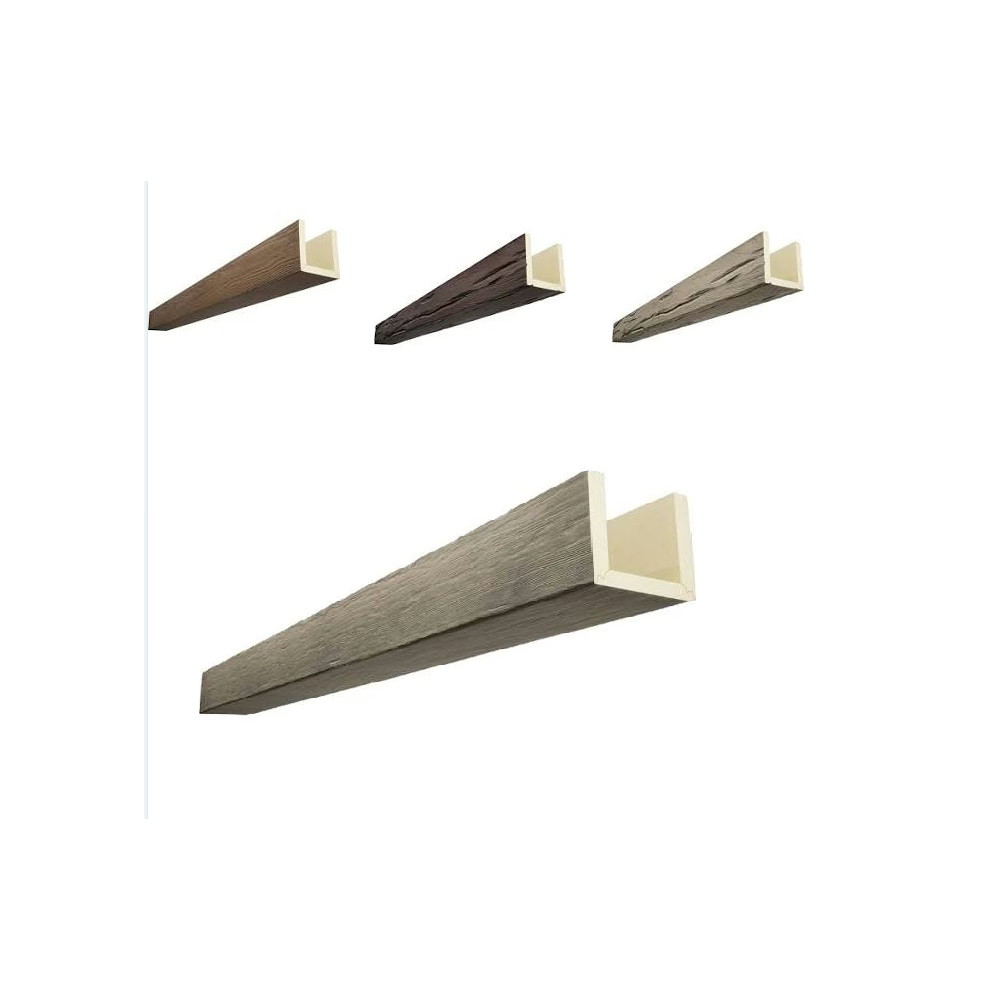
Profiles for Maximum Impact
Statement beams typically use profiles with strong visual character. The profile is the first thing the eye registers from across the room, so it has to earn the beam's place as a defining element.
Deep Hand-Hewn Profiles
Hand-hewn profiles with deep surface texture give a statement beam strong visual presence from across the room. The texture catches light and shadow at varying angles throughout the day, creating a beam that feels alive and present. These profiles are the most common choice for statement beams in traditional, rustic, and lodge-style interiors.
Layered Coffered Profiles
Coffered and stepped profiles introduce shadow detail that adds depth to tall ceilings. The beam reads as a more complex architectural element rather than a simple linear form, which makes it appropriate for statement applications in classical, transitional, and luxury traditional interiors.
Custom Architectural Profiles
Projects with strong design identity often call for custom profiles that no standard catalog can provide. Custom mold development allows designers to specify edge details, integrated corbels, or unusual proportions that make the statement beam truly unique. Custom profiles are common in luxury residential work and in commercial projects with distinctive brand identities.
Minimal Profiles for Modern Statements
Not every statement beam needs aggressive surface texture. In modern and contemporary interiors, a smooth-planed profile with crisp edges and confident proportions can make just as strong a statement as a heavily textured profile in a traditional room. Modern statement beams earn their place through proportion and finish rather than surface detail.
Finish Choices for Statement Beams
The finish of a statement beam determines how strongly it commands attention and how it coordinates with the room's other elements.
Deep and Dramatic Finishes
Walnut, mahogany, ebony, and other deep finishes make the statement beam a focal point that the eye cannot ignore. These finishes work in rooms where the beam is meant to be the dominant architectural feature, and they pair well with rich material palettes like leather, brass, and natural stone.
Hand-Applied Weathered Finishes
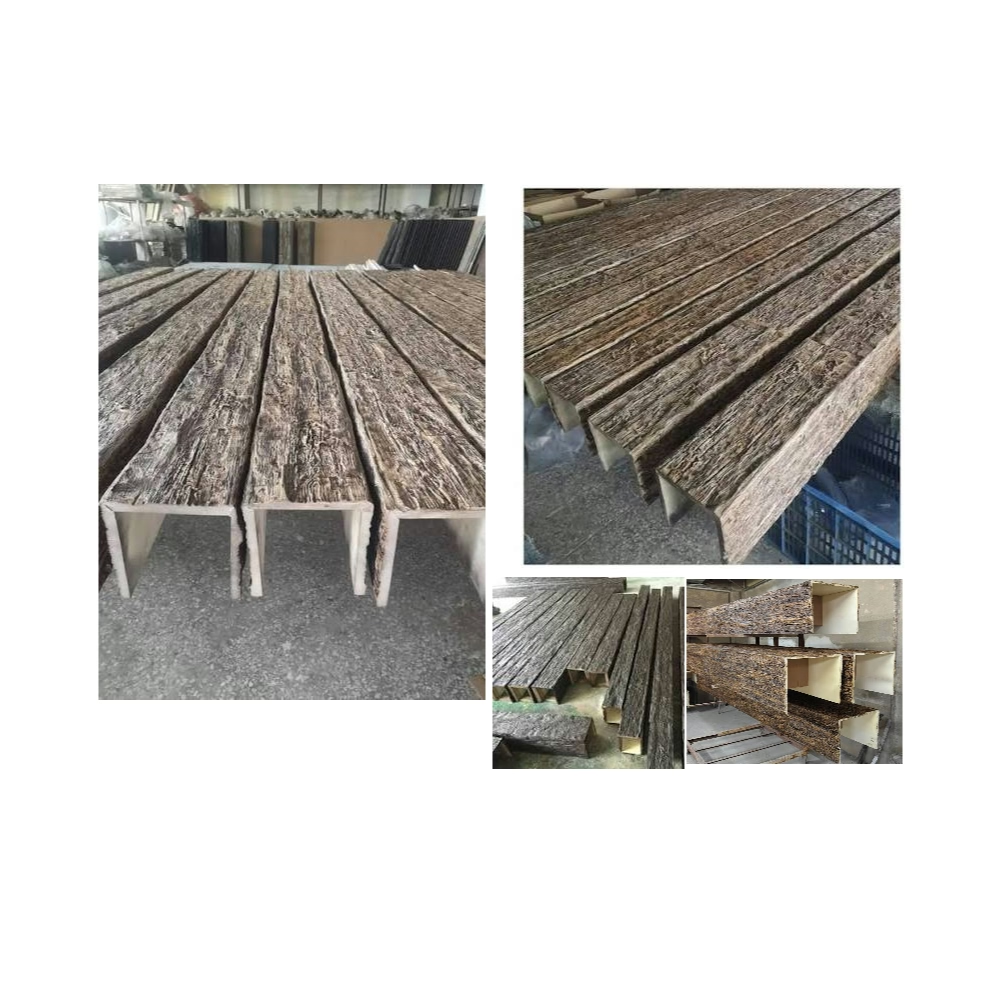
Multi-step weathered finishes with hand-applied highlights and shadows give a statement beam the appearance of authentic timber aged by light and use. These finishes work particularly well in traditional, transitional, and modern farmhouse interiors, where the beam is meant to feel like it has been part of the room for decades.
High-Contrast Two-Tone Finishes
Two-tone finishes that combine a deep base color with paler highlights create dramatic visual impact. The contrast draws attention to the beam's surface detail and makes the statement feel even bolder. Designers often use two-tone finishes in commercial environments where the beam needs to read clearly from across a large space.
Painted Statement Finishes
Painted statement beams in matte black, charcoal, or crisp white create bold graphic effects against contrasting ceiling colors. A matte black beam on a white ceiling makes an unmistakable modern statement. A white beam on a pale ceiling creates subtle architectural detail that reads more as shadow line than color contrast.
Coordinating Statement Beams With Lighting
Statement beams almost always carry lighting as part of their role. The lighting reinforces the beam's status as the room's defining feature.
Signature Chandeliers and Pendants
A signature chandelier or pendant cluster hanging from a statement beam creates a layered focal point that anchors the entire room. The beam provides the architectural support, the fixture provides the illumination, and together they create a composition that visitors remember. Designers coordinate the beam finish with the fixture material for a cohesive look.
Layered Recessed and Indirect Lighting
Recessed downlights integrated into the beam profile, combined with LED tape along the edges, create layered lighting effects that the room can adjust for different occasions. Bright downlighting supports active use of the space, while indirect tape lighting creates ambient mood for evening entertaining. The statement beam becomes the control center for the room's lighting design.
Theatrical Uplighting
Uplighting mounted at the beam base washes the ceiling above, creating a dramatic effect that makes the beam appear to float. Theatrical uplighting works particularly well in commercial environments like hotel lobbies, restaurant dining rooms, and retail flagship stores, where the lighting design is meant to support the brand experience.
Sizing Statement Beams Appropriately
Statement beams work when their size is proportional to the room and the statement being made. Too small and the beam disappears. Too large and the room feels overpowered.
Width and Depth Considerations
Statement beams are typically wider and deeper than accent beams. A common starting point is to size the beam width at one-third to one-half of the ceiling height, with depth matching or exceeding width. Tall ceilings benefit from wider, deeper beams that have the visual weight to anchor the room.
Length and Projection
Statement beams can run wall to wall for maximum impact, or they can extend past the walls to create a cantilevered architectural gesture. Wall-to-wall beams work in great rooms and open-plan layouts. Cantilevered beams work in entry foyers and feature walls where the projection adds drama.
Installation Considerations for Statement Beams
Statement beam installation is more involved than standard decorative beams, because the beam is meant to be a focal point that holds up to scrutiny.
Structural Review
The ceiling must be evaluated to confirm that it can support the beam and any loads it carries. Most residential and commercial ceilings handle statement beams easily, but older buildings or renovations may require additional blocking or reinforcement. Engineers typically review the installation plan before production begins.
Coordination With Multiple Trades
Statement beam installation coordinates with electrical, mechanical, and finish trades. Electricians rough in wiring for integrated lighting before installation, painters prepare the ceiling around the mounting area, and flooring contractors finish the floor before scaffold moves into place. Sequencing these trades properly keeps the project on schedule.
Sample Approval in the Actual Room
Statement beams should always be approved with a finish sample viewed in the actual room. The beam is meant to command attention, and any mismatch between the sample and the room's lighting is immediately obvious. Sample approval eliminates surprises and ensures the finished beam delivers the intended visual impact.
The Beam That Defines the Room
Eye-catching statement ceiling PU faux beams create the kind of bold architectural moment that defines a space. They deliver timber character with modern manufacturing precision, they install efficiently, and they hold their finish for years of service. For projects where the ceiling is meant to be the room's defining element, statement beams are the most direct path to a memorable interior.
Technical References
ASTM standards cited in every specification
Test Data
Lab results from internal testing program
Updated 2026
Reviewed against current product specs


