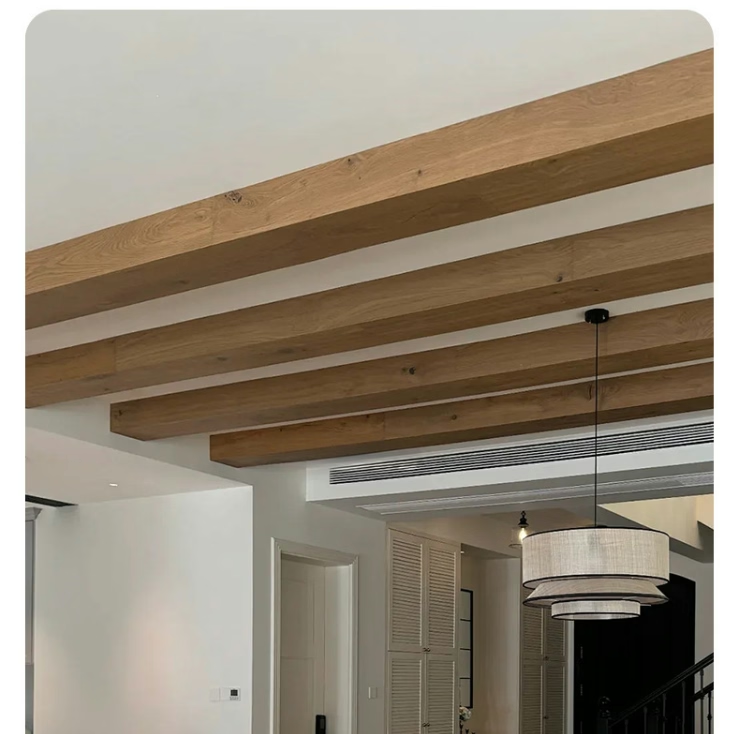
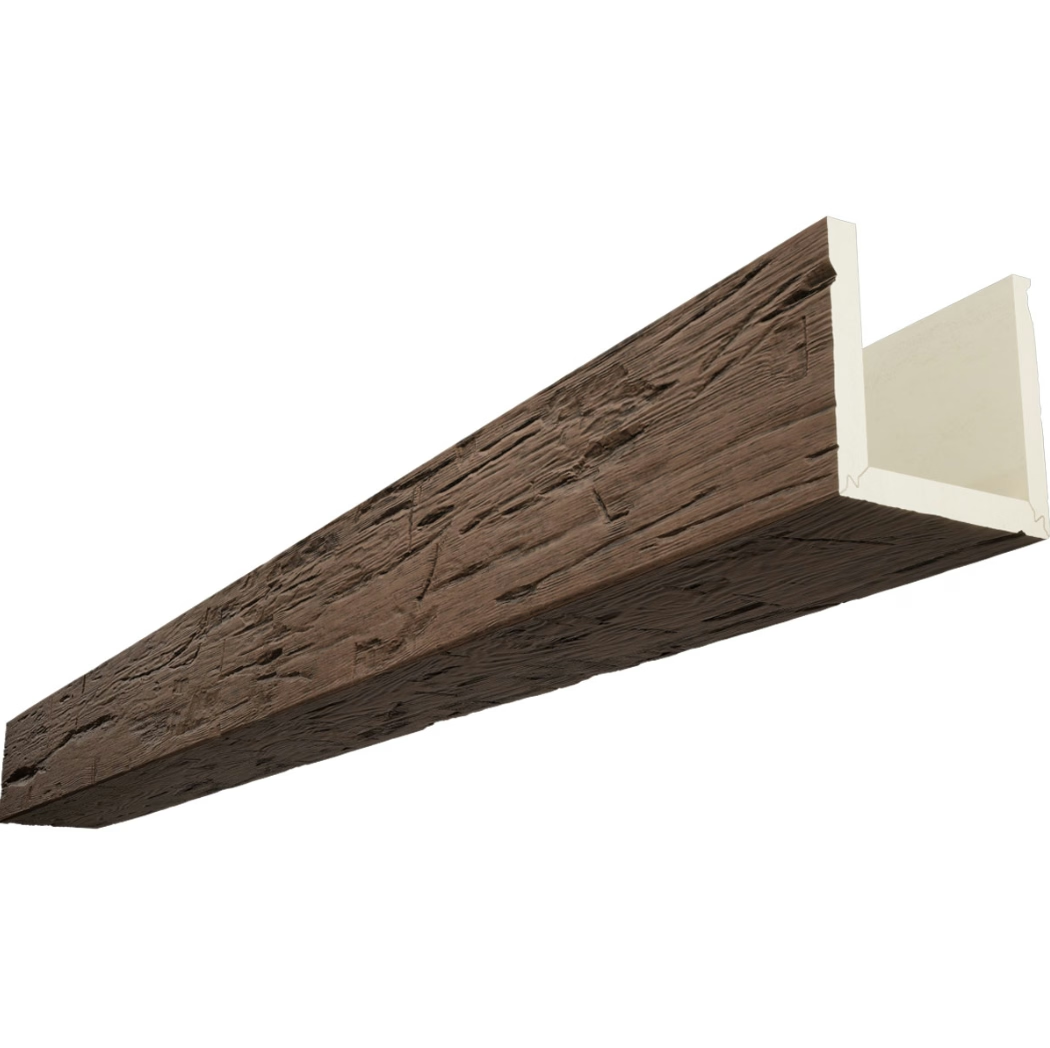
Wholesale buyers of polyurethane faux wood beams have more options than they did ten years ago, and the pricing is more competitive than ever. The shift is largely a result of Chinese, Vietnamese, and Mexican factories opening up direct sales channels that bypass the traditional import distributor. For trade buyers placing recurring orders, this direct channel can mean a 30 to 60 percent reduction in landed cost compared to buying through a U.S. wholesaler.
A wholesale order is not just a bulk version of a retail purchase. The way the order is structured, packed, shipped, and cleared determines whether the savings actually reach the bottom line. Understanding those mechanics is what separates a smart wholesale buyer from one who simply sends a large PO and hopes for the best.
What "wholesale" means in the faux beam market
The term gets used in three different ways. In its strictest sense, wholesale means buying from the manufacturer or its authorized distributor in bulk quantities and reselling to retailers or end users. In practice, many buyers use wholesale loosely to mean any bulk purchase at a discount, whether they intend to resell or just consume the product on their own projects.
For polyurethane faux beams, wholesale usually starts at a container load or close to it. A typical 40-foot high-cube container holds around 800 to 1200 beams depending on length, profile, and packing density. Some factories set a lower MOQ of 100 or 200 pieces for buyers who want to test the product or who are ordering custom finishes. Below that threshold, prices often step up significantly because the factory cannot amortize its setup costs across enough units.
The wholesale price tier is where most of the savings live. A single beam might cost a homeowner $200 at a U.S. retailer. That same beam, ordered in a 1000-piece wholesale run, can land at the buyer's warehouse for $35 to $60 fully delivered. Multiply that gap across an entire hotel renovation or a tract of custom houses, and the financial case for going wholesale direct becomes obvious.
The MOQ conversation most buyers underestimate
Minimum order quantities are not just about volume. They are also about the factory's ability to keep a production run efficient. Polyurethane beam manufacturing involves mold setup, foam pouring, curing time, demolding, finishing, staining or coating, and final QC. If the factory has to change mold five times to fulfill an order, the unit cost jumps even on a high piece count.
Buyers should ask specifically how the MOQ is calculated. Some factories count by piece, some by container, some by mold run. A 500-piece MOQ might be easy to meet on a single product, but a 500-piece order spread across 10 SKUs becomes 50 pieces per SKU, which is below the efficient production threshold. Negotiating the MOQ down is sometimes possible if the buyer accepts longer lead times or fewer finish options.
Why pricing varies so much between factories
A $20 difference in unit price between two seemingly similar factories is almost always traceable to one of three things: raw material grade, labor cost structure, and overhead. Polyurethane foam is not all the same. Higher density foam costs more but holds its shape better over time and accepts screws and brackets without cracking. Lower density foam is cheaper but tends to dent, warp, and degrade faster under UV exposure.
Labor cost matters more than many buyers expect. A factory that pays its workers a fair wage, runs a clean production floor, and invests in training will charge more per beam than a backyard operation running with minimal overhead. The first factory is also far more likely to produce consistent quality across a 1000-piece order. Saving $5 per beam on a cheap factory and discovering that 15 percent of the shipment is unusable is not actually a saving.
Building a wholesale order that makes financial sense starts before the quote
The mistake many new wholesale buyers make is sending a request that says "please quote faux wood beams" with no detail. Factories respond to vague inquiries with cautious, high quotes. They have to protect themselves against the buyer who ends up ordering half what they said they would. A specific, well-built inquiry gets the factory's sales engineers involved, who are more accurate and more willing to negotiate on price.
A strong wholesale inquiry includes the beam profile and dimensions, the finish or stain color code, the quantity per SKU, the target port of arrival, the desired shipping method (LCL, FCL, or air), and any packaging requirements like individual boxes, master cartons, or pallet configuration. It should also note the project timeline so the factory can advise on production scheduling.
Packaging decisions that change the bottom line
A faux beam is light but bulky. Wrapping each beam in plastic, stacking them in a long carton, and palletizing them costs more than simply bundling them with strapping and shrink wrap. Some buyers save $1 to $2 per beam by accepting bulk wrap, but they pay for it later in damage rates during transit. A well-packaged beam survives a 30-day ocean voyage; a poorly packaged one sometimes arrives with cracked corners or stained faces.
For wholesale orders destined for distribution centers, individual retail-ready packaging usually pays off. The end retailer can sell directly from the box without repacking, which saves labor and reduces handling damage. For orders going straight to a job site, master carton packaging is more efficient because the installer is going to open the box anyway and discard the inner wrap.

Freight, customs, and the real landed cost
The factory's quote is rarely the final cost. Shipping from Asia to the U.S. West Coast runs about $3,000 to $6,000 per 40-foot container depending on the season and fuel surcharges. From Asia to the East Coast, add another $1,500 to $3,000. From Vietnam or Mexico to the U.S. interior, rates are lower because transit time is shorter. Customs duty on polyurethane decorative beams typically falls in the 3 to 5 percent range under most-favored-nation tariffs, but this varies by country of origin and the specific HS code the broker uses.
A good freight forwarder will quote door-to-door pricing that includes origin trucking, ocean freight, destination charges, customs clearance, and final delivery. DDP (delivered duty paid) terms put all of this on the factory or its forwarder, which simplifies budgeting but usually costs 10 to 15 percent more than arranging each leg separately. FOB (free on board) terms let the buyer pick their own forwarder, often saving money but requiring more involvement.
Buyers should also budget for unloading, storage if the container arrives before the jobsite is ready, and any inspection costs. A pre-shipment inspection by a third party typically runs $250 to $400 per man-day, and most factories require at least one full day for a container-load order.
Quality control on a wholesale run
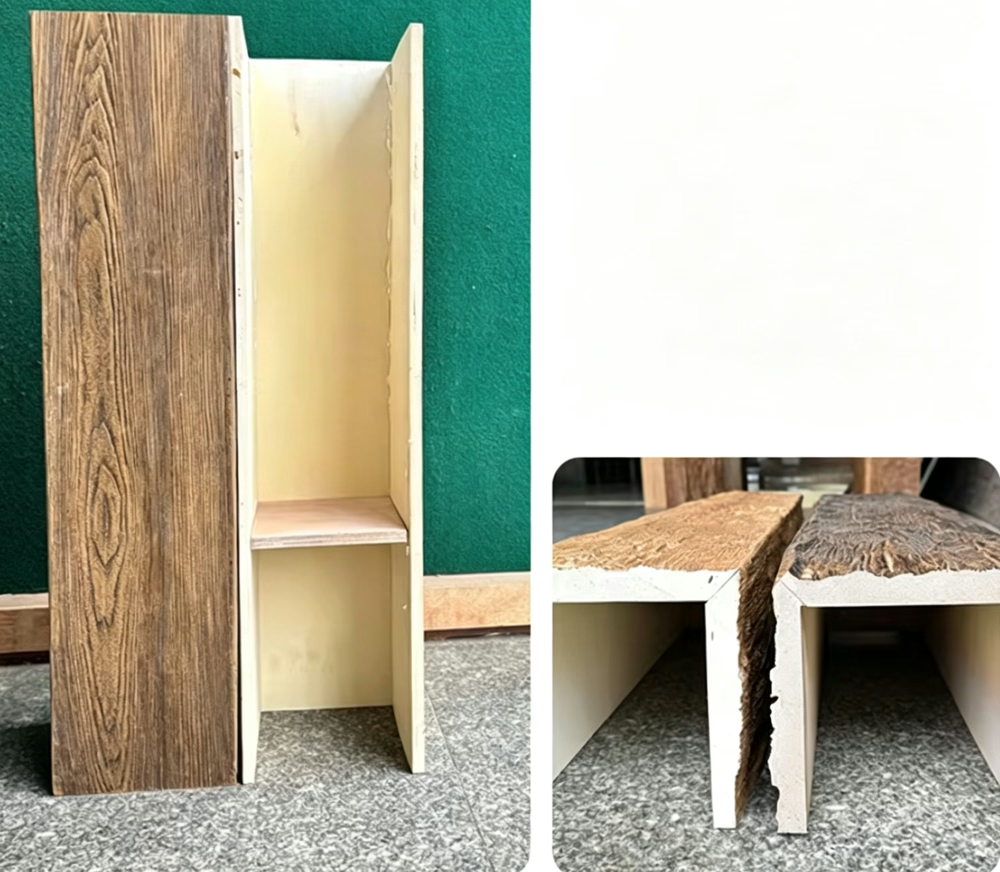
Even factories with strong reputations ship occasional defects. A typical acceptable defect rate for polyurethane faux beams is 1 to 3 percent. Above that, the buyer's cost in time and replacement product starts to undermine the savings. The most common defects are color mismatch, surface blemishes, dents from handling, and broken end caps.
A pre-shipment inspection catches most of these. The inspector pulls a random sample from the finished, packed goods and checks for dimensional accuracy, color consistency, finish quality, and packaging integrity. If the defect rate exceeds an agreed threshold, the factory sorts or replaces before the container leaves. If the rate is acceptable, the buyer signs off and the goods ship.
For buyers placing monthly or quarterly orders, an in-line inspection during production is even more valuable. The inspector visits the factory mid-run, watches the pour and curing, and confirms that the same standards are being held throughout the order, not just on the samples the factory showed before production began.

Who benefits most from wholesale factory direct pricing
Importers and resellers are the obvious winners. They buy at wholesale prices, hold inventory, and sell at retail or trade prices to contractors and homeowners. Their margin comes from the gap between factory cost and end-user pricing, and that gap is widest when the buying side is the factory itself.
Large contractors and developers also benefit. A general contractor building 30 custom homes a year might use 600 faux beams annually. Buying wholesale direct, they save enough per beam to fund an extra project manager or to upgrade the lighting and millwork budget across the entire development. Many large contractors now run their own procurement departments specifically to capture these savings.
Smaller specialty retailers, including online stores and regional building supply yards, are increasingly going wholesale direct as well. The internet has flattened the geographic advantage that distributors once held, and a small retailer in Ohio can now source the same factory product as a big box store in California. The differentiator for the small retailer is service, customization, and delivery speed, not access to the product.
Practical first steps for a first-time wholesale buyer
Start small. Order one mixed container or one pallet of mixed SKUs. Inspect the goods personally when they arrive. Build a relationship with one factory rather than spreading orders across five. Send clear, detailed inquiries with realistic timelines. Insist on pre-shipment samples and inspections, especially for the first order. Pay the deposit on time, because a factory that is not paid promptly will not prioritize a small buyer's order.
Build a relationship over two or three shipments before placing a full-container order. Watch how the factory handles problems, even small ones. A factory that responds quickly to a minor finish issue on your sample order is likely to respond well to a real problem on a production run. A factory that goes silent when something goes wrong now will go silent when something goes wrong later, when the stakes are much higher.
Wholesale factory direct purchasing is not magic. It does not turn a low-quality product into a premium one, and it does not eliminate the work of sourcing, inspecting, and managing inventory. What it does is remove a layer of cost from the supply chain, and that layer is often larger than the buyer expects. For trade buyers willing to invest in the relationship, the economics work.
Technical References
ASTM standards cited in every specification
Test Data
Lab results from internal testing program
Updated 2026
Reviewed against current product specs