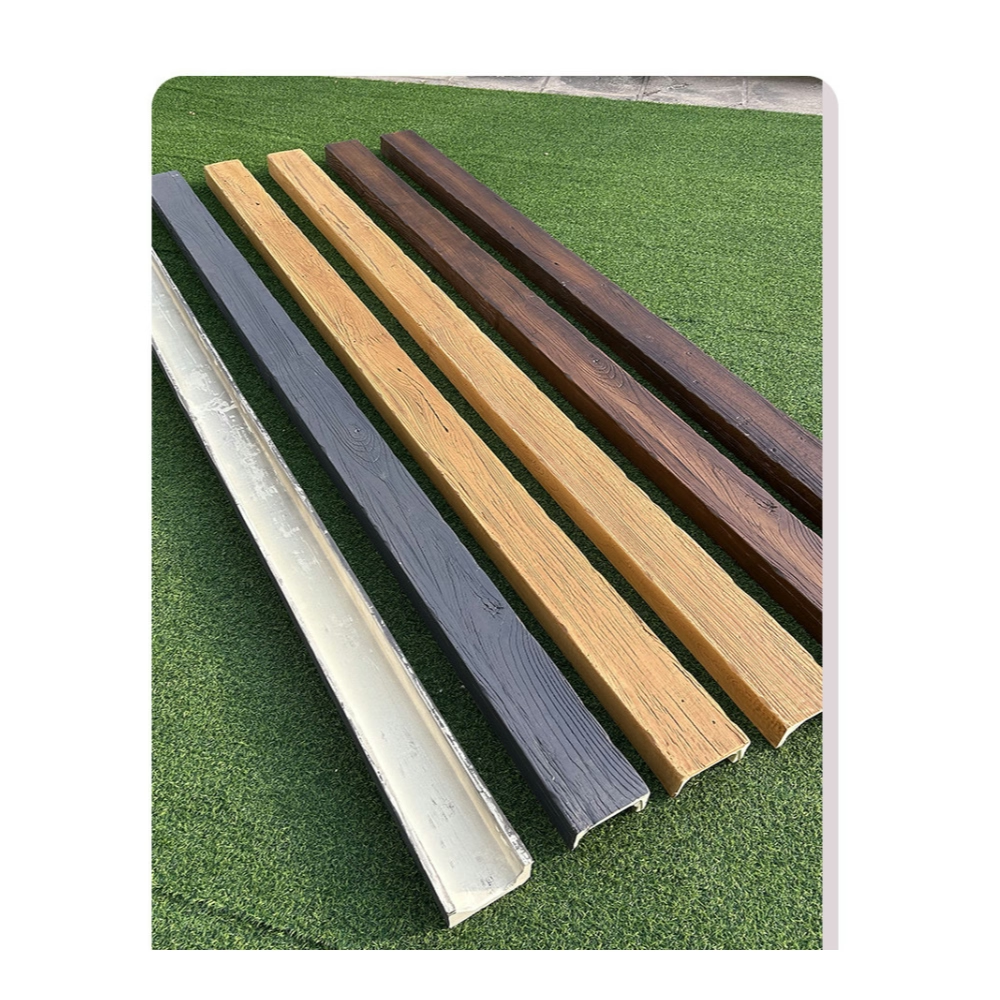
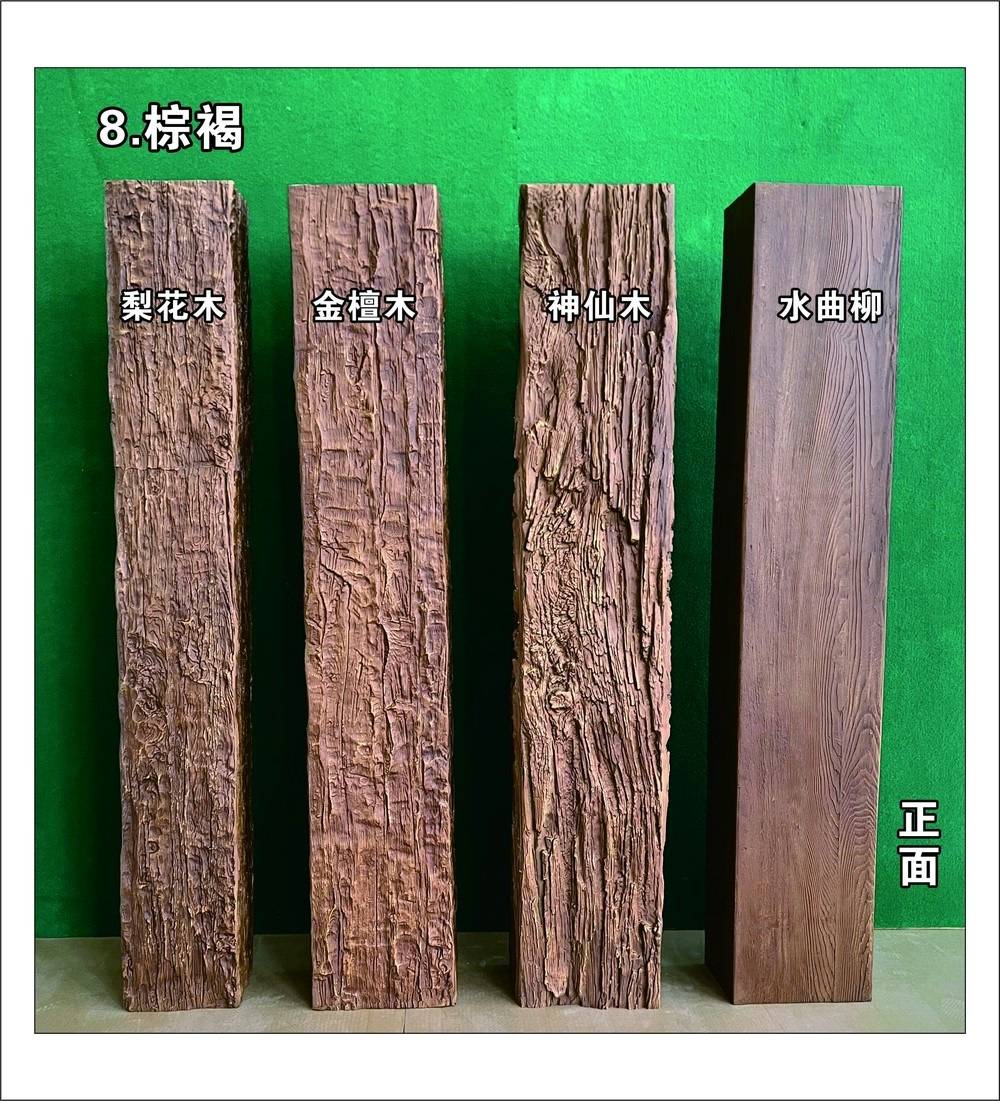
A faux wood beam that requires on-site finishing is a different product than one that arrives finished from the factory. The pre-finished version takes hours off the install timeline, removes skilled labor from the project, and produces a consistent color across all the beams in the project. The on-site finished version requires the homeowner or contractor to invest in staining equipment, learn the finishing process, and accept that color matching between beams will require careful blending.
For most modern projects, pre-finished is the right choice. The factory finish is more consistent than what most on-site finishers can produce, the lead time is shorter overall, and the result is more durable because factory finishes are applied under controlled conditions with commercial-grade coatings.
What factory pre-finishing includes
A pre-finished polyurethane faux beam receives its complete color and surface treatment at the factory before shipment. The specific steps vary by product and price tier, but the general sequence is consistent. The beam is molded, demolded, trimmed of flash lines, sanded smooth, sealed with a primer coat, stained or colored with one or more applications, and sealed with one or more topcoats. Each step happens in a controlled environment with proper ventilation, temperature, and humidity.
The primer coat creates a uniform base for the color coats. Polyurethane foam is naturally variable in surface texture, and a primer evens out the absorption rate so the stain applies evenly. Without primer, some areas of the beam would absorb more stain than others, creating blotches and uneven color.
The stain or color coat establishes the wood appearance. For beams designed to look like a specific species, the stain is formulated to match the color, grain tone, and depth of that species. For beams designed to look like aged or weathered timber, the stain might be a combination of colors applied in layers to produce a multi-tone effect.
The topcoat seals the finish and provides protection against UV, moisture, and physical wear. Polyurethane topcoats are the most common because they bond well to the foam and provide a durable, slightly flexible surface. Wax-based topcoats are used for some specialty finishes but require more maintenance over time.
How factory finishes differ from on-site finishes
The most important difference is environmental control. A factory finish is applied in a space with stable temperature, low humidity, and good ventilation. The finish cures under these conditions and develops its full hardness and adhesion. An on-site finish is applied in variable conditions, sometimes in the same space where the beam will eventually be installed, and the finish may not cure optimally.
The second difference is application equipment. Factories use spray booths with proper extraction, calibrated spray guns, and consistent pressure and flow rates. The finish is applied in thin, even coats that the on-site finisher cannot easily replicate with a brush or rental sprayer. The factory finish is also typically applied in multiple passes with light sanding between coats, a process that requires time and equipment on site.
The third difference is finish quality. Factory-applied finishes can include proprietary processes like hand-applied highlights, glaze washes, and specialty effects that require skilled workers and dedicated stations. An on-site finisher can approximate these effects but rarely matches them in detail. The factory finish looks more refined because it is more refined.
The benefits of pre-finished beams for installation speed
The most obvious benefit is the elimination of finishing labor on site. A typical on-site finishing process for a faux wood beam includes masking the surrounding area, applying the stain, allowing it to penetrate, wiping off excess, applying the topcoat, allowing it to dry, and possibly applying additional coats. Each step adds time, and the total time per beam is often 1 to 3 hours of active work plus drying time.
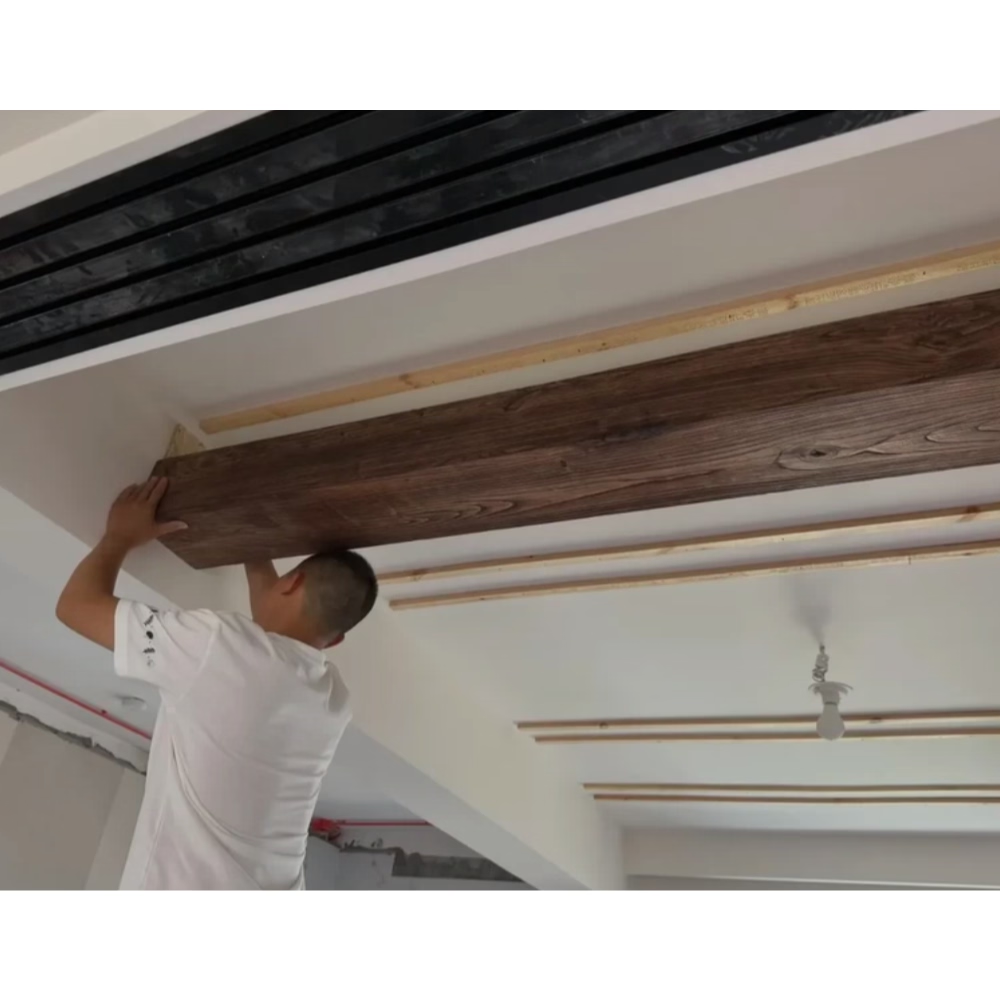
Pre-finished beams skip all of these steps. The installer mounts the beam, and it is done. The time savings on a project with 10 beams is 10 to 30 hours, which translates to several hundred dollars in labor cost at typical contractor rates. For larger projects with 30 or 40 beams, the savings are even more substantial.
The time savings are not just in active labor. On-site finishing requires drying time between coats, which can be 4 to 24 hours per coat. During this time, the space cannot be used, other trades cannot work in the area, and the project schedule is delayed. Pre-finished beams eliminate these constraints entirely.
Color consistency across the project
A pre-finished beam order from a single production run will have very consistent color across all pieces. The factory applies the same stain mix, the same number of coats, and the same topcoat to every beam. The result is that 20 beams look like 20 cuts from the same piece of timber, which is the visual effect most designers are aiming for.
On-site finishing rarely produces this consistency. The finisher applies stain with slightly different pressure, dwell time, and wiping technique on each beam. The result is noticeable variation that becomes more obvious when the beams are mounted side by side on a single ceiling. Skilled finishers can minimize the variation, but it rarely disappears entirely.
For projects where color consistency is critical, pre-finished beams are the only practical way to achieve the desired result. Hotels, restaurants, retail spaces, and high-end residential projects all benefit from the consistency that factory finishing provides.
The limitations of pre-finished beams
The most significant limitation is the inability to adjust the color on site. If the homeowner or designer decides after seeing the beams that the color is too dark, too light, too red, or too gray, there is no way to change it without re-finishing the entire beam. This risk is mitigated by ordering samples or shop drawings before placing the full order, but it cannot be eliminated entirely.
The second limitation is the limited range of standard finishes. Factories offer a finite menu of finishes based on what their equipment and skills can produce efficiently. A buyer who wants a specific custom color must pay for custom formulation and might face minimum order quantities or setup charges that make the project uneconomic.
The third limitation is touch-up. Pre-finished beams that get scratched, dented, or damaged during shipping or installation require on-site touch-up. The touch-up paint or stain provided by the factory can usually be blended into the surrounding finish, but the result is rarely as good as the original factory application. Significant damage might require returning the beam for factory refinishing, which is impractical for most projects.
How to evaluate a factory finish before ordering
Order samples. This is the single most important step in evaluating a factory finish. The sample should be in the same profile and dimensions as the production beam, ideally cut from a piece of the actual mold rather than a separate sample piece. A small color chip or finish card is useful for general color evaluation but does not show the actual finish quality.
Evaluate the sample under the lighting conditions where the beam will be installed. A finish that looks warm under incandescent lighting might look cool under LED, and vice versa. The sample should be viewed in the actual room or a similar space before the order is placed.
Test the sample for durability. Press a fingernail into an inconspicuous area to check hardness. Apply a small amount of water to see how the finish handles moisture. Scrape gently with a coin to check adhesion. These simple tests reveal whether the finish is properly cured and adequately protected.
Common factory finish options
Standard stain colors form the base of most factories' finish menus. These include traditional wood tones like walnut, oak, cherry, mahogany, and pine. The colors are formulated to match popular wood species and usually have multiple variations within each species to allow some choice.
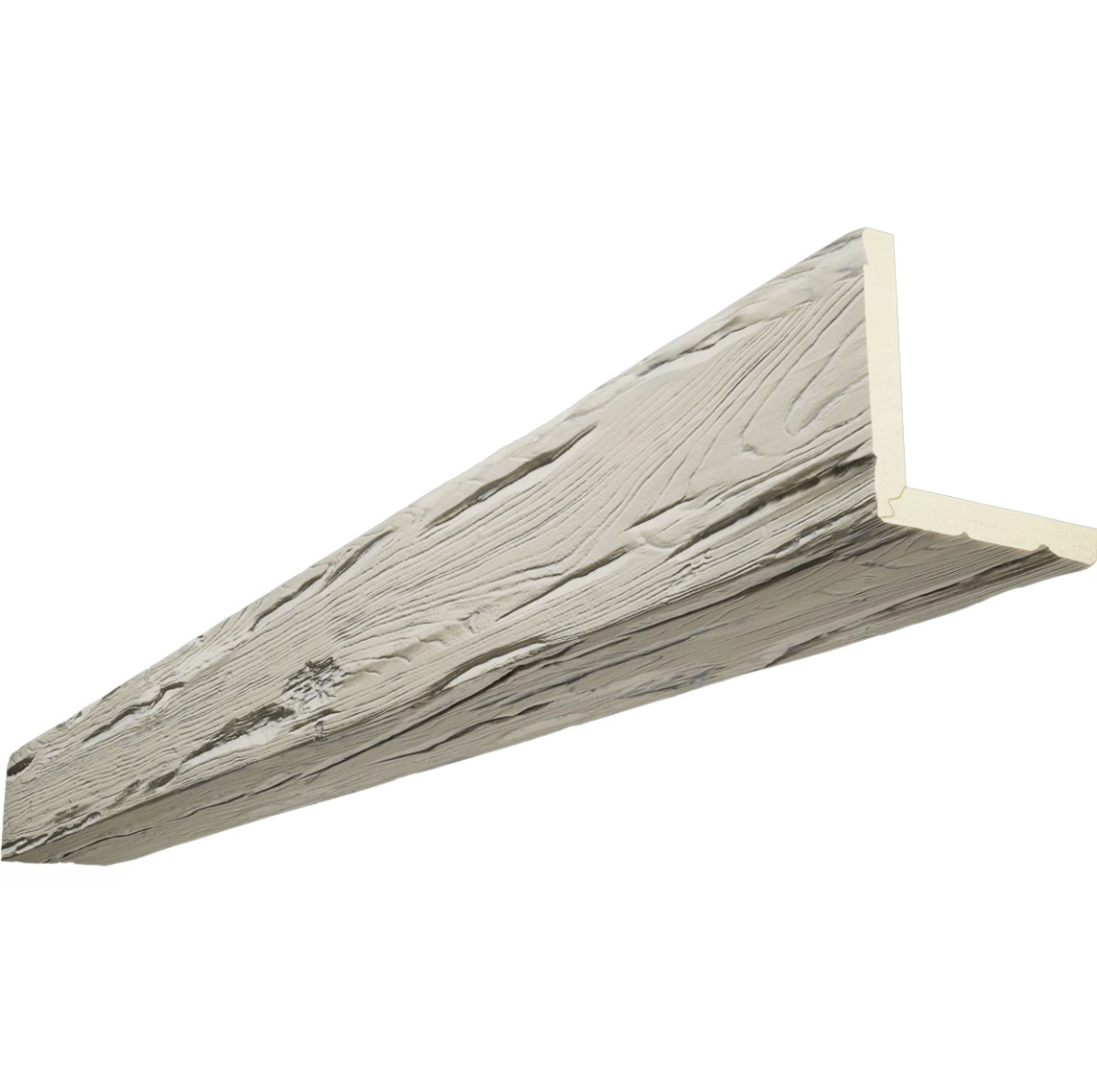
Weathered finishes are increasingly popular. These include driftwood gray, barnwood, reclaimed barnwood, whitewashed, and limed oak. The weathered look is created by combining a base stain with a glaze wash that lightens or whitens the high points of the grain. The effect mimics timber that has aged naturally over decades.
Hand-painted finishes are available from higher-end factories. These include multi-tone distressing, whitewash with visible wood grain showing through, and specialty effects like pickled, cerused, or lime-washed. Hand-painted finishes are more expensive because they require skilled labor and longer production time.
Custom finishes are available but usually only on larger orders. The factory's finishing team works with the buyer to develop a target color, produces sample pieces for approval, and then applies the custom finish to the production run. The setup cost is real but amortizes across a large order.
Choosing the right finish for the project
For traditional residential interiors, a standard stain in walnut, oak, or cherry is usually a safe choice. These finishes are widely available, look good in most lighting conditions, and are forgiving of minor color variation between beams.
For modern farmhouse or coastal interiors, a weathered or whitewashed finish is often the right choice. These finishes pair well with shiplap walls, light-colored furniture, and natural fiber textiles. The lighter tones also help reflect light in rooms with limited natural illumination.
For rustic or mountain interiors, a barnwood or reclaimed timber finish works well. These darker, more textured looks add weight and character to the space. They pair well with stone, leather, and dark metal accents.
For commercial spaces like restaurants or retail, the finish should align with the brand identity. A coffee shop might use a warm walnut, while a beach-themed restaurant might use a whitewashed or driftwood gray. Custom finishes are sometimes justified in commercial spaces where the brand requires a specific look.

Caring for pre-finished beams
Pre-finished beams require minimal maintenance. Dust should be removed periodically with a soft cloth or a vacuum brush attachment. Spills should be wiped up promptly to avoid staining. Direct sunlight should be avoided where possible, as UV exposure will gradually lighten even the most UV-resistant finishes.
For beams installed in kitchens or dining areas, occasional cleaning with a mild soap solution is appropriate. Abrasive cleaners should be avoided because they can dull the finish. For beams installed in bathrooms or high-humidity environments, ensure the finish is rated for moisture exposure and that ventilation is adequate.
Touch-up kits are usually available from the factory or the installer. These kits include small bottles of stain, topcoat, and applicators designed to repair minor damage. Significant damage is rare but should be addressed promptly to prevent moisture infiltration into the foam.
When pre-finished is the right choice
For most projects, pre-finished is the right choice. The factory finish is more consistent, more durable, and more economical than on-site finishing. The homeowner gets a better result with less project disruption. The contractor saves labor hours and reduces the project's exposure to scheduling delays.
For projects where the homeowner wants a specific custom color that is not in the factory's standard menu, on-site finishing might be the only option. Even in these cases, factory pre-finishing with on-site topcoat modification is often a workable compromise.
For projects where the beams are exposed to unusual conditions, including direct sunlight, high humidity, or physical contact, the factory should be consulted about finish recommendations. Some environments require specialty finishes that not all factories carry. Specifying the environment during the quoting process ensures the factory recommends an appropriate finish.
Pre-finished beams represent the modern standard for polyurethane faux wood beam installation. The combination of consistent factory quality, faster project timelines, and reduced on-site labor makes them the practical choice for almost every project.
Technical References
ASTM standards cited in every specification
Test Data
Lab results from internal testing program
Updated 2026
Reviewed against current product specs