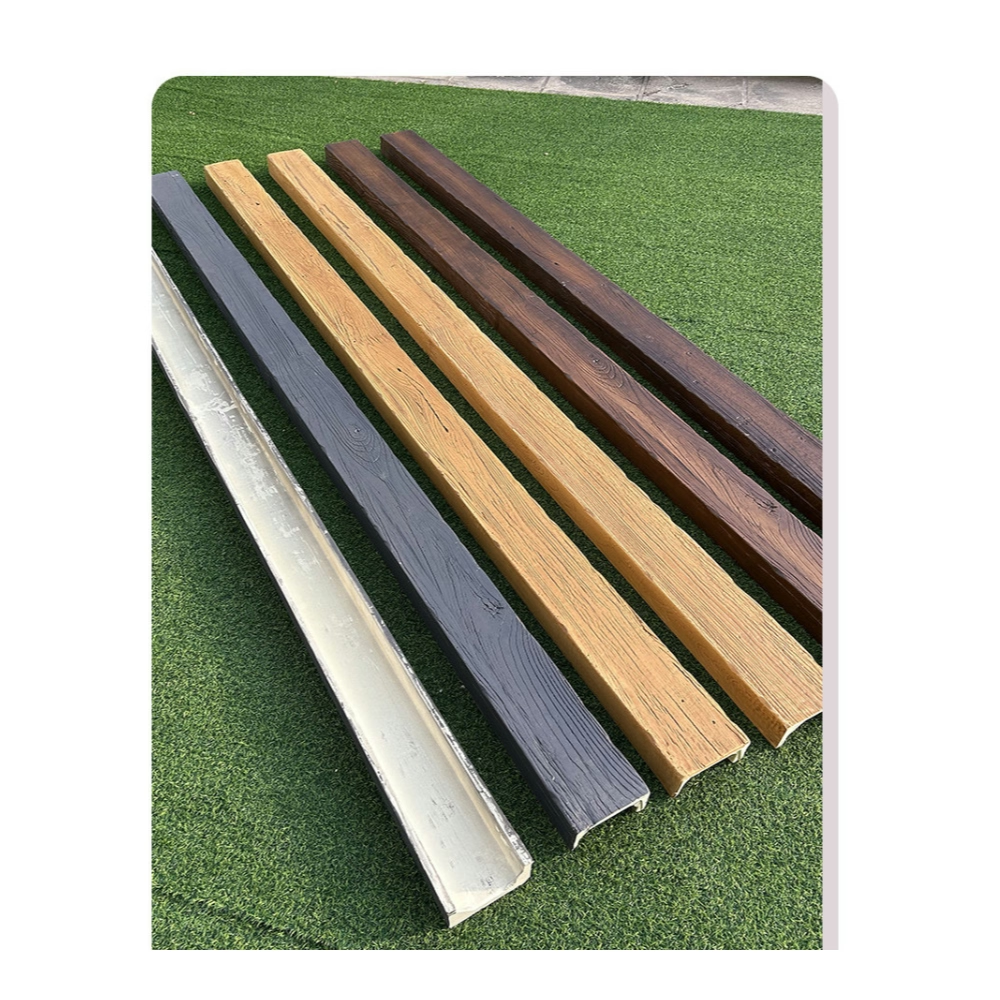
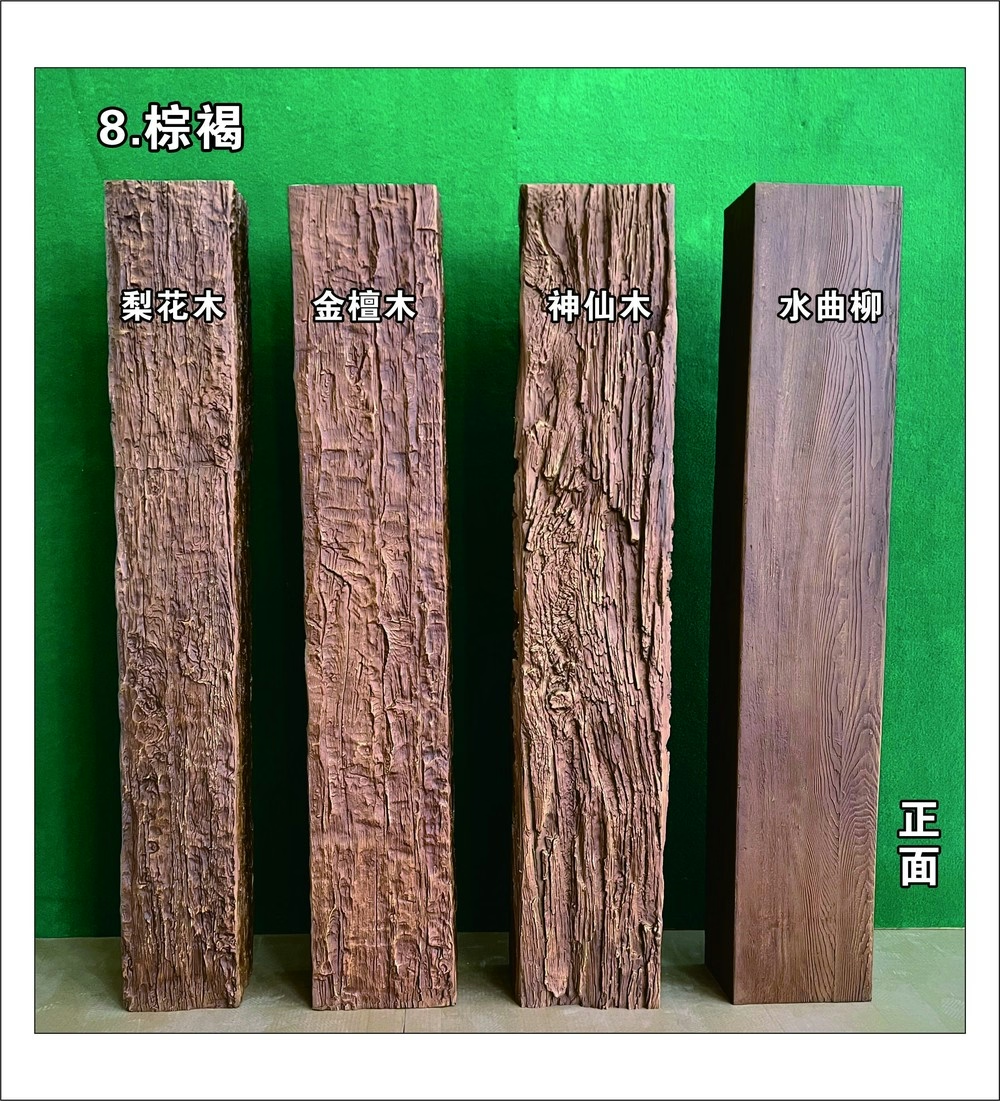
There is a particular satisfaction in opening a crate of faux wood beams and finding them ready to install. No staining supplies to gather, no drop cloths to lay, no smell of solvent in the house for days. The installer mounts the beam, the project moves forward, and the homeowner sees the finished result sooner. This is the experience that factory pre-finishing is designed to deliver, and when done well, it is the simplest way to add architectural character to a ceiling.
The decision to use pre-finished beams is straightforward for most projects. The decision about which pre-finished product to use is where the project planning matters. Not all pre-finished beams are the same, and the differences show up in durability, color consistency, and overall appearance once installed.
What defines a quality factory pre-finish
A quality factory pre-finish starts with surface preparation. The cast beam is sanded to remove mold lines and surface imperfections, then sealed with a primer that creates a uniform base for the color coats. Without proper preparation, the finish will look uneven or fail prematurely.
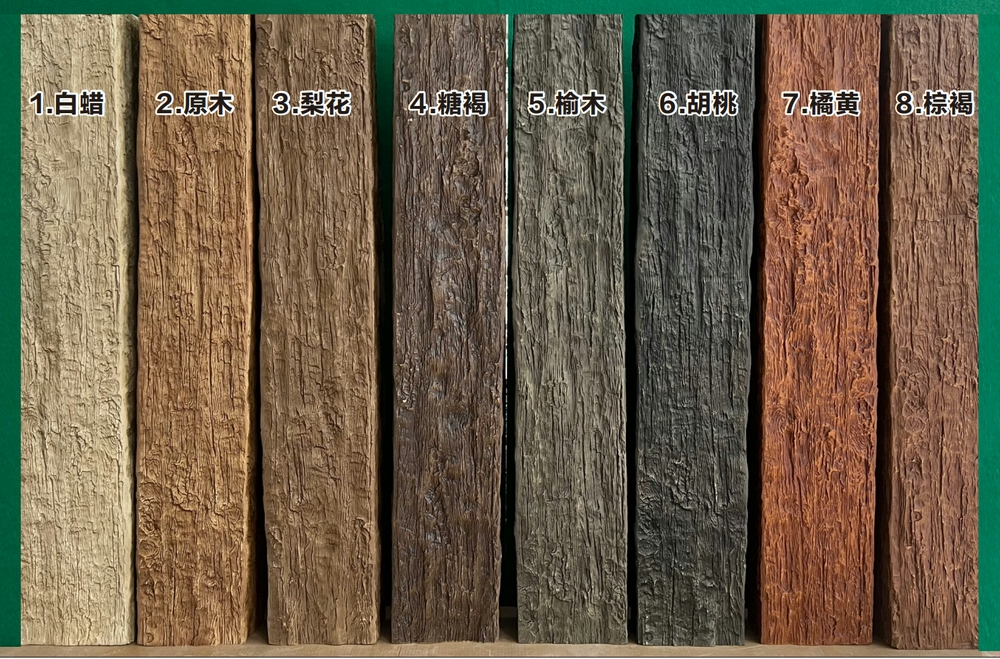
The color application is the next layer of quality. Single-tone finishes can be sprayed evenly with standard equipment. Multi-tone finishes, which are increasingly popular for premium beams, require skilled workers who can apply glaze washes and highlights by hand or with carefully calibrated spray equipment. The difference between a competent multi-tone finish and a poor one is visible immediately.
The topcoat is the final protection. A quality topcoat resists UV degradation, water spotting, and physical wear. It also affects the sheen of the beam, from matte through satin to semi-gloss. Most faux wood beams look best with a satin or matte topcoat because high-gloss finishes look unnatural on a surface meant to be timber.
Curing is the often-overlooked quality factor. A finish that is rushed out of the factory before it has fully cured will look good on day one but fail prematurely. Proper curing takes time and controlled conditions. Factories that invest in curing rooms or staging areas produce finishes that last longer and look better over the years.
How long a factory pre-finish lasts
A well-applied factory pre-finish on a polyurethane faux beam should last 10 to 20 years in normal interior conditions. In direct sunlight or high-traffic environments, the lifespan might be shorter. In protected interior environments with stable temperature and humidity, the finish can last even longer.
UV exposure is the primary degradation factor. Direct sunlight will gradually lighten even UV-resistant finishes over years. Beams installed near skylights, large windows, or glass doors will fade faster than beams in interior spaces without significant natural light. For these locations, a UV-resistant topcoat with a higher concentration of UV inhibitors is recommended.
Physical wear is the secondary degradation factor. Beams installed at low heights or in areas where people brush against them will show wear faster than beams installed at high ceilings. For low installations, a more durable topcoat like a catalyzed polyurethane provides better protection than a standard acrylic or alkyd.
Moisture is the third degradation factor. Beams installed in bathrooms, kitchens, or exterior environments need moisture-resistant finishes. Standard interior finishes will fail quickly in these locations, leading to cloudiness, peeling, or mold growth beneath the finish.
Choosing the right pre-finished beam for the project
The first consideration is the finish color and style relative to the project's design intent. A traditional residential interior usually calls for warm wood tones like walnut, oak, or cherry. A modern interior might look better with a cooler gray or weathered tone. A rustic interior often benefits from a heavily textured barnwood or reclaimed look.
The second consideration is the beam profile relative to the room scale. Large rooms with high ceilings can support larger beam profiles like 8-inch by 10-inch or even 10-inch by 12-inch. Smaller rooms look better with smaller profiles like 4-inch by 6-inch or 6-inch by 8-inch. The beam should look proportionate to the space, neither overwhelming nor disappearing.
The third consideration is the beam length relative to the installation. Most faux beams are produced in lengths up to 20 feet, with longer beams sometimes available by special order. The installation might require splices, returns, or angles that affect the beam length needed. Pre-finished beams can be ordered in custom lengths, often at a small surcharge per cut.
Where pre-finished beams save the most time
On new construction projects, pre-finished beams save time because the home is unoccupied and finishing fumes are not a concern, but the time savings are still significant. The general contractor can schedule the beam installation alongside other trades without coordinating finishing time, drying time, and ventilation.
On renovation projects, pre-finished beams save even more time. The home is usually occupied, and the disruption of on-site finishing is significant. Eliminating the finishing step means the homeowner is not displaced, the room is not out of service, and the project schedule is not extended by finishing delays.
On commercial projects, pre-finished beams save time because the space is usually on a tight opening schedule. A restaurant that needs to open by a certain date cannot afford finishing delays. A retail store that needs to receive merchandise by a certain date has the same pressure. Pre-finished beams eliminate one of the most common sources of schedule slippage.
Common pre-finish problems and how to avoid them
The most common pre-finish problem is color drift between the sample and the production run. A sample approved in the showroom might be produced in a slightly different shade in the actual order because the stain mix was not perfectly replicated. This is more common with custom finishes than with standard finishes, but it can happen with any finish.
Avoiding this problem requires clear communication with the factory about acceptable color tolerance. Most factories can hold a tolerance of one or two delta E units, which is the threshold most people cannot perceive. Tighter tolerances are possible but add cost. Documenting the tolerance in the purchase agreement protects both sides.
The second common problem is finish damage during shipping. Pre-finished beams are more vulnerable to shipping damage than unfinished beams because the finish can be scratched, chipped, or dented. Proper packaging with foam wrap, corner protectors, and adequate crating reduces this risk but does not eliminate it. Inspecting beams on receipt is important.
The third common problem is mismatch between pre-finished beams and adjacent real wood elements. A pre-finished faux beam mounted next to a real wood mantel or beam might be a slightly different shade because the real wood is itself variable. This is rarely a problem on a project that uses only faux beams, but it can become an issue on mixed-material projects.
How to specify the finish correctly on a purchase order
The purchase order should reference the factory's standard finish code, not just a descriptive name. Finish names like "weathered oak" or "barnwood gray" can mean different things at different factories. The factory's finish code refers to a specific formulation that the factory can replicate precisely.
The purchase order should also specify the sheen level, the topcoat type, and any specialty requirements like UV resistance or moisture resistance. These specifications might seem obvious but omitting them is a common source of misunderstanding.
The purchase order should reference an approved sample by date and identification number. If a dispute arises about whether the finished beams match the approved sample, the dated reference allows both sides to verify what was approved. Without this reference, the dispute becomes a matter of opinion rather than fact.
Working with the factory on custom pre-finishes
Custom pre-finishes are available from most factories but typically require a larger minimum order to justify the setup cost. The setup cost covers stain mixing, color matching, sample production, and any adjustments to the application process. A typical setup cost ranges from $200 to $800 depending on the complexity.
The custom finish process usually starts with the buyer providing a reference sample. This might be a piece of actual wood, a paint chip, a photograph, or a finish card from another product. The factory's color matching team develops a formulation that approximates the reference, produces a sample for the buyer's approval, and adjusts the formulation based on feedback. This iterative process usually takes 2 to 4 rounds before a final sample is approved.
Once the final sample is approved, the factory produces the full order using the agreed formulation. A reference sample is retained by the factory for future reorders, which makes repeat orders faster and more accurate. Buyers who plan to reorder the same custom finish should specify retention of the reference in the purchase agreement.
The economics of pre-finished versus on-site finished beams
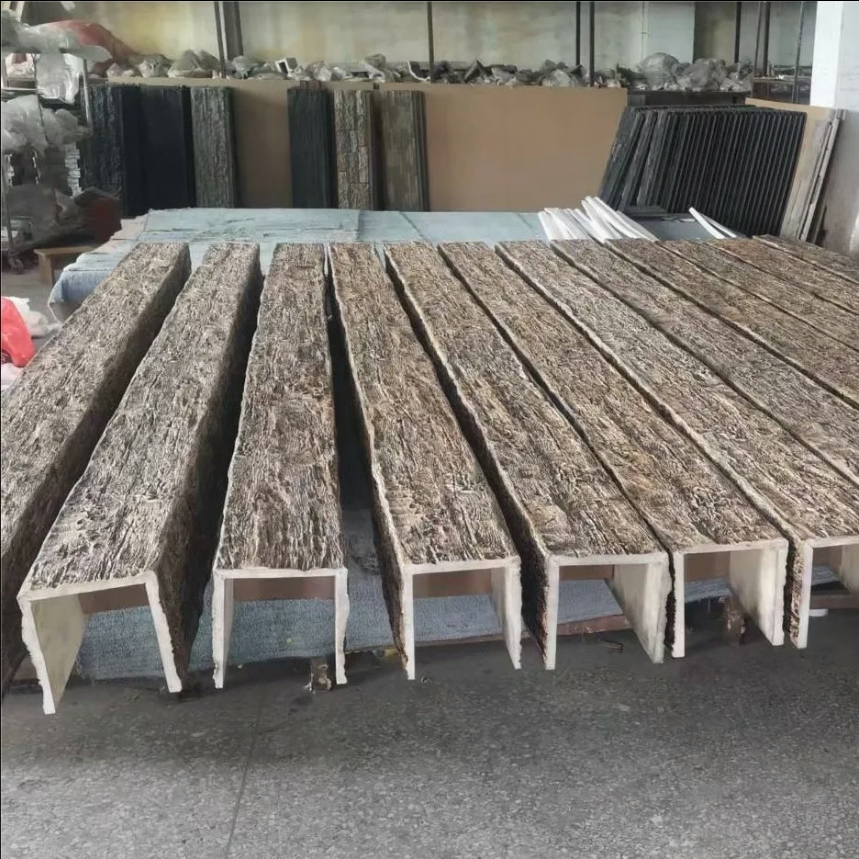
Pre-finished beams cost more per unit than unfinished beams from the same factory. The premium typically ranges from $10 to $40 per beam depending on the finish complexity. Whether this premium is a good value depends on the labor cost the buyer avoids by not finishing on site.
For projects where the buyer is also the finisher, the comparison is direct. The buyer pays $20 more for a pre-finished beam and saves 2 hours of finishing labor. At a typical DIY value of time, this is a clear saving. For projects where the buyer is paying a contractor, the comparison depends on the contractor's finishing rates.
For projects with many beams, the pre-finish premium is amortized across more pieces, and the labor savings are larger. A 20-beam project might pay $400 more for pre-finishing and save 40 hours of labor. A 5-beam project might pay $100 more for pre-finishing and save 10 hours of labor. Both can make sense, but the value proposition is clearer on larger projects.

Installation tips for pre-finished beams
Handle the beams with clean gloves to avoid fingerprints in the finish. Fingerprints are difficult to remove from a cured factory finish and require solvent cleaning that can damage the surrounding area. Cotton or nitrile gloves are appropriate.
Use proper mounting hardware designed for the beam weight and the ceiling structure. Faux beams are light compared to real wood, but the mounting hardware still needs to support the beam securely. Standard L-brackets or beam hangers rated for the beam weight are appropriate. The hardware should be hidden inside the beam or against the ceiling, not visible from below.
Touch up any minor damage during installation with the factory-supplied touch-up kit. The kit usually includes a small bottle of stain, a small bottle of topcoat, and applicators. Apply the touch-up sparingly and blend into the surrounding finish. Major damage should be reported to the factory before installation proceeds.
Maintenance over the life of the beam
Pre-finished beams require minimal maintenance. Annual dusting with a soft cloth is usually sufficient. Beams in kitchens may need occasional cleaning with a damp cloth and mild soap. Beams in bathrooms should be wiped down after shower use to prevent moisture buildup.
Avoid harsh chemicals, abrasive cleaners, and solvents on the finish. These products can dull the sheen, dissolve the topcoat, or damage the underlying color coat. If a stain or mark cannot be removed with mild soap and water, the factory should be consulted about appropriate cleaning products.
For beams showing significant wear or damage after many years, factory refinishing is sometimes possible. The beam is removed, shipped back to the factory, and refinished using the original or an updated formulation. This service is not always available and is usually expensive, but it can extend the life of a high-quality beam indefinitely.
Pre-finished beams represent the most practical way to add architectural character to a ceiling in modern construction. The factory finish quality is consistent, the installation is fast, and the long-term appearance is reliable. For most projects, there is no good reason to choose on-site finishing over a quality factory pre-finish.
Technical References
ASTM standards cited in every specification
Test Data
Lab results from internal testing program
Updated 2026
Reviewed against current product specs