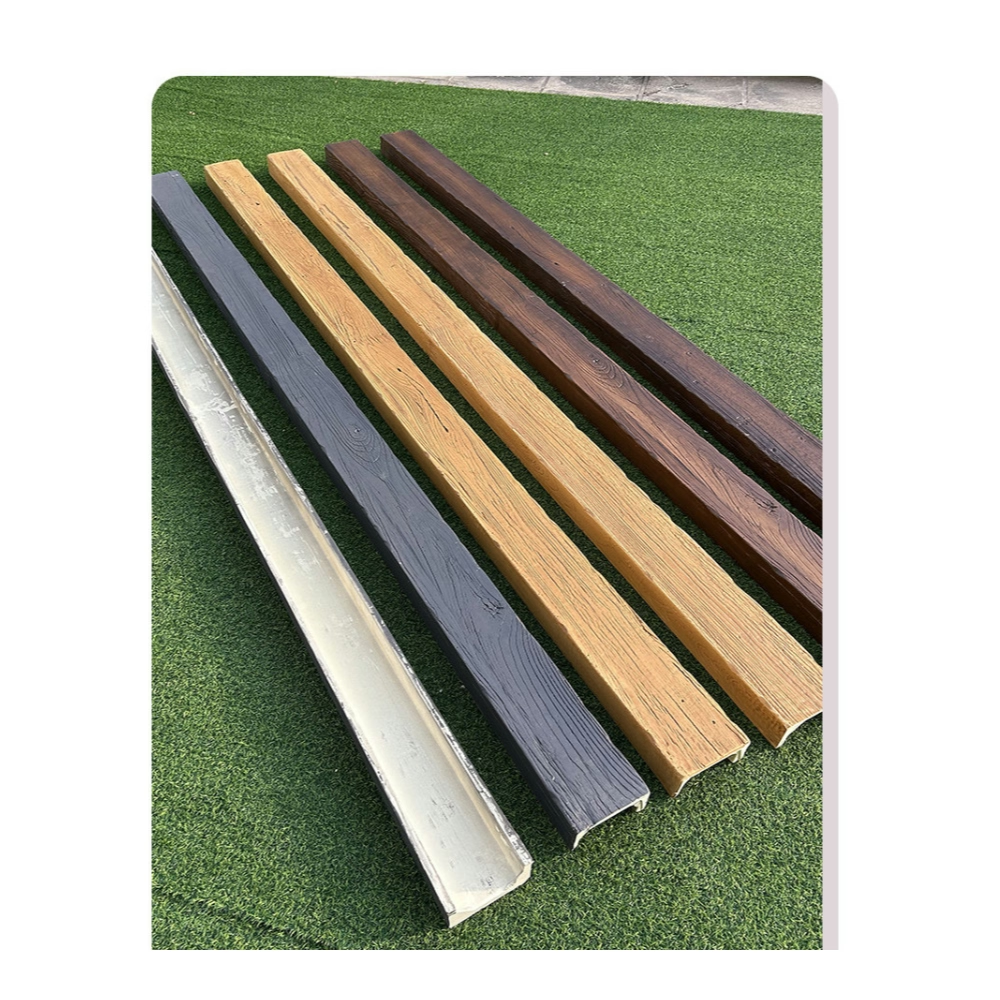
A factory pre-finished polyurethane faux wood beam arrives at the job site as a finished product. The contractor does not need to stain it, seal it, or otherwise treat it before installation. This single fact changes the entire installation workflow, often cutting a full day out of the project timeline and eliminating the trade coordination headaches that come with on-site finishing.
For contractors working on tight schedules or in occupied spaces, pre-finished beams are not just a convenience. They are sometimes the only practical option. A hospital renovation cannot have finishing fumes in patient areas. A restaurant cannot close for the two days required to stain and seal ceiling beams. A custom home cannot have the finishing process hold up the closing date. In each of these cases, pre-finished beams make the project viable.
How factory pre-finishing is done
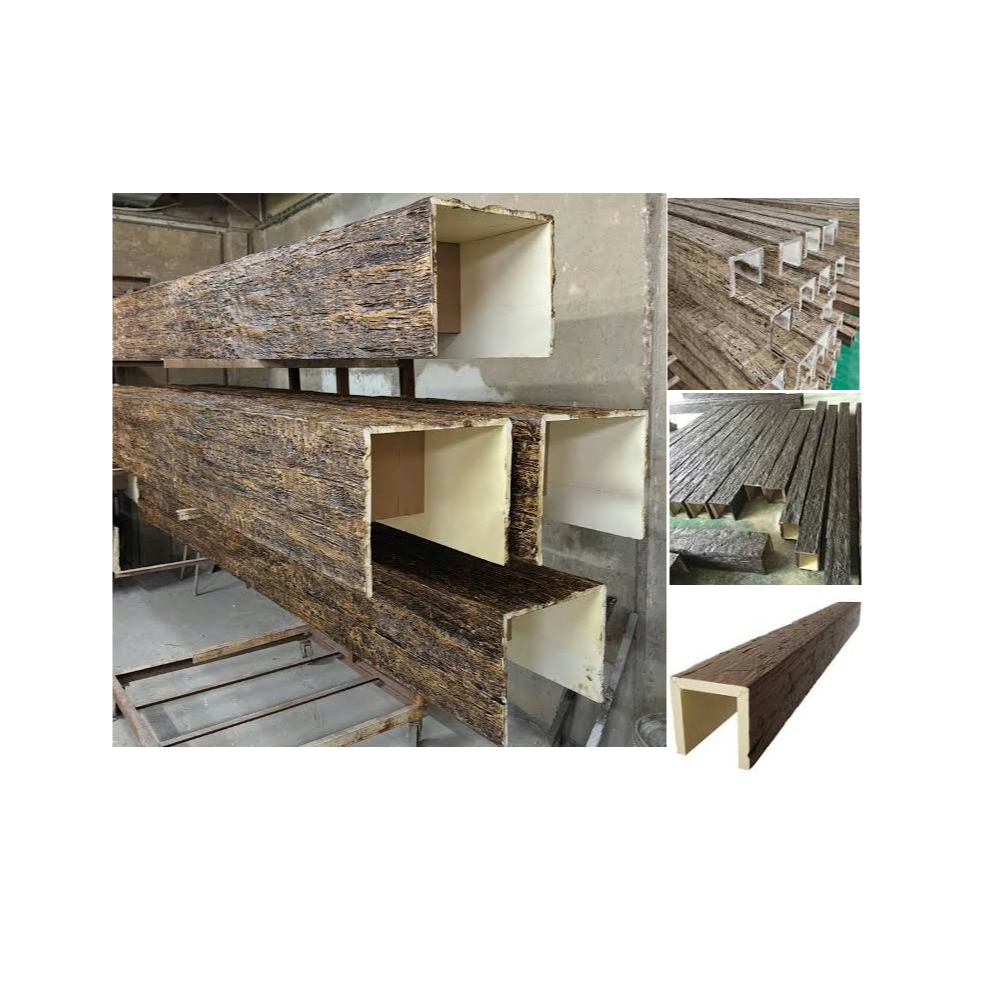
The pre-finishing process at the factory involves several stages, each of which contributes to the final quality. The cast beam emerges from the production line with a raw polyurethane surface that is functional but visually unappealing. Transforming that surface into a convincing wood appearance requires careful preparation and skilled application.
Surface preparation is the first stage. The beam is sanded to remove any mold lines or surface irregularities. Minor imperfections are filled, and the entire surface is wiped clean. Some factories use a tack cloth to remove any remaining dust before the primer is applied. This stage is critical because any imperfection left in the surface will show through the finish.
Primer application follows preparation. The primer is sprayed evenly across the entire beam surface, allowed to flash off, and then cured under controlled conditions. The primer creates a uniform base for the subsequent color coats and helps the finish adhere to the polyurethane foam. Skipping the primer or applying it unevenly produces an inconsistent final appearance.
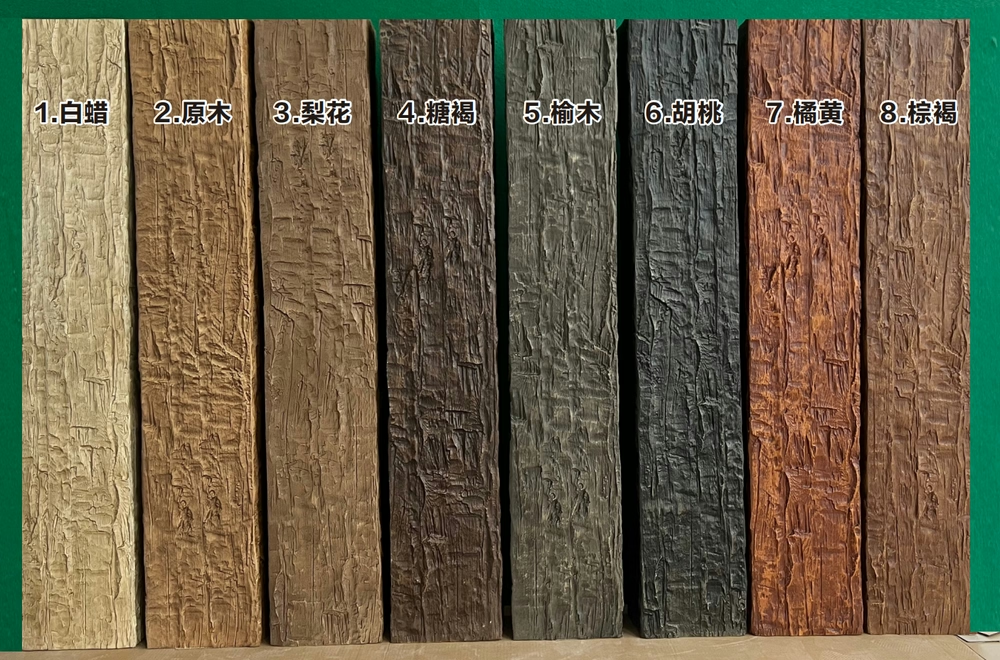
Color application is the stage that creates the wood appearance. For single-tone finishes, this is a straightforward spray application. For multi-tone finishes, the color might be applied in layers, with each layer adding depth and variation. Glaze washes, highlights, and specialty effects are added by skilled workers using hand techniques or specialized spray equipment.
Topcoat application seals the finish. The topcoat is usually a clear polyurethane or acrylic that provides UV protection, moisture resistance, and the desired sheen level. Multiple thin coats produce better results than a single thick coat. Each coat is allowed to cure before the next is applied.
The role of curing in factory finishing
Curing is often invisible but always important. A finish that has not fully cured will look good initially but fail prematurely. Proper curing requires controlled temperature, controlled humidity, and adequate time. Most factories cure their finishes in dedicated rooms or staging areas where conditions are held within tight tolerances.
The curing time varies by finish chemistry and environmental conditions. Some finishes reach handling strength within hours but require days to reach full hardness. Rushing the curing process is one of the most common quality compromises in factory finishing, and it shows up as premature wear, finish failure, or color shift over time.
Buyers evaluating a factory's pre-finishing quality should ask about the curing process. A factory that can describe its curing conditions, timeline, and quality checks is one that takes finishing seriously. A factory that cannot answer these questions is one that might be rushing the process.
The installation workflow for pre-finished beams
The installation workflow for pre-finished beams is simpler than for unfinished beams in several important ways. The installer receives the beams, inspects them for damage, and mounts them. There is no preparation step, no finishing step, and no drying time between installation and use.
The first step is layout. The installer marks the ceiling where each beam will be mounted, verifies the locations against the design drawings, and identifies any site-specific issues like uneven ceilings, blocking requirements, or lighting integration points. This step is the same regardless of whether the beams are pre-finished or unfinished.
The second step is mounting hardware installation. The installer attaches brackets, blocking, or other hardware to the ceiling according to the design. For most residential installations, this involves L-brackets screwed into the ceiling joists or blocking. For commercial installations, the hardware might be more elaborate.
The third step is beam installation. The beam is lifted into position, secured to the mounting hardware, and checked for level. For long beams, this step might require two installers. The beam is usually secured with screws driven through the bracket into the beam, with the screw heads hidden inside the beam or covered with a touch-up marker.
The fourth step is final inspection. The installer checks all beams for level, secure mounting, and consistent appearance. Any minor touch-ups are applied using the factory-supplied touch-up kit. The room is cleaned up, and the project is ready for the next trade or for the homeowner to enjoy.
How pre-finishing changes the project timeline
On a typical residential ceiling beam project with 10 beams, the timeline differences between pre-finished and unfinished are substantial. With unfinished beams, the project timeline is approximately 5 to 7 days from beam delivery to final inspection. The first day is beam mounting. Days 2 through 4 are finishing, with each day including application, drying, and possible recoating. Day 5 is final touch-up and inspection.
With pre-finished beams, the same project takes 1 to 2 days from beam delivery to final inspection. Day 1 is beam mounting. Day 2 is final touch-up and inspection. The savings of 3 to 5 days is significant on most projects and transformative on tight ones.
The time savings translate directly to labor cost savings. A contractor finishing the project in 2 days instead of 7 days spends 5 fewer days on site, which is 5 fewer days of labor, insurance, and overhead. For projects where the contractor has other work waiting, the time savings also reduce the opportunity cost of having the crew tied up on the beam project.
Trade coordination advantages
On a construction site, every trade affects every other trade. The painter cannot paint until the drywall is finished. The flooring installer cannot work until the painter is done. The beam installer, if finishing on site, occupies the room for days and prevents other trades from working in the space.
Pre-finished beams eliminate this scheduling conflict. The beam installer mounts the beams in a single day or two and is done. The painter, electrician, and other trades can work in the space immediately after. The project schedule becomes more predictable because the beam installation is no longer a bottleneck.
This advantage is most pronounced on commercial projects where multiple trades are scheduled in sequence. A project manager who knows the beam installation will take 1 day instead of 5 can schedule the other trades more confidently and avoid crew idle time.
Quality control on pre-finished beams
The factory is responsible for the finish quality on pre-finished beams, but the buyer is responsible for accepting or rejecting the finished product. Inspection at receipt is the buyer's opportunity to identify any defects before installation begins.
The first inspection check is color consistency across all beams in the order. Lay the beams side by side in good lighting and look for variation. Some variation is expected and even desirable, since real wood is variable. Excessive variation, especially noticeable shifts in tone, indicates a production issue.
The second inspection check is finish quality. Look for runs, sags, orange peel, dust inclusions, or other spray defects. Look for holidays or missed spots. Look for sheen inconsistencies. Any of these issues are grounds for rejection before installation.
The third inspection check is physical damage. Look for dents, scratches, cracks, or chips. Minor damage at corners or ends is often acceptable and can be touched up on site. Major damage on visible surfaces is grounds for replacement.
Common issues with pre-finished beams and how to handle them
The most common issue is color drift between the approved sample and the production run. The buyer approved a sample in the showroom or via a photograph, and the production beams arrived slightly different in tone. This is rarely significant enough to justify rejection, but it can be disappointing.
Handling this issue starts with documentation. The purchase agreement should specify acceptable color tolerance, usually in delta E units. If the production beams are within tolerance, the buyer accepts them. If they are outside tolerance, the factory re-finishes or replaces. Having the tolerance documented in advance prevents disputes.
The second common issue is damage during shipping. Beams that were perfect at the factory arrive with dents or scratches from transit. Handling this issue requires clear documentation of the damage at receipt, photographs showing the damage before unpacking, and immediate notification to the factory and the freight carrier. Most factories will replace damaged beams quickly when the documentation is clear.
The third common issue is mismatch with adjacent real wood elements. The faux beam is a slightly different shade than the real wood mantel, beam, or trim it is mounted next to. Handling this issue requires either accepting the difference, finishing the real wood to match the faux, or finishing the faux to better match the real wood. The factory can sometimes supply custom stain for the touch-up.

When on-site finishing might still make sense
Despite the advantages of pre-finishing, there are situations where on-site finishing is the better choice. These situations are uncommon but worth considering.
Custom colors that cannot be matched by the factory are one situation. A homeowner wants a specific shade that no factory can replicate accurately. The contractor finishes the beam on site, blending the stain to match other elements in the room. The result is more visually integrated than a pre-finished beam that is close but not exact.
Repairs to existing beams are another situation. A faux beam that has been damaged or has faded over time might need to be refinished in place. Removing the beam, shipping it back to the factory, and reinstalling is often impractical. On-site refinishing is the practical solution.
Touch-up work on pre-finished beams is a third situation. Minor damage during installation requires touch-up. This is on-site finishing by definition, but it is not the same as full finishing. The touch-up kit supplied by the factory is designed for this purpose and produces acceptable results when applied carefully.
Long-term performance of pre-finished beams
Pre-finished beams hold up well over time when the finish is properly applied and the environment is appropriate. The factory finish typically outlasts an equivalent on-site finish by 20 to 50 percent, primarily because of the controlled application conditions and the use of commercial-grade coatings.
UV degradation is the most common long-term issue. Beams in direct or strong indirect sunlight will fade over years. The fade is gradual and might not be noticeable until the beam is compared to a new beam. For most installations, the fade is acceptable and considered part of the beam's natural aging.
Physical wear is less common because most beams are installed at heights that limit contact. Beams at lower heights in high-traffic areas might show wear on the bottom or corners. This wear can be touched up but rarely requires full refinishing.
Moisture damage is rare in interior installations but can occur in bathrooms, kitchens, or exterior applications. The factory finish is moisture resistant but not waterproof. Prolonged exposure to standing water will eventually damage even the best coating. Proper installation with attention to water management is the best prevention.
Selecting a factory for pre-finished beams
The most important factor in selecting a factory for pre-finished beams is the consistency of the finish across production runs. A factory that produces excellent samples but inconsistent production runs is a risky choice. Ask for references from buyers who have ordered the same finish on multiple occasions.
The second important factor is the factory's color matching capability. Even standard finishes require color matching between production runs, especially if the buyer reorders months or years after the initial order. A factory with strong color matching produces consistent product over time. A factory with weak color matching produces noticeable variation.
The third important factor is the factory's responsiveness to quality issues. Even the best factories occasionally ship product with defects. How the factory handles these situations determines whether the buyer has a positive or negative experience. A factory that responds quickly and resolves issues fairly is one worth working with long-term.
Making the decision to go pre-finished
For most projects, the decision to use pre-finished beams is straightforward. The time savings, quality improvements, and project simplicity advantages outweigh the higher unit cost. The homeowner gets a better result, the contractor saves labor, and the project finishes sooner.
For projects with unusual requirements, the decision requires more thought. Custom colors, repair situations, and tight budget constraints might favor on-site finishing despite its disadvantages. Evaluating the specific requirements against the available pre-finished products is the right way to make the call.
Pre-finished PU faux wood beams represent the modern standard for faux beam installation. The combination of factory quality, project speed, and long-term durability makes them the practical choice for almost every application. For contractors building a reputation on quality and efficiency, pre-finished beams are not just an option; they are the default.
Technical References
ASTM standards cited in every specification
Test Data
Lab results from internal testing program
Updated 2026
Reviewed against current product specs