
Chestnut was once one of the most abundant hardwoods in North American forests, used extensively for structural beams, fencing, and furniture. The chestnut blight of the early twentieth century destroyed billions of trees, leaving old-growth chestnut a rare and expensive material today. Salvaged chestnut beams appear in restoration projects and high-end custom homes, but the supply is limited and the cost is significant.
Faded weathered chestnut polyurethane faux beams offer a practical alternative. The factory finish captures the warm brown patina of aged chestnut, with the subtle variations and character marks that real chestnut develops over decades. The result is the visual richness of aged chestnut without the scarcity, the cost, or the structural weight of the real material.
For retro and rustic interior styles, faded weathered chestnut provides warmth, character, and a sense of history. The brown tones are warmer than the grays of weathered cedar or barnwood, making chestnut appropriate for spaces that need cozy, enveloping color.
What defines the faded weathered chestnut look
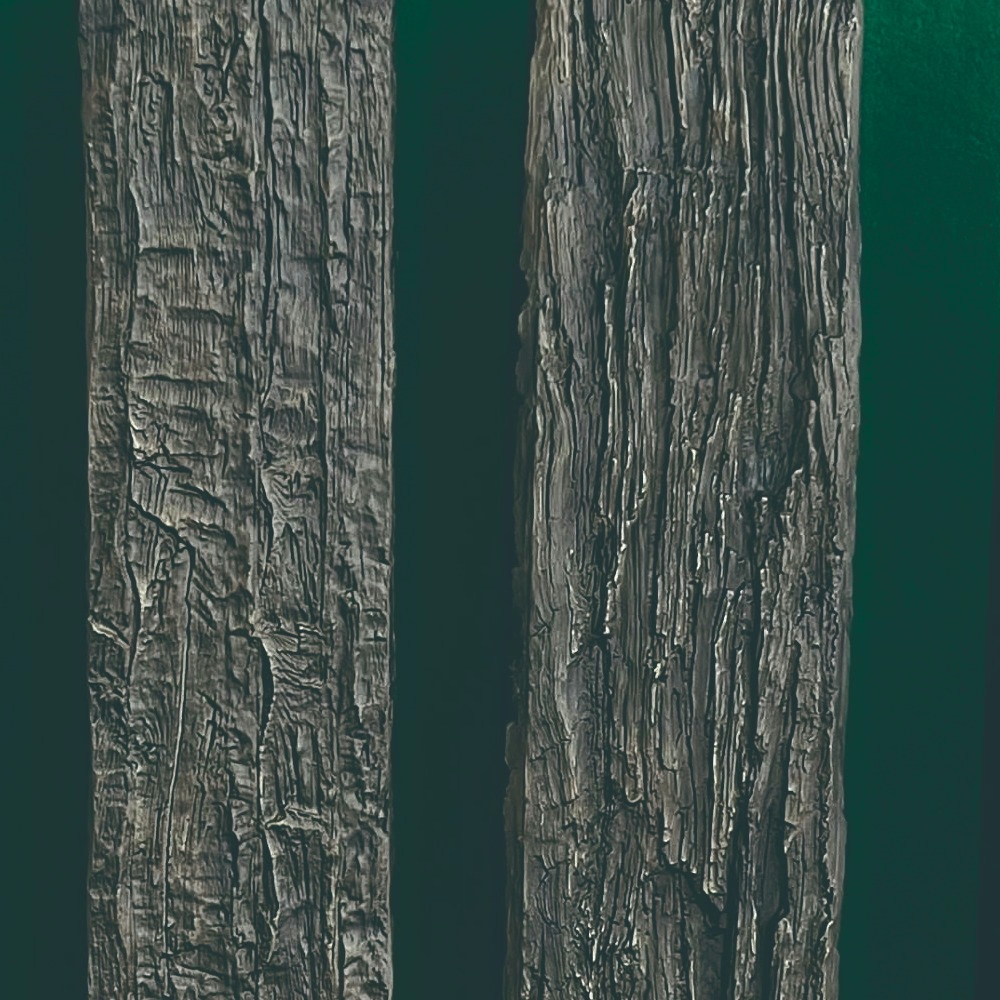
Aged chestnut has a warm brown color that ranges from medium amber-brown in younger pieces to deeper chocolate-brown in older pieces. The fading process, driven primarily by UV exposure and oxidation, softens the color slightly but does not shift it dramatically toward gray the way cedar does. The result is a brown tone with subtle variation, not a gray tone.
The grain pattern of chestnut is distinctive. The grain is typically straight but with prominent growth rings that create visible bands across the beam surface. The rings are more pronounced in older chestnut, where decades of growth have created wide, visible bands. A convincing chestnut finish should show these growth ring variations.
Chestnut wood often has wormholes, mineral streaks, and other natural character marks that develop over time. These marks are part of what makes aged chestnut look authentic. A factory finish that includes simulated character marks produces a more convincing result than a finish on a clean beam surface.
How factory finishes replicate weathered chestnut
The base color for weathered chestnut is a warm brown stain with amber undertones. The base is usually applied in a single coat that establishes the overall tone. The base color should not be uniform; slight variations in application produce the natural color variation that aged wood exhibits.
The glaze wash adds depth and emphasizes the grain pattern. The glaze settles into the grain recesses, darkening the low points and creating contrast that makes the grain stand out. The glaze color is usually a darker brown than the base, sometimes with hints of red or amber to enhance the warmth.
Hand-applied highlights bring out the character marks and growth ring variations. Skilled workers use smaller brushes or rags to apply the highlights selectively, emphasizing certain areas while leaving others at the base color. The result is a multi-tone finish that looks like it developed naturally over decades.
The topcoat seals the finish and provides protection. A satin or matte topcoat looks natural on aged chestnut. Semi-gloss topcoats can look too polished for the rustic aesthetic that chestnut usually implies.
Color palette and tonal range
The lightest tones of faded chestnut are warm tan with subtle brown undertones. These tones work well in rooms with abundant natural light or in design schemes that emphasize lighter colors. The lightest chestnut is also appropriate for spaces where the beams are a subtle background element rather than a focal point.
The medium tones of faded chestnut are the classic aged brown that most people associate with the species. These tones have more pronounced brown with amber undertones, providing warmth without being too dark. The medium tones work in the widest range of interior styles and are the most popular choice for faded chestnut finishes.
The darkest tones of faded chestnut are deep chocolate brown with subtle warmth. These tones are appropriate for rooms with limited natural light or for design schemes that emphasize rich, enveloping colors. The darkest chestnut works well in libraries, dens, and other spaces where a cozy, intimate atmosphere is desired.
Interior styles that work with faded weathered chestnut
Rustic farmhouse style is a natural fit for faded weathered chestnut. The warm brown tones complement the white walls, natural wood furniture, and vintage accessories that define the style. A great room ceiling with chestnut beams creates the focal point that anchors the rest of the design.
Mountain lodge style uses faded weathered chestnut for its warmth and connection to traditional alpine architecture. The brown tones work with stone fireplaces, leather furniture, and plaid textiles. A vaulted ceiling with chestnut beams and tongue-and-groove planking creates the classic lodge feeling.
Craftsman and bungalow style homes often featured chestnut beams historically, and faded weathered chestnut is appropriate for restoration or new construction in these styles. The warm tones complement the natural wood trim, built-in cabinetry, and earthy color palettes of Craftsman interiors.
Retro and mid-century modern styles can use faded weathered chestnut in unexpected ways. The warm brown provides contrast to the cleaner lines and brighter colors of mid-century design. A single chestnut beam across a minimalist ceiling creates a strong visual anchor.
English cottage and European country styles also work with faded weathered chestnut. The aged, character-rich appearance fits the historic feeling of these styles. Exposed beams with chestnut finishes are common in renovated cottages and country homes.
Pairing faded chestnut with other materials
Stone elements pair beautifully with faded weathered chestnut. The warm brown of the chestnut complements the earthy tones of stone, whether the stone is used on a fireplace, an accent wall, or flooring. Limestone, sandstone, and fieldstone all work with chestnut finishes.
Brick elements also work with faded weathered chestnut. The warm brown of the chestnut harmonizes with the red-brown of traditional brick. Exposed brick walls with chestnut beam ceilings create a richly textured, warm environment.
Plaster and drywall provide a smooth contrast to the textured, character-rich surface of the chestnut beam. White or cream-colored walls let the beam color and texture show through without competition. The contrast between smooth walls and textured beams is visually appealing.
Metal elements in warm tones complement faded chestnut. Oil-rubbed bronze, antique brass, and wrought iron all work with the warm brown palette. Polished chrome or brushed nickel can also work but create a different, more contemporary feel.
Wood elements in coordinating tones create a layered, harmonious effect. Furniture, flooring, and trim in warm brown tones can complement faded chestnut beams without competing with them. The key is to vary the tones slightly so the materials do not look identical.

Practical considerations for faded chestnut beams
Lighting is important for showing the finish at its best. Warm lighting enhances the amber undertones in the chestnut finish, while cool lighting can make the finish look duller. LED bulbs with a color temperature of 2700K to 3000K work well with faded chestnut finishes. Avoid cool white or daylight LEDs that wash out the warm tones.
Natural light also affects the appearance of the finish. North-facing rooms with cool light might need additional warm artificial light to bring out the chestnut tones. South-facing rooms with abundant warm light will show the finish naturally.
The room size relative to the beam size affects the visual impact. Larger rooms can support larger beam profiles, while smaller rooms need smaller profiles to maintain proportion. A 10-inch by 12-inch beam in a small room can feel overwhelming; a 6-inch by 8-inch beam in a large room can feel insignificant.
The ceiling height also matters. Higher ceilings can support beams that are thicker and more prominent. Lower ceilings need beams that are proportionate to the space, with attention to the clearance below the beam for walking and furniture placement.
Cost and value of faded chestnut beams
Faded weathered chestnut is a more complex finish than basic wood tones, so it commands a premium over single-tone finishes. The premium reflects the additional labor for the multi-step process, the additional stain colors, and the hand-applied character marks. The premium typically ranges from $15 to $40 per beam over standard finish pricing.
The value of the premium depends on the project context. For a rustic restoration where the chestnut look is essential, the premium is justified by the visual result. For a casual installation where the beams are background elements, a simpler finish might provide adequate appearance at lower cost.
Compared to real salvaged chestnut, faux chestnut beams offer significant savings. Real salvaged chestnut can cost $50 to $150 per board foot, and beams are large board feet. A single 20-foot salvaged chestnut beam might cost $2,000 to $6,000. A faux chestnut beam of the same dimensions might cost $200 to $500 from a factory direct source. The savings can fund other elements of the project or simply improve the project margin.
Installation considerations for faded chestnut beams
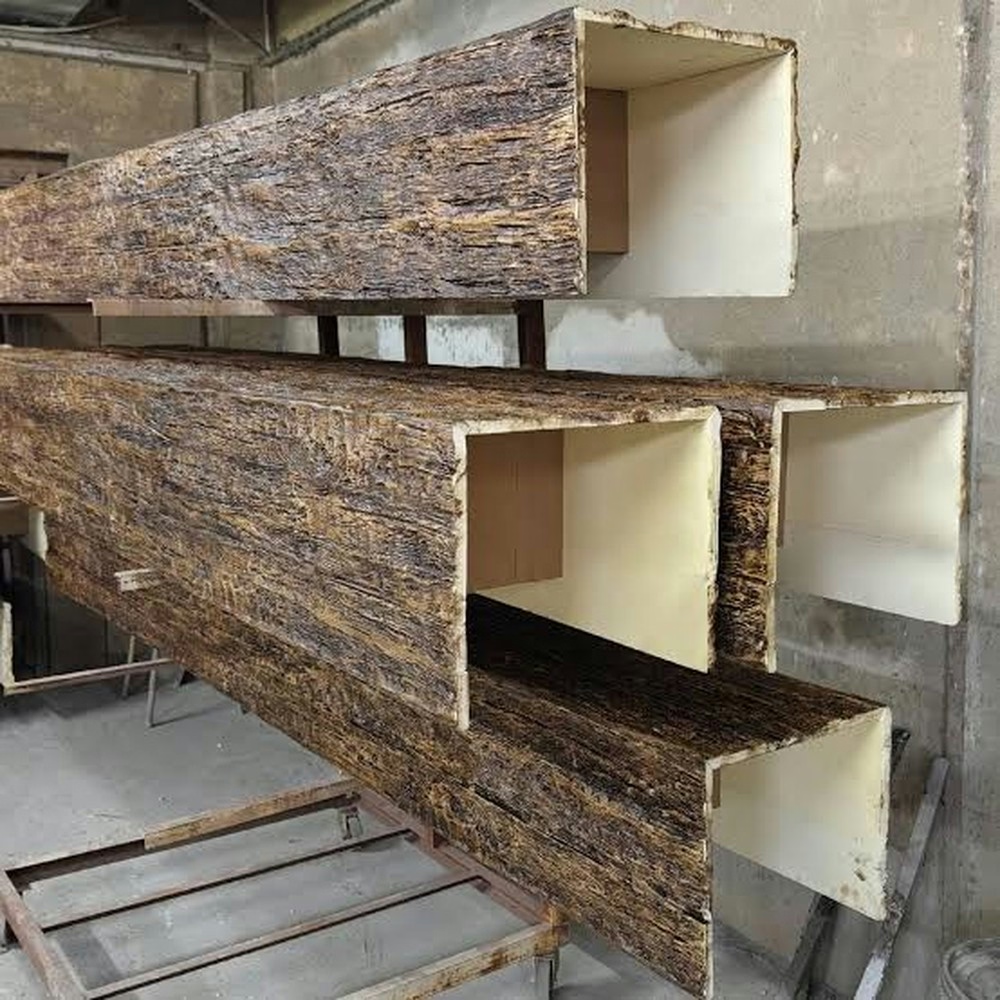
The installation process is similar to other faux timber beams, with attention to preserving the factory finish. Clean gloves should be worn during handling to avoid fingerprints on the finished surface. The beams should be protected from impact during transport and mounting.
The mounting hardware should be hidden inside the beam or against the ceiling. Visible hardware disrupts the illusion of solid timber. Standard L-brackets or cleats work well for most installations, with the hardware finished in a dark color that disappears in the shadow of the beam.
Joint treatment is important for installations with multiple beams. The joints between beams should be tight and well-finished to maintain the illusion of continuous timber. Pre-mitered or pre-spliced beams from the factory produce the best results for visible joints.
Maintenance of faded chestnut finishes
Faded chestnut finishes are durable and require minimal maintenance. Dusting with a soft cloth is usually sufficient for routine cleaning. Spills should be wiped up promptly to avoid staining. Direct sunlight should be minimized where possible to prevent UV degradation over years.
For beams showing wear or damage after many years, factory refinishing is sometimes possible. The beam is removed, shipped back to the factory, and refinished using the original or an updated formulation. This service is not always available but can extend the life of a high-quality beam.
Touch-up kits supplied by the factory should be used for any minor damage during installation or over the life of the beam. The touch-up materials should include the multiple colors needed to match the weathered chestnut finish, including the base brown, the glaze wash, and any hand-applied highlights.
For designers and homeowners who want the warm, character-rich appearance of aged chestnut without the cost or scarcity of salvaged material, faded weathered chestnut PU faux beams offer a practical and visually convincing alternative. The factory finish captures the essence of aged chestnut, and the polyurethane substrate provides the practical benefits that make modern beam installation feasible. For retro and rustic interiors, faded weathered chestnut provides the warmth and history that these styles require.
Technical References
ASTM standards cited in every specification
Test Data
Lab results from internal testing program
Updated 2026
Reviewed against current product specs


