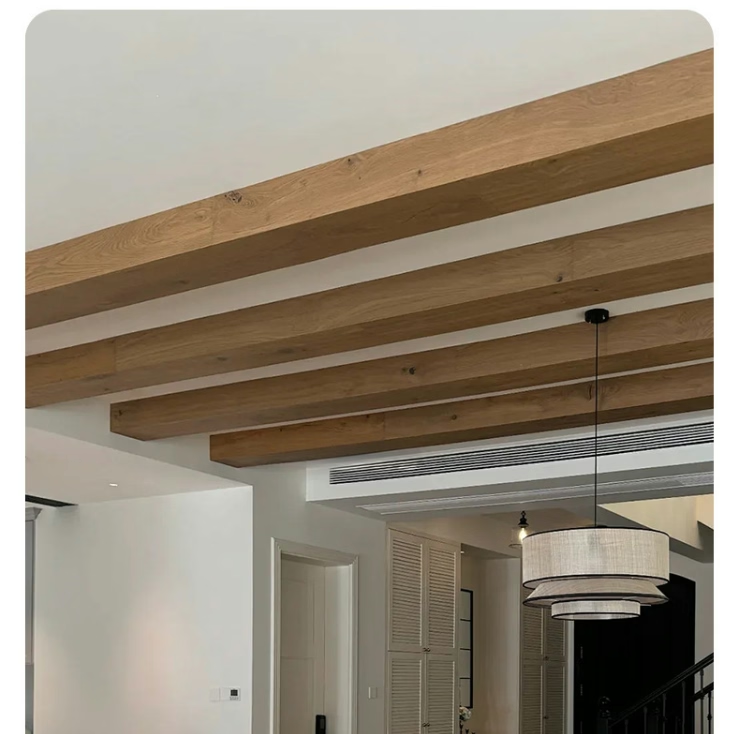
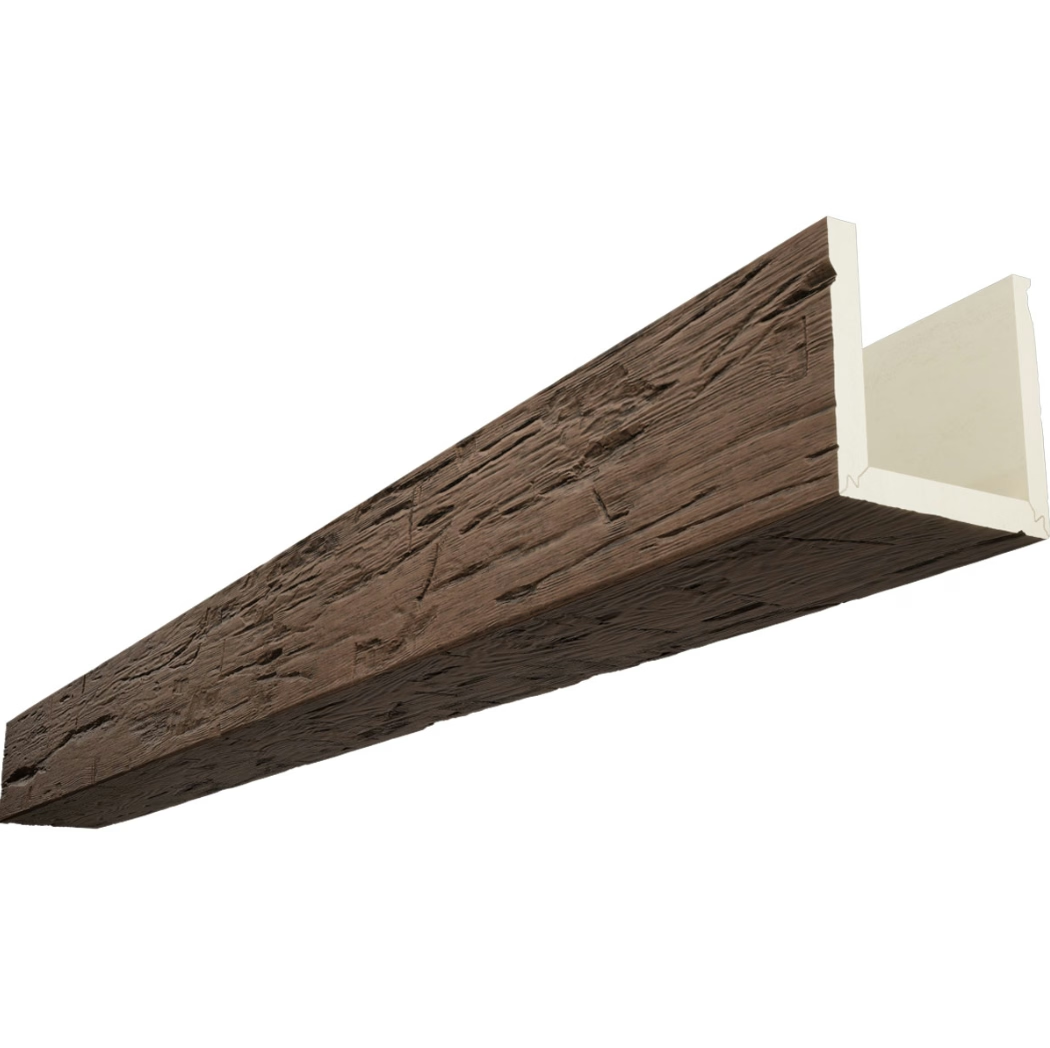
In-stock polyurethane faux beams offer a significant advantage over made-to-order products when project timelines are tight. The beams are already manufactured, finished, and packaged, waiting for shipment rather than waiting for production scheduling. For buyers managing active projects, this inventory availability can mean the difference between meeting a project deadline and missing it.
How In-Stock Inventory Differs From Made-to-Order
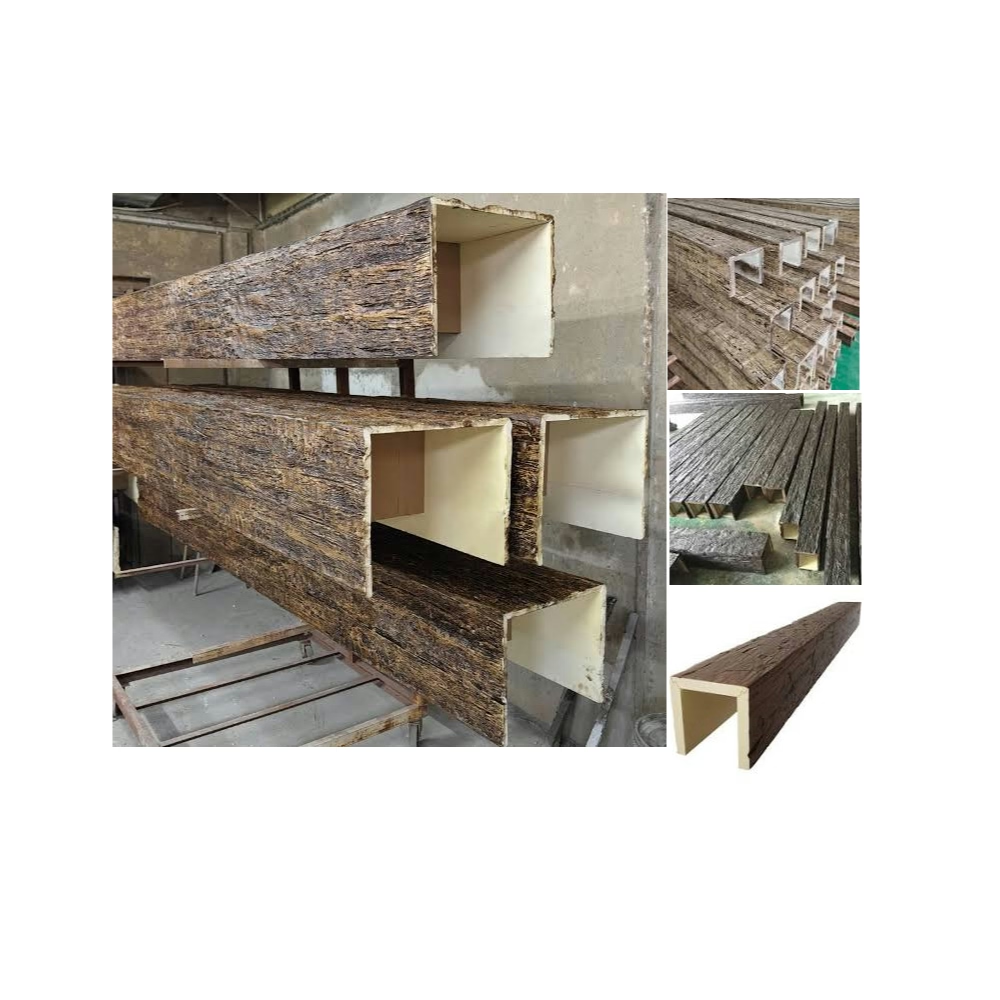
In-stock beams have already completed their production cycle. The resin has cured, the surface finish has been applied, and the beams have passed quality inspection. They're packaged and stored in warehouse inventory, ready to ship as soon as an order is placed and shipping is arranged.
Made-to-order beams, in contrast, enter production only after the order is placed. Production scheduling, raw material preparation, mold setup, manufacturing time, finishing time, and quality inspection all need to happen before the beams are ready to ship. This production cycle typically takes weeks for standard products and longer for custom specifications.
The time savings from in-stock inventory can be substantial. A made-to-order beam that requires four to six weeks of production time becomes available in days when the same beam is already in inventory. For projects with compressed timelines, this difference determines whether the beams arrive when needed or arrive after the project has moved on.
Common In-Stock Beam Specifications
Suppliers typically maintain in-stock inventory for their most popular specifications. Standard cross-section dimensions like 6 inch by 4 inch, 8 inch by 6 inch, and 10 inch by 8 inch are common in-stock sizes. Standard lengths from 8 to 20 feet are typically available, with longer or shorter lengths potentially requiring special order.
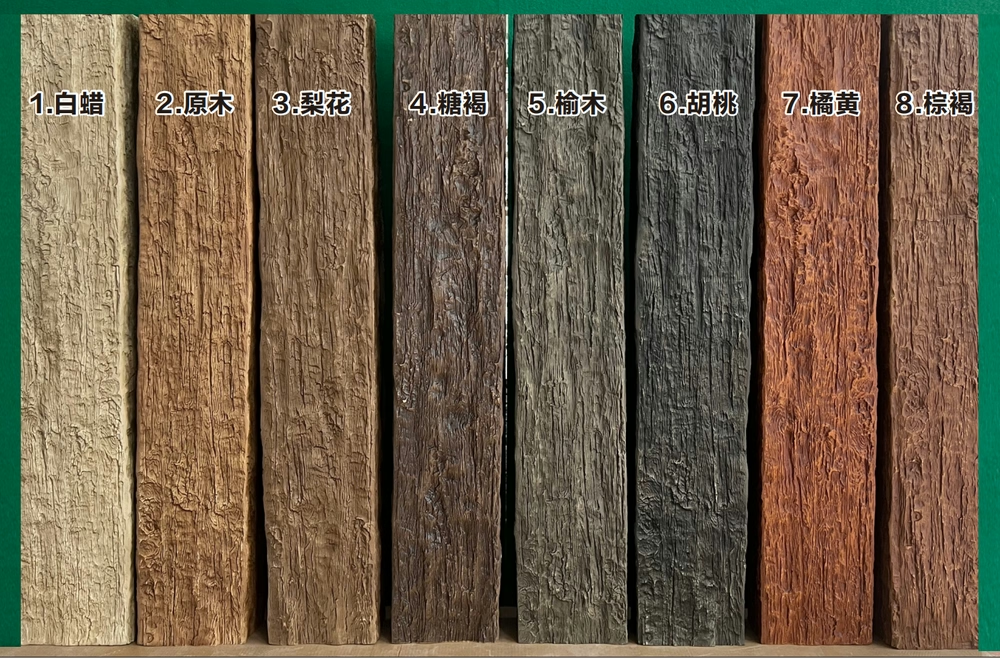
Standard finishes represent the most popular color and texture combinations. Warm walnut, aged oak, driftwood gray, and classic white are typical in-stock finishes. Specialty finishes like custom color matches or unique weathering treatments are usually made-to-order rather than held in inventory.
The specific in-stock specifications vary by supplier. Buyers should confirm current inventory availability before planning a project around specific dimensions or finishes. Suppliers update their in-stock offerings based on production schedules, market demand, and warehouse capacity.
Global Shipping Options for In-Stock Beams
In-stock beams can ship via any standard shipping method because they're immediately available. Ocean freight remains the most economical option for large orders, with typical transit times of three to six weeks depending on origin and destination. Air freight provides faster delivery for time-sensitive orders, with typical transit times of one to two weeks including processing.
Express courier services are available for small orders and samples, though the dimensional weight of full-size beams often makes express courier impractical for anything beyond the smallest shipments. The dimensional weight of a typical 12-foot beam exceeds practical express courier limits.
For projects in North America, ground shipping from regional warehouses can provide fast delivery at reasonable cost. Some suppliers maintain warehouse facilities in multiple regions, allowing them to ship from the location closest to the project. This regional inventory approach reduces transit time and shipping cost simultaneously.
International Logistics for Beam Shipments
International beam shipments require careful coordination of multiple logistics steps. Export documentation, customs clearance at origin, international transit, customs clearance at destination, and final delivery all need to be sequenced properly. Experienced freight forwarders manage these steps routinely and can provide accurate transit time estimates.
For ocean freight shipments, container selection affects both cost and handling. Full container loads are most economical for large orders. Less than container load options work for smaller orders but require consolidation with other shipments, which adds time and handling.
For air freight shipments, dimensional weight calculations affect pricing significantly. Polyurethane beams are light relative to their volume, so the dimensional weight often exceeds the actual weight. Understanding how dimensional weight is calculated helps buyers evaluate air freight pricing accurately.
Lead Time Planning With In-Stock Inventory
Project planning with in-stock inventory is significantly simpler than planning with made-to-order products. The production lead time is effectively zero, which means the total lead time is just the shipping time. This simplification allows for more confident project scheduling and reduces the buffer time that needs to be built into project timelines.
For buyers with predictable project pipelines, in-stock inventory supports just-in-time ordering strategies. Beams can be ordered closer to the actual installation date rather than being ordered months in advance to accommodate production lead times. This approach reduces inventory carrying costs and improves cash flow for both buyers and their clients.
For unexpected project additions or rush requirements, in-stock inventory provides a safety net. When a project suddenly needs additional beams or a similar project emerges with a tight timeline, in-stock availability allows immediate response rather than requiring production scheduling that may not fit the timeline.
Quality Considerations for In-Stock Beams
In-stock beams are typically the same quality as made-to-order beams because they're produced using the same manufacturing processes. The beams may have been in inventory for varying lengths of time, but polyurethane faux beams have essentially unlimited shelf life when stored properly.
Proper storage conditions protect in-stock beams from damage and contamination. Warehouses should maintain reasonable temperature and humidity levels to prevent any material degradation. Packaging should protect the beams from dust, moisture, and physical damage during storage.
Buyers receiving in-stock beams should inspect them upon arrival to confirm they meet specifications and haven't been damaged during storage or shipping. Quality inspection at receipt protects the buyer from accepting damaged or non-conforming material and establishes a clear timeline for any claims.
Pricing Considerations for In-Stock vs Made-to-Order
In-stock beams are sometimes priced slightly differently than made-to-order beams. The pricing difference reflects the carrying costs of maintaining inventory, the faster availability, and the reduced production scheduling burden. Some suppliers offer pricing incentives for in-stock purchases to encourage quick inventory turnover.
For large orders, made-to-order production may produce better pricing despite the longer lead time. The production efficiency of a dedicated manufacturing run for a specific order can produce economies of scale that aren't available when drawing from existing inventory. Buyers with large orders should compare both options before deciding.
For small orders and time-sensitive requirements, in-stock pricing premium is typically justified by the time savings and flexibility. The ability to receive beams in days rather than weeks has real value that often exceeds the modest pricing premium for in-stock products.
Coordinating In-Stock Orders With Project Schedules
Successful in-stock ordering requires coordination between the buyer's project schedule and the supplier's inventory availability. Confirming inventory availability before finalizing project commitments prevents the disappointment of planning around a specification that becomes unavailable.
For ongoing project pipelines, maintaining awareness of supplier inventory levels helps with project planning. Some suppliers provide inventory lists or notifications when popular specifications are restocked. This information allows buyers to time their orders for maximum availability.
For projects with flexible specifications, in-stock alternatives may be available even when the first-choice specification is out of stock. Discussing alternative specifications with the supplier before finalizing project plans preserves flexibility and helps avoid delays when first-choice inventory isn't available.
Building Inventory Relationships
Regular buyers who consistently order in-stock beams often develop strong relationships with suppliers' inventory and shipping teams. These relationships provide visibility into inventory levels, advance notice of incoming stock, and priority access to popular specifications when they become available.
For large-scale buyers, some suppliers offer dedicated inventory programs where specific beam specifications are maintained in stock based on the buyer's projected demand. These programs combine the benefits of in-stock availability with the volume efficiency of planned production, often producing the best overall outcome for both parties.
For the smoothest project execution, integrating in-stock ordering into a broader supplier relationship that includes made-to-order capacity, custom finishing services, and technical support provides flexibility to handle whatever project requirements emerge. Suppliers who can serve both in-stock and made-to-order needs from a single relationship simplify logistics and communication for the buyer.
Technical References
ASTM standards cited in every specification
Test Data
Lab results from internal testing program
Updated 2026
Reviewed against current product specs