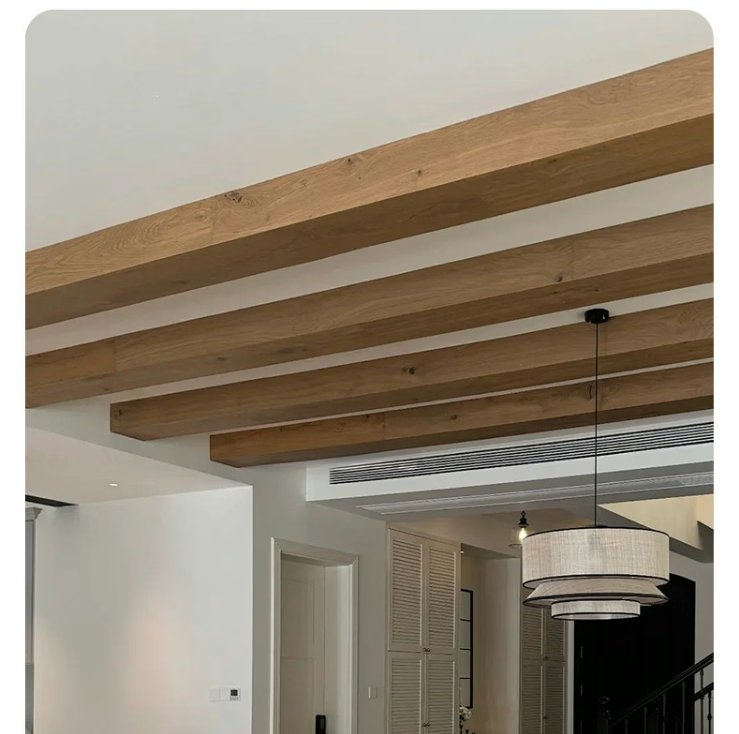
The most common complaint we hear from contractors and homeowners is the same: the order finally arrives, but the renovation has already been pushed back a month waiting on it. Long lead times ruin schedules, push job walk-throughs, and frustrate homeowners who have already torn out their old ceiling. The fix is straightforward: keep real stock in the United States and ship it out the door the day an order clears. That is what our US-based warehouse network exists to do.
Why Local Stock Beats Trans-Pacific Freight
A typical container from an Asian factory takes between four and six weeks to reach a US port under normal conditions. Once it arrives, the contents still need to clear customs, get unloaded, get transported to a warehouse, and then get picked, packed, and labeled before the customer's order even gets touched. Add port congestion, drayage surcharges, or the occasional customs hold and that timeline stretches to two months. By contrast, a beam sitting in a Texas warehouse on a Tuesday morning can be on a truck to California by Thursday.
For renovation timelines, that difference is the difference between a project that flows and a project that bleeds money on labor crews standing around.
What Faux Beams Are Stocked Domestically
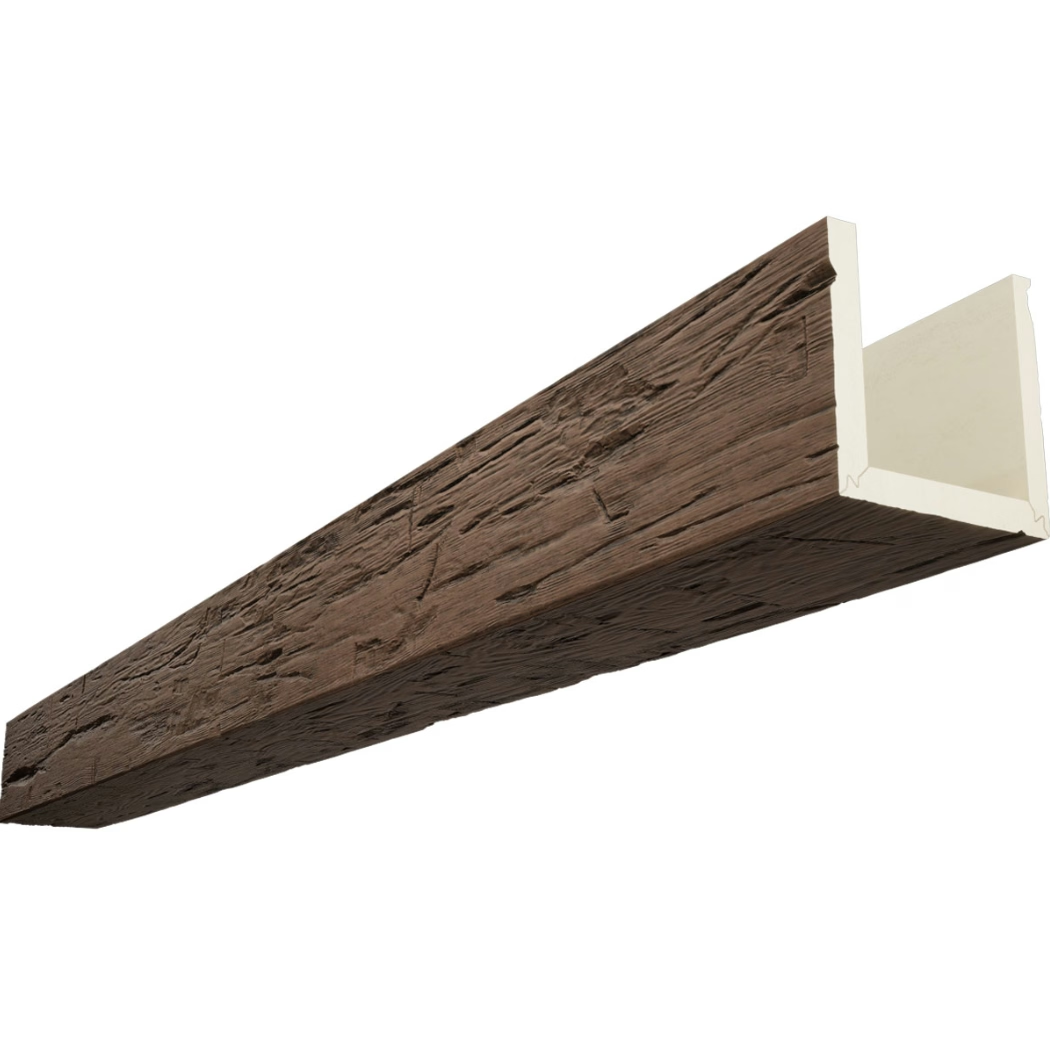
We maintain running inventory for our most popular profiles: standard 3-sided U-beams in widths from 4 inches up to 12 inches, lengths from 8 to 20 feet, and the six best-selling wood-grain finishes. Arched beams in the two most-requested radii are kept on hand as well. Custom colors, exotic profiles, and very large bulk orders still come direct from the factory, but the bulk of B2B and B2C orders move through our domestic network.
Stock Locations and Coast-to-Coast Reach
Our warehouses sit in three regions: the West Coast (Los Angeles), the central corridor (Dallas-Fort Worth), and the East Coast (Allentown, Pennsylvania). With these three nodes, we reach roughly 92% of US ZIP codes via standard ground freight in five business days or less. East of the Mississippi gets overnight or 2-day service from the Pennsylvania warehouse; the southern half of the country pulls from Texas; the western states pull from California.
How Orders Move Through the Network
The internal flow is deliberately simple. Once a customer places an order on the website, by phone, or through a distributor portal, the system routes it to the warehouse with the closest inventory. Picker pulls the stock, the order gets palletized or boxed depending on size, and the carrier gets a notification the same afternoon.
Cut-Off Times and Same-Day Dispatch
Most regional warehouses offer a 2:00 PM local cut-off for next-day carrier pickup. Orders placed before that window go out the same day. Orders placed after go out the next morning. For large contractors running tight schedules, this predictability matters more than absolute speed — they need to know when a truck arrives, not just that it will eventually arrive.
Palletized vs. Boxed Shipping
Most residential orders up to six 12-foot beams ship in reinforced cartons on a standard LTL rate. Bulk distributor orders on pallets get stretch-wrapped and corner-protected, and we flag the BOL with handling notes so the receiving warehouse doesn't drop a 14-foot beam off the lift. For orders over 16 feet, we coordinate with carriers that have extended-length trailers in service.
Delivery Confirmation and POD
Every shipment leaves with a tracking number tied to the order. Larger freight orders include a delivery appointment system so the contractor doesn't have to sit around waiting. We email BOLs ahead of delivery and the driver calls 30 minutes before arrival. If anything goes sideways — wrong product, freight damage, missed delivery — our customer service team gets on it within an hour.

What This Means for Contractors
A contractor running three or four remodels a month cannot afford a six-week wait on materials. Crews get paid by the day, customers want their homes back, and supply-chain surprises eat into margin. Domestic warehousing changes the math: order Tuesday, beams arrive Thursday, ceiling goes up Friday. The contractor can bid more jobs because their cycle time is shorter.
Reducing Stockpiling on the Job Site
One of the hidden costs of slow shipping is that contractors order extra material "just in case" and stockpile it on site for weeks. With local shipping, the contractor orders what the job needs and re-orders when the next phase starts. Less clutter on the job, less risk of damage to materials sitting outside, less capital tied up in inventory.
Better Cash Flow for Distributors
Distributors carrying our products don't need to put up capital for four months of inventory at a time. They order weekly, get product in days, and turn that inventory into revenue before the invoice comes due. That kind of velocity is what keeps a distribution business healthy.
What This Means for Homeowners
Homeowners doing their own installation are often the most time-pressured customers. They've taken a weekend off work, they have family coming for the holidays, or they're listing the house and need the photos to look right before the photographer arrives. Local shipping gives them the same reliability a contractor would expect, but with the simplicity of a residential delivery service.
Residential-Friendly Delivery
Most homeowner orders ship via UPS or FedEx Ground, with appointment windows for the larger items. The driver will hand the boxes off to the homeowner at the front door or garage. For unusually long beams, the homeowner can pick up at the local terminal if that is more convenient, and we will help arrange that.
Damage Rates Drop Dramatically
Long trans-Pacific shipments rack up damage — containers get tossed around on the ship, dropped at the port, stacked in the yard, and bounced on the truck. By the time they reach the customer, maybe 4% of beams have a corner ding or a cracked edge. Shipping from a US warehouse cuts that number to under 1%. The beam arrives ready to install, not ready to repair.

Pricing and Freight Terms
Domestic warehousing does add cost on the front end — we maintain three warehouses, we staff pickers and packers, we pay rent, utilities, and insurance on hundreds of thousands of square feet. But the freight savings on a 40-foot container offset much of that, and the customer pays less total landed cost than they would on a direct-import order.
Free Freight Thresholds
We offer free freight on residential orders above $1,500 to most US ZIP codes. Contractor accounts above $5,000 also ship free to most service areas. Below those thresholds, freight is calculated at checkout based on weight and destination.
Freight Class and Density
Faux beams are light for their size, which means they ship at a favorable freight class. A typical 12-foot U-beam in our most common 6-inch size weighs under 20 pounds, so a full pallet might only be 400 pounds — well below the threshold where LTL carriers add heavy-item surcharges.
When Direct Factory Shipping Still Wins
Local warehouses are not the right answer for every order. A 500-beam bulk order for a developer building out a subdivision is going to come direct from the factory, both because the volume overwhelms warehouse capacity and because the freight economics work better at that scale. Custom profiles, special finishes, or unusual sizes also come direct. The warehouse exists to serve the small and mid-size order, which is the bulk of the business.
Customer Communication Throughout the Process
Speed is only useful if the customer knows what's happening. Every order gets a confirmation email with the estimated ship date, then a shipping notification with the tracking number, and then delivery confirmation. If there is a delay — out of stock on a color, weather delays at the carrier — the customer hears about it before they have to ask. That kind of proactive communication is what makes fast shipping actually feel fast.
Account Managers for Repeat Customers
Contractors and distributors with regular volume get a dedicated account manager. The account manager knows their typical order patterns, calls ahead when stock is running low on a popular profile, and coordinates any rush orders directly with the warehouse. That personal relationship turns a transactional relationship into a partnership.
Common Questions About Local Shipping
Q: Do you ship to Canada? Yes, we ship to most Canadian provinces via ground carrier. Transit times are typically 5–10 business days, and the customer handles any duties or brokerage fees.
Q: Can I pick up my order at the warehouse? Local pickup is available at all three warehouse locations. Schedule the pickup window with our team and the order will be ready when you arrive.
Q: What if I need an unusual size or finish that isn't stocked? We will quote the factory-direct timeline, which usually runs 4–6 weeks for custom orders. Many customers choose to wait, but if the timeline doesn't work, we can suggest an in-stock alternative.
Q: How long until my order ships after I place it? In-stock orders ship same day if placed before the warehouse cut-off. After cut-off, they ship the next business morning.
A Faster Path from Click to Ceiling
Renovation schedules are tight. Homeowners want their rooms back. Contractors want their crews productive. Distributors want inventory that turns. US-based warehousing is the simplest answer to all three of those problems — keep real product in the country, ship it out the door the day the order clears, and let the project move forward at the speed of the customer, not the speed of the shipping container.
Technical References
ASTM standards cited in every specification
Test Data
Lab results from internal testing program
Updated 2026
Reviewed against current product specs