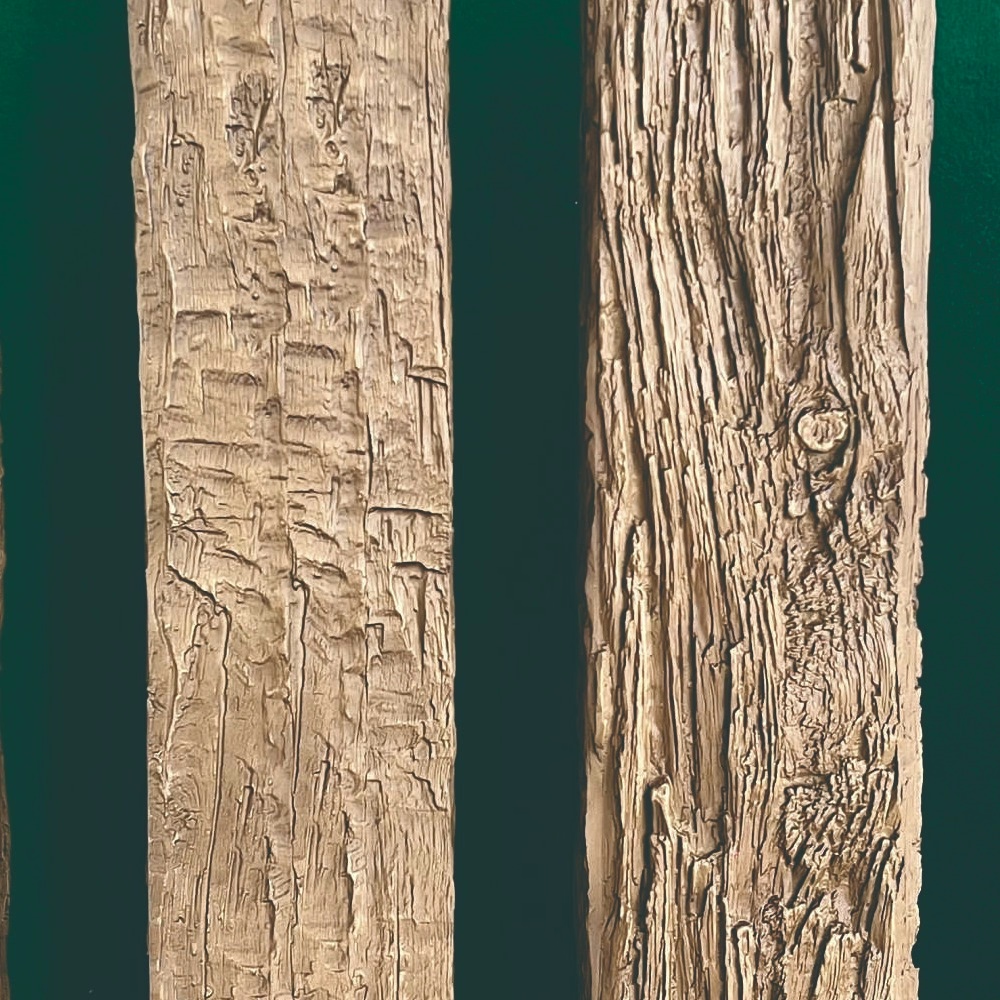
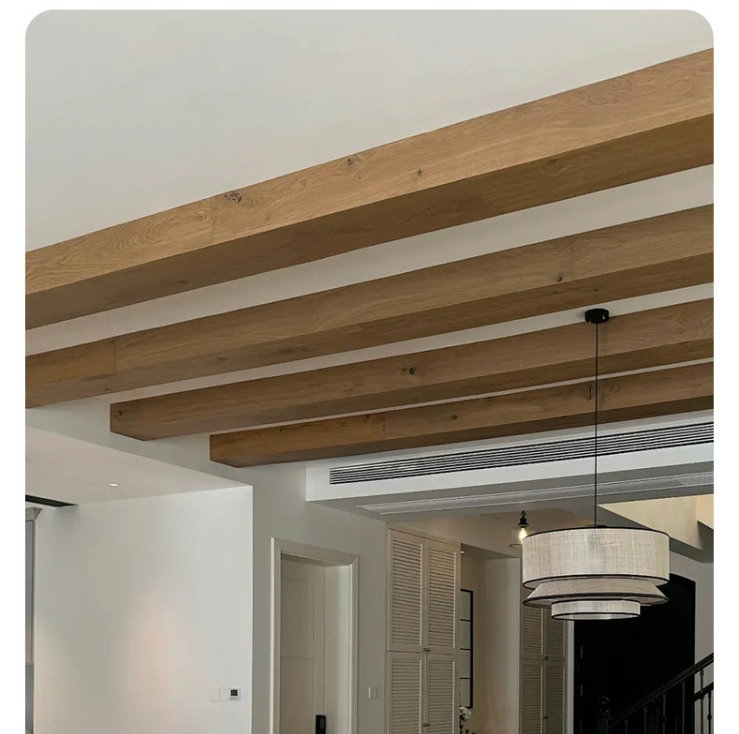
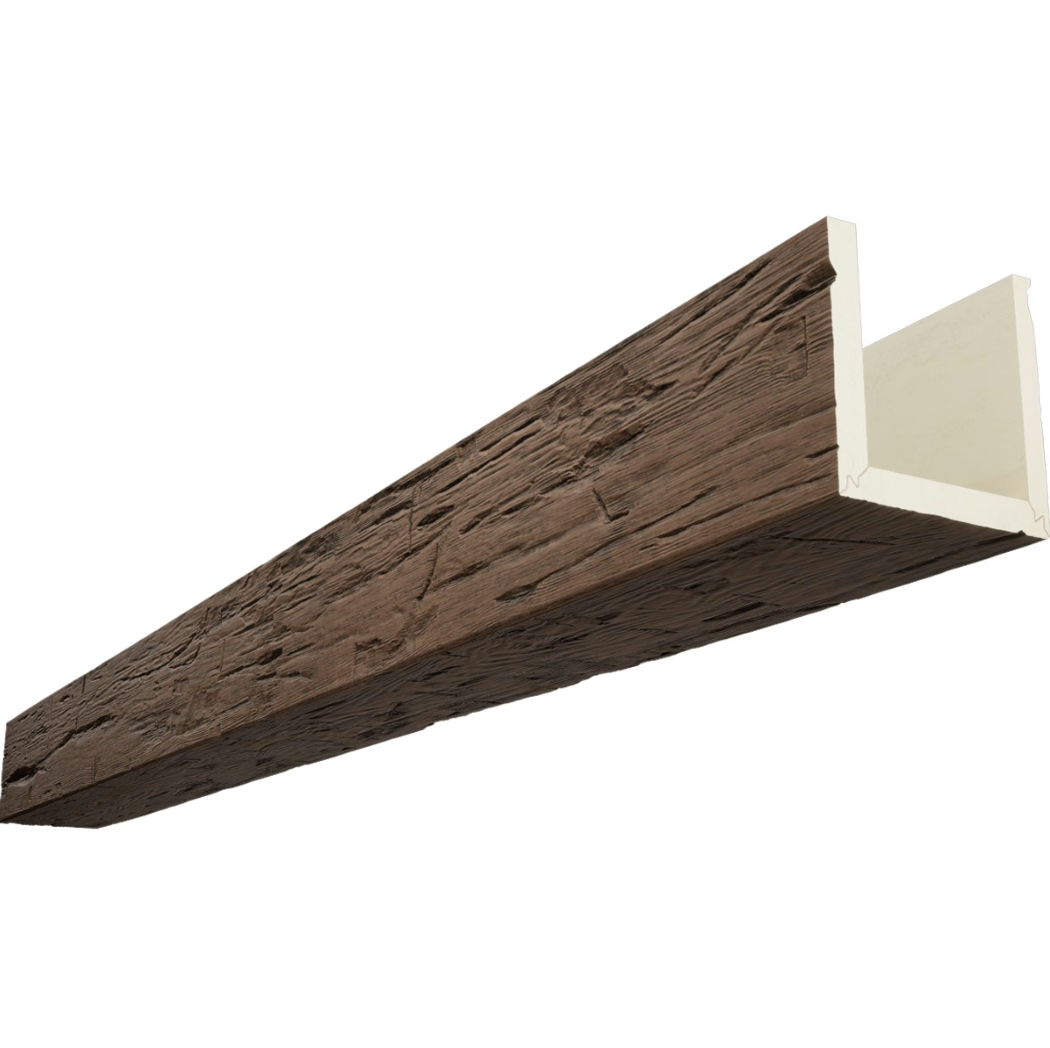
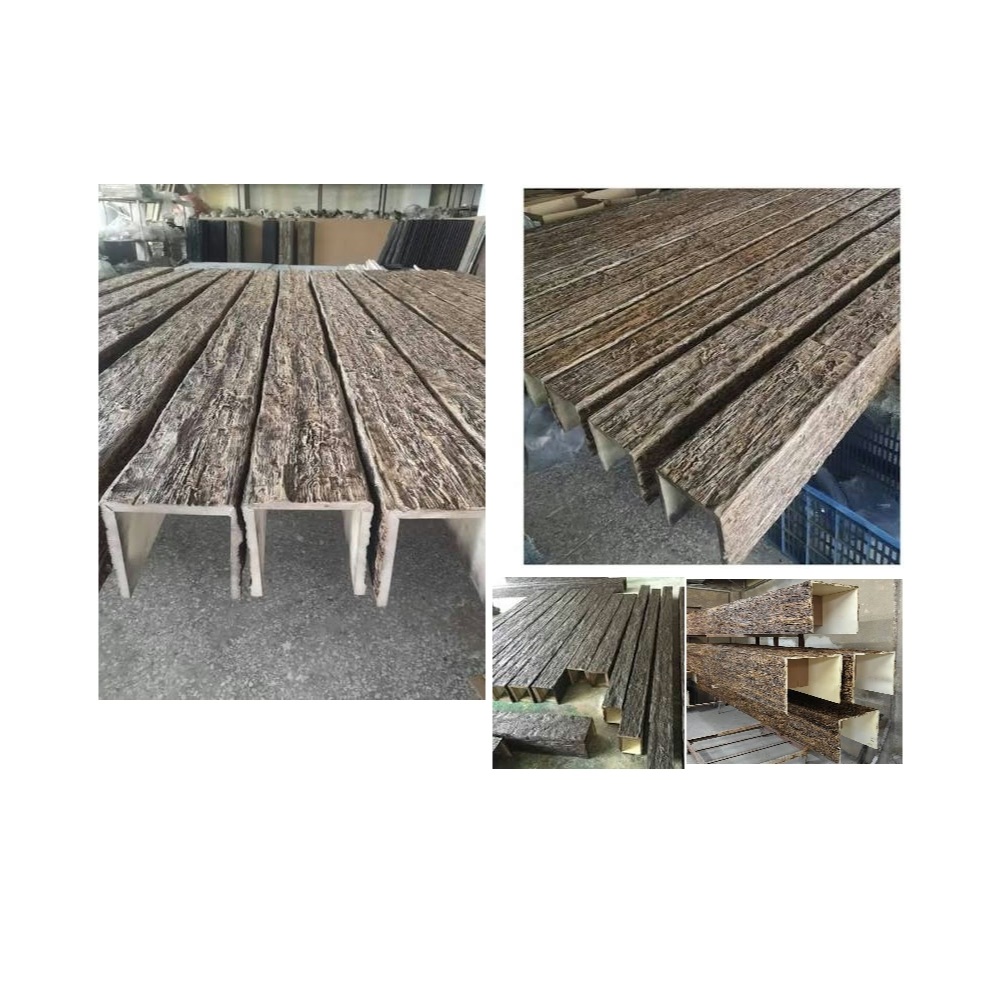
The phrase "custom order" usually triggers an eye-roll from anyone who has ordered custom building materials before. Three weeks for the quote, six weeks for the production, another month in transit, and a vague promise of "soon" for delivery. The reality is that custom faux timber beams can move at speeds that surprise most buyers, but only if the supplier has built their workflow around speed rather than around the assumption that custom means slow. We have. Our custom faux timber beam orders typically ship within three to four weeks of order confirmation — not the eight to twelve weeks many buyers expect.
Where Time Goes in a Custom Order
A custom beam order has more moving parts than a stock order. The finish has to be matched, the dimensions have to be confirmed, the production slot has to be scheduled, the freight has to be arranged, and the documentation has to be generated. Each of those steps can be a bottleneck if it is not actively managed. We manage each one in parallel rather than in sequence, which is where the time savings come from.
The Hidden Time Sink: Sequential Handoffs
The traditional approach to a custom order is to finish one step before starting the next. The quote has to be approved before production is scheduled. Production has to finish before packing begins. Packing has to finish before documentation is generated. Each step waits for the previous step. The total time is the sum of all the steps.
We do not work that way. We start packing materials the day the order is confirmed, we generate draft documentation while production is running, and we book freight slots before the beams are finished. The total time is closer to the longest single step than to the sum of all steps.
Parallel Production Planning
When a custom order comes in, the production team starts working on it within 24 hours. The molds get prepped, the raw materials get pulled from inventory, and the production slot gets booked in the schedule. If the order is small enough, it gets inserted into the next open production window rather than waiting for a dedicated slot.
Material Sourcing in Advance
For unusual finishes or specialty sizes, raw materials might need to come in. We identify those materials during the quote phase and order them before the customer has even approved the quote. By the time the customer confirms, the materials are already in the warehouse waiting.
Multi-Stream Production
A long custom beam can take days to mold and finish. Rather than treating that as a single uninterrupted block, we split the work across multiple production streams. One stream handles the structural molding. Another stream preps the finish. A third stream builds the packaging. All three streams run in parallel, and the beams converge in finishing at the end of the timeline.
Dedicated Freight Slots
The biggest variable in shipping time is freight availability. A booking on a standard vessel can take three to seven days to confirm. A dedicated slot with our core carriers is reserved the moment production hits a milestone. We pay a small premium to hold those slots, and the customer gets a shipping date within days of placing the order rather than weeks.
Booking Freight Before Production Finishes
For customers who need their custom beams on a specific date, we can book the freight slot before production even completes. That locks in the vessel space, gets the container assignment, and arranges the inland trucking. By the time the beams roll off the production line, the freight plan is already in place and they go straight into the container.
Real-Time Production Visibility
Customers can log into a production tracking portal and see where their order is. The portal shows each stage of production: mold prep, raw material pull, molding, finishing, curing, packing, and container loading. Each stage updates as the beams pass through it. No chasing, no phone calls, no waiting for someone to email back.
The Documentation Sprint
Custom orders often require destination-specific documentation: country-of-origin certificates, fire-rating test reports, VOC compliance sheets, MSDS, phytosanitary certificates where required, and customs broker instructions. Generating all of that paperwork is usually a bottleneck at the end of the order. We move it to the front.
Documentation Generated in Parallel
Our documentation team starts the moment the order is confirmed. The country-of-origin certificate gets drafted. The MSDS gets pulled from current files. The fire-rating test report gets attached. Customs broker instructions are drafted based on the destination and the buyer's preferred broker. By the time the beams finish production, the documentation is essentially complete — it just needs the final shipping details.
Pre-Cleared Documentation
For destinations with predictable customs procedures, we can pre-clear the documentation before the vessel even arrives at port. The customer's broker receives the document packet by email two weeks before the container is due. That lets the broker file the entry in advance and clear the container as soon as it hits the dock.
White-Glove Export Coordination
Custom orders tend to be high-value and time-sensitive, which is why they get white-glove export coordination rather than routine handling. A dedicated export coordinator owns the order from quote to delivery, and that coordinator is the single point of contact for the customer.
What the Coordinator Handles
The coordinator handles the quote, the production schedule, the documentation, the freight booking, the carrier relationships, the customs broker coordination, and any in-transit issues that come up. The customer does not have to chase different departments for different pieces of the order — the coordinator does that internally.
Proactive Communication Throughout
The coordinator sends status updates at every milestone. If the order is running ahead, the customer hears about it. If there is a delay, the customer hears about it with an explanation and a revised plan. There are no silent gaps in the communication, which is the most common complaint customers have about custom orders.
When Speed Is the Difference
Some custom orders are not just preferred to be fast — they actually need to be fast. A contractor who lost a bid to a competitor and is now scrambling to win the next one. A distributor whose client is threatening to cancel. A homeowner who scheduled a renovation around their in-laws' visit and now needs the beams by Friday. For those cases, we offer an expedited custom production path with a guaranteed ship date.
Expedited Production
Expedited production pushes a custom order to the front of the queue. The order skips the normal production calendar and runs on dedicated lines. The cost premium for expedited production is typically 25–40% above standard custom pricing, depending on the order size and complexity. The time savings is usually three to four weeks.
Expedited Freight
For orders that need to be on a vessel by a specific date, we offer expedited freight booking at a premium. The booking goes to the next available vessel regardless of carrier preference, and the container gets priority handling at the port. That shaves another week or two off the timeline.
Combined Expedited Production and Freight
For orders that need to arrive by a specific date, we combine both expedited services. The order goes into production immediately, runs on dedicated lines, ships on the next available vessel, and clears customs on arrival. The total timeline from order confirmation to delivery can be as short as three weeks for a typical order.
Real-World Timeline Examples
A US East Coast distributor orders 80 custom-color faux timber beams in a specific driftwood finish. Standard custom timeline: 28 days from order to delivery. Expedited: 19 days.
A Middle East contractor needs 200 beams in a custom profile for a hotel renovation. Standard: 35 days. Expedited with combined freight: 24 days.
A UK distributor orders 150 beams with a custom-matched stain. Standard: 32 days including ocean transit. Expedited production with priority freight: 22 days.
The Limits of Fast Custom
Some constraints cannot be engineered away. Ocean transit across the Pacific takes 18–22 days no matter how the freight is booked. Customs clearance in some destinations takes two to three weeks regardless of how early the documentation is filed. And some custom profiles genuinely require two weeks of production time because the mold has to be hand-finished.
What we can do is eliminate the time that goes to waiting around. We can keep the production queue short. We can hold freight slots. We can run documentation in parallel. We can communicate proactively. The hard constraints of physics and bureaucracy remain, but the soft constraints of internal process are largely gone.
Common Questions About Custom Order Speed
Q: What is the fastest you can produce a custom beam? For simple customizations (color, finish, length), the fastest production is about 10 business days. For complex customizations (new profile, new mold), it is 21–28 days.
Q: Can you guarantee a specific delivery date? For expedited orders, yes. For standard orders, we provide an estimated date and update it as the order progresses. If the order is at risk of missing the date, we communicate proactively.
Q: What is the cost premium for expedited custom orders? Expedited production runs 25–40% above standard pricing. Expedited freight runs 15–25% above standard freight. We provide a quote that separates the two so the customer can choose.
Q: Can I track my order during production? Yes. Every custom order gets a production tracking link with login credentials. The link shows each stage of production with timestamps.
Speed Is the New Custom
The old assumption was that custom meant slow. That assumption was never true — it was just convenient for suppliers who did not invest in their own processes. We have invested. Custom faux timber beams now ship at speeds that surprise first-time customers, and that speed is what keeps them coming back.
Technical References
ASTM standards cited in every specification
Test Data
Lab results from internal testing program
Updated 2026
Reviewed against current product specs