
The most common remodeling scenario we hear about is some version of this: a homeowner decided last month that the living room needed a refresh, they finally booked a contractor, the contractor is coming next week, and now the family room needs to look like the photos on the Pinterest board by the time the in-laws arrive for the holiday. The timeline is impossible. The budget is fixed. The design has to be good. Versatile faux beams solve exactly this problem because one product can do several things at once — add visual interest, hide ceiling flaws, define the space, and make a room feel finished.
What "Versatile" Means for Faux Beams
Versatile means the same product family can serve multiple design roles across the same project. A versatile faux beam system might include U-shaped beams that wrap existing structure, flat-back beams that mount directly to drywall, beam straps that add iron-look detail, end caps that finish the beam terminations, and matching trim that ties everything together. The homeowner picks the pieces that solve their design problems, and the pieces all look like they belong in the same room.
One Product Family, Many Applications
The same beam profile that runs across a vaulted ceiling can also serve as a mantel beam, a kitchen island accent, a doorway header, or a built-in bookcase detail. The finish matches across all applications, the dimensions can be coordinated, and the design language is consistent. Versatility means the homeowner can solve multiple design challenges with a coherent material palette.
Compatible With Multiple Installation Methods
Versatile beams work in multiple installation scenarios. They can mount to drywall ceilings with adhesive and minimal fasteners. They can wrap existing structural beams with a U-shaped profile. They can be incorporated into a coffered ceiling grid. They can frame a kitchen island. They can define a transition between two spaces. The same product, applied differently, solves different problems.
Common Remodeling Problems Versatile Beams Solve
In a typical interior remodel, there are several design problems the homeowner is trying to solve at once. Versatile beams address multiple problems simultaneously.
Flat Ceiling Syndrome
The flat ceiling is the most common complaint in tract homes, condos, and builder-grade construction. The ceiling is the largest unbroken surface in the room, and a flat white ceiling makes the room feel like a box. Adding beams — even just a few beams across the ceiling — immediately breaks up the surface, adds visual interest, and makes the ceiling feel like part of the design rather than a placeholder.
Outdated Popcorn or Textured Ceilings
Older homes often have popcorn ceilings or heavy texture that dates the room. Scraping the texture is messy and expensive. Covering it with a layer of drywall is also expensive. Versatile beams allow the homeowner to embrace the existing ceiling by adding beams that draw the eye away from the texture and toward a deliberate design element.
Awkward Room Proportions
Rooms that are too long, too narrow, too tall, or too short benefit from beams that break up the proportions. A long narrow room can be visually shortened by adding a beam perpendicular to the long axis. A tall room can be brought down to human scale by adding horizontal beams that interrupt the vertical sweep. Versatile beams let the designer manipulate the room proportions with the same product family.
Empty Walls
Rooms with too much empty wall space benefit from decorative beam elements. A horizontal beam at chair-rail height can serve as the foundation for a picture rail or wall display. A vertical beam at a corner can frame a wall. A beam header over a doorway can give the doorway presence. Versatile beams turn empty walls into opportunities for design.
Mismatched Existing Materials
Remodels often involve new materials meeting old materials. A new kitchen opens up to a living room that still has the original builder-grade trim. Versatile beams provide a transitional element that bridges the gap between old and new, makes the room feel intentional rather than patched, and gives the eye a place to rest.
The Remodeling Timeline Problem
Remodeling timelines compress for reasons that are often outside the homeowner's control. The contractor has another job starting. The materials are delayed. The holiday is approaching. The family needs the room back. Versatile faux beams address the timeline problem by being a fast material to source, quick to install, and forgiving of imperfect site conditions.
Fast Material Sourcing
Versatile beams are stocked in standard sizes, finishes, and profiles. A homeowner can order on Monday and have beams on site by Wednesday for a Saturday install. The material is not a custom order that takes weeks. It is a stocked product that ships fast.
Quick Installation
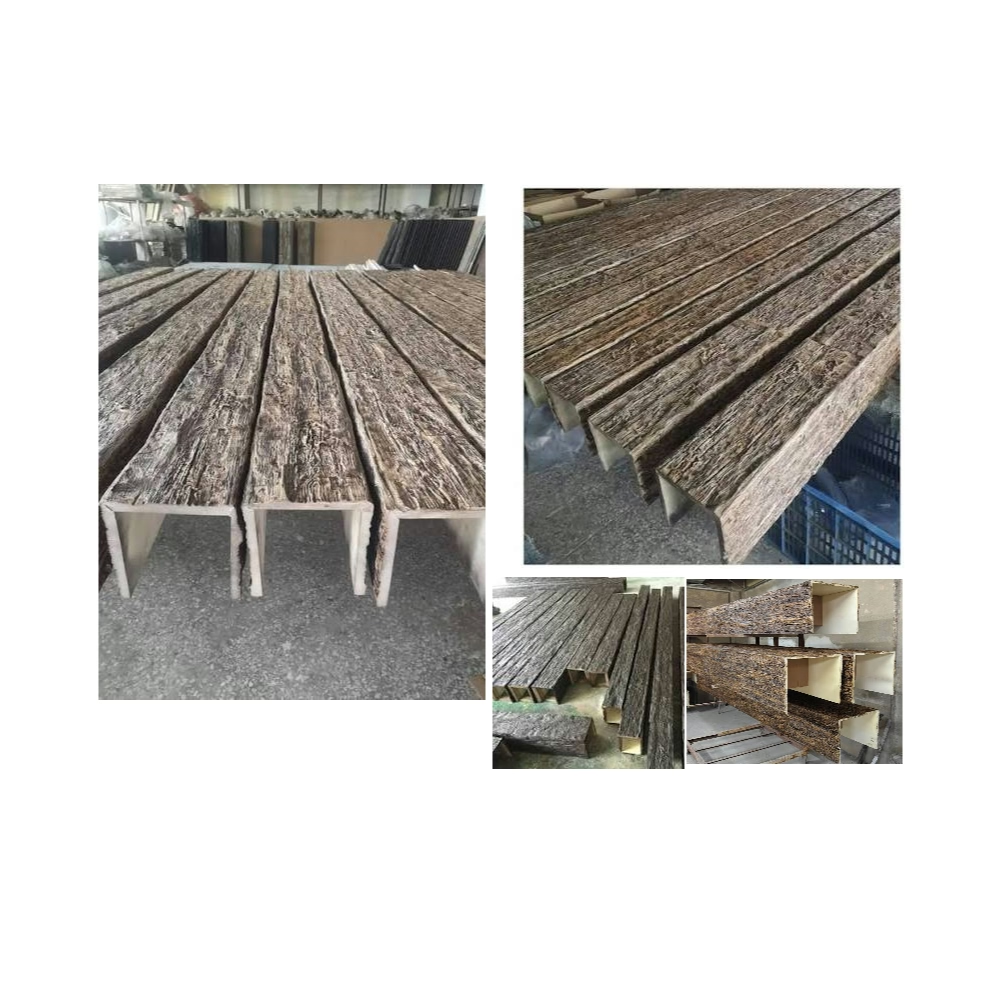
Versatile faux beams install in a fraction of the time of real timber. A typical living room ceiling with five beams can be installed in a day by a two-person crew. The beams are lightweight, the installation is straightforward, and the finishing is minimal. The contractor can move on to the next phase of the remodel without waiting on a long beam installation.
Forgiving of Imperfect Site Conditions
Unlike real timber, which can warp, crack, or refuse to lie flat against an imperfect ceiling, versatile faux beams are dimensionally stable. They do not move with humidity changes. They do not twist. They do not develop checks or splits. If the ceiling has a slight bow, the beam follows the ceiling without complaint. The finished installation looks clean even when the underlying structure is not perfect.
A Real-World Remodel Scenario
A homeowner in Phoenix decides to remodel their 1990s tract home living room. The ceiling is flat white drywall with a light texture. The walls are beige. The trim is builder-grade oak. The fireplace has a tile surround that has seen better days. The budget is $8,000. The timeline is three weeks before the family arrives for Thanksgiving.
The Design Decision
The homeowner wants the room to feel warmer, more designed, and less like a builder box. They are drawn to modern farmhouse style with wood beams, shiplap, and warm neutrals. They have seen photos of rooms with beams across the ceiling and want to recreate the look.
The Beam Solution
Versatile faux beams solve several problems at once:
- The ceiling gets visual interest from three beams running across the room
- The fireplace surround gets a faux beam mantel that ties into the ceiling beams
- The doorway between the living room and the kitchen gets a beam header that defines the transition
- The empty wall above the sofa gets a single horizontal beam that serves as a picture rail
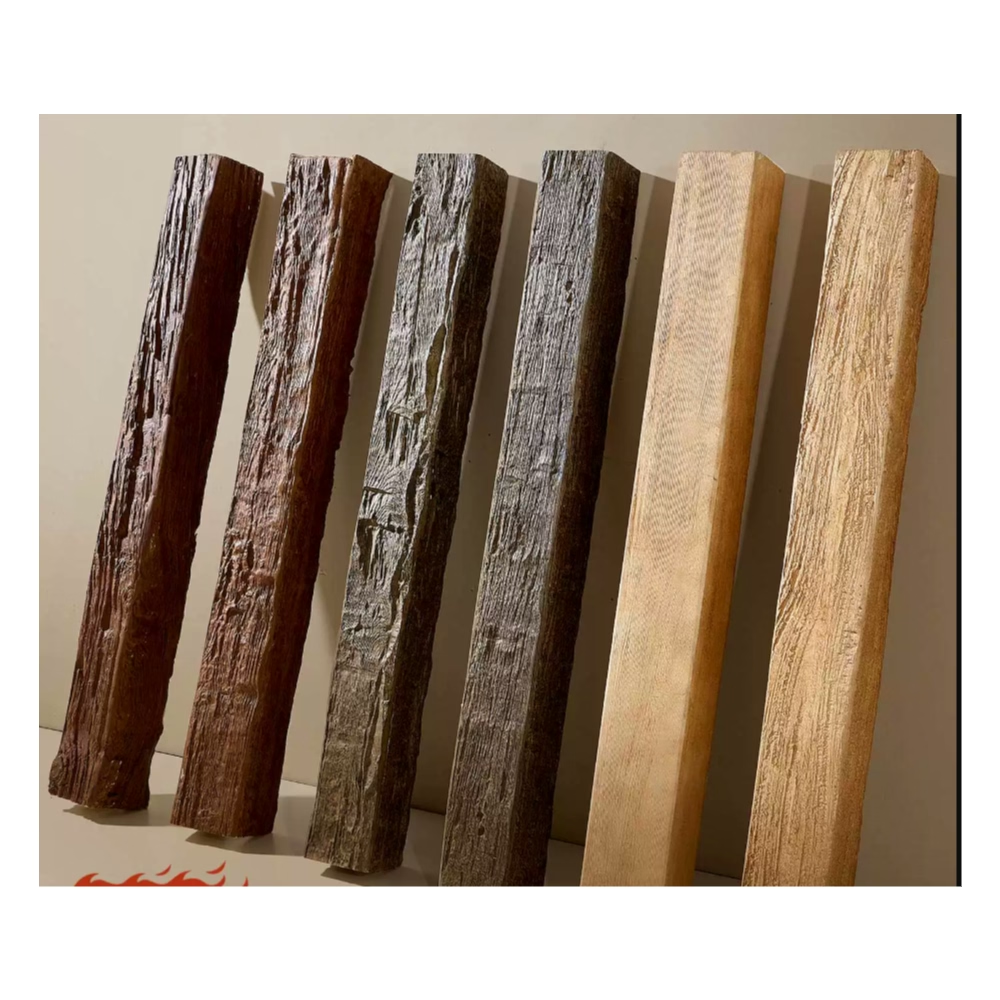
The same driftwood gray finish runs across all the beams. The same profile family creates a consistent design language. The room feels designed rather than assembled.
The Timeline
The beams are ordered on a Tuesday and arrive the following Monday. The contractor installs the ceiling beams on Wednesday, the fireplace mantel on Thursday, and the doorway header on Friday. The room is ready for paint touch-ups over the weekend. The family arrives the following week to a room that looks like a magazine spread.
Beam Profiles for Versatile Applications
Different beam profiles serve different design roles within the same project.
Standard U-Beams
Standard U-beams are the workhorses of the versatile system. They can wrap an existing structural beam, mount directly to the ceiling with a back block, or serve as a decorative element across an open ceiling. The same profile is used for many applications within a project.
Flat-Back Beams
Flat-back beams mount directly to a flat surface like a wall or a ceiling where there is no existing structure to wrap. They are slightly thinner than U-beams and have a flat back that sits flush against the mounting surface. Flat-back beams work well for the picture rail, doorway header, or mantel applications.
Box Beams
Box beams are four-sided hollow beams with a flat bottom. They work well for ceilings where the beam needs to look like a freestanding structural element, for kitchen island accents, or for mantel applications where the beam is not mounted to a wall.
Beam Straps and Decorative Hardware
Beam straps, iron-look hardware, and decorative corbels add detail to the basic beam profiles. The same hardware is used across the project for consistency. A strap across a beam joint, a corbel at a beam end, and iron-look connectors at a beam-to-wall transition all reinforce the design language.
Combining Beams With Other Remodeling Elements
Versatile beams work well in combination with other common remodeling elements.
Shiplap Walls
A shiplap accent wall with a faux beam mantel is a classic combination. The shiplap provides the texture, the beam provides the horizontal anchor, and the combination delivers the modern farmhouse look.
Built-In Cabinetry
A built-in entertainment center or bookcase with a faux beam header above gives the built-in a finished top edge and makes the cabinetry feel more substantial. The beam and the cabinetry share the same finish and design language.
Recessed Lighting
Recessed lighting between faux beams adds functional task lighting while reinforcing the beam pattern on the ceiling. The lights are positioned between beams so the beam shadows do not interfere with the light distribution.
Tongue and Groove Ceiling
A tongue and groove wood ceiling with faux beams on top combines the texture of the planks with the structure of the beams. The combination is common in mountain, coastal, and craftsman-style interiors.

Common Questions About Versatile Beams
Q: Can I use beams from the same product family in different rooms? Yes. Many homeowners use the same beam family across multiple rooms for a consistent design language throughout the house.
Q: What if my project requires a beam profile that is not standard? Custom profiles are available, but custom orders have longer lead times. Most projects can be solved with the standard versatile product family.
Q: Can faux beams be painted to match existing trim? Yes. Polyurethane faux beams accept paint well. The factory can pre-finish the beams in a custom color, or the homeowner can paint them after installation.
Q: Are versatile beams available in matching trim and accessories? Yes. The versatile system includes matching end caps, beam straps, corbels, and trim pieces. Everything is designed to work together.
One Product Family, Endless Applications
The strength of versatile faux beams is that they solve multiple design problems within a single project, with a single material palette, on a single installation timeline. For the homeowner with a compressed timeline, a fixed budget, and a design vision that includes beams in multiple locations, versatile faux beams are the practical answer. The room gets the beams it needs, the timeline gets the speed it requires, and the design gets the consistency it deserves.
Technical References
ASTM standards cited in every specification
Test Data
Lab results from internal testing program
Updated 2026
Reviewed against current product specs


