The room has nice furnishings, good light, and a reasonable layout, but it feels like a box. The ceiling is flat, the walls are flat, and the eye has nothing to catch on. The homeowner wants the room to feel more designed, more grounded, more like a space with character. The fix is rarely more furniture, more art, or more color. The fix is the ceiling. Adding faux beams across a flat ceiling introduces depth, dimension, and architectural interest that transforms the room from a container for furniture into a designed space.
What Architectural Depth Actually Means
Architectural depth is the visual layering that makes a space feel intentional rather than incidental. A flat ceiling is a single layer — the eye sees one surface at one distance. A beamed ceiling is multiple layers — the eye sees the beam faces, the spaces between the beams, the shadows cast by the beams, the ceiling behind the beams. The room has more visual information, more places for the eye to rest, and more sense of design.
The Layering Principle
Layered ceilings feel designed. Flat ceilings feel accidental. The difference is whether the eye perceives the ceiling as a single surface or as a composition of surfaces.
The Shadow Principle
Shadows add depth to any surface. Beams cast shadows on the ceiling, on the walls, and on each other. The shadows change throughout the day as the light shifts, which adds dynamic visual interest to the room. A flat ceiling has no shadows because there are no features to cast them.
The Proportion Principle
Rooms with proper proportions feel designed. A flat ceiling often makes a room feel out of proportion because the eye has no reference points to gauge the space. Beams provide reference points. The eye sees the beam dimensions, the spacing between beams, and the relationship of the beams to the room. The room feels properly proportioned because the eye has the information it needs.
Why Faux Beams Add Depth
Real structural beams add depth because they are three-dimensional objects projecting from the ceiling. Faux beams add depth through the same visual mechanism — the eye perceives them as three-dimensional objects because they have visible faces, visible edges, and visible shadows.
The Three-Sided Profile
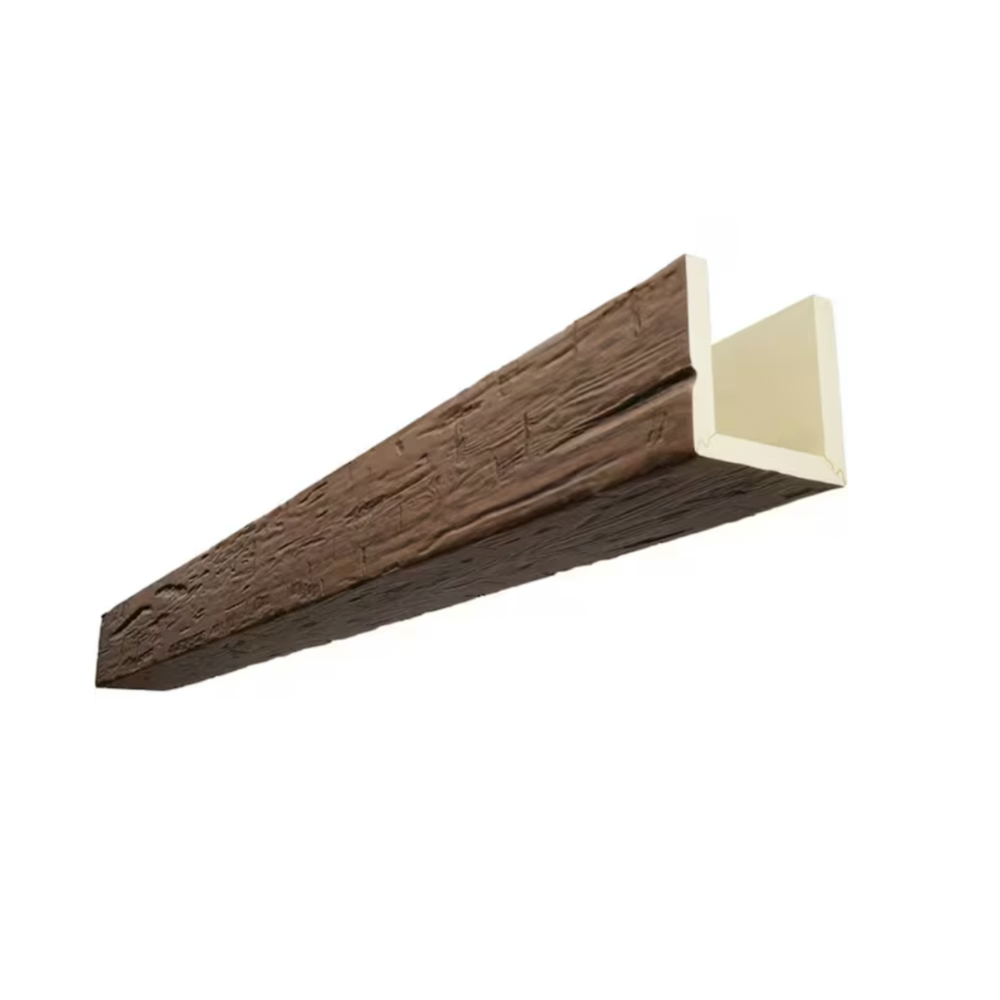
Most faux beams have a three-sided U-channel profile that wraps over an existing surface or mounts to the ceiling. The three sides — the front face, the bottom edge, and the back face against the ceiling — are all visible to the eye from different angles. The result is a beam that reads as a solid three-dimensional object even though it is hollow inside.
The Shadow Line at the Beam-Ceiling Junction
The shadow line where the beam meets the ceiling is the most important visual element for depth. The eye registers the shadow as a separation between the beam and the ceiling, which makes both the beam and the ceiling feel like distinct surfaces.
The Profile Edge
The edges of the beam profile — where the front face meets the bottom, where the bottom meets the side — catch light and cast micro-shadows. The edges make the beam feel solid and dimensional rather than flat.
The Finish Texture
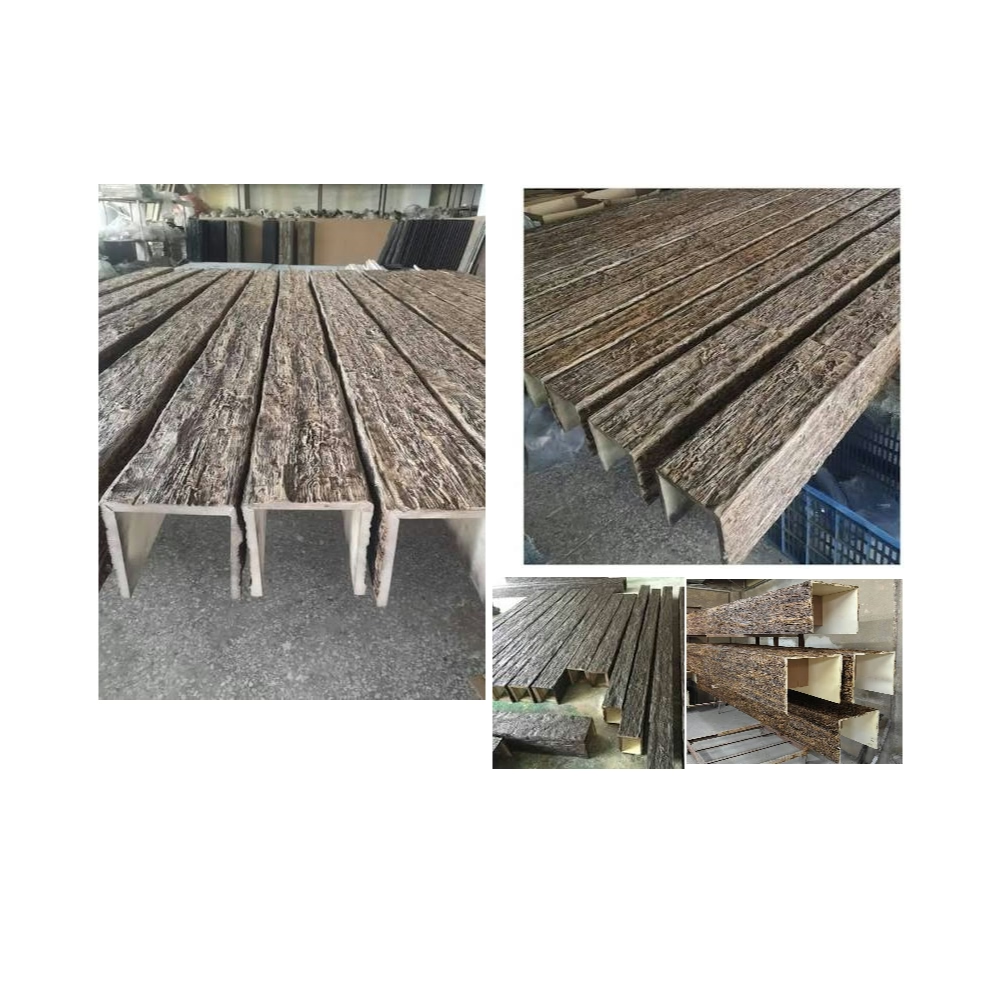
The finish texture on the beam — wood grain, weathering, hand-detailing — adds visual interest that makes the beam feel like a designed element. A flat-painted beam without texture looks like a painted box. A textured beam with grain and detail looks like an architectural feature.

Beam Configurations for Depth
Different beam configurations create different kinds of depth.
Parallel Beams
Parallel beams running across the ceiling create rhythm and direction. The depth comes from the repetition — the eye sees beam, gap, beam, gap, beam. The rhythm makes the ceiling feel like a designed composition.
Coffered Grid
A coffered grid pattern creates depth through the recessed panels between the beams. The beams form a frame around each panel, and the recessed panel adds a layer of depth within the frame. Coffered ceilings are particularly effective in formal rooms like dining rooms and libraries.
Crossing Beams
Beams that cross each other create depth at the intersections. The intersection is a three-dimensional moment where two beams overlap, and the eye sees the layering. Crossing beams are common in rustic, craftsman, and Tudor-style interiors.
Perimeter Beams
Beams running along the perimeter of the ceiling create a tray ceiling effect. The center of the ceiling is recessed relative to the perimeter, which adds a layer of depth across the entire ceiling. Perimeter beams are effective in bedrooms, dining rooms, and formal living rooms.
Single Feature Beam
A single beam running across the ceiling creates a focal point and adds depth at a specific location. Single beams work in rooms where the goal is to draw attention to one architectural moment rather than to spread depth across the entire ceiling.
Depth and Ceiling Height
Faux beams add depth without affecting the perceived ceiling height. The actual ceiling stays the same, but the visual ceiling feels different.
Why Beams Do Not Lower the Ceiling
A real beam that drops 6 inches from an 8-foot ceiling makes the ceiling feel 6 inches lower. A faux beam that drops 1–3 inches has a minimal effect on the perceived height. The eye sees the beam as an architectural feature rather than as a reduction in ceiling height.
Beams Can Make Low Ceilings Feel Higher
Counterintuitively, beams can make low ceilings feel higher. The eye uses the beam as a reference point and reads the ceiling as the surface behind the beam rather than as the surface above the room. The beam creates visual interest that distracts from the low ceiling.
Beams Can Make High Ceilings Feel Grounded
Vaulted or high ceilings often feel disproportionate to the rest of the room. Beams running across the ceiling break up the vertical sweep and bring the ceiling down to a human scale. The room feels more intimate and the proportions feel right.
Depth and Room Size
Beam depth interacts with room size in interesting ways.
Small Rooms
Small rooms benefit from fewer, smaller beams. A single beam across the ceiling, or two parallel beams in a narrow room, adds depth without overwhelming the space. Larger or more numerous beams can make a small room feel cluttered.
Medium Rooms
Medium rooms can support more elaborate beam patterns. Parallel beams, perimeter beams, or a simple coffered grid all work well in medium rooms. The depth adds visual interest without dominating the space.
Large Rooms
Large rooms benefit from substantial beams. Multiple parallel beams, a full coffered grid, or crossing beams create depth that is proportional to the room size. Smaller beams in a large room feel anemic.
Vaulted Rooms
Vaulted rooms can support dramatic beam patterns. Beams that follow the vault, beams that run perpendicular to the peak, or beams that frame the vaulted space all add depth to the dramatic ceiling. The depth makes the vault feel intentional rather than incidental.
Combining Beam Depth With Other Architectural Elements
Beam depth is enhanced by other architectural elements that add their own layering.
Recessed Lighting
Recessed lights between beams create layered lighting that emphasizes the beam pattern. The lights illuminate the ceiling between the beams while leaving the beams in partial shadow. The contrast makes both the lights and the beams more visible.
Ceiling Medallions
A ceiling medallion at the center of the room, framed by the beam pattern, adds another layer of depth. The medallion is a focal point, and the beams lead the eye toward it.
Crown Molding
Crown molding at the wall-ceiling junction creates a transition between the wall and the beamed ceiling. The molding adds depth at the perimeter and ties the wall treatment to the ceiling treatment.
Wall Treatments
Wall treatments — wainscoting, board-and-batten, shiplap — add depth to the walls that complements the depth added by the ceiling beams. The room feels layered from floor to ceiling.

How to Specify Beam Depth for Your Project
The right beam depth depends on the room, the design direction, and the visual goals.
Subtle Depth
For subtle depth, choose a beam profile that is relatively shallow — 1–2 inches of drop from the ceiling. The beam is visible but understated. Subtle depth works in contemporary, transitional, and minimalist interiors.
Moderate Depth
For moderate depth, choose a beam profile that is 3–4 inches of drop. The beam is clearly visible and provides a substantial architectural presence. Moderate depth works in craftsman, traditional, and modern farmhouse interiors.
Dramatic Depth
For dramatic depth, choose a beam profile that is 5+ inches of drop, with substantial width and detailed profile. The beam is a major architectural feature. Dramatic depth works in rustic, Tuscan, and grand traditional interiors.
Layered Depth
For maximum depth, combine multiple beam types — perimeter beams, interior beams, and decorative cross beams. The layered approach creates a ceiling with multiple visual planes. Layered depth works in formal dining rooms, libraries, and grand entryways.
Common Questions About Beam Depth
Q: Will beams make my small room feel smaller? The right beam configuration will not. Smaller beams with adequate spacing add depth without crowding the room. The key is matching the beam size to the room size.
Q: Can beams be combined with a tray ceiling? Yes. Perimeter beams at the outer edge of the tray create a defined transition between the recessed center and the outer ceiling. Interior beams can be added within the recessed area for additional depth.
Q: What is the smallest beam profile that still adds depth? A 4-inch wide, 1.5-inch deep beam adds visible depth even in small rooms. Smaller profiles are available for very tight spaces.
Q: Can beams be used in modern or contemporary interiors? Yes. Sleek, square-profile beams with clean finishes work well in contemporary interiors. The depth is provided by the beam itself rather than by ornate detailing.
Designing for Depth
Architectural depth is what separates a designed room from a furnished room. A furnished room has objects placed in a space. A designed room has a space that has been considered from every angle, ceiling included. Faux beams are one of the most accessible and effective ways to add depth to a ceiling, and the depth transforms the room from flat to layered, from incidental to intentional, from a box to a designed space.
Technical References
ASTM standards cited in every specification
Test Data
Lab results from internal testing program
Updated 2026
Reviewed against current product specs