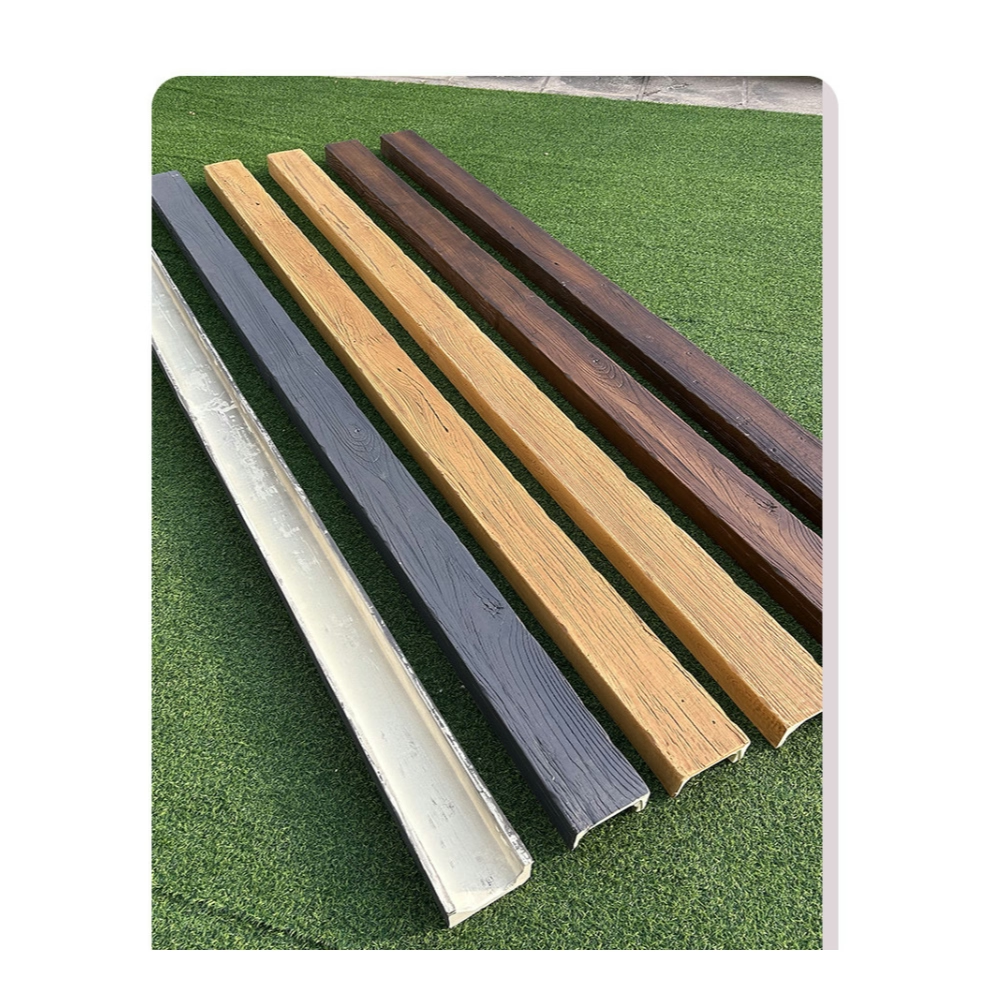
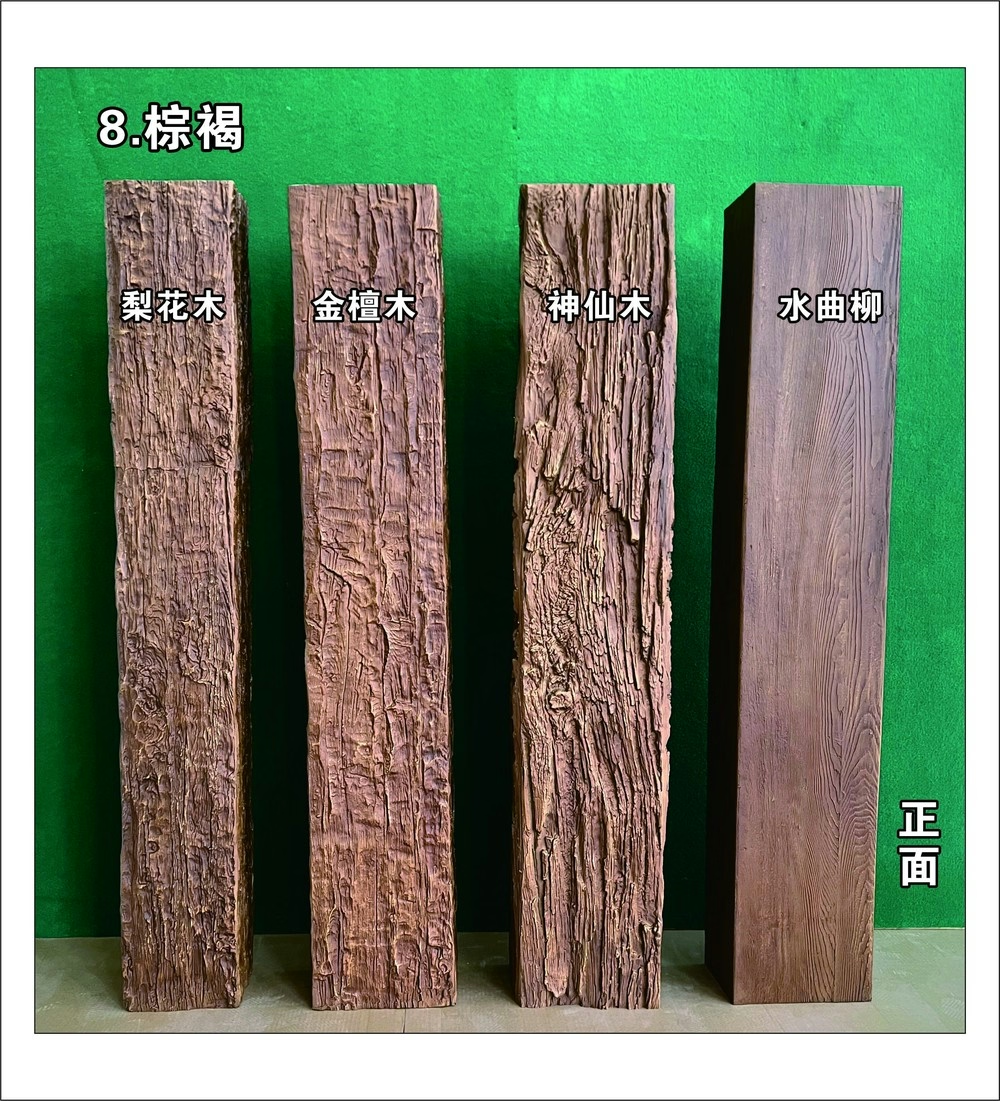
A homeowner stands in a room with 12-foot ceilings and decides the space needs beams. They call two contractors. One says they can install real reclaimed oak beams for $8,000 and it will take a week. The other says they can install polyurethane faux beams for $1,500 and it will take one day. The homeowner is not sure whether the real beams are worth the difference. The honest answer is: it depends on what the homeowner values, and the comparison is not as simple as "real is better." Real beams and faux beams are different products with different installation requirements, different performance characteristics, and different costs. This article breaks down the installation comparison so homeowners can make an informed decision.
Weight: The Fundamental Difference
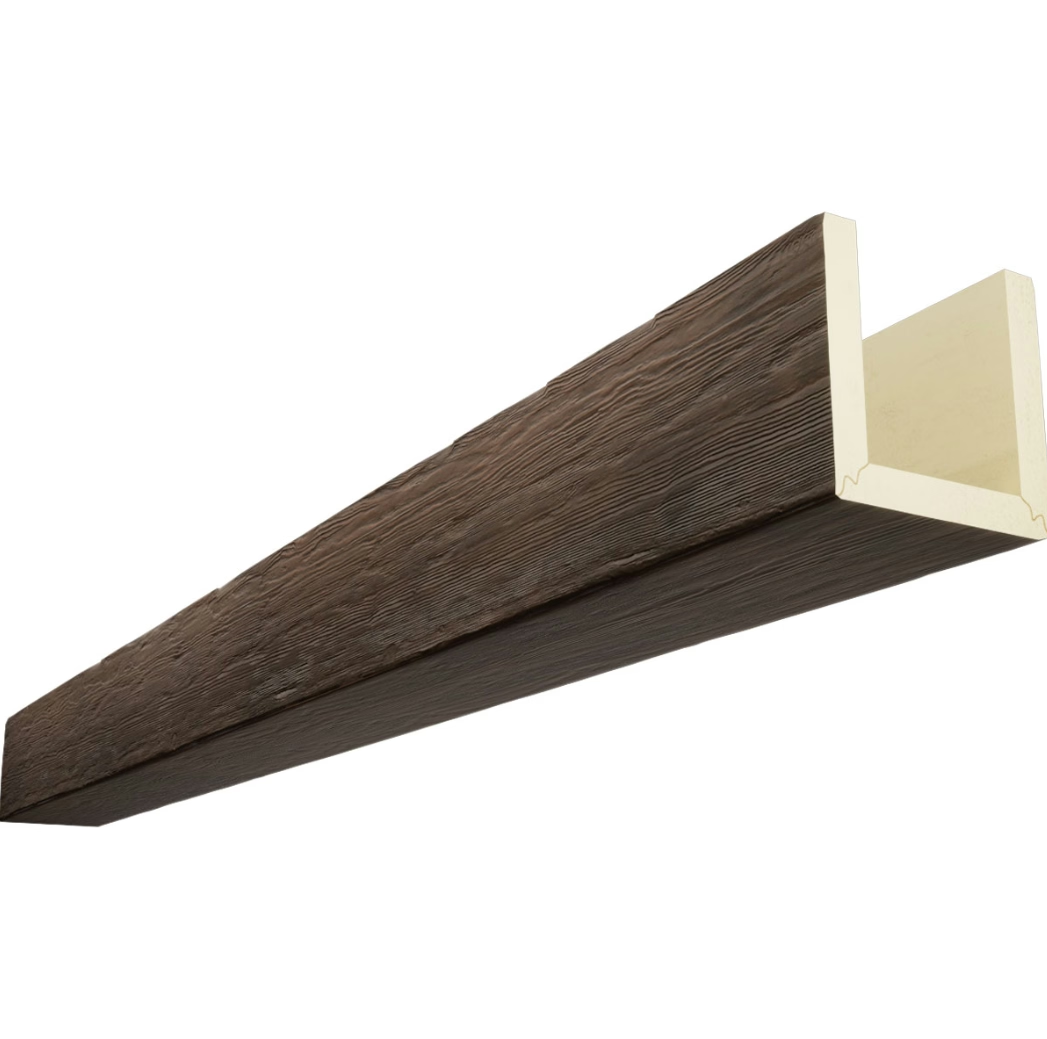
The single most important difference between real beams and faux beams is weight. Real timber beams are heavy. A 6-inch by 8-inch by 12-foot Douglas fir beam weighs approximately 120 pounds. A 6-inch by 8-inch by 12-foot reclaimed oak beam weighs approximately 140 pounds. A faux polyurethane beam of the same dimensions weighs approximately 25 pounds.
What Weight Means for Installation
Weight affects every step of the installation:
- How many people are needed to lift the beam into place
- What kind of lifting equipment might be required
- Whether the ceiling structure can support the weight
- How long the installation takes
- What the risk of injury is during installation
A 140-pound beam requires at least two strong people, possibly more for longer spans. A 25-pound faux beam can be handled by one person, and many homeowners install them solo.
Structural Support Requirements
Real beams require structural support. If the homeowner is installing a decorative beam that is not load-bearing, they still need to install blocking or a ledger between the joists to support the weight. If the homeowner is installing a structural beam, the engineering and installation requirements are significant.
Faux decorative beams require minimal structural support. The polyurethane beam is light enough to be attached to the ceiling with construction adhesive and mechanical fasteners. The fasteners go into the joists or into blocking, but the blocking only needs to support 25 pounds per beam rather than 140.
Tools Required
The tools required for each installation reflect the complexity and weight of the material.
Tools for Real Timber Beams
Installing real timber beams typically requires:
- Forklift or beam hoist for moving heavy beams
- Steel connectors, bolts, and lag screws
- Level, chalk line, and measuring tape
- Circular saw or beam saw for cutting
- chisels and hand tools for fitting joints
- Drill with heavy-duty bits for lag screws
- Stud finder or radar scanner for locating ceiling framing
- Safety equipment: gloves, safety glasses, hard hat
Tools for Faux Polyurethane Beams
Installing faux polyurethane beams typically requires:
- Drill with standard bits for pilot holes and fasteners
- Level and measuring tape
- Miter saw or hand saw for cutting
- Construction adhesive (caulking gun)
- Finish nails or brad nailer
- Color-matched caulk for joints
- Painter's tape for temporary support
- Ladder or step stool
- Safety equipment: gloves, safety glasses
The tool list for faux beams is shorter, the tools are less expensive, and the tools are more likely to be in a homeowner's existing toolkit.
Installation Time
Installation time affects labor cost, project disruption, and scheduling.
Real Beam Installation Time
A professional contractor typically installs real timber beams at a rate of one to two beams per day, depending on the beam size, the ceiling height, and the complexity of the installation. A room with four beams would take two to four days of installation time.
The time breaks down as follows:
- Measuring and templating: 2–4 hours per beam
- Preparing structural support (blocking, ledger): 1–2 hours per beam
- Fitting and adjusting the beam: 2–4 hours per beam
- Fastening and finishing joints: 1–2 hours per beam
Faux Beam Installation Time
A professional contractor typically installs faux polyurethane beams at a rate of four to six beams per day. A room with four beams would take one day of installation time.
The time breaks down as follows:
- Measuring and cutting: 15–30 minutes per beam
- Applying adhesive: 10 minutes per beam
- Positioning and fastening: 10–20 minutes per beam
- Finishing joints with caulk: 10 minutes per beam
DIY Installation Comparison
A capable DIY homeowner can install faux beams in a room over a weekend. The learning curve is short, the tools are basic, and the beams are forgiving of minor measurement errors.
A DIY homeowner installing real timber beams faces significant challenges: the beams are too heavy for one person, the structural support requirements are beyond typical DIY scope, and the cutting and fitting requires skills that take years to develop.
Site Conditions and Preparation
Both real and faux beams require site preparation, but the requirements differ.
Real Beam Site Preparation
Real beams require significant site preparation:
- Structural engineer assessment for load calculations
- Building permit application and approval
- Installation of heavy-duty blocking between joists
- Coordination with other trades if electrical or mechanical systems are in the ceiling
- Temporary support structures during installation
Faux Beam Site Preparation
Faux beams require minimal site preparation: -确认 ceiling joist locations
- Mark beam layout on ceiling
- Clean mounting surfaces
- Confirm beam fit (dry fit before adhesive)
No permits are required for decorative faux beams because they are not structural. No engineer is needed because the weight is negligible.
Finish Quality
The finished appearance of real and faux beams reflects their materials.
Real Beam Finish Quality
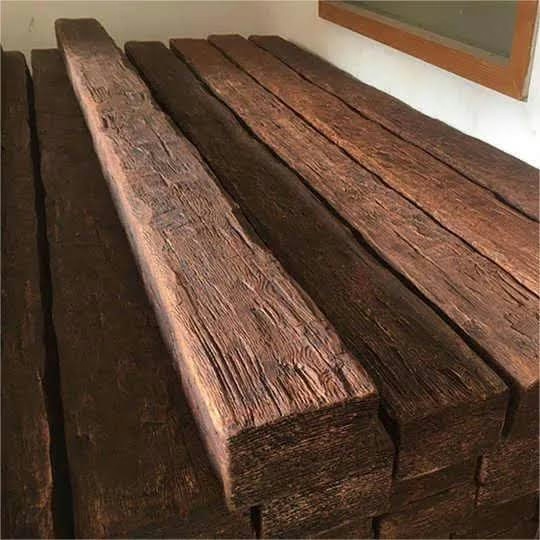
Real timber beams have genuine wood character: natural grain variation, knots, checks, and color variation. The character is authentic and appeals to homeowners who value natural materials.
The finish quality depends on the skill of the finisher and the quality of the wood. A well-finished real timber beam is beautiful. A poorly finished real timber beam shows gaps, uneven stain absorption, and surface imperfections.
Faux Beam Finish Quality
Faux polyurethane beams have consistent finish quality because the finish is applied in a controlled factory environment. The grain texture is embossed into the polyurethane, the stain is applied with professional equipment, and the finish is sealed with a durable top coat.
The finish quality of a premium faux beam is comparable to a well-finished real timber beam. The grain texture is not identical to real wood, but it reads as wood from normal viewing distances, and the durability of the factory finish often exceeds the durability of a field-applied finish on real wood.
Weather and Environment
Real timber beams respond to environmental conditions. Polyurethane beams do not.
Real Wood and Moisture
Real timber beams absorb moisture and release it based on the humidity of the surrounding air. This causes the beams to expand and contract, which can lead to:
- Cracks and checks in the wood surface
- Warping or twisting of the beam
- Gaps at the joints
- Finish failure
In humid environments (bathrooms, kitchens, basements, coastal regions), real timber beams require careful attention to finish and ventilation.
Polyurethane and Moisture
Polyurethane faux beams are dimensionally stable. They do not absorb moisture, do not expand or contract with humidity changes, and are not susceptible to rot or decay. They are appropriate for any room in the house, including bathrooms and kitchens.
Skill Requirements
The skill requirements for installing real versus faux beams are significantly different.
Real Beam Installation Skills
Installing real timber beams requires:
- Understanding of structural loading and beam mechanics
- Ability to read architectural drawings and specifications
- Skill with heavy equipment and lifting techniques
- Carpentry skills for cutting and fitting complex joints
- Finish carpentry skills for achieving clean joints and transitions
- Knowledge of building codes and permit requirements
These skills take years to develop. A homeowner attempting to install real timber beams without this experience is likely to create structural problems, finish problems, or both.
Faux Beam Installation Skills
Installing faux polyurethane beams requires:
- Basic measuring and marking
- Basic cutting with a saw
- Following adhesive manufacturer instructions
- Basic fastening techniques
These skills can be learned in an afternoon. A capable homeowner with basic tools can install faux beams successfully.
Cost Comparison
Installation cost is a major factor in the decision between real and faux beams.
Real Beam Installation Cost
Real beam installation by a professional typically costs:
- Materials: $500–$2,000 per beam depending on wood species and size
- Labor: $300–$600 per beam for installation
- Structural support: $200–$500 per beam for blocking and hardware
- Permits and engineering (if required): $500–$2,000
Total for a room with four beams: $8,000–$20,000
Faux Beam Installation Cost
Faux beam installation by a professional typically costs:
- Materials: $100–$400 per beam depending on profile and finish
- Labor: $75–$150 per beam for installation
- Adhesive and fasteners: $50–$100 per room
Total for a room with four beams: $1,000–$2,500
DIY faux beam installation eliminates the labor cost entirely.
When Real Beams Are Worth the Cost
Despite the higher cost and complexity, there are situations where real timber beams are the right choice.
When Structural Beams Are Required
If the beam is serving a structural purpose — replacing a removed load-bearing wall, supporting a roof or floor above — real timber or engineered wood is required by code. Decorative faux beams cannot be used for structural applications.
When Authentic Character Is Essential
For homeowners who specifically want the natural variation, knots, checks, and grain of real wood, faux cannot fully replicate the character. The difference is subtle but real.
When the Budget Justifies It
If the project budget comfortably accommodates real timber beams and the homeowner values natural materials, real beams are a legitimate choice. The premium cost is not irrational — it reflects real material, real craftsmanship, and genuine character.
Common Questions About Installation Comparison
Q: Can I install faux beams myself if I have never done carpentry work? Yes. Faux beam installation is accessible to beginners. The key skills are measuring, cutting, and applying adhesive. All three can be learned quickly.
Q: Do faux beams look as good as real beams from a distance? Yes. From normal viewing distances, premium faux beams are difficult to distinguish from real timber. The texture, color, and shadow play read as wood.
Q: Can I combine real and faux beams in the same room? Yes. Many designers combine a real timber mantel beam with faux ceiling beams. The combination provides authentic character in the most visible location while keeping the overall project budget manageable.
Q: How long do faux beams last compared to real beams? Premium polyurethane faux beams have a lifespan of 20–30+ years with proper installation. Real timber beams can last the life of the structure, but they require ongoing maintenance to prevent moisture damage and finish failure.
The Honest Comparison
The comparison between real and faux beams is not a story of one being better than the other. It is a story of different products for different priorities. If the priority is authentic character, structural function, and the budget accommodates it, real timber beams deliver. If the priority is visual impact, ease of installation, cost control, and environmental flexibility, faux polyurethane beams deliver. The homeowner who understands what each product does well makes the right choice for their project.
Technical References
ASTM standards cited in every specification
Test Data
Lab results from internal testing program
Updated 2026
Reviewed against current product specs