
A 10-by-12-foot room is a 10-by-12-foot room. The walls are where they are. The ceiling is where it is. But how the room feels — cramped or open, low or soaring, narrow or expansive — is a matter of perception, and perception can be shaped. Interior designers have used spatial illusions for centuries to make spaces feel larger than they are. Faux ceiling beams are one of the most powerful tools for creating these illusions because the ceiling is the largest surface in the room and therefore the most impactful place to manipulate perception.
The Psychology of Spatial Perception
How we perceive the size of a room is not purely a function of its physical dimensions. It is also a function of how our visual system processes the room's features.
The Ceiling as a Reference
When you walk into a room, your visual system uses the ceiling as one of the primary references for judging the space. The height of the ceiling, the color of the ceiling, and the features on the ceiling all contribute to your perception of the room's size.
Horizontal vs. Vertical Emphasis
A room that emphasizes horizontal lines feels wider and more grounded. A room that emphasizes vertical lines feels taller and more soaring. Beams that run in a particular direction create a directional emphasis that shapes the room's perceived character.
Visual Layering
A room with layered surfaces — a beam, then a gap, then a beam, then the ceiling, then the wall — has more visual information than a flat surface. The additional information makes the room feel richer and more complex. Complex, layered rooms often feel larger than simple, flat rooms even if they are the same size.
Illusion 1: Making a Room Feel Wider
A narrow room — a hallway that became a living room, an addition that extended a kitchen, a bowling alley of a great room — feels cramped because the walls are too close together.
The Beam Illusion
Install beams that run perpendicular to the narrow dimension. The beams draw the eye across the width of the room, emphasizing the widest dimension. Each beam creates a visual "stop" that breaks the length into segments. The room feels wider because the eye is repeatedly directed across the width.
How It Works
Think of a narrow room with beams running across it. The eye travels from wall to beam to beam to beam, repeatedly crossing the widest dimension of the room. Each crossing reinforces the perception of width. The narrow dimension becomes less dominant because the eye is not continuously traveling along it.
Practical Application
For a 10-foot-wide by 24-foot-long room, install beams running across the 10-foot width. The beams are 10 feet long. They are spaced at regular intervals — every 3 feet, every 4 feet, or every 6 feet — along the length of the room. The beam spacing creates a rhythm that makes the room feel organized and intentional rather than long and narrow.
Beam Sizing
The beams should be proportional to the width. For a 10-foot width, beams that are 6–8 inches wide are appropriate. Too narrow and the beams look anemic. Too wide and they overwhelm the narrow room.

Illusion 2: Making a Room Feel Longer
A room that is too short — a basement, an attic conversion, a tract home with low ceilings — feels cramped because the ceiling is close.
The Beam Illusion
Install beams that run parallel to the length of the room, emphasizing the longest dimension. The beams create a visual flow that draws the eye along the room, making it feel like it extends further than it actually does.
How It Works
Parallel beams running along the length of a room create a corridor effect. The eye follows the beams from one end of the room to the other, reinforcing the perception of length. The corridor effect makes the room feel like it continues beyond its actual walls.
Practical Application
For a 12-foot-wide by 16-foot-long room with low ceilings, install beams running along the 16-foot length. The beams are 16 feet long. Two or three parallel beams spaced across the 12-foot width create a subtle striped effect that adds visual interest to the ceiling without overwhelming the small space.
Beam Sizing
For a room where the goal is to emphasize length, the beams should be relatively thin. A 4–6 inch wide beam is appropriate. Thinner beams create a refined, elegant effect rather than a heavy, rustic effect.
Illusion 3: Making a Room Feel Taller
A room with a low ceiling — a basement, a converted attic, a tract home — feels oppressive because the ceiling is close to your head.
The Beam Illusion
Install beams that create a visual separation between the ceiling and the walls. The beams draw the eye horizontally across the ceiling, which counteracts the oppressive vertical feeling of a low ceiling.
How It Works
Low ceilings feel oppressive because the eye is continuously registering the proximity of the ceiling. Beams that run across the ceiling interrupt this continuous vertical registration. The eye is drawn across the beam, then across the gap, then across the next beam. The horizontal movement counteracts the vertical oppression.
Practical Application
For a room with 7-foot 6-inch ceilings, install beams across the shorter dimension of the room. Use relatively thin beams (4–6 inches) with a minimal drop from the ceiling (1–2 inches). The beam profile should be simple — a square or slightly chamfered edge — rather than ornate. The goal is to add visual interest without making the low ceiling feel even lower.
The Coffered Ceiling Option
A coffered ceiling — a grid of beams forming recessed panels — is particularly effective for low ceilings. The coffering creates the illusion of a higher ceiling because the recessed panels suggest additional space above. The coffered grid draws the eye across the ceiling and creates a sense of depth that a flat ceiling cannot provide.
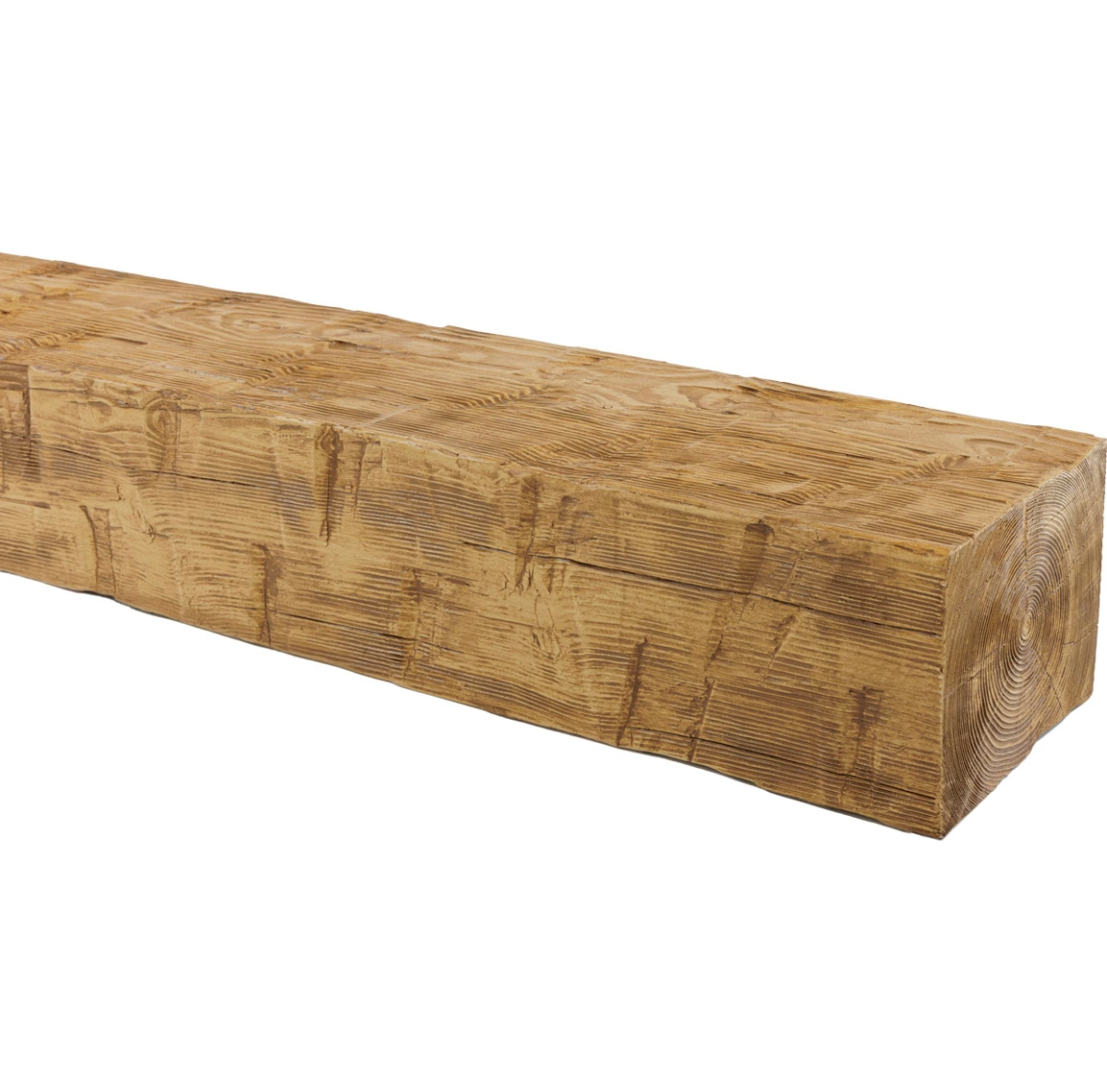
Illusion 4: Making a Room Feel More Expansive
A room that feels small in every dimension — a galley kitchen, a compact living room, a small bedroom — needs a more dramatic intervention.
The Beam Illusion
Use beams to create a visual grid that breaks the room into defined zones. The grid creates the impression of multiple spaces within one, which makes the room feel more complex and therefore larger.
How It Works
A small room with a single purpose feels small because the entire room is visible at once. A small room with a visual grid has defined zones — a seating area, a reading corner, a display area — and the zones create the impression of a larger, more complex space.
Practical Application
For a small living room, install a 2x2 or 3x2 grid of beams that divides the ceiling into four or six panels. The grid should align with the furniture groupings: a panel over the sofa, a panel over the coffee table, a panel over the reading chair. Each panel defines a zone, and the grid makes the room feel designed and organized.
Beam Sizing
For a small room, smaller beams are better. A 4–6 inch wide beam in a grid pattern adds visual interest without overwhelming the space. The grid lines should be clean and consistent.
Illusion 5: Connecting Indoor and Outdoor Spaces
A room with a strong visual connection to the outdoors can feel larger than it is. Beams can enhance this connection.
The Beam Illusion
Install beams that align with or mirror the lines of the outdoor view. A beam that aligns with a fence line, a deck edge, or a garden path creates a visual connection that extends the room beyond its walls.
How It Works
The eye follows the beam line from inside the room to the outdoor view. The outdoor space becomes part of the perceived room. The room feels larger because the outdoor space is incorporated into the visual field.
Practical Application
In a room with large windows or sliding doors, install beams that run parallel to the glass. The beams create a visual rhythm that draws the eye toward the outdoor view. If the outdoor space has structural elements (a pergola, a fence, a garden trellis), beams that mirror those elements reinforce the connection.
Combining Illusions
The most powerful spatial illusions combine multiple techniques.
Wide and Tall
For a room that is both narrow and low, combine the width illusion (beams across the narrow dimension) with the height illusion (clean, minimal profile that does not overwhelm). The result is a room that feels wider and more open.
Long and Layered
For a room that is too long, combine the length illusion (parallel beams) with visual layering (multiple beam heights, decorative elements, recessed lighting). The result is a room that feels long but also rich and interesting.
Small but Interesting
For a small room, combine the grid illusion (defined zones) with the layering illusion (multiple surfaces, shadows, depth). The result is a small room that feels complex and considered rather than simple and cramped.
The Role of Color in Spatial Illusion
Beams are more effective at creating spatial illusions when they are combined with appropriate color choices.
Light Ceilings
A light-colored ceiling reflects light and makes the room feel more open. Beams on a light ceiling create contrast that draws the eye without darkening the room.
Dark Beams
Dark beams absorb light and create strong shadow lines. This is good for defining zones and creating visual separation. But dark beams can also make a room feel smaller if overused.
Contrasting Finishes
Beams in a contrasting finish — a dark beam on a light ceiling, a light beam on a dark ceiling — create strong visual statements. The contrast reinforces the spatial illusion by creating clear visual boundaries.
Monochromatic Beams
Beams in a finish that matches the ceiling color create a more subtle effect. The beams are visible as shadows and texture rather than as strong color blocks. This approach works in contemporary or minimalist interiors where a subtle effect is preferred.
Common Questions About Spatial Illusions
Q: Will beams make my already-large room feel overwhelming? Large rooms need proportionally large beams. The key is matching the beam size to the room size. Oversized beams in a large room create drama. Undersized beams in a large room look anemic.
Q: Can beams create illusions in a room with sloped ceilings? Yes. Beams that follow the slope or cut across it can enhance or correct the visual effect of the slope. The goal is to make the slope feel intentional rather than accidental.
Q: How many beams do I need to create a spatial illusion? A single beam can create a subtle illusion. A grid of beams creates a stronger illusion. The number of beams depends on the room size and the strength of the effect desired.
Q: Do beams always create the intended illusion? Not always. The illusion depends on correct beam placement, sizing, and finish. Beams that are too small, too widely spaced, or the wrong color may not create the intended effect.
The Room That Feels Larger Than It Is
Every room has physical limits. But every room also has perceptual limits that are more flexible. A well-designed room — one where the ceiling is considered, the proportions are correct, and the visual elements work together — feels larger than the same room with a flat, unconsidered ceiling. Faux ceiling beams give homeowners and designers the tools to create these perceptual shifts. The room is the same size. But it feels bigger, wider, taller, or more expansive. And that feeling — of a space that exceeds its physical dimensions — is what makes a well-designed room a pleasure to inhabit.
Technical References
ASTM standards cited in every specification
Test Data
Lab results from internal testing program
Updated 2026
Reviewed against current product specs


