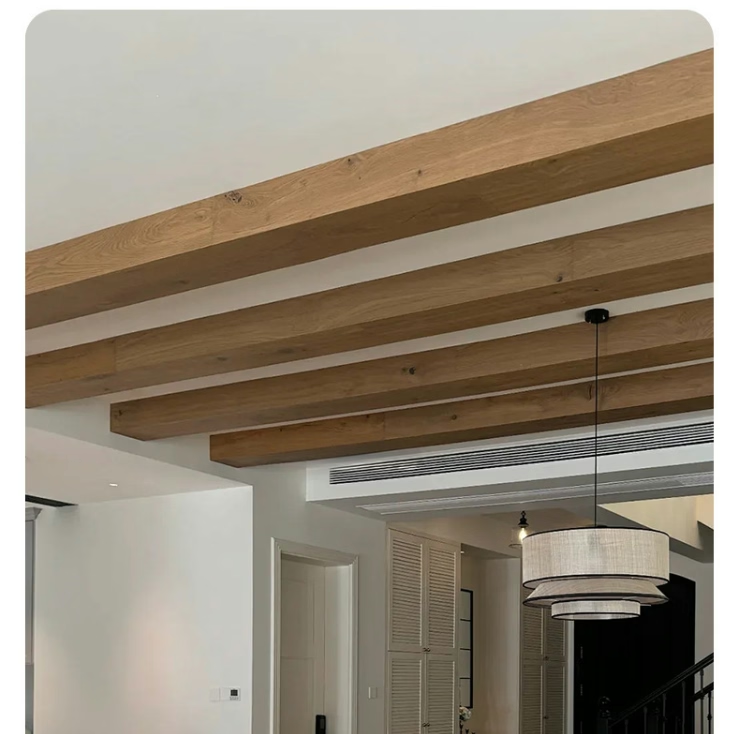
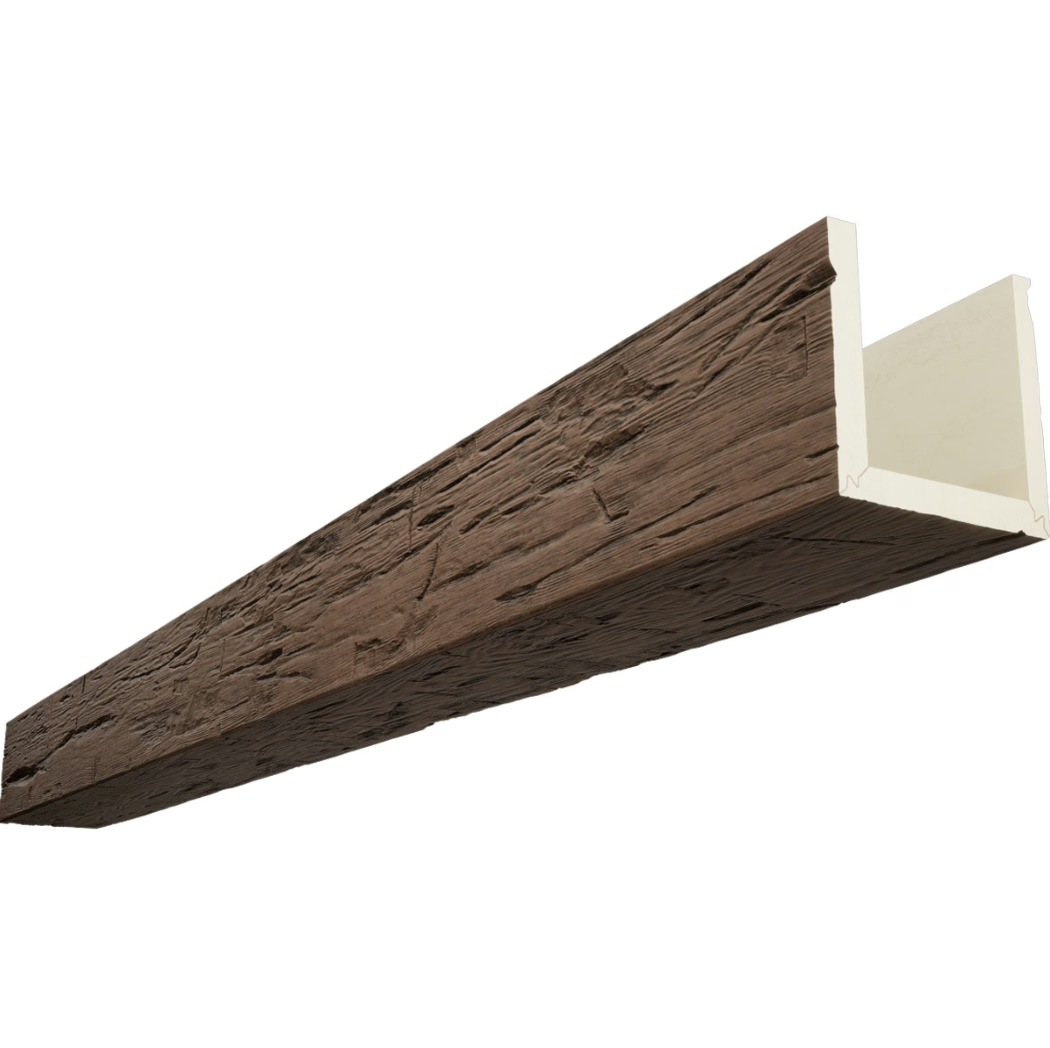
Walking into a well-designed restaurant or hotel lobby, the eye reads warmth before it reads materials. Exposed timber overhead, soft lighting bouncing off a weathered grain pattern, the sense that the space has been there for decades. That feeling is exactly what fire-retardant PU faux wood beams are designed to deliver, with the fire safety documentation that commercial code officials require to sign off on the project.
The commercial segment has been the fastest-growing part of the faux beam market for the past several years. Restaurant groups discovered that overhead timber treatment photographs well for marketing materials and creates the kind of intimate atmosphere that drives repeat visits. Hotel chains adopted it for the same reasons, plus the practical benefit that lightweight PU beams install faster than solid timber, keeping renovation timelines tight.
What makes a beam fire-retardant
Fire retardancy in polyurethane foam is not a coating applied after the fact. The retardant is integrated into the foam formulation during the chemical reaction that creates the polymer. Liquid components are mixed in a controlled sequence, the fire retardant additives are introduced at the right moment, and the foam expands into the mold with the retardant distributed evenly throughout every cubic centimeter of the finished part.
The most common retardant chemistries used in PU foam for commercial applications are based on phosphorus and nitrogen compounds. These work through a char-forming mechanism. When exposed to flame, the treated foam surface decomposes into a carbon-rich char layer that insulates the underlying material from further heat. The char also reduces the release of flammable volatiles, which slows the combustion chain reaction.
The result is a foam that resists ignition, propagates flame slowly if it does ignite, and produces less smoke than untreated foam. The performance is quantifiable and reproducible, which is why testing labs can produce reliable flame spread and smoke developed numbers for a given formulation.
Performance levels and what they mean in real fires
A Class A beam under ASTM E84 has a flame spread index between 0 and 25. For comparison, untreated red oak has an FSI around 100, and untreated polyurethane foam has an FSI in the 400 to 600 range. A Class A beam is meaningfully safer than either of those materials.
In a real fire scenario, the practical implication is time. A Class A beam takes longer to ignite, longer to contribute to flashover, and produces less smoke that obscures visibility during evacuation. For a restaurant with 200 occupants, those extra minutes can be the difference between an orderly evacuation and a tragedy.
For commercial code compliance, Class A is required in the most stringent occupancies. Class B is acceptable in many general commercial uses. Class C is the minimum performance typically accepted in any commercial setting. The local code and the specific occupancy type determine which classification is required, and a fire engineer can advise on the specific requirement for a given project.
Applications where fire-retardant beams are standard
Restaurant ceilings are the most visible commercial application for fire-retardant faux beams. The combination of warm aesthetics, fast installation, and code compliance makes them a natural fit. A typical restaurant might have 15 to 30 beams crossing the dining room ceiling, sometimes with additional decorative beams over the bar and entry vestibule.
Hotel lobbies and reception areas are another major application. The ceiling beams here often have to coordinate with the lighting design, with recessed fixtures or pendant lights mounted between or directly on the beams. Fire-retardant PU beams handle integrated lighting cleanly because the foam can be drilled for wire routing without compromising the fire performance, and the integral retardant means the cut edges retain the same rating as the molded surface.
Conference centers and meeting rooms use faux beams to soften what would otherwise be large flat ceilings. The acoustic benefits are real: a ceiling broken up by beams absorbs sound better than a smooth plane, reducing the echo that makes large meeting rooms unpleasant to use. Combined with the visual warmth, this makes faux beams a popular choice for both new construction and renovation.
Retail stores, particularly in the boutique and lifestyle segments, often use faux beams to create a sense of heritage and authenticity. A clothing store in a converted warehouse or a coffee shop in a new building can both benefit from the same ceiling treatment, and the fire-retardant rating satisfies the code without changing the visual outcome.
Office buildings and corporate spaces
Corporate office lobbies, boardrooms, and executive suites increasingly feature decorative ceiling treatments as companies invest in workplace aesthetics to attract and retain talent. Fire-retardant faux beams fit naturally into these spaces, particularly in LEED-certified buildings where the timber-look ceiling contributes to the biophilic design strategy.
For office fit-outs, the fire rating requirements depend on the local code and the specific use of the space. A standard office typically requires Class B or Class C. Conference rooms, corridors, and lobbies in high-rise buildings often require Class A. Working with the building's fire protection engineer during the design phase helps identify the right classification for each application.

How to source fire-retardant beams for a commercial project
The sourcing process for fire-retardant commercial beams is more structured than for residential products. The first step is identifying manufacturers with current, relevant test reports. Most large PU beam factories maintain tested formulations and can provide documentation within a few days.
Requesting samples is the next step. A good supplier will send not only a beam sample but also the documentation package: the test report, the letter of compliance, the MSDS, and any other certificates relevant to the destination market. Reviewing these documents before placing an order is non-negotiable for commercial work.
For large orders, a pre-shipment inspection by a third-party agency is standard practice. The inspector verifies that the production run matches the tested formulation, checks the finish quality, and confirms that the packaging is appropriate for international shipping. The cost is typically a few hundred dollars, well worth the assurance it provides.
Lead times for fire-retardant commercial beams are usually two to four weeks longer than for non-rated equivalents. The additional time reflects the production scheduling for tested batches, the documentation assembly, and sometimes the need for fresh test reports if the production formulation has been recently updated. Planning ahead and ordering early in the project timeline avoids last-minute expediting fees.
The cost calculus for fire-retardant commercial beams
The price premium for fire-retardant treatment on PU beams is real but usually manageable within a project's materials budget. As a rough guide, expect to pay 15 to 30 percent more per beam compared to a non-rated equivalent. For a project with 50 beams, the absolute cost difference might be a few thousand dollars.
The cost calculus gets more interesting when the alternative is considered. Using non-rated beams would require either a fire engineering analysis to demonstrate equivalent safety, additional sprinkler density to compensate for the extra fuel load, or a different decorative material altogether. Each of these alternatives has its own cost, and in most cases, the fire-retardant beam turns out to be the lower total cost option once the system-level implications are factored in.
For developers working on multiple commercial projects over several years, building a relationship with one or two fire-retardant beam suppliers creates economies of scale. The supplier gets predictable order volume, the developer gets consistent quality and pricing, and the documentation process becomes routine rather than a per-project scramble.
Fire-retardant PU faux wood beams have moved from a specialty product to a mainstream commercial offering over the past decade. The factories that supply this segment have the testing, the documentation, and the production capacity to handle large commercial orders. For restaurant groups, hotel chains, and corporate fit-outs, the path forward is to specify the appropriate fire classification, source from a manufacturer with current documentation, and build the slightly longer lead time into the project schedule. The result is a commercial space that looks like it has been there for generations while meeting every fire safety code that applies.

Technical References
ASTM standards cited in every specification
Test Data
Lab results from internal testing program
Updated 2026
Reviewed against current product specs