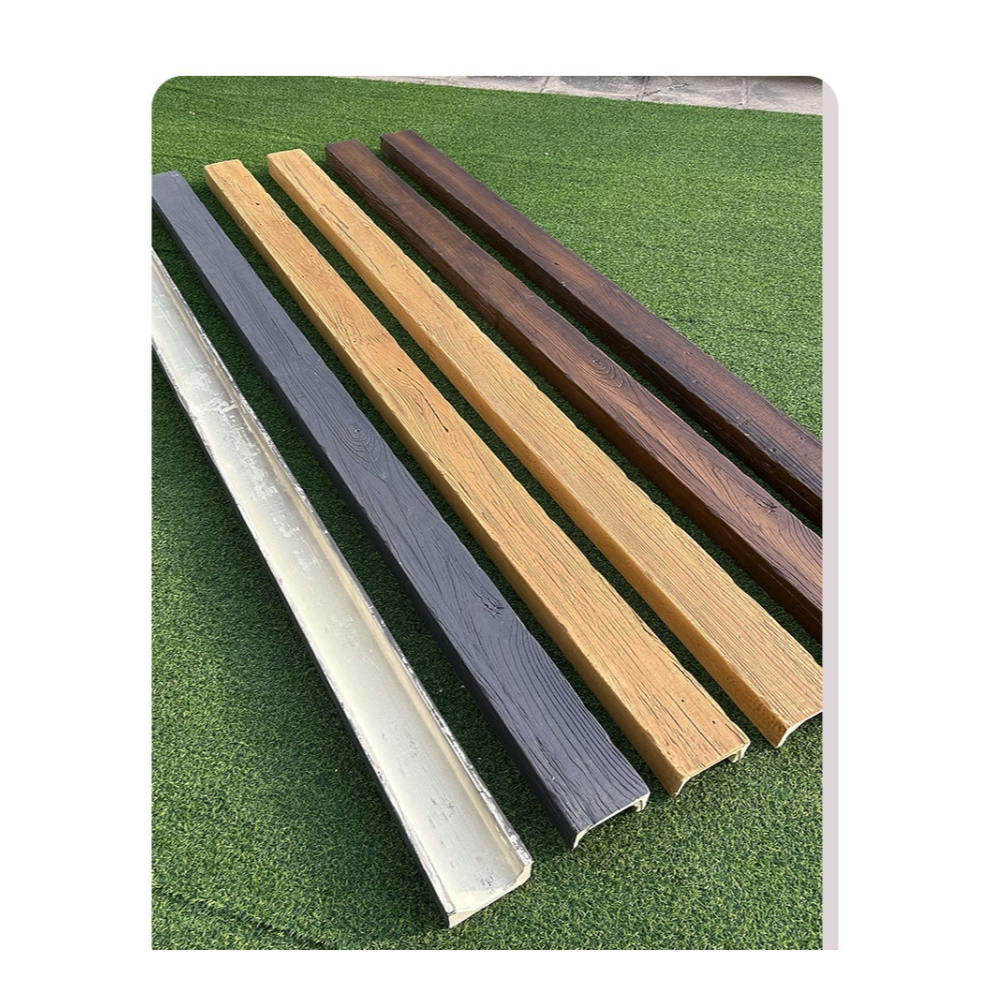
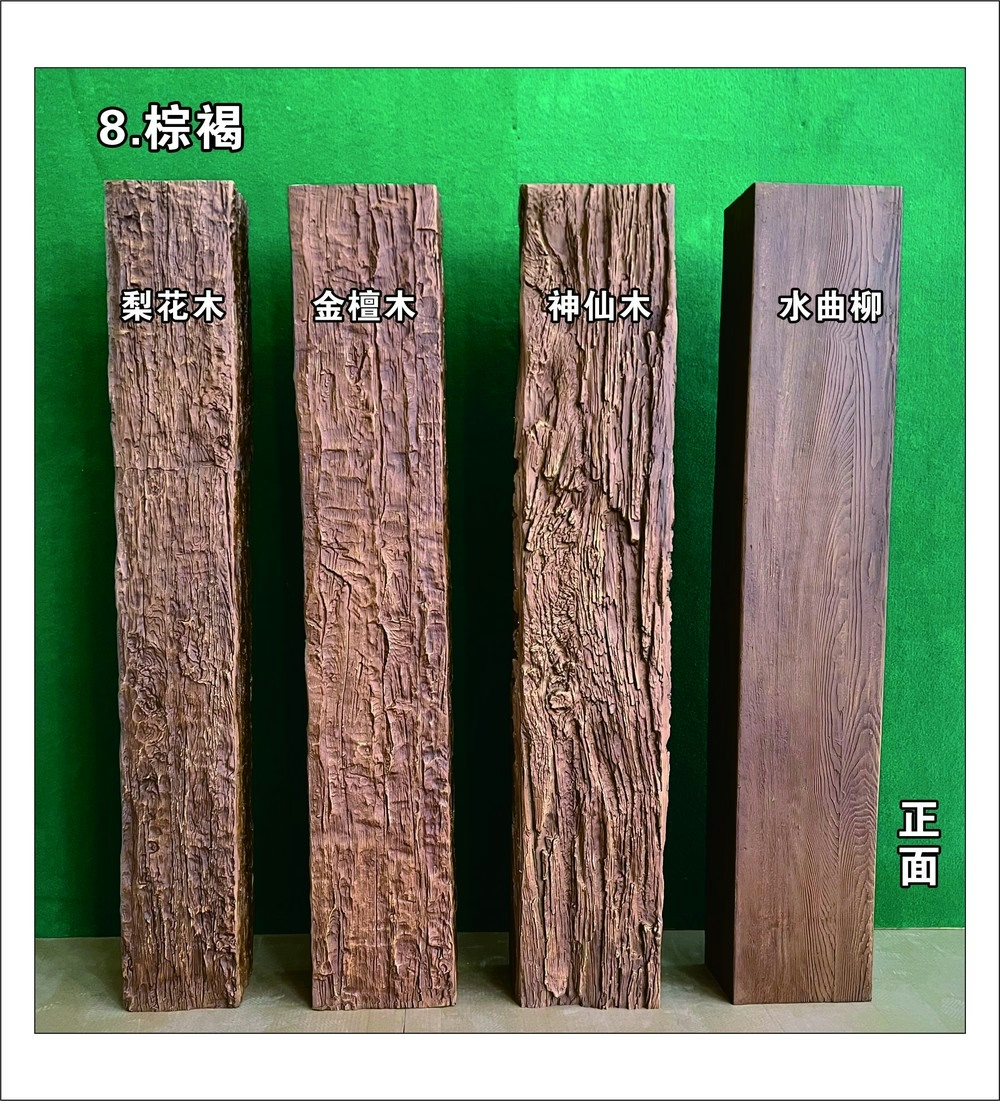
Beam profile design in the polyurethane faux wood market has evolved beyond the simple three-sided U-shape and the solid flat-back panel. The flat-back U-shell is a hybrid profile that takes the best characteristics of both designs and combines them into a product that works well across a wider range of installation scenarios.
Understanding this profile helps specifiers and installers choose the right beam for each application. The flat-back U-shell is not the right choice everywhere, but in the situations where it shines, it offers real advantages over more traditional profiles.
Anatomy of a flat-back U-shell beam
The flat-back U-shell beam has the cross-sectional shape of a traditional U-channel on the bottom and sides, with a flat panel closing off the top of the channel. The result is a hollow shell that is open on the bottom but closed on the top, sides, and back. When mounted against a ceiling, the flat top panel sits flush against the ceiling surface while the U-shaped channel faces downward.
This profile differs from a traditional U-shape in three important ways. First, the top is closed by the flat back panel rather than left open. Second, the flat back panel provides a continuous mounting surface against the ceiling. Third, the enclosed shell has different acoustic and fire performance characteristics than an open-top U-shape.
The enclosed shell also provides better protection for wiring that runs inside the beam. With a traditional U-shape, the wiring is exposed to the space above the beam through the open top. With a flat-back U-shell, the wiring is enclosed within the shell and protected from above by the flat back panel.
Why the hybrid profile exists
The flat-back U-shell was developed in response to specific installation challenges that neither the traditional U-shape nor the solid flat-back panel addressed completely. The traditional U-shape works well for wrapping structural members or for installations where the gap at the ceiling is acceptable. The solid flat-back works well for flush mounting but limits wiring access and can create acoustic issues in certain ceiling configurations.
The flat-back U-shell addresses both of these limitations. The flat back provides the flush mount appearance and the continuous mounting surface. The U-shell shape on the bottom and sides provides the visual character of a structural beam rather than a flat panel dropped from the ceiling. And the enclosed shell protects wiring while still allowing access through end caps or removable panels.
For projects where the ceiling is flat and the design calls for a beam that looks like it belongs there rather than being applied, the flat-back U-shell is often the best compromise. It has the clean ceiling-to-beam transition of a flat-back profile and the dimensional appearance of a traditional U-shape beam.
Installation advantages
The installation process for flat-back U-shell beams is similar to other flush mount profiles but with a few specific advantages. The flat back panel distributes mounting pressure evenly across the full width of the beam, reducing the need for precise shimming at individual fastener points. The enclosed shell protects the wiring during installation, so there is no concern about damaging cable runs during beam mounting.
The flat back also provides better acoustic performance than an open-top U-shape. An open-top U-shape allows sound to enter the cavity above the beam, where it can resonate and reflect back into the room. The closed top of a flat-back U-shell eliminates this resonance cavity, which is particularly valuable in rooms where acoustic control matters, such as home theaters, conference rooms, or open-plan offices.
For integrated lighting installations, the flat-back U-shell provides more options than either of the alternative profiles. Wiring can enter the beam through holes drilled in the flat back, through the end caps, or through small access panels in the bottom face if needed. This flexibility simplifies the wiring layout for projects with multiple fixture types or locations.
Where the profile works best
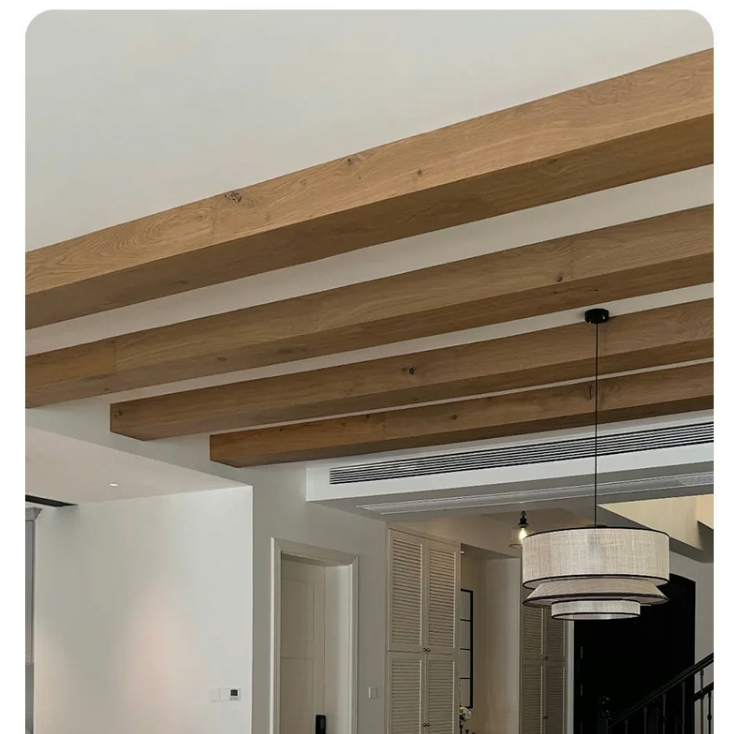
Modern residential interiors with flat ceilings are the most common application. The clean ceiling-to-beam transition that the flat back provides matches the design language of contemporary residential architecture, and the U-shell shape gives the beam enough visual weight to feel like a deliberate architectural element.
Commercial fit-outs in office buildings, restaurants, and retail spaces also benefit from the flat-back U-shell profile. The flush mount appearance integrates well with modular ceiling systems, and the enclosed shell provides better acoustic performance in spaces where noise control is important.
Renovation projects with existing flat ceilings are another strong application. The flat back accommodates minor variations in ceiling flatness, and the enclosed shell simplifies the integration with existing wiring and ceiling fixtures.
Hospitality projects, including hotel guest rooms and corridors, use flat-back U-shell beams to create warm overhead treatments that meet fire codes and integrate with the building services hidden above the ceiling. The enclosed shell protects the wiring, and the flush mount appearance maintains the clean lines of the corridor design.
Installation considerations specific to this profile
The mounting approach for flat-back U-shell beams follows the same principles as other flush mount profiles, with a few specific considerations. The flat back panel needs to be in full contact with the ceiling across its width to maintain a clean appearance. Any significant gap between the back panel and the ceiling will be visible as a shadow line along the top of the beam.
The enclosed shell can trap moisture if it is installed in an environment with high humidity and the shell is not properly sealed. The flat back panel against the ceiling can prevent moisture from escaping, leading to condensation inside the shell that may cause finish issues over time. For installation in humid environments, ensuring the shell is well-sealed at all joints and penetrations is important.
Field cuts for wiring or for fitting around obstacles should be done carefully to maintain the structural integrity of the shell. The flat back panel provides rigidity to the cross-section, and large cuts in the panel can compromise the beam's shape. Smaller penetrations for wiring are usually fine, but large openings should be reinforced with backing plates if needed.
Acoustic performance and treatment
The enclosed shell of a flat-back U-shell beam provides better baseline acoustic performance than an open-top U-shape, but for projects where acoustic control is critical, additional treatment may be desirable. Acoustic insulation can be added inside the shell during manufacturing or on site during installation.
Some manufacturers offer acoustic-rated versions of their flat-back U-shell beams, with internal insulation that absorbs sound and reduces the reverberation that large ceiling treatments can introduce. These versions are typically specified for conference rooms, classrooms, auditoriums, and other spaces where speech intelligibility is important.
The acoustic performance of the beam should be coordinated with the acoustic design of the overall ceiling and room. A beam that absorbs sound at a different rate than the surrounding ceiling can create an uneven acoustic environment. Working with an acoustic consultant on projects with critical acoustic requirements helps ensure that the beams contribute to the intended acoustic outcome rather than detracting from it.
Comparing the profile to alternatives
The flat-back U-shell sits between the traditional U-shape and the solid flat-back panel in terms of cost, installation complexity, and visual character. Understanding where it falls in this spectrum helps specifiers choose the right profile for each application.
Compared to a traditional U-shape, the flat-back U-shell offers better ceiling integration, better acoustic performance, and better wiring protection. The cost is typically slightly higher because the additional flat back panel adds material and complexity to the mold. The installation is also slightly more involved because the flat back requires careful mounting to achieve the flush appearance.
Compared to a solid flat-back panel, the flat-back U-shell offers better visual character because the U-shaped sides and bottom create more dimensional appearance than a flat panel would. The cost is similar, depending on the specific designs. The installation is comparable in complexity, though the flat-back U-shell may offer more wiring access options.
The right choice depends on the project priorities. For projects where ceiling integration and acoustic performance are the primary concerns, the flat-back U-shell is often the best option. For projects where authentic structural beam appearance is the priority, a traditional U-shape may be more appropriate. For projects where cost is the primary concern, either profile can work depending on the specific design.

Sourcing flat-back U-shell beams
Not all PU beam manufacturers offer the flat-back U-shell profile. It is a more specialized design than the traditional U-shape, and the tooling investment for the mold is higher. Manufacturers that offer this profile typically serve the commercial and high-end residential markets where the demand justifies the tooling.
When sourcing flat-back U-shell beams, requesting samples from manufacturers that offer the profile is the best way to evaluate the design. The samples should include a cross-section view that shows how the flat back integrates with the U-shell sides. A well-designed profile has a smooth transition between the flat back and the sides, with no visible seam or stress concentration point.
For projects with specific fire rating requirements, confirming that the flat-back U-shell profile has been tested as a complete assembly is important. A test report on the foam formulation alone may not accurately reflect the fire performance of the enclosed shell, which has different heat dissipation characteristics than an open profile. Manufacturers that have tested the complete assembly can provide documentation that is more reliable for code compliance purposes.
The flat-back U-shell is a versatile profile that fills a useful niche in the PU faux beam market. For projects where flush mounting, acoustic performance, and wiring protection are all priorities, this profile offers a combination of benefits that neither the traditional U-shape nor the solid flat-back panel can match.
Technical References
ASTM standards cited in every specification
Test Data
Lab results from internal testing program
Updated 2026
Reviewed against current product specs