Coastal resorts sit in the worst possible climate for any building material. Salt-laden air never really stops blowing. UV levels are punishing. Winter brings a freeze-thaw cycle that punishes anything porous. Real timber handles a decade in that environment only if the maintenance budget is generous, and even then it rarely looks good after year five.
That is the case that has driven coastal hospitality groups toward exterior-grade polyurethane faux timber over the last several years. The product has matured into something that genuinely competes with cedar and teak for outdoor feature work, with a maintenance profile that hospitality CFOs actually like.
What "exterior grade" means in this category
Not every PU beam is rated for outdoor use. The interior-grade products use a skin that handles humidity and the occasional splash but is not designed for direct rain, UV, or freeze-thaw cycling. Exterior-grade products are formulated differently.
The skin is usually a higher-density polyurethane elastomer with UV inhibitors built into the polymer chain rather than added as a topcoat. That distinction matters because topcoats wear off, and once they do, the foam underneath degrades quickly.
The core is closed-cell foam with a density high enough to resist water uptake. Good products sit between 350 and 500 kg/m³. Anything below 300 kg/m³ will eventually absorb moisture through micro-cracks in the skin, and once water gets into the core, freeze-thaw damage is inevitable.

The freeze-thaw problem in plain terms
Water expands by about 9 percent when it freezes. In a porous material, that expansion pushes the cell walls apart. One cycle does almost nothing visible. Twenty cycles open hairline cracks. A hundred cycles start flaking the surface. A New England coastal resort will see 30 to 60 freeze-thaw cycles in a typical winter, and a Baltic or Sea of Japan property can see over 100.
Real timber absorbs water through the end grain fastest. After enough seasons, the end grain checks, the surface raises, and paint or stain starts peeling. Polyurethane does not absorb water the same way because the closed-cell structure traps gas inside each cell. Water can sit on the surface or in a scratch, but it does not migrate through the body of the beam.
Two real-world performance points matter most. First, the skin must remain flexible at low temperatures. A rigid skin gets brittle around -20°C and any small impact can crack it. Quality exterior beams stay flexible down to -30°C or below. Second, the bond between the skin and the core must survive thermal cycling. If the skin delaminates, water gets in and the freeze-thaw problem starts.
UV, salt, and the surface chemistry
Salt spray is corrosive to metals and aggressive on organic materials. Timber in a coastal environment leaches tannins, then grayens, then starts to fiber out. Polyurethane is inert to salt. Salt crystals can sit on the surface indefinitely without chemistry happening.
UV is the bigger challenge. Polyurethane, like most polymers, will chalk at the surface if it is not stabilized. Quality exterior products use a combination of HALS (hindered amine light stabilizers) and UV absorbers in the skin layer. The chalk layer that forms is usually only a few microns thick and can be cleaned off.
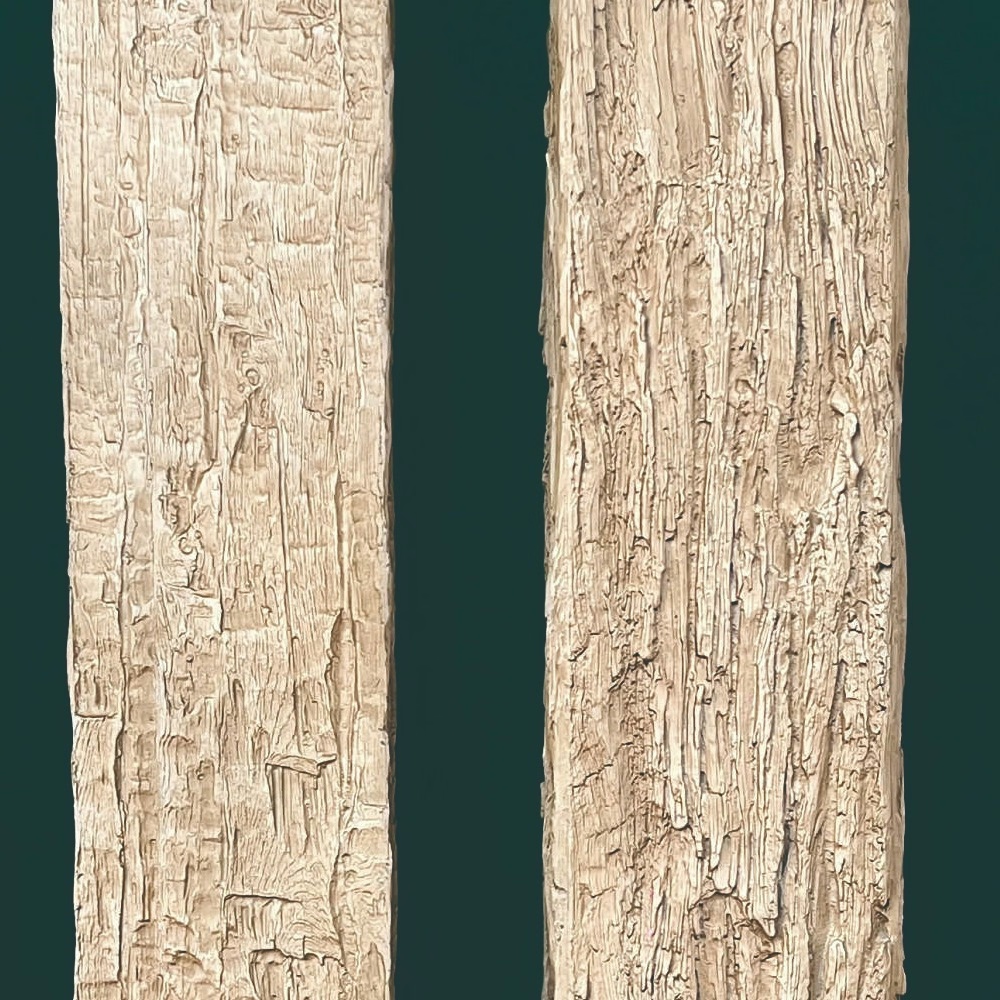
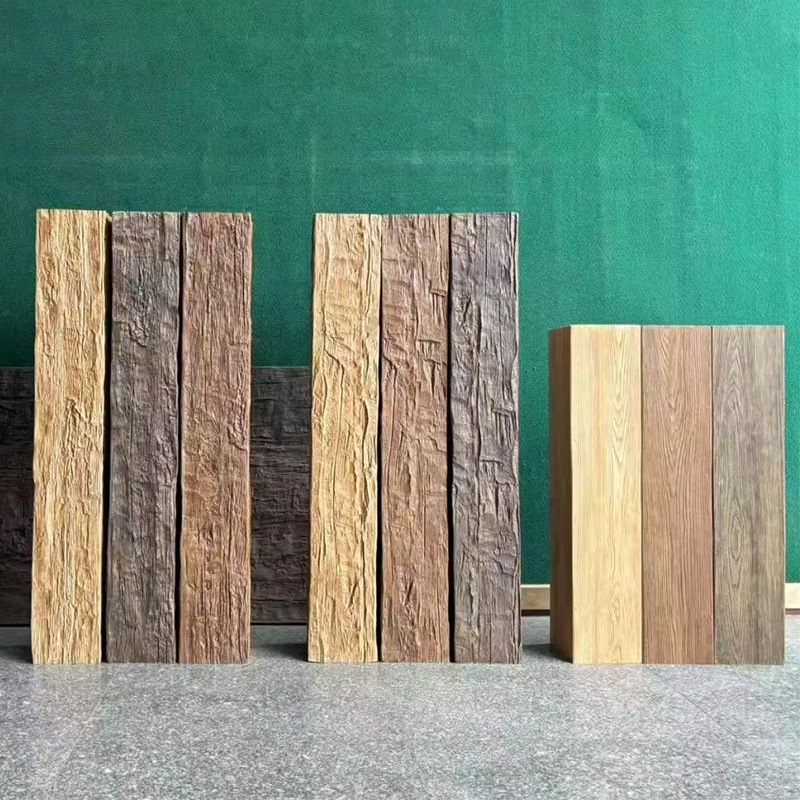
For visible coastal applications, most manufacturers offer a factory-applied topcoat that mimics the weathering patina of real timber. Aged driftwood gray, sun-bleached oak, and silvered cedar are all standard. The topcoat adds a sacrificial layer that can be refreshed every 5 to 7 years without stripping the beam back to bare foam.
Where these beams earn their place on a resort
Pool house overhangs are a common first install. The original spec usually called for teak or cedar, and the replacement spec usually calls for faux timber after the second refurbishment. The beams under a pool house overhang see splash, chlorine vapor, direct sun, and heavy use from guests.
Beachfront porte-cochères and entry canopies are another common application. These beams are often 300×300 mm or larger and run for tens of meters. Real timber at that scale is heavy, expensive, and difficult to source in consistent sections. Polyurethane at 6 to 8 kg per meter is workable by a two-person crew without crane support.
Outdoor restaurant pergolas and beach club shade structures round out the typical project list. The beams are decorative but highly visible, and the maintenance window is narrow because these spaces are revenue-generating almost every day of the year.
Design considerations for specifiers
Span and load still matter even though the beams are decorative. A 6-meter span with no intermediate support will sag visibly over time if the product has no internal reinforcement. Steel-reinforced options exist for longer spans or for installations where the beam is also supporting a light fixture or ceiling fan.
Wind load on a coastal structure is non-trivial. Hurricane zones in the Caribbean and the Gulf require specific anchoring details. The beam itself is light, which is good for seismic loading, but the connections need to be designed for uplift. Stainless steel brackets and through-bolts are standard practice.
Color selection should account for how the patina will age. Darker finishes show chalk lines faster under UV and need refreshing sooner. Mid-tone driftwood colors hide weathering longer and tend to look better after five years than they did new.
Comparing lifecycle cost to real timber
A cedar beam installed at a beach resort might cost $80 to $120 per linear meter installed, with a refinishing cycle every 18 to 24 months at $20 to $35 per meter. Over a 10-year window, the installed cost easily reaches $200 per meter in present-value terms, and the beam is usually replaced or significantly repaired at year 12 to 15.
A comparable exterior-grade PU beam might cost $60 to $90 per meter installed, with a topcoat refresh every 5 to 7 years at $8 to $12 per meter. The 10-year cost lands closer to $90 per meter, and the beam itself typically carries a 15- to 25-year warranty against structural failure.
The numbers shift further toward PU as labor costs rise and as resort operators feel the pressure to reduce annual maintenance shutdowns.
What to ask a supplier before committing
Ask for the ASTM G154 or ISO 4892 accelerated weathering test data. A good supplier will have 3,000-hour or longer reports. Ask for freeze-thaw cycle counts from a recognized lab like SGS, Intertek, or TÜV. Ask about the warranty in writing, including what happens if the skin delaminates.
Get a sample and leave it outside in your specific climate for 6 to 12 months before specifying. Nothing replaces local data. A beam that survives the south coast of England may not be the right choice for northern Japan, and vice versa.
For coastal resorts where downtime is expensive and visual consistency matters to the brand, exterior-grade polyurethane faux timber is one of those rare products that genuinely improves the lifecycle outcome while reducing the maintenance budget.

Technical References
ASTM standards cited in every specification
Test Data
Lab results from internal testing program
Updated 2026
Reviewed against current product specs


