Popcorn ceilings are one of those features that defined an era of American residential construction and then aged very poorly. Roughly half of all homes built between 1965 and 1990 have them, and many homeowners want them gone. The standard solutions are scraping, drywalling over, or installing a drop ceiling. All three are expensive, messy, or both.
A fourth option has become increasingly popular: install a full grid of faux beams across the entire ceiling. The beams visually break up the textured surface, give the room a contemporary architectural feature, and let homeowners skip the messy demolition entirely.

Why faux beams work for popcorn coverage
Popcorn texture is unpopular for two reasons. The first is aesthetic. It reads as dated and busy. The second is practical. The texture collects dust, is hard to clean, and is difficult to patch if damaged.
A full grid of faux beams addresses the aesthetic problem directly. The eye stops on the beams rather than on the texture. The texture becomes a neutral background rather than a focal point.
The beams also break up the ceiling plane in a way that makes the room feel more architectural. What was a single flat surface becomes a series of framed panels. Each panel reads as its own coffered section, even though the underlying ceiling is unchanged.
For homeowners who want a contemporary look without major construction, this is a powerful transformation at a relatively modest cost.
Layout strategies for full coverage
The most common layouts for full-coverage faux beam grids are:
A regular grid of beams running in two perpendicular directions, creating square or rectangular panels across the ceiling. This is the most uniform approach and works in square rooms or rooms where the architecture is symmetrical.
A directional grid where beams run primarily in one direction, with occasional perpendicular beams to break up long runs. This works in rectangular rooms where a directional pattern emphasizes the longer dimension.
A combination grid with a heavier perimeter beam and lighter internal beams. The perimeter beam defines the room edge, and the internal beams create a coffer pattern within. This is the most architectural approach.
The choice of layout depends on the room shape, the ceiling height, and the design intent. Most installers will mock up the layout in tape on the actual ceiling before installation so the homeowner can see the pattern before any beams are mounted.

Spacing and proportion guidance
For full ceiling coverage, beam spacing typically ranges from 1.2 to 2.4 meters on center. Closer spacing creates a finer pattern that suits smaller rooms. Wider spacing creates a bolder pattern that suits larger rooms.
The beam profile should be moderate. Profiles around 150×200 mm or 200×200 mm work for most residential applications. Heavier profiles (300 mm or more) tend to overpower the room when used at full coverage. Lighter profiles (100×150 mm or smaller) can work but may feel under-scaled against the ceiling area.
The ceiling height matters. Standard 2.4 to 2.7 meter ceilings can accommodate a beam dropped 100 to 200 mm below the ceiling plane without feeling cramped. Higher ceilings can accommodate deeper drops.
The popcorn texture itself is usually 5 to 15 mm thick. The beam should clear the highest points of the texture by at least 10 mm. This means the bottom of the beam is typically 100 to 200 mm below the original ceiling plane.
Installation approach
The most common installation approach for full ceiling coverage uses a combination of blocking and direct mounting. The installer screws or nails light-gauge timber blocking or furring strips into the ceiling joists, then attaches the faux beams to the blocking.
For popcorn ceilings, a few specific considerations matter. The texture should be tested for asbestos before any work that disturbs it. Homes built before 1980 may contain asbestos in the texture, and disturbing it requires professional abatement.
If the texture is confirmed asbestos-free, the installer should avoid scraping or aggressively disturbing it. Mounting the beams over the texture is the whole point. The texture stays in place and is hidden by the new beam grid.
The blocking needs to be solidly anchored into the joists rather than just into the ceiling material. Popcorn texture and the underlying drywall are not strong enough to hold fasteners under load. Long wood screws (75 mm or longer) into the joists provide the secure attachment.
The beam weight is light enough that the blocking does not need to be heavy. Standard 25×50 mm or 25×75 mm furring strips work for most residential profiles. Heavier beams or longer spans may require 50×75 mm or larger blocking.
Handling ceiling fixtures
Full ceiling coverage with beams requires planning around existing ceiling fixtures. Recessed lights, smoke detectors, sprinkler heads, and ceiling fans all need to be addressed.
Recessed lights can usually stay in place. The beams frame around them. The light still illuminates the room, though the pattern of light and shadow changes because the beams block some of the light spread. If the lighting was already dim, this may be a problem and additional fixtures may be needed.
Smoke detectors should not be covered. The installer frames the beam grid around the detector locations, leaving the detector in the open space between beams.
Sprinkler heads need to remain unobstructed and at the correct distance from the ceiling per fire code. This usually means leaving the area around each sprinkler clear or extending the sprinkler drop below the beam line.
Ceiling fans usually need to be relocated. The fan cannot be mounted to a faux beam. The fan should be mounted to a fan-rated electrical box attached directly to a ceiling joist, and the beam grid should be laid out around the fan location.
Cost comparison to other popcorn solutions
Scraping a popcorn ceiling typically costs $1 to $3 per square foot for a professional job, plus the cost of re-texturing or finishing the exposed drywall. The work is messy, requires moving furniture out of the room, and can take several days for an average home.
Drywalling over popcorn typically costs $2 to $5 per square foot including the drywall, installation, taping, mudding, and finishing. This is a major construction project that disrupts the home for days or weeks.
Installing a drop ceiling typically costs $3 to $7 per square foot for the grid and tiles, with the visual result being a commercial-looking ceiling rather than a residential one.
Full-coverage faux beam installation typically costs $4 to $10 per square foot depending on the beam profile and finish. The result is an architectural feature that adds value rather than just covering a problem.
Design choices that work
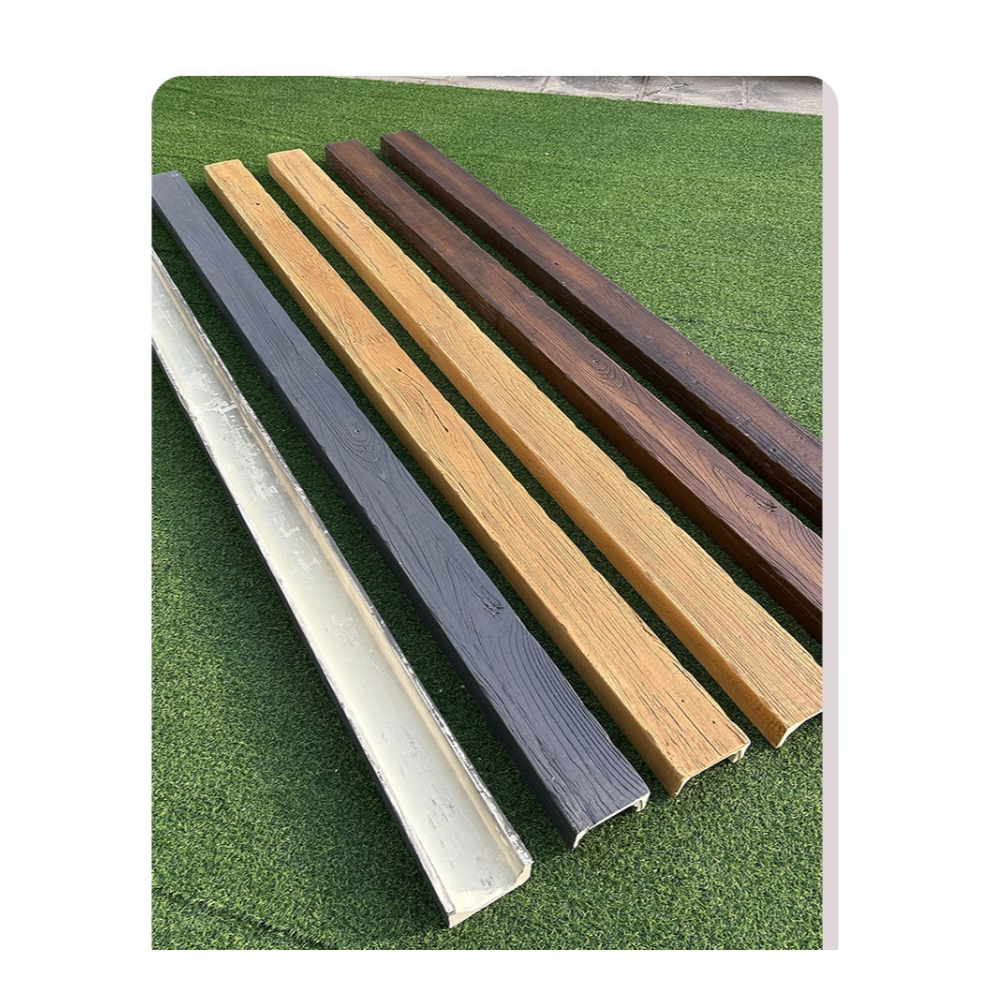
For a contemporary look, the faux beams can be in a clean oak or pale maple finish against a flat ceiling color that has been refreshed to match. The beam color and the ceiling color should be clearly different to maintain the architectural effect.
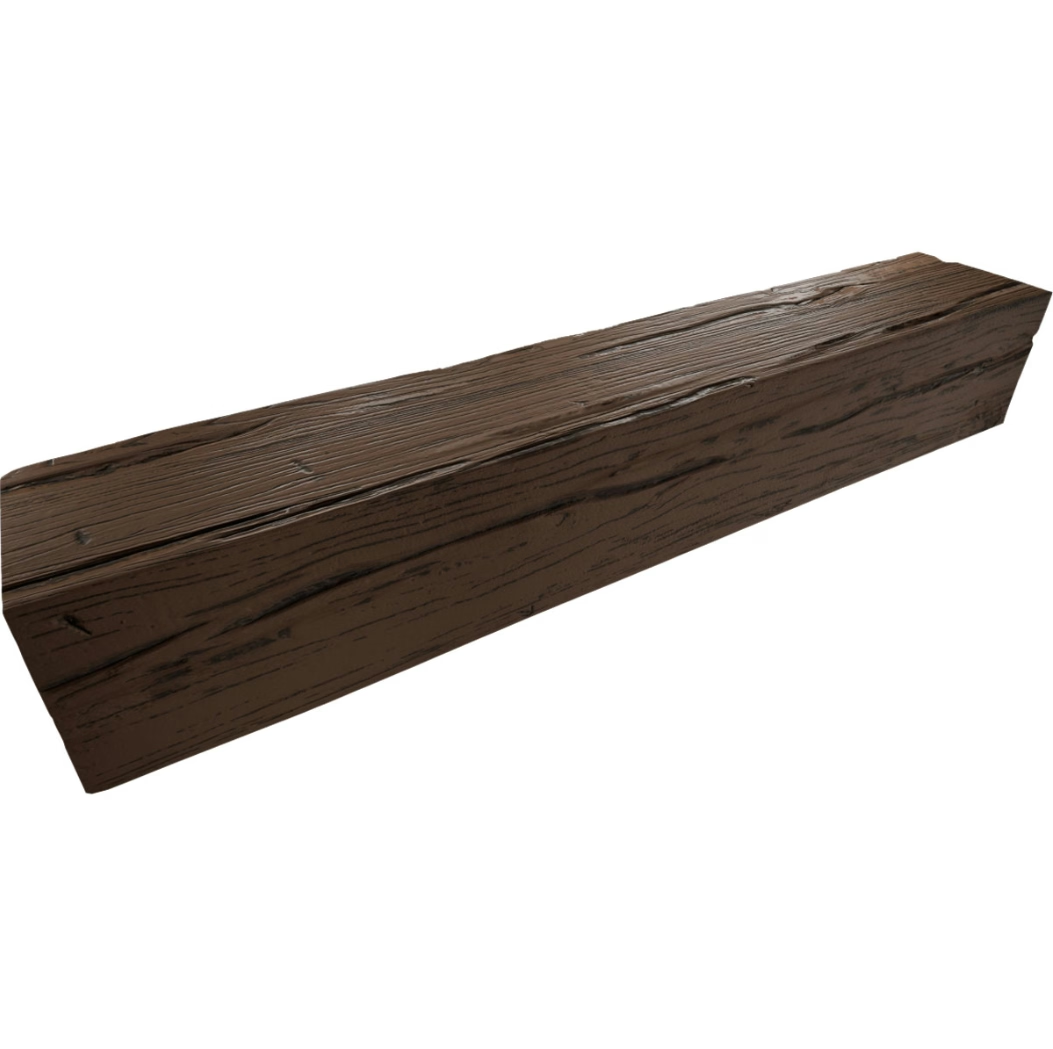
For a more traditional look, the beams can be in an aged oak or distressed walnut finish, with the ceiling color remaining soft cream or pale gray. The combination reads as a traditional coffered ceiling.
For a farmhouse or country look, the beams can be in a rustic hand-hewn finish with a softer ceiling color in cream or pale taupe. This works well in ranch homes from the popcorn era that already have some rustic character.
For a coastal or Scandinavian look, the beams can be painted in a soft white or pale gray, with the ceiling in a slightly contrasting off-white. The painted beam reads as a contemporary architectural element rather than as a wood feature.
A note on resale value
For homeowners considering resale, full-coverage faux beam ceilings are a strong feature in most markets. Buyers react well to the architectural character, and the underlying popcorn ceiling is fully covered so it does not show up in the buyer's inspection as a defect to negotiate.
In markets where mid-century or contemporary homes are popular, the beam grid can be specified to fit those aesthetics. In markets where traditional or farmhouse styles dominate, the aged oak or hand-hewn finish works better.
For a homeowner who wants to transform a dated popcorn ceiling without the mess and cost of demolition, full-coverage faux beam installation is one of the more satisfying renovation options available.

Technical References
ASTM standards cited in every specification
Test Data
Lab results from internal testing program
Updated 2026
Reviewed against current product specs