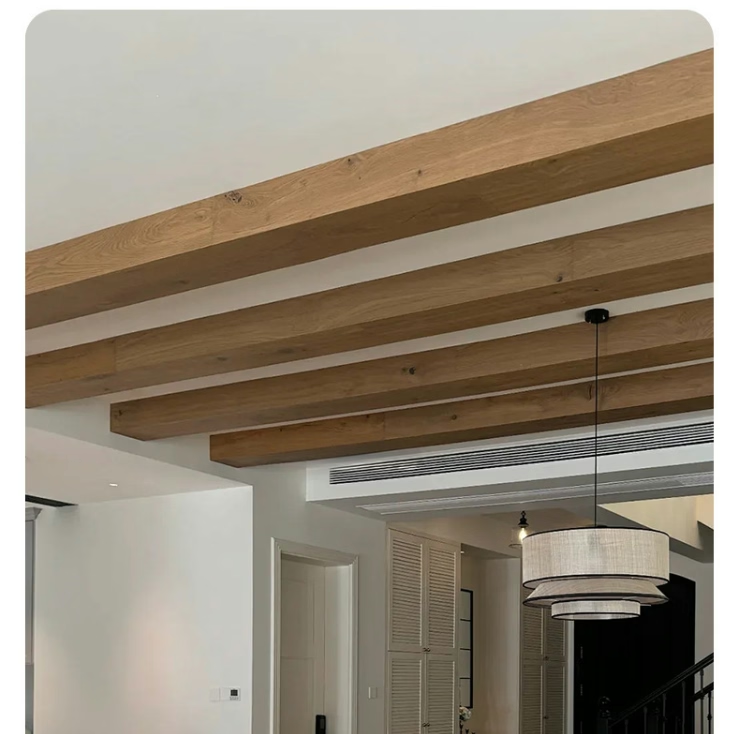
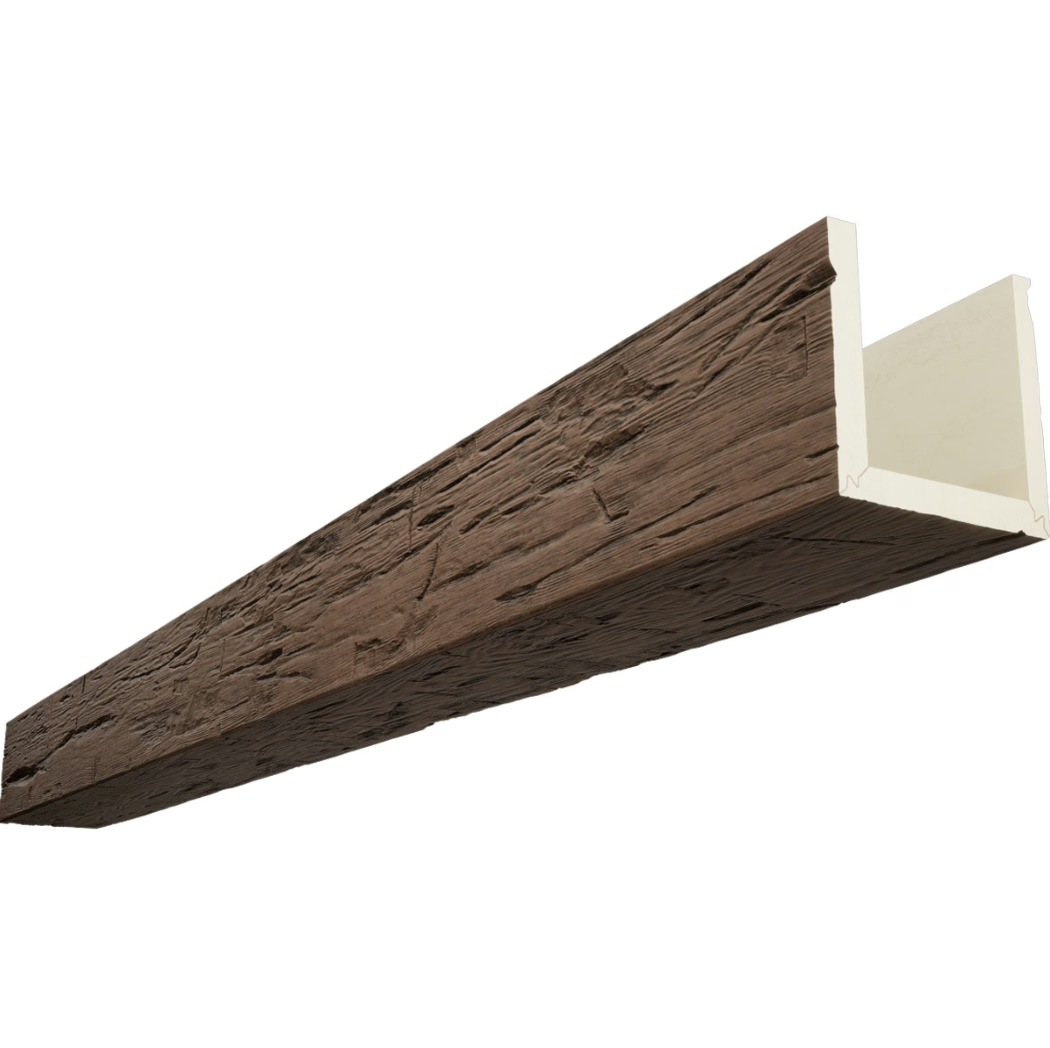
Polyurethane resin decorative beams occupy a specific niche in the faux timber market. They are typically lighter than high-density faux wood products, often use a co-extruded skin for surface detail, and are commonly specified for commercial interiors, hospitality, and themed retail environments where the beam is decorative rather than structural.
Full container load (FCL) purchasing is the standard way to source PU resin beams for larger projects. This article covers the practical aspects of bulk ordering, from specification through delivery.

Understanding PU resin in this product category
The phrase "PU resin faux beam" usually refers to a beam produced by casting or injecting liquid polyurethane resin into a closed mold, often around a structural core or a foam insert. The skin is formed by the mold surface, which can carry very fine grain detail and surface texture.
This process is different from the open-pour or continuous-extrusion methods used for some faux wood products. The mold-based process allows for highly detailed surface reproduction but is generally slower and more expensive than continuous extrusion.
The result is a beam with a hard outer skin, a uniform cellular structure inside, and surface detail that can replicate wood grain, hand-tooling, weathering, or other specific characteristics. For decorative applications where the surface appearance matters, this is the preferred product category.
PU resin beams are typically specified for:
- Hospitality interiors (hotels, resorts, restaurants)
- Retail and themed environments
- Commercial lobbies and feature ceilings
- High-end residential applications
- Restoration projects that need specific historic looks
What bulk orders look like
A typical full container load of PU resin beams might include:
- 200 to 400 linear meters of finished beam
- 20 to 60 individual beams, depending on length
- Multiple profiles and finishes in a single container if the project requires
- Total shipment weight of 4,000 to 10,000 kg depending on profile and packaging
- Container utilization of 65 to 85 percent of the 40HC volume
For very large projects, multiple containers ship on a defined schedule. A hotel renovation may take 6 to 12 containers over 4 to 8 months. A new-build commercial project may take 15 to 30 containers over 12 to 18 months.

Specification considerations for bulk orders
The specification document for a bulk PU resin beam order needs to cover more detail than a simple interior-grade order. The key points are:
Profile dimensions: cross-section dimensions, edge profile, length tolerance. For multi-profile orders, each profile needs its own specification.
Surface detail: mold number or reference, surface texture description, grain pattern reference. For custom finishes, an approved control sample.
Color and finish: color reference (Pantone, RAL, or sample), finish type (matte, satin, gloss), and aging or weathering effects if applicable.
Fire performance: many commercial projects require specific fire ratings. ASTM E84, EN 13501-1, or GB 8624 classifications should be specified and supported by test reports.
VOC and emissions compliance: for indoor applications, low-VOC or GREENGUARD certification may be required.
Packaging: bundle size, pallet type, wrapping specification, container packing plan.
Marking: project name, room or zone identification, install sequence number, or any other project-specific marking.
The buyer should provide this specification as a controlled document with version control. Any changes during production should trigger a revised document and supplier confirmation.
Pricing and discount structure
PU resin beam pricing for bulk orders typically includes:
Base unit price: the cost per linear meter at standard FCL quantities.
Profile setup charge: a one-time charge for custom profiles or non-standard dimensions. This is usually amortized over the first production run.
Finish setup charge: a one-time charge for custom finishes or colors. May be waived for standard finishes.
Tooling or mold charge: for custom profiles, a charge to produce the mold. This can be significant for new profiles.
Discount tier: FCL pricing is typically 10 to 20 percent below small-order pricing. Additional volume tiers may apply.
Payment terms: usually 30 percent deposit with order, 70 percent against shipping documents. Custom tooling may require 50 percent upfront.
The buyer should request a complete pricing breakdown in writing before the order is placed. This makes it easy to compare offers from different suppliers on an apples-to-apples basis.
Quality standards for resin beams
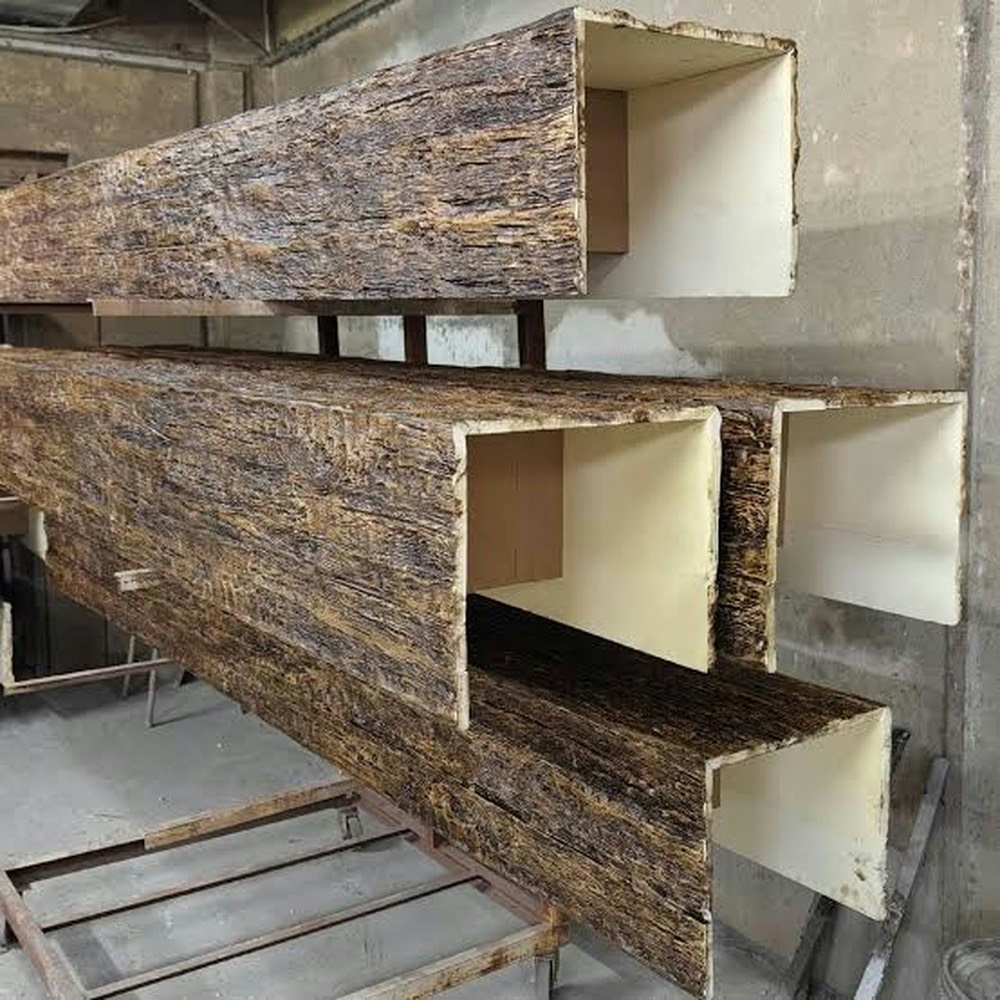
Quality standards for PU resin beams are typically more demanding than for general faux wood products because the resin formulation is more sensitive and the surface finish is more visible.
Common quality criteria include:
Surface integrity: no voids, bubbles, blisters, or flow lines visible on the surface. Surface should match the approved control sample in texture and color.
Dimensional accuracy: cross-section dimensions within ±2 mm, length within ±3 mm. Tighter tolerances may be available at additional cost.
Skin adhesion: the surface skin should not delaminate from the core under normal handling. A pull test or cross-cut test is sometimes specified.
Color consistency: color should match the approved control sample within a defined tolerance (usually ΔE 2 or better under controlled lighting).
Density: foam core density should meet the specification (typically 250 to 400 kg/m³ depending on application).
Fire performance: if specified, fire rating should be supported by test reports from an accredited lab.
Acceptable Quality Limit (AQL): the buyer and supplier should agree on an AQL for visual defects. AQL 1.0 to 2.5 is typical.
For high-visibility commercial projects, the buyer may want to specify tighter tolerances than the supplier's standard. This usually comes at a cost premium but reduces the risk of visible quality issues after installation.
Production lead times
PU resin beams have longer production lead times than continuously extruded faux wood products. The mold-based process is slower, and curing time is built into the cycle.
Typical lead times:
- Standard profiles in standard finishes: 15 to 25 days
- Standard profiles in custom finishes: 20 to 35 days
- Custom profiles: 30 to 60 days (including mold production)
For large multi-container orders, production is usually staged. The supplier produces and ships containers over a period of weeks or months rather than completing the entire order before the first shipment.
The buyer should confirm the production schedule in writing and track progress against milestones. A common approach is to tie deposit payments to production milestones.
Container packing and shipping
PU resin beams are typically packed in corrugated carton sleeves, then bundled and wrapped on pallets or slip sheets. The packing density depends on the profile and the length.
For mixed-profile orders, the packing plan is more complex. The buyer should request a packing plan that shows how the container is loaded, including any special dunnage or bracing.
Common packing problems:
- Insufficient dunnage leading to shifting in transit
- Mixed profiles packed without clear separation
- Insufficient protection on the skin surface
- Improper weight distribution causing the container to exceed axle limits
For international shipments, the container should be inspected before sealing. The buyer or a third-party inspector should confirm the load matches the packing list and that the container is in good condition.
Receiving and quality inspection at destination
When the container arrives at the destination, the buyer should inspect the goods before signing off on the shipment. This is the buyer's main opportunity to identify any transit damage or quality issues.
A standard receiving inspection includes:
Visual inspection: examine each beam for surface damage, color variation, or other visible defects. Compare against the approved control sample.
Quantity verification: count the beams and verify against the packing list.
Dimensional check: spot-check beam dimensions against the specification.
Documentation review: verify that all required documents are present and accurate.
Damage documentation: photograph and document any damage before the container is unloaded. This is needed for any insurance claim.
The buyer should have a clear protocol for handling non-conforming goods. Some defects can be repaired on site. Others require the beam to be replaced. The protocol should be agreed with the supplier before the first shipment.
Long-term supplier relationship benefits
For buyers who place regular bulk orders, a long-term relationship with a PU resin beam supplier brings several benefits beyond unit price:
Priority production scheduling: established buyers get priority during peak production periods.
New product access: established buyers often get first access to new profiles and finishes.
Improved payment terms: as the relationship matures, the supplier may offer more flexible payment terms.
Custom development: established buyers can more easily commission custom profiles or finishes.
Joint problem solving: when issues arise, an established relationship makes resolution faster and more collaborative.
The relationship investment pays off over multiple orders. The disciplined buyer approaches the relationship with a long-term perspective rather than transactionally.
A short checklist for first-time bulk orders
- Provide a detailed specification document
- Request a complete pricing breakdown in writing
- Confirm production lead time and shipping schedule
- Arrange for pre-production samples and approval
- Plan a pre-shipment inspection
- Coordinate destination logistics with a customs broker
- Prepare a receiving inspection protocol
- Document everything in writing
For commercial buyers who need PU resin decorative beams in volume, this disciplined approach to bulk ordering protects the buyer's investment while building the kind of supplier relationship that delivers value over many orders.

Technical References
ASTM standards cited in every specification
Test Data
Lab results from internal testing program
Updated 2026
Reviewed against current product specs