Curved faux wood beams are one of the more challenging products to ship in volume. Their shape defeats the standard packaging and loading patterns that work for straight beams. They are more fragile in transit because the geometry concentrates stress at certain points. And they are expensive to replace if damaged.
Despite these challenges, curved beams ship successfully in full container loads for projects around the world. This article looks at the practical methods that suppliers and buyers use to handle curved beam shipments, and what to plan for when ordering.

Why curved beams are different
Straight beams stack. Curved beams do not. The geometric challenge is the fundamental reason curved beam shipping requires more planning than straight beam shipping.
A straight 6-meter beam in a 200×200 mm profile has a simple rectangular envelope. Forty or fifty of them can be stacked in a 40HC with reasonable efficiency. The stack is stable, the load is balanced, and the packing density is high.
A curved beam with a 3-meter radius, in the same profile, has an envelope that is shaped like an arc. The packing density drops immediately because curved beams do not nest neatly. They need internal bracing, custom crating, or both to ship safely.
The other challenge is fragility. A curved beam is weakest at the apex of the curve and at the transition points. Stress concentrates at these locations during handling. A drop, a bump, or an awkward lift can crack the skin or break the beam.
Both the packaging challenge and the fragility issue require custom solutions that add cost and complexity compared to straight beam shipping.
Common applications for curved beams
Curved faux wood beams are typically specified for:
Vaulted ceiling transitions: the curved beam marks the transition from a flat ceiling to a vaulted or domed section above.
Barrel ceiling features: restaurant or hotel lobbies with barrel-vaulted ceilings often use curved beams to define the curve.
Arch and eyebrow details: architectural features where a beam defines an arch over a window, doorway, or feature element.
Barrel-vaulted corridors: hallways with curved ceilings where beams run along the curve.
Custom feature ceilings: one-off designs that include curved or arched beam elements.
In all these applications, the curved beam is usually a focal feature. The buyer cannot afford to have a damaged beam in the shipment.
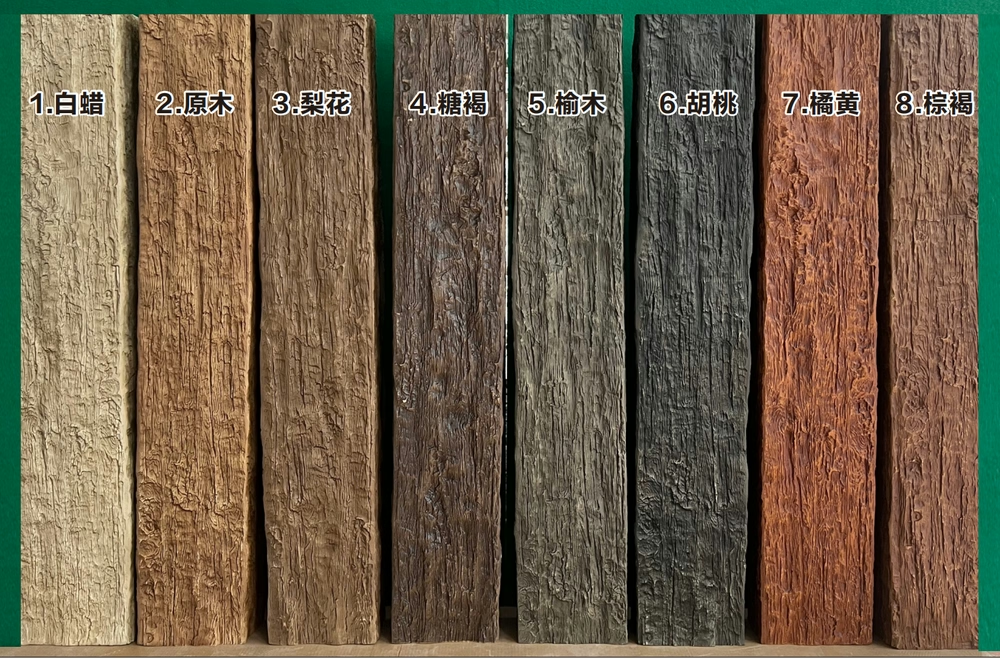
Packing methods for curved beams
Several packing methods are used for curved beams, each with trade-offs:
Individual cardboard cradles. Each curved beam is nested in a custom-cut cardboard cradle that supports the curve and prevents point loading. The cradles are then stacked or racked in the container. This is a common method for moderately curved beams where the curve is gentle.
Custom wooden crates. Each beam or pair of beams is mounted in a wooden crate with internal bracing that follows the curve. This is the most protective method but also the most expensive in materials, labor, and container volume.
Foam-in-place packaging. The beam is wrapped in plastic and surrounded by expanding foam that conforms to the shape. The foam provides excellent protection but is difficult to remove and dispose of at the destination.
Suspension packing. The beam is hung from the ceiling of the container using straps or brackets, with foam or padding between the beam and the container floor. This works for lighter beams but is sensitive to container movement.
Layered cardboard dividers. For beams with very gentle curves, custom-cut cardboard dividers can create cells that hold each beam in place. This is the lowest-cost method but only works for specific shapes.
The choice of packing method depends on the beam fragility, the container utilization requirement, and the buyer's cost tolerance.
Container utilization rates
Curved beams almost always achieve lower container utilization than straight beams. Typical numbers:
- Straight beam FCL: 70 to 85 percent volume utilization
- Gently curved beam FCL: 50 to 70 percent volume utilization
- Tightly curved beam FCL: 35 to 55 percent volume utilization
The lower utilization means higher freight cost per beam. For tightly curved beams, the freight cost can be 50 to 100 percent higher per beam than for straight beams of similar size.
This is one of the reasons curved beams are more expensive than straight beams in delivered cost, even when the production cost is only slightly higher.
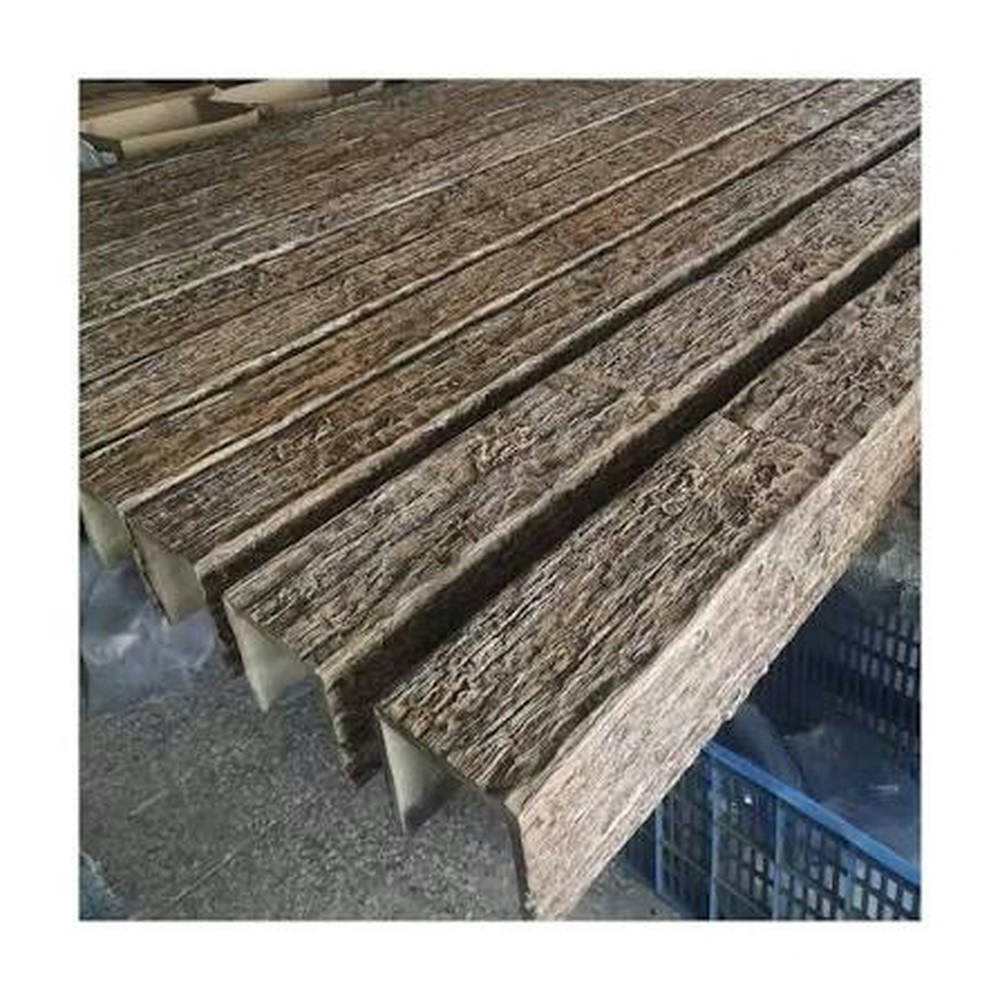
Freight considerations
For curved beam shipments, the freight cost per unit is higher and the handling requirements are stricter. The buyer should plan for this in the project budget.
A few specific considerations:
Insurance coverage: marine cargo insurance should be confirmed for curved beam shipments. The premium is usually the same percentage of cargo value, but the claim process needs to recognize the higher damage risk.
Handling instructions: the container should be marked with handling instructions and "do not stack" or "this side up" labels as appropriate. The freight forwarder should brief the receiving team on the special handling requirements.
Port handling: at both origin and destination, the container needs to be handled with care. Ports that are used to handling standard building products may not have protocols for curved beams. The buyer or their forwarder should brief the port handling team.
Inland transport: the inland leg from port to project site often involves multiple handling points. The buyer should ensure the trucking company has experience with fragile or unusual cargo.
Pre-shipment inspection is essential
For curved beam shipments, pre-shipment inspection is not optional. Every beam should be inspected before it is packed and again after packing but before the container is sealed.
The first inspection confirms that the beams meet the specification in shape, color, and finish. Any defects should be corrected before packing, because repairs are much harder after the beam is in a crate or cradle.
The second inspection confirms that the packing is correct and the beams are secure. Photographs of the packed beams should be taken and shared with the buyer. Any concerns should be addressed before the container is sealed.
The inspection cost for a curved beam shipment is higher than for a straight beam shipment, but the cost of replacing a damaged beam in production is also higher. The economics favor inspection.
Production planning for curved beams
Curved beams are usually produced against a specific project order rather than as stock items. The mold or forming equipment is set up for the specific curve, and the production run is sized to the order plus a small allowance for damage or replacement.
Production lead times for curved beams are typically 30 to 60 days, longer than for straight beams. The buyer should plan this into the project schedule.
For large orders with multiple curved beams of the same profile, the supplier may produce in batches and ship each batch as it is completed. This spreads the production risk and provides earlier delivery of part of the order.
For projects with both straight and curved beams, the curved beams can be the long-pole item. The buyer should order the curved beams early enough that they do not hold up the rest of the shipment.
Coordinating with the project site
Curved beams are usually installed by specialists rather than general contractors. The installer needs to be involved early in the process to confirm the beam specifications, the install sequence, and any site-specific requirements.
A pre-installation meeting between the supplier, the installer, and the buyer's project manager is standard practice. The meeting confirms the install sequence, identifies any site constraints, and plans for the handling of the curved beams on site.
The curved beams should be installed before the surrounding structure is closed in. This gives the installer the access needed and avoids damage to other finishes.
Damage replacement planning
Even with the best packaging and handling, a small percentage of curved beams may arrive damaged. The buyer should plan for this by:
Ordering a small overrun (typically 5 to 10 percent) above the project requirement.
Identifying a replacement timeline with the supplier in case damage occurs.
Keeping damaged beams for potential salvage or for use as patterns for replacements.
Documenting damage thoroughly for any insurance claim.
The replacement beam typically needs to go through the full production cycle again, which means a 30 to 60 day delay. The buyer should have contingency plans for cases where the project schedule cannot accommodate this delay.
Working with experienced suppliers
Curved beam container shipping is not the right place for a first-time supplier relationship. The buyer should work with a supplier who has shipped curved beams in volume before and can demonstrate successful project references.
The experienced supplier will have:
- Packing methods proven for the specific type of curved beam
- Relationships with freight forwarders who understand curved beam handling
- Production capacity for curved beam orders
- Quality control processes specific to curved beam manufacturing
- Insurance relationships that cover curved beam shipments
The buyer should ask for references and ask to see photographs of previous curved beam container shipments. This is the best way to assess whether the supplier has the experience required.
A practical approach to curved beam orders
For most projects, the right approach to curved beam container shipping is:
- Involve the supplier early in the design phase to confirm feasibility and cost
- Confirm the packing method in writing before production starts
- Order a 5 to 10 percent overrun to allow for damage
- Plan a pre-shipment inspection with the buyer or a third-party inspector
- Coordinate destination handling with an experienced freight forwarder
- Plan a receiving inspection protocol at the project site
- Have contingency plans for replacement beams if damage occurs
With this disciplined approach, curved beam container shipping is manageable even for large projects. The key is recognizing that curved beams require more care than straight beams and budgeting time and money accordingly.

Technical References
ASTM standards cited in every specification
Test Data
Lab results from internal testing program
Updated 2026
Reviewed against current product specs


