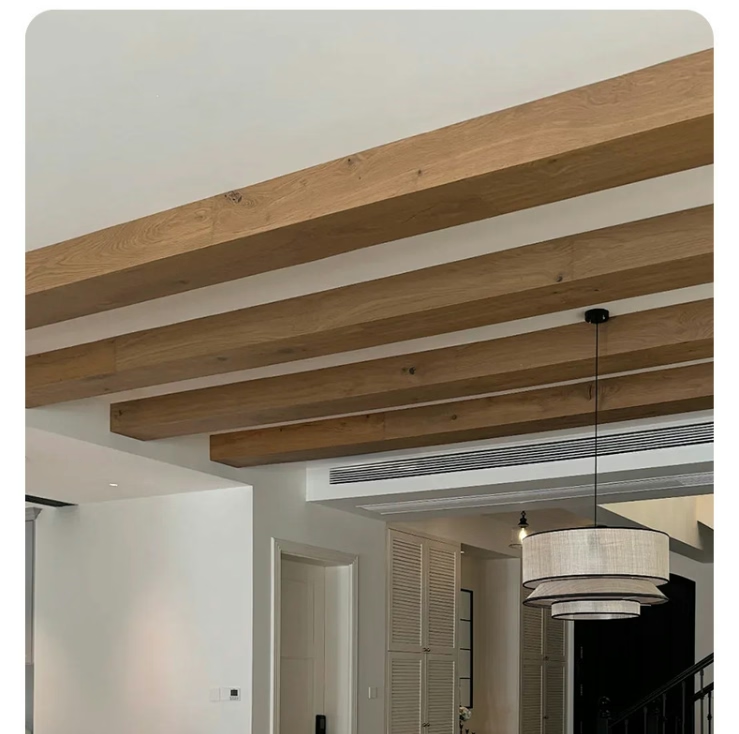
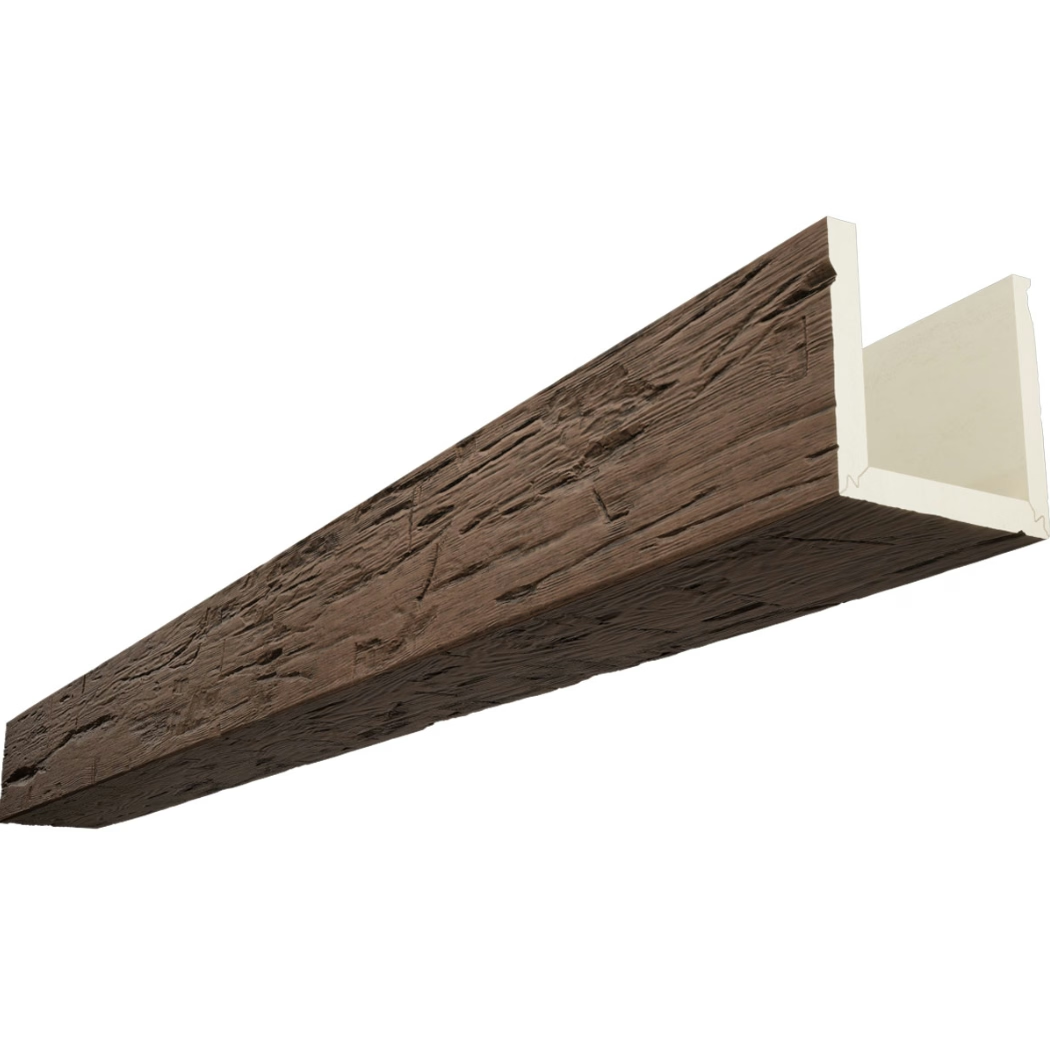
Large interior projects involving decorative beams have a way of growing in complexity once work begins. What starts as a simple specification for "wood-look beams across the lobby ceiling" expands into coordination with lighting designers, structural engineers, fire safety consultants, finishing contractors, and project schedulers. Each trade has its own priorities, and when beam selection affects what every other trade does, decision-making gets fragmented in ways that slow projects and inflate costs.
Turnkey solutions exist precisely because fragmentation creates problems. A turnkey beam supplier takes responsibility for the entire scope: design consultation, custom manufacturing, hardware engineering, fire certification, finishing coordination, logistics, and sometimes even installation. The principal contractor or property owner deals with one supplier rather than coordinating a dozen. That single point of responsibility reduces risk, accelerates decisions, and produces more coherent end results.
The turnkey model works best when the supplier has both manufacturing capability and project management experience. A factory that just makes beams can produce excellent products but cannot coordinate with the lighting designer or manage installation logistics. A project management firm without manufacturing depth sources beams from subcontractors and adds markup without controlling quality. The supplier who does both, designs and makes the beams in-house and manages the full project, offers something that other models cannot match.
What turnkey really covers
Design consultation at the front end helps align the beam specification with the overall interior concept. The turnkey supplier reviews architectural drawings, discusses aesthetic direction with the designer, and proposes beam specifications that work within the visual concept. This consultation identifies issues early that would be expensive to address after beams are manufactured.
Custom manufacturing produces beams to the exact specifications the project requires. Lengths are cut to fit specific ceiling dimensions. Profiles are molded to match the architectural style. Textures and finishes are developed to coordinate with other materials in the space. Custom manufacturing extends beyond standard catalog products to create beams that exist for this specific project.
Hardware engineering addresses the structural side of beam installation. Brackets are designed for the specific beam weight, ceiling structure, and any seismic or wind load requirements. Engineering calculations confirm that the mounting system can support the beams safely over the project lifetime. Hardware is manufactured or sourced to match the engineering specification.
Fire certification is verified for the specific beam formulation used in the project. Test reports are matched to the production run rather than relying on generic certifications. If the formulation requires adjustment for fire performance, the adjustment is made before production begins. Documentation is prepared in the format required by the project jurisdiction.
Finishing coordination ensures that the beam finish matches other materials in the space. Color matching with floor finishes, wall colors, and other millwork is done by the same supplier rather than relying on the finishing contractor to match independently. Stain colors, paint sheens, and texture treatments are specified together rather than pieced together from separate decisions.
Logistics coordination manages the movement of beams from factory to installation site. This includes production scheduling to align with construction milestones, packaging designed for the specific shipping route and duration, customs clearance for international projects, and delivery sequencing that matches the installation schedule.
Installation oversight ranges from remote consultation to full on-site installation management. Some turnkey suppliers provide only installation guidance and leave actual installation to the general contractor. Others provide installation crews who handle the beam work directly. The level of involvement should be specified in the turnkey agreement.
Where turnkey adds the most value
Historic building renovations often benefit from turnkey beam solutions because the existing structure creates unusual requirements. Old buildings have non-standard dimensions, hidden conditions revealed during construction, and preservation requirements that constrain what can be modified. A turnkey supplier experienced with historic work can navigate these constraints while delivering beams that respect the building's character.
Hospitality projects including hotels, restaurants, and event venues often have aggressive schedules that compress design, manufacturing, and installation into short timeframes. Turnkey suppliers with project management capability can run these compressed schedules more reliably than fragmented teams. The single point of responsibility prevents the scheduling conflicts that occur when multiple trades each manage their own timelines.
Mixed-use developments combine residential, commercial, and sometimes retail components with different finish requirements for each. Coordinating beam finishes across multiple spaces within a single project is easier when one supplier manages the entire beam scope. Variations between residential and commercial fire ratings can be handled within the same project without fragmenting the supply chain.
International projects that cross borders create documentation and logistics complexity that benefits from turnkey coordination. A supplier who can manage export documentation, customs clearance, and destination-country compliance reduces the burden on the principal contractor. Single-source responsibility for international projects avoids the coordination gaps that cause customs delays and compliance problems.
Custom architectural features like vaulted ceilings, coffered designs, and complex geometries require beam specifications that coordinate with many other elements. Turnkey suppliers can integrate beam design with the structural, lighting, and HVAC design rather than addressing beams as an isolated component. The integrated approach produces cleaner results than treating beams as an add-on after other design is complete.

How turnkey projects get priced
Fixed-price contracts are common for well-defined turnkey scopes. The supplier commits to delivering the specified beams and services for an agreed price, with change orders for scope modifications. Fixed pricing works well when the project scope is clear from the start and changes are minimal.
Cost-plus contracts apply to projects with undefined scope or anticipated changes. The supplier charges for actual costs plus a markup for overhead and profit. Cost-plus contracts require transparent cost reporting and trust between parties. They work well for complex projects where scope cannot be fully defined upfront.
Unit pricing combined with project management fees is a hybrid approach. Beam units have fixed prices, while project management services are billed separately. This approach allows the project scope to evolve while providing cost certainty for the physical product.
Phased pricing aligns payments with project milestones. Initial payment covers design and engineering. Subsequent payments cover manufacturing milestones, delivery, and installation completion. Phased pricing protects both parties by tying payments to progress.
Currency and payment terms for international projects add complexity. Turnkey suppliers experienced in international work can quote in multiple currencies, accept letters of credit, and structure payment terms that satisfy both buyer and seller requirements. Payment terms are often a more significant factor than unit price for large international projects.
Selecting a turnkey beam supplier
Manufacturing capability is the foundation. The supplier must be able to produce the beams to the specifications the project requires. Visit the factory if possible, or request virtual tours, to confirm manufacturing capability. Look for evidence of similar projects the supplier has completed.
Project management experience indicates that the supplier can coordinate the full scope. Ask for references from comparable projects. Talk to past clients about how the supplier managed communication, handled problems, and delivered against the schedule.
Design capability allows the supplier to contribute to the design rather than just executing specifications. Some turnkey suppliers have in-house designers who can suggest beam configurations, profiles, and finishes that work with the overall concept. This design capability adds value beyond pure execution.
Fire and compliance expertise is critical for commercial projects. The supplier should understand the fire codes applicable to the project jurisdiction and be able to produce beams that meet those codes with documented certification. Suppliers without compliance expertise create risk for the project.
Financial stability matters for large projects that span months or years. A supplier that fails financially mid-project leaves the principal contractor with incomplete work and no recourse. Check financial references and confirm that the supplier has the working capital to complete the project scope.
Geographic presence can be valuable for projects in specific regions. Suppliers with offices or warehouses near the project site can provide faster response and lower logistics costs. International projects benefit from suppliers with experience in the destination country.

Managing turnkey projects effectively
Clear scope definition at the start prevents disputes later. The turnkey agreement should specify exactly what is included and what is excluded. Design changes, additional beams, modified finishes, or scope expansion should be documented as formal change orders with adjusted pricing and schedule.
Regular communication keeps the project on track. Weekly or biweekly calls between the principal contractor and the turnkey supplier ensure that issues surface early. Written meeting notes with action items and responsibilities provide a record that prevents misunderstandings.
Site visits by the turnkey supplier during critical phases confirm that installation matches the design intent. Suppliers who inspect their own work catch problems before they become expensive to correct. Site visits also demonstrate commitment to the project outcome.
Documentation maintenance throughout the project supports final project delivery. As-built drawings showing actual beam locations, fire certification documentation for installed beams, maintenance manuals, and warranty information all need to be organized and delivered at project completion.
Warranty and post-installation support should be specified in the turnkey agreement. Beams that develop problems after installation need to be addressed by the supplier, not left to the property owner to resolve. Clear warranty terms and responsive post-installation support protect both parties.
Common pitfalls in turnkey projects
Scope creep is the most common problem. Projects that start with a clear scope gradually expand as additional features are requested, additional spaces are added, or design changes occur. Each change affects cost and schedule. Disciplined change management prevents scope creep from undermining the project budget and timeline.
Communication gaps between the turnkey supplier and other project participants create coordination problems. The supplier needs to be integrated into the overall project communication rather than treated as an isolated component. Regular participation in project team meetings keeps everyone aligned.
Quality assurance gaps occur when the turnkey supplier assumes that their standard quality processes are sufficient for the specific project. Project-specific quality requirements may exceed standard processes. Defining quality requirements in the turnkey agreement ensures that the supplier meets the project needs.
Timeline assumptions that prove optimistic create schedule pressure that compromises quality. Be realistic about production lead times, especially for custom beams with specialty finishes or fire ratings. Buffer time in the schedule absorbs unexpected delays without derailing the project.
Change order disputes arise when the supplier and contractor disagree about whether a request is a change or included in the original scope. Clear scope definition and a defined change order process prevent disputes. Good turnkey agreements specify what constitutes a change and how changes are priced.
Technical References
ASTM standards cited in every specification
Test Data
Lab results from internal testing program
Updated 2026
Reviewed against current product specs