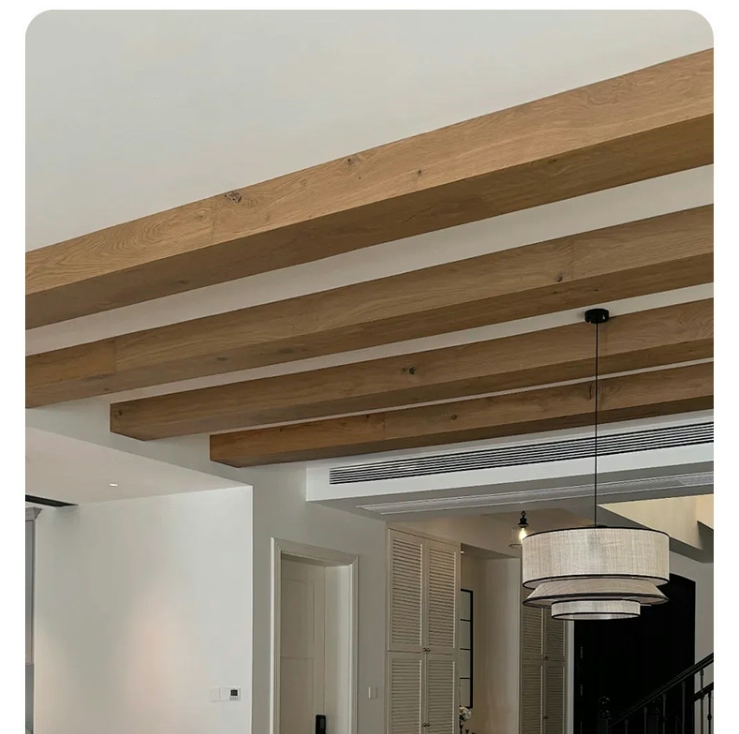
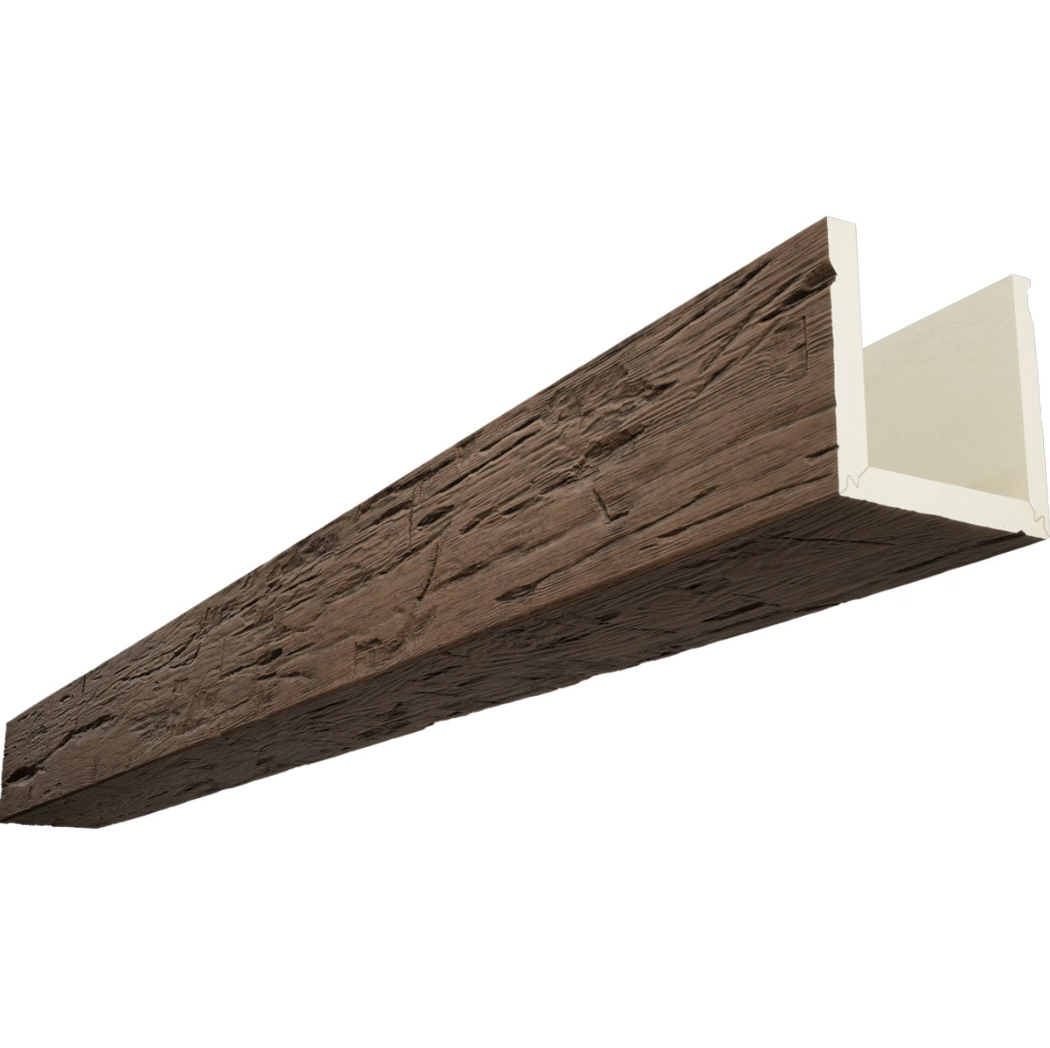
The global trade in polyurethane architectural millwork is one of those quiet, steady markets that rarely makes headlines but consistently posts solid growth year after year. Unlike fashion-driven product categories, decorative millwork serves a basic human appetite for warmer, more crafted interiors, and the lightweight nature of PU makes it possible to ship that warmth across oceans at a reasonable cost. Recent export data shows the category continuing to grow, with shifts in the regional mix that are worth understanding for anyone planning a sourcing strategy.
The Overall Growth Pattern
Aggregate export volumes of lightweight PU architectural millwork — including faux beams, decorative corbels, ceiling panels, and column wraps — have grown at a compound annual rate in the high single digits for the past several years. The growth has not been explosive, and that is part of what makes the category attractive to manufacturers. It grows through renovations, hospitality projects, residential developments, and the gradual replacement of heavier, harder-to-ship materials.
The biggest source of this growth is the continued shift away from solid timber and plaster for decorative ceiling and wall elements. Both materials are heavy, both are labour-intensive to install, and both are increasingly difficult to source sustainably. Polyurethane offers a credible visual replacement at a fraction of the weight, which means it can be shipped anywhere and installed by almost any trade.
The Major Source Countries
China remains the dominant exporter of PU architectural millwork by volume, with manufacturing concentrated in coastal provinces that have well-developed export logistics. The advantage of Chinese supply is scale, mould variety, and a deeply experienced tooling base that can produce consistent profiles across very large production runs.
Other significant source countries include Turkey, which serves European and Middle Eastern markets with shorter transit times, and Vietnam, which has been steadily building capacity for North American buyers looking for diversification away from China. Eastern European producers, particularly in Poland and Romania, supply the EU with shorter lead times and tariff advantages, though their product range is still narrower than the Chinese offering.
The source-country mix is becoming more diverse each year. Buyers who once defaulted to a Chinese supplier are now running multi-source strategies that include at least one backup geography in case of tariff disruption, freight rate spikes, or capacity constraints.
The Major Destination Markets
The United States is the single largest destination for PU architectural millwork, and it has been for over a decade. The combination of a strong renovation market, an active hospitality sector, and a large population of new residential construction creates sustained demand for the category. Importers in the US typically source in full container loads and distribute to big-box retailers, regional building suppliers, and online channels.
The European Union is the second largest destination region, with Germany, France, the UK, Italy, and Spain absorbing the bulk of volume. European demand skews toward more refined, painted finishes and toward profiles that suit classical and contemporary interior styles. The Middle East has emerged as a fast-growing destination, particularly the UAE, Saudi Arabia, and Qatar, where high-end residential and hospitality projects favour ornate mouldings and beam profiles that complement luxury interior themes.

Southeast Asia is another growth region, with Vietnam, the Philippines, Indonesia, and Thailand all expanding their import volumes. Local construction booms, rising middle-class home renovation activity, and the growth of branded hotel chains across the region are all contributing. Latin America, particularly Mexico, Colombia, and Chile, is also growing from a smaller base, driven by residential and commercial construction.
The Role of E-Commerce in Trade Growth
The expansion of cross-border e-commerce platforms has introduced more small and mid-sized buyers to PU millwork. A decade ago, the typical importer was a building products distributor with a warehouse and a sales force. Today, the typical importer can be a small design firm, a regional contractor, or an online retailer who places smaller, more frequent orders.
This shift has changed the demand pattern at the manufacturer level. There is now meaningful demand for mixed container loads, retail-friendly packaging, and product configurations that suit e-commerce fulfilment — individual piece labelling, smaller cartons, and protective packaging that survives individual parcel delivery.
The Trends Shaping the Next Few Years
Several trends are likely to shape the next phase of PU millwork exports. The first is the continued refinement of surface finishes. Buyers are asking for deeper wood grain embossing, more accurate colour matching, and matte surfaces that look less plasticky than older PU products. Manufacturers investing in better moulds and better coating technology are gaining share.
The second trend is customisation. As the market matures, more buyers want profiles that are not in any standard catalogue. Custom moulds for unique beam profiles, corbel designs, and ceiling medallions are becoming a meaningful part of the business, particularly for the hospitality and high-end residential segments.
The third trend is sustainability. Buyers are asking about recycled content, low-VOC formulations, and end-of-life disposal. Manufacturers who can document their environmental practices and offer products that meet specific certifications are increasingly preferred, even at a small price premium.
What This Means for Buyers and Manufacturers
For buyers, the data points to a healthy supply market with multiple sourcing options. Capacity is not constrained, lead times are reasonable, and pricing remains competitive. The biggest risks for buyers are freight rate volatility and tariff changes, both of which are outside the manufacturer's control but can be partially hedged with longer-term contracts and multi-source strategies.
For manufacturers, the data suggests that the category will continue to grow, but the share of value will shift toward those who can offer the most realistic finishes, the most flexible customisation, and the most reliable logistics. The era of selling commodity PU beams at commodity prices is fading. The era of selling well-engineered, beautifully finished, efficiently shipped PU millwork is just beginning.
A Practical View of the Numbers
A reasonable working assumption for someone planning a sourcing strategy is that global demand for PU architectural millwork will continue to grow in the five to ten percent range annually for the next several years. Within that growth, the share going to emerging markets will rise faster than the share going to mature markets, and the share going to customised, high-finish products will rise faster than the share going to standard catalogue items.
These assumptions are not guarantees, but they are consistent with the export data and the broader trends in construction, renovation, and interior design. For a buyer building a long-term supply partnership, or for a manufacturer planning capacity, they offer a reasonable baseline for the kind of planning that makes the difference between scrambling and growing.
Technical References
ASTM standards cited in every specification
Test Data
Lab results from internal testing program
Updated 2026
Reviewed against current product specs