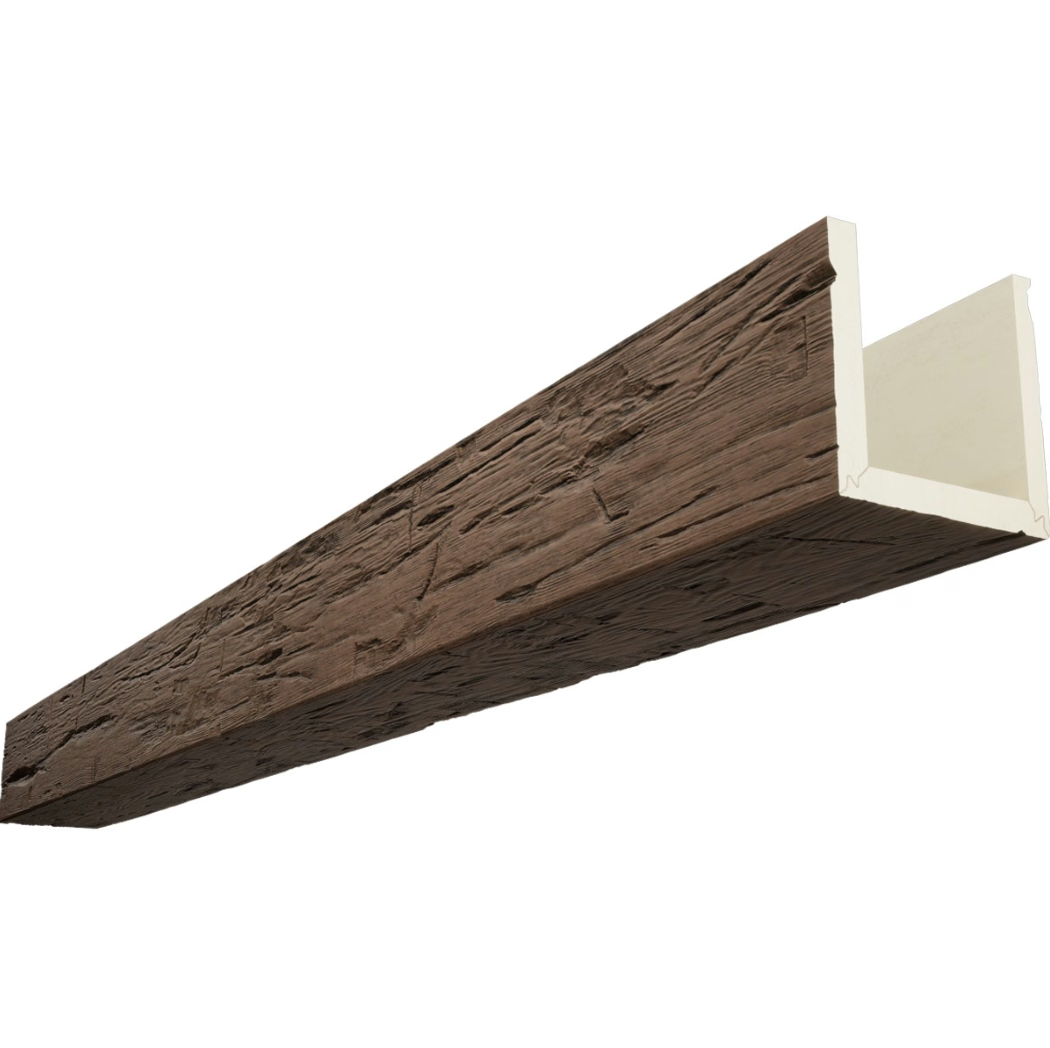
Once a buyer has chosen a polyurethane faux beam manufacturer, the next decision is how to get the product from the factory floor to the buyer's warehouse. For a domestic order, that question barely exists — a truck shows up, the goods are loaded, and the buyer receives them a few days later. For an international order, the question becomes a small project of its own, with ocean carriers, freight forwarders, customs brokers, inland trucking, and a stack of documents that all have to line up.
A dedicated international shipping service for faux beams is what makes that project manageable. The best services combine the freight booking, the container loading, the documentation, and the destination handling into a single workflow with a single point of contact. The buyer does not need to become a logistics expert to receive their goods on time and in good condition.
What the Service Actually Does
A good international shipping service handles the entire chain from the moment the buyer's purchase order is confirmed to the moment the container is unloaded at the destination warehouse. The supplier's export team books the vessel, arranges the container pickup, schedules the loading at the factory, prepares the export documents, and dispatches the cargo.
On the destination side, the buyer's broker (or the supplier's nominated broker, depending on the Incoterm) handles customs clearance, duty payment, and the release of the cargo. Inland transportation from the port to the buyer's warehouse is arranged, and the container is delivered at a pre-agreed date and time window.
The shipping service also keeps the buyer informed. Status updates are sent at each major milestone: goods packed, container loaded, vessel departed, vessel arrived, customs cleared, container out for delivery. A buyer who knows where their cargo is at every step can plan their own operations accordingly.
Choosing the Right Service Level
Not every shipment needs the same level of service. A buyer placing a trial order of a few cartons may be content with less-than-container-load (LCL) service that consolidates the goods with other shippers' cargo. A buyer with a steady stream of full container loads needs a dedicated service that has the volume to negotiate good rates and the operational capacity to handle frequent shipments.
Full container load (FCL) service is the right choice for most recurring faux beam orders. The container is loaded at the factory under the buyer's (or the supplier's) supervision, sealed, and transported to the destination port without being opened in between. FCL is faster, less handling means less damage, and the freight cost per cubic metre is lower than LCL.
LCL service has its place for small orders, sample reorders, and supplementary stock for an unexpected spike in demand. The transit time is longer and the per-unit cost is higher, but the buyer only pays for the space they use, which is the right economic choice for a small shipment.
The Role of the Freight Forwarder
The freight forwarder is the operational hub of the international shipping service. A good forwarder has contracts with multiple ocean carriers, knows which vessels have space, and can offer alternatives when the preferred sailing is full. The forwarder also arranges the inland transport at both ends, the customs broker if needed, and the cargo insurance.
For high-volume faux beam buyers, the relationship with the forwarder is a long-term partnership. The forwarder learns the buyer's product, the buyer's preferred routing, and the buyer's delivery windows, and the forwarder plans capacity accordingly. In return, the buyer commits to a certain volume and gets a better rate than they would get by shopping the spot market for every shipment.
A new buyer should interview several forwarders before committing. The questions to ask include which carriers they work with, what their average transit times are on the buyer's main lane, how they handle cargo claims, and what their reporting and tracking capabilities look like. The forwarder's answers will quickly reveal whether they are a good fit.
Documentation in the Shipping Service
Documentation is the part of international shipping that most buyers underestimate. The list of documents required for a single shipment can run to a dozen or more items, and each one has to be accurate. The most common documents are the commercial invoice, the packing list, the bill of lading, the certificate of origin, and any product-specific certifications. Some destinations also require a fumigation certificate, an inspection certificate, or a specific customs declaration form.
A dedicated shipping service treats the documentation process as a checklist. Each document is prepared, reviewed, and filed before the container is sealed. Any discrepancy is caught at this stage, not at the destination port where a customs hold can delay the cargo for days.
Buyers can make the documentation process easier by providing the supplier with a clear set of instructions about how each document should be formatted, what information must be included, and where the documents should be sent. The clearer the instructions, the fewer the corrections.
Tracking and Visibility
Modern international shipping services offer real-time tracking that lets the buyer see where their cargo is at any moment. The vessel's position is updated regularly, the port-to-port transit time is visible, and the inland delivery is scheduled with a defined window.

Visibility matters because it allows the buyer to plan. A buyer who knows the container is due at the destination port on a specific day can schedule the customs broker, the inland trucking, and the receiving crew in advance. A buyer who only finds out the cargo has arrived when the shipping notice arrives in their inbox loses a day or two of preparation time.
Damage and Claims
Even with good packaging and careful handling, the occasional carton arrives damaged. The shipping service should have a clear process for documenting damage, filing claims with the carrier, and recovering the cost. The most important step happens at the moment the container is opened: any visible damage must be noted on the delivery receipt before the container is accepted, otherwise the carrier will dispute the claim.
A good shipping service supports the buyer through the claims process. The supplier provides the photographs taken at loading, the forwarder files the claim with the carrier, and the buyer is kept informed about the progress. Most claims are resolved within a few weeks, and the recovery is credited against future shipments.
The Long-Term Value of a Good Service
International shipping is one of those areas where the cheapest option is rarely the best. A slightly higher freight rate that comes with better tracking, better documentation, and better claims handling is usually a better deal than a rock-bottom rate that arrives late with the wrong paperwork. The buyer who invests in finding a reliable shipping service is investing in their own ability to make commitments to their own customers with confidence.
Technical References
ASTM standards cited in every specification
Test Data
Lab results from internal testing program
Updated 2026
Reviewed against current product specs